

Forget the usual five-day splits: training your whole body three times a week often builds more muscle and fits real life better.
This 3-day full-body beginner strength routine uses simple compound moves, short 45–60 minute sessions, and clear progression rules so you actually get stronger.
Read on and you’ll get three complete workouts, warm-ups, step-by-step progression guidelines (how to add sets, reps, or weight), and an easy fallback for busy weeks so you make steady, measurable muscle gains.
Complete 3-Day Full-Body Beginner Routine Overview and Weekly Structure
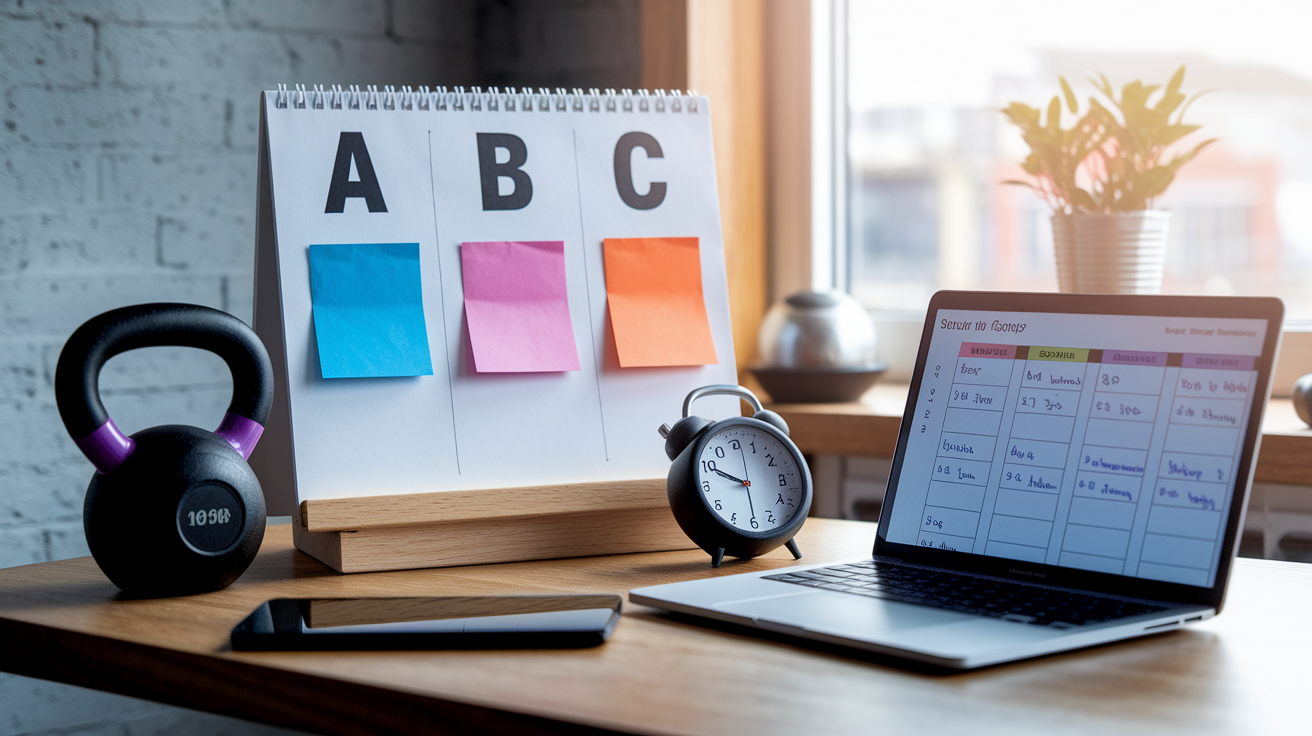
This routine runs on three training days each week, usually Monday, Wednesday, and Friday. Non-consecutive days give your muscles about 48 hours between sessions, which lines up with how long muscle protein synthesis stays elevated after you lift. Each session takes 45 to 60 minutes including warm-up and cool-down, so you’re looking at a manageable weekly commitment even when things get busy.
The program cycles through three workouts: A, B, and C. Each one trains your whole body using compound movements that hit multiple muscle groups at once. Beginners do well with this setup because you’re practicing the same movement patterns multiple times per week, which speeds up skill development and strength gains. You’re not waiting a full week to train your chest or legs again like those old “bro split” programs. You’re hitting every major muscle group three times per week with fresh stimulus.
Research supports this structure. Studies from 2010 to 2026 show that 72% of peer-reviewed trials found better muscle growth with full-body routines compared to once-weekly splits. Adherence rates run 25% higher for three-day programs than five or six-day splits, probably because the schedule fits real life and reduces burnout. Muscle protein synthesis stays elevated for 24 to 48 hours after training, so hitting each muscle every other day keeps the growth signal active all week.
Weekly Structure Breakdown:
- Three training sessions spaced across the week (example: Monday gets Workout A, Wednesday gets Workout B, Friday gets Workout C).
- Rest days between sessions allow full recovery. Use them for light walking, stretching, or complete rest.
- Total weekly commitment of roughly 2.5 to 3 hours of focused training time.
- Session flow follows this order: 5 to 10 minute warm-up, main compound lifts, accessory movements, 5 to 10 minute cool-down.
- Equipment needed includes a barbell, dumbbells, basic machines (leg press, lat pulldown, cable station), and a bench.
- Rotation pattern repeats continuously. After Workout C on Friday, you start the next week with Workout A on Monday.
Full-Body Strength Training Exercise Selection for Beginners
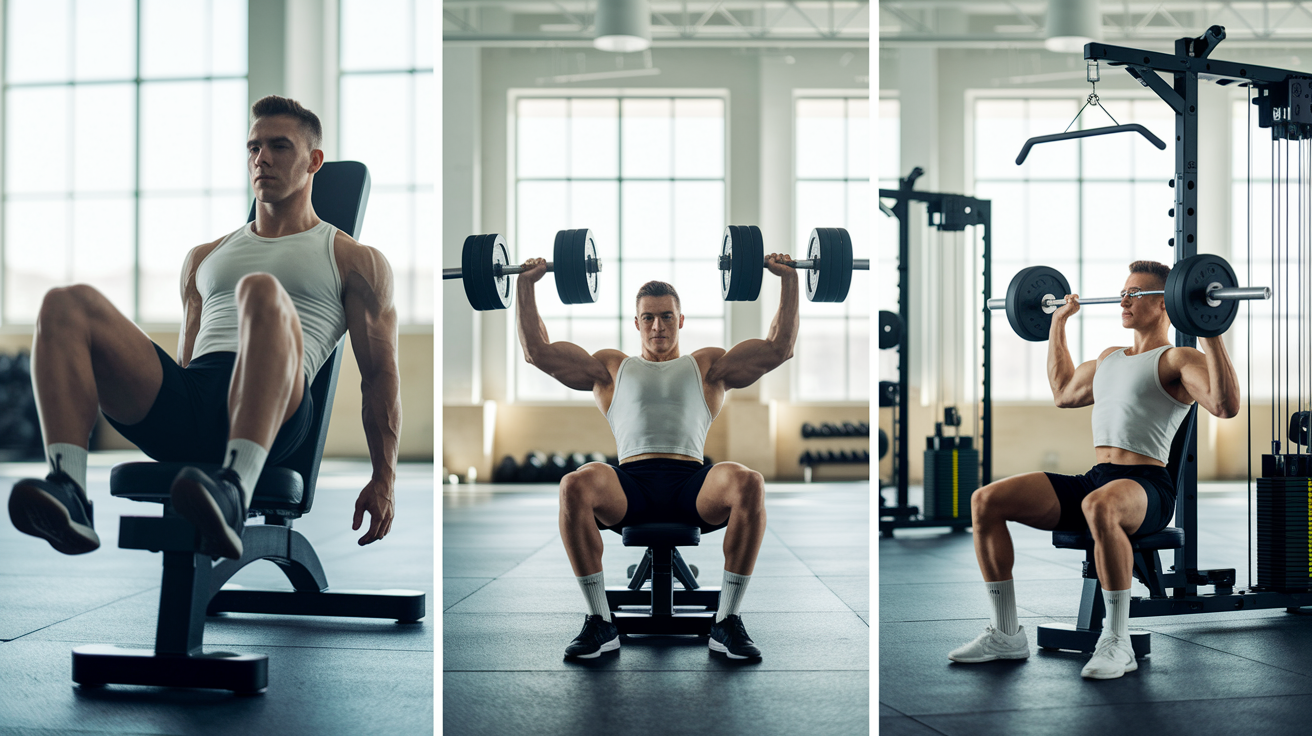
The exercise list leans on stable compound movements that let you move heavy weight safely while you’re still learning proper form. Compound lifts like leg presses, incline dumbbell presses, lat pulldowns, and chest-supported rows recruit multiple muscle groups at once. You get more training effect per exercise and keep sessions efficient. Machines and supported positions reduce the balance and coordination demands that can overwhelm beginners, letting you focus on pushing and pulling with good posture instead of worrying about tipping over.
Choosing exercises like the leg press over back squats, or chest-supported rows over bent-over barbell rows, lowers systemic fatigue and joint stress. You’ll still build serious strength and size, but with a lower risk of burnout or nagging aches in your lower back and knees. The full range of motion you get on these movements creates high mechanical tension (the main driver of muscle growth) without requiring perfect balance or advanced bracing skills. As you progress, you can add free-weight variations. Starting here builds a solid foundation.
Brief coaching cues make a big difference. Brace your core before every rep by taking a breath and tightening your midsection as if someone’s about to poke you in the stomach. Keep your chest up and shoulders pulled back slightly during presses and rows. Push through your whole foot on leg movements, not just your toes. Move the weight under control in both directions. No bouncing or jerking. If your form starts breaking down before you hit the target rep range, the weight’s too heavy.
Five Primary Compound Movements and Target Muscles:
- Leg Press: quads, glutes, hamstrings
- Incline Dumbbell Press: chest, front shoulders, triceps
- Lat Pulldown: lats, biceps, upper back
- Chest-Supported Row: mid-back, rear shoulders, biceps
- Romanian Deadlift (RDL): hamstrings, glutes, lower back
Warm-Up and Cool-Down Protocols for a 3-Day Strength Routine
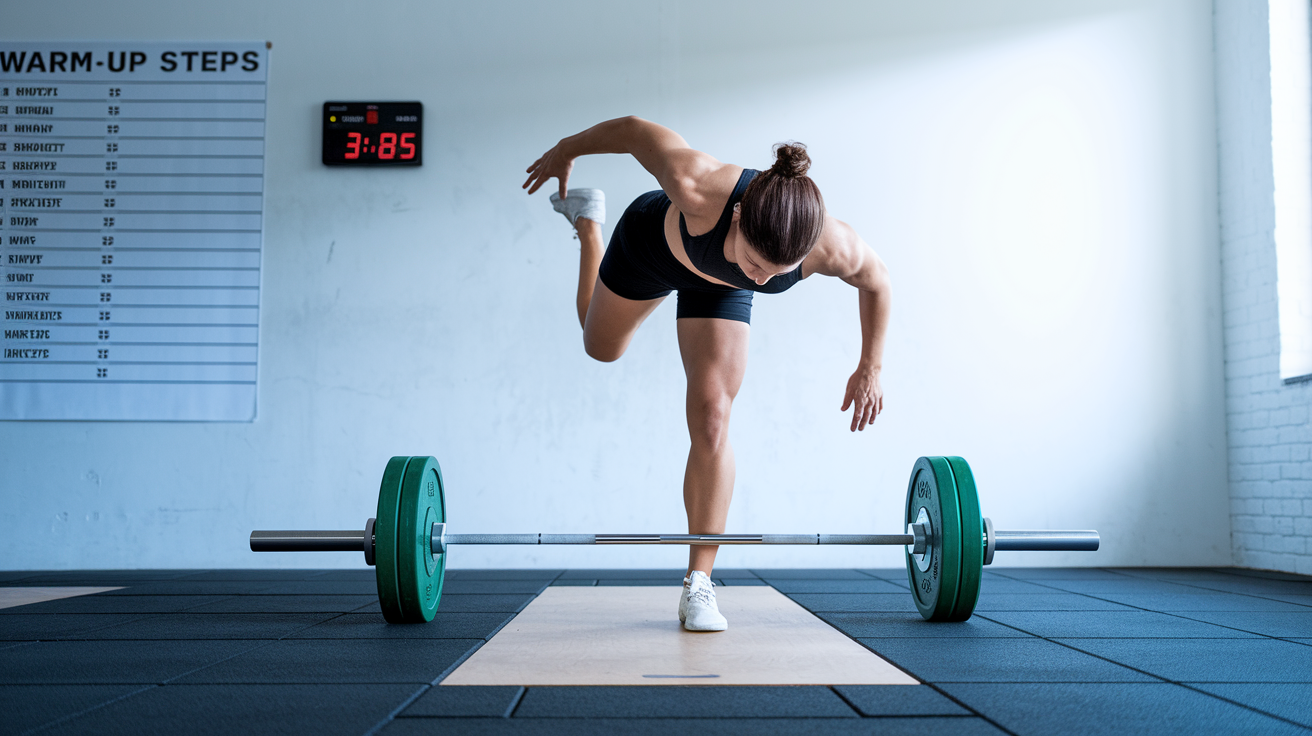
A good warm-up raises your core temperature, lubricates your joints, and primes the nervous system for heavier work. Spend 5 to 10 minutes on light cardio. Walking on a treadmill, easy cycling, or rowing at a conversational pace all work. Follow that with a few dynamic mobility drills like leg swings, arm circles, or bodyweight squats to move your joints through a full range without fatigue. Then do one to three ramp sets for your first lift, using light weight and building up to your working load. For example, if your working set is 135 pounds, you might do 8 reps with the empty bar, 5 reps at 95 pounds, then 3 reps at 115 before starting your real sets.
After your last working set, spend 5 to 15 minutes cooling down with light stretching or low-intensity cardio. This helps clear metabolic waste, reduces post-workout stiffness, and signals your nervous system to shift into recovery mode. Static stretches held for 20 to 30 seconds on tight muscles (hip flexors, hamstrings, chest) improve long-term mobility and reduce injury risk over time.
Warm-Up Breakdown
- Light cardio options: treadmill walk, stationary bike, rowing machine, jumping jacks. Anything that gets your heart rate up without creating fatigue.
- Dynamic drills: leg swings (forward/back and side-to-side), arm circles, bodyweight squats, lunges, torso twists. Move through ranges you’ll use in the workout.
- Ramp-set structure: start with very light weight (often the empty bar or 30 to 50% of working weight) for 8 to 10 reps, add weight and drop reps each set until you reach working load.
- Breathing and bracing cues: practice taking a deep breath into your belly, bracing your core tight, then exhaling slowly. This activates the muscles that stabilize your spine under load.
Workout A: Full-Body Beginner Routine (Quad & Chest Emphasis)
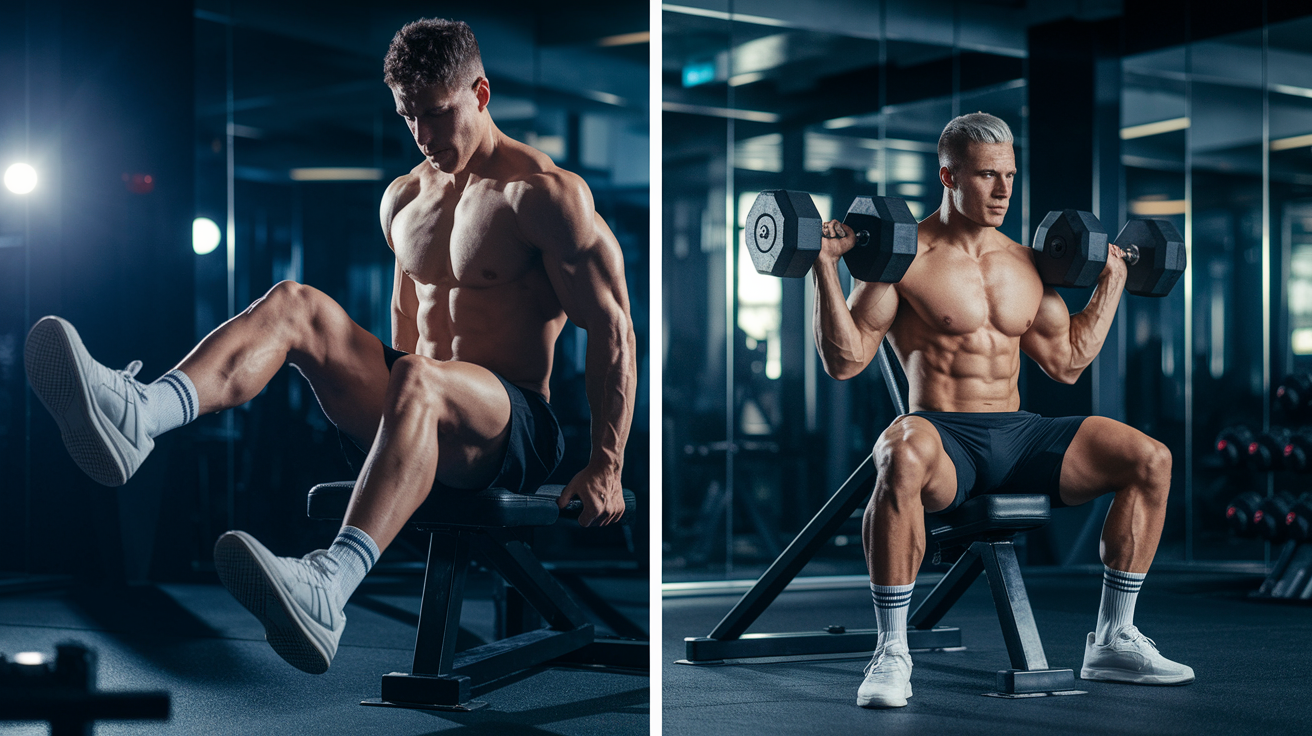
Workout A leads with a quad-dominant leg press, then hits chest with an incline dumbbell press, followed by back, hamstrings, shoulders, and arms. Even though it emphasizes quads and chest, you’re still training your entire body in one session. This balance keeps no muscle group neglected and keeps the session time-efficient. Starting with the leg press when you’re fresh lets you handle the most challenging movement safely.
Sequence your lifts from most demanding to least. Leg press and incline press are your primary compounds. Do them first when energy and focus are highest. Rest 2 to 3 minutes between sets on these moves to let your nervous system and muscles recover fully. Lat pulldowns and leg curls come next with slightly shorter rest (60 to 90 seconds), then finish with shoulder and arm accessories using 60 to 90 seconds of rest. This structure keeps fatigue manageable and form quality high throughout the session.
Focus on controlled reps. Lower the weight smoothly over 2 to 3 seconds, pause briefly at the bottom, then drive it back up with intent. Don’t rush through sets just to finish faster. On the leg press, keep your lower back pressed into the pad and push through your whole foot. On incline press, keep your shoulder blades squeezed together and avoid flaring your elbows out past 45 degrees. Pull the lat pulldown bar to your upper chest, not behind your neck, and keep your torso upright with a slight lean back.
| Exercise | Sets | Reps | Rest |
|---|---|---|---|
| Leg Press | 3 | 8–12 | 2–3 min |
| Incline Dumbbell Press | 3 | 8–12 | 2–3 min |
| Lat Pulldowns | 3 | 10–15 | 60–90 sec |
| Seated Leg Curls | 3 | 10–15 | 60–90 sec |
| Lateral Raises | 3 | 12–15 | 60–90 sec |
| Rope Tricep Pushdowns | 2 | 10–15 | 60–90 sec |
Workout B: Full-Body Beginner Routine (Back & Hamstring Emphasis)

Workout B shifts the focus to your posterior chain (the muscles along your backside). The chest-supported row hits your mid-back and lats without stressing your lower back, and Romanian deadlifts (RDLs) train your hamstrings and glutes through a long range of hip hinge motion. This combination balances out the quad and chest work from Workout A and builds pulling strength that supports better posture and injury prevention.
RDLs are one of the best beginner-friendly hamstring exercises because the movement is simple and the load stays in front of you where it’s easier to control. Start light. Many people can feel their hamstrings working with just the empty barbell. Hinge at your hips by pushing them back, keep a slight bend in your knees, and lower the bar down your shins until you feel a stretch in your hamstrings. Then drive your hips forward to stand back up. Your lower back should stay neutral (no rounding or excessive arching) the entire time.
After the two main lifts, the machine shoulder press gives your shoulders and triceps some volume without fatiguing your core. Leg extensions add quad volume, cable flyes hit your chest with a different stimulus than pressing, and dumbbell curls finish your biceps. Rest 2 to 3 minutes after rows and RDLs, then 60 to 90 seconds for the remaining exercises. This keeps intensity high where it matters and efficiency high overall.
Five Form and Safety Tips for Workout B:
- Chest-supported row: Keep your chest flat against the pad and pull the handles to your lower ribs, squeezing your shoulder blades together at the top.
- RDL hamstring cue: Push your hips back first, then let the bar travel down your legs. Don’t start by bending your knees or rounding your back.
- Grip on rows: Use a neutral or underhand grip if it feels more comfortable on your wrists and elbows. Both work the same muscles effectively.
- Shoulder press alignment: Keep your core braced and avoid arching your lower back excessively when pressing overhead. If you can’t press without arching, reduce the weight.
- Breathing pattern: Inhale at the top or bottom of each rep (whichever feels natural), hold your breath during the hard part of the lift, then exhale as you finish.
Workout C: Full-Body Beginner Routine (Glute & Shoulder Emphasis)
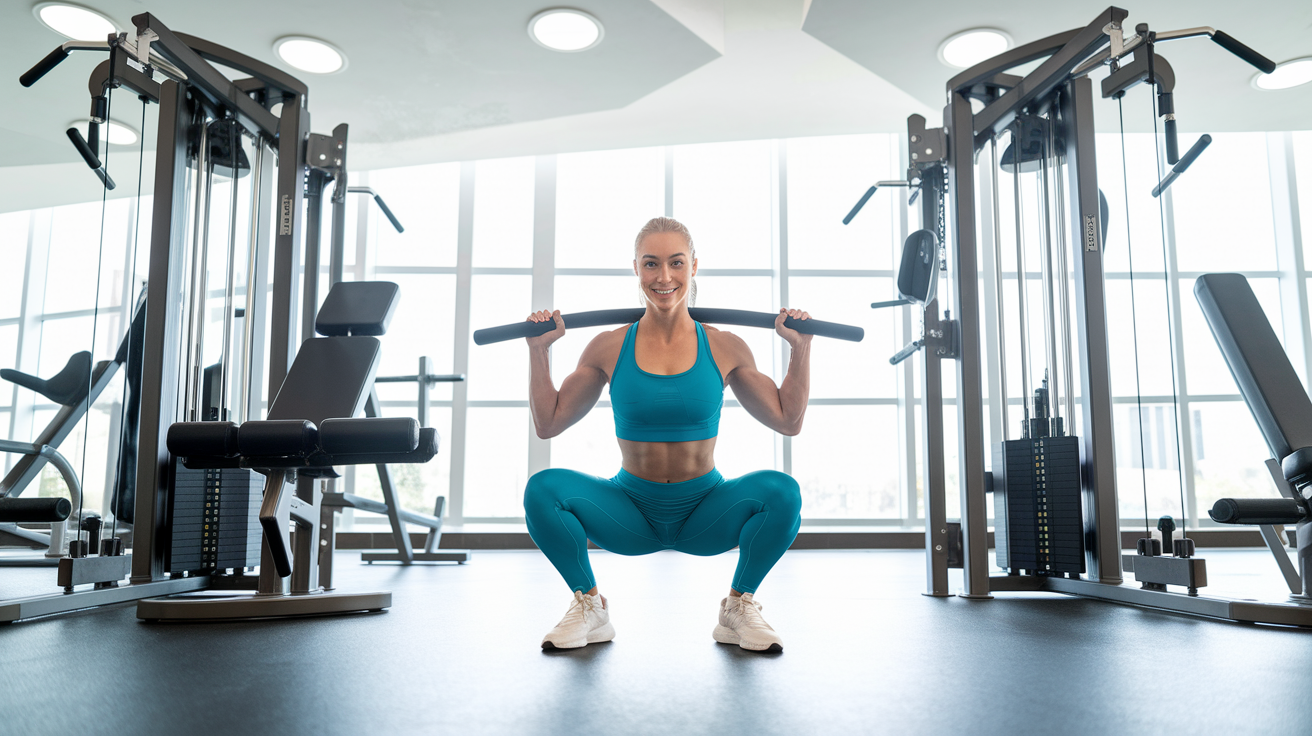
Workout C rounds out the week by emphasizing your glutes and shoulders while still covering all the major movement patterns. The hack squat (or Smith machine squat) targets quads and glutes with a more upright torso position than a back squat, which many beginners find easier on their lower back. Seated cable rows and flat machine chest press provide stable pulling and pressing volume, and the leg curls add more hamstring work to complement the RDLs from Workout B.
The final two exercises (cable lateral raises and face pulls) use higher reps (15 to 20) to build shoulder endurance and rear-delt strength. These movements use lighter loads, so rest stays short at 60 to 90 seconds. Face pulls are especially valuable for shoulder health because they strengthen the small muscles that stabilize your shoulder blade and counterbalance all the pressing work. Pull the rope attachment toward your face, spreading the handles apart at the end of each rep and squeezing your shoulder blades together.
Volume on Workout C is similar to A and B. Three working sets on the main lifts, two to three on accessories. If you’re recovering well and progressing, stick with this structure for several months before adding more sets or exercises. Beginners grow from almost any reasonable training stimulus, so more volume isn’t always better. Consistency and progressive overload matter far more than doing extra sets.
Substitution Options
- Bodyweight squats: replace hack squat if no machine is available. Add a backpack with books or water bottles for load.
- Goblet squats: hold a dumbbell or kettlebell at chest height. Easier to learn than barbell squats and still very effective for quads and glutes.
- Dumbbell rows: replace seated cable rows. Brace one hand on a bench, row the dumbbell to your hip with the other.
- Push-ups: substitute for flat machine press if training at home. Elevate your hands on a bench or box to make them easier, or elevate your feet to make them harder.
- Dumbbell leg curls: lie face-down on a bench, squeeze a dumbbell between your feet, and curl it toward your glutes.
- Band lateral raises: stand on a resistance band and raise the handles out to the side. Works the same as cables with minimal equipment.
Progression Guidelines and Overload Strategies for Beginners

Progressive overload means doing slightly more work over time. More reps, more weight, or both. The simplest and most reliable method for beginners is called double progression. Pick a weight you can lift for at least the bottom of the rep range (for example, 8 reps on an 8 to 12 exercise) with 1 to 3 reps left “in the tank” (called reps in reserve, or RIR). Each week, try to add one or two reps to each set. Once you can complete all your working sets at the top of the range (12 reps in this example) with good form and still have 1 to 2 RIR, increase the weight by the smallest available increment.
Microloading keeps progression smooth. On barbell exercises, add 5 to 10 pounds total (2.5 to 5 pounds per side). On dumbbells, jump to the next available pair, often a 5-pound increase per hand. On machines, use the smallest weight pin jump your gym offers. After you add weight, your reps will drop back toward the lower end of the range. That’s normal. Rebuild your reps over the next few weeks, then add weight again. This cycle repeats for months or even years.
Track your reps week to week so you know when to add load. If you did 3 sets of 10 reps last week, aim for 3 sets of 11 or 12 this week. If you hit 12 across all sets, bump the weight next session. Don’t try to add weight every single week on every single exercise. Progress isn’t perfectly linear. Some lifts will move faster than others, and that’s fine. The goal is measurable improvement over months, not days.
Example Progression Cycle
| Week | Reps/Set | Load | Target |
|---|---|---|---|
| 1 | 8, 8, 8 | 100 lbs | Add 1–2 reps per set |
| 3 | 11, 11, 10 | 100 lbs | Push final set to 11 |
| 4 | 12, 12, 12 | 100 lbs | Increase weight next week |
| 5 | 8, 8, 8 | 105 lbs | Rebuild reps |
What to Expect Over 8–12 Weeks of a 3-Day Full-Body Routine

The first four to six weeks are dominated by neural adaptations. Your nervous system learns to recruit muscle fibers more efficiently, coordinate movement patterns, and generate force without wasting energy. You’ll feel stronger and more confident under the bar even if your muscles haven’t grown much yet. Lifts that felt awkward in week one will start to feel smooth and controlled by week four. This skill development is real progress. Don’t dismiss it.
Strength and technique benchmarks become clear around the six-week mark. Most beginners can add 10 to 20 pounds to their leg press, 5 to 15 pounds to their rows and presses, and several reps to their accessory movements within the first two months. Research on higher-frequency programs shows strength increases of 12 to 15% are common over 12 weeks. Bill Starr’s athletes in the 1970s increased their squat by roughly 18% in 12 weeks using a similar three-day full-body structure, though those were advanced lifters with a strong base.
Visible physical changes (more defined arms, thicker quads, broader shoulders) usually appear between 8 and 12 weeks if you’re eating enough protein and staying consistent. Muscle growth is slower than strength gains, but it’s happening even when you can’t see it yet. Take progress photos every four weeks and compare them side by side. The mirror lies when you look at it every day. Photos don’t.
Deload Week and Fatigue Management in a Beginner Strength Program

A deload is a planned lighter training week that lets your body catch up on recovery. Even beginners benefit from deloads because accumulated fatigue can sneak up on you. When your joints ache, your motivation drops, or your lifts stall or regress for two weeks in a row, it’s time to deload. You’re not being lazy. You’re managing fatigue so you can train hard again next week.
Structure a deload by reducing your working weights by 40 to 50% for one week while keeping the same exercises, sets, and rep ranges. So if you’ve been leg pressing 200 pounds for 3 sets of 10, drop to 100 or 120 pounds and move through the reps with perfect form and zero strain. Or keep the same weights but drop one set from each exercise. Either works. The goal is to move and maintain the habit without adding new stress. After the deload week, return to your normal training loads and you’ll often find you’re stronger than before.
Four Signs That a Deload Is Needed:
- Persistent fatigue that doesn’t improve with an extra rest day or better sleep.
- Nagging joint pain in your knees, elbows, or shoulders that wasn’t there a few weeks ago.
- Stalled or regressing lifts for two consecutive weeks despite good effort and nutrition.
- Lack of motivation to train, even when your schedule is clear and you’ve been consistent for weeks.
Recovery, Nutrition, and Sleep Recommendations for Beginner Lifters
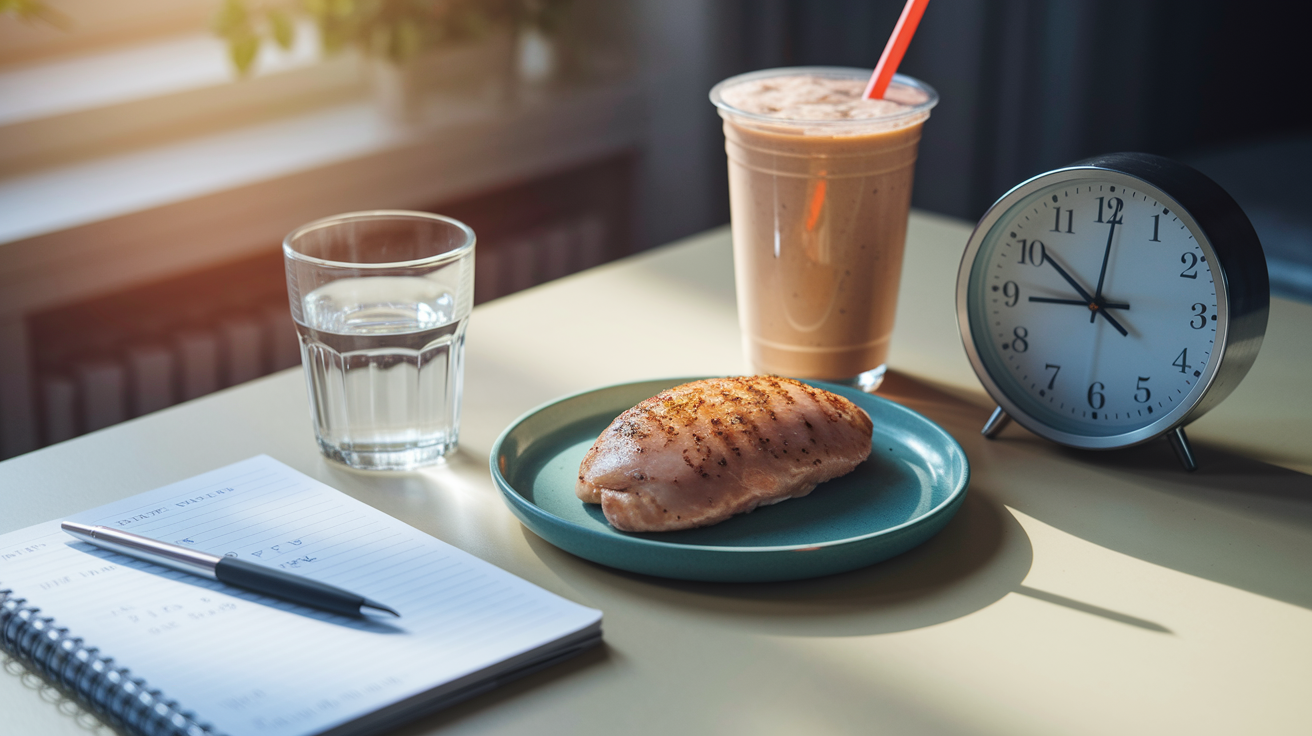
Sleep is the foundation of recovery. Aim for 7 to 9 hours per night, and prioritize consistency. Going to bed and waking up at roughly the same time every day stabilizes your energy, appetite, and training performance. If you’re sleeping less than 7 hours regularly, your strength gains will be slower and your risk of injury higher. One bad night won’t ruin you. Chronic sleep debt will.
Protein supports muscle repair and growth. Target 1.6 to 2.2 grams per kilogram of body weight per day. For a 70-kilogram (154-pound) person, that’s roughly 112 to 154 grams daily, spread across three to four meals. A palm-sized portion of chicken, fish, eggs, Greek yogurt, or tofu at each meal usually gets you there. Hydration matters too. Drink water throughout the day, especially before and after training. A simple pre-workout snack (a banana and a handful of nuts, or a protein shake) 30 to 60 minutes before your session can improve performance if you train early in the morning or several hours after your last meal.
On off-days, stay lightly active. A 20 to 30-minute walk, easy stretching, or a short yoga session improves blood flow and reduces stiffness without interfering with recovery. Avoid intense cardio or long runs on rest days. Those add fatigue instead of supporting it. Rest days are for recovery, not punishment.
Five Simple Daily Recovery Habits:
- Get 7 to 9 hours of sleep every night, even on weekends.
- Eat a palm-sized portion of protein at each meal.
- Drink at least 8 glasses of water daily, more if you sweat heavily.
- Move lightly on off-days with walking, stretching, or easy cycling.
- Take 5 minutes after each session to stretch tight muscles and breathe deeply.
Exercise Substitutions and Minimal Equipment Options for a 3-Day Routine
You don’t need a fully equipped commercial gym to run this program effectively. A basic home setup with a barbell, a bench, a set of dumbbells, and a pull-up bar covers most of the movement patterns. If you’re missing a specific machine, find an exercise that uses the same muscle groups and similar joint angles. For example, dumbbell Romanian deadlifts replace barbell RDLs, goblet squats replace leg presses, and dumbbell rows replace cable rows.
The substitution principle is simple: match the movement pattern and muscle groups, then adjust load and reps to create similar fatigue. A hack squat and a goblet squat both involve knee and hip extension with an upright torso, so the training effect is comparable even though the equipment differs. Push-ups and machine chest presses both involve horizontal pushing, so swapping one for the other works fine. Focus on the pattern, not the specific tool.
| Original Exercise | Home/DB Alternative |
|---|---|
| Leg Press | Goblet Squat or Bodyweight Squat (add load with backpack) |
| Incline Dumbbell Press | Incline Push-Ups (hands on a bench or sturdy box) |
| Lat Pulldowns | Pull-Ups or Band-Assisted Pull-Ups |
| Seated Leg Curls | Dumbbell Leg Curls or Nordic Curls (partner-assisted) |
| Chest-Supported Row | Single-Arm Dumbbell Row (braced on bench) |
| Romanian Deadlifts | Dumbbell RDLs (one DB in each hand) |
Tracking Progress and Staying Consistent on a 3-Day Beginner Program
Tracking is the difference between guessing and knowing. Write down every exercise, set, rep, and weight you use in each session. A simple notebook works. Date the page, list your exercises, and jot down your numbers. Apps with built-in timers and progression tracking make it even easier, but pen and paper is fine if that’s what you’ll actually use. The key is creating a record you can review week to week.
The metrics that matter most are sets, reps, load, and reps in reserve (RIR). For example, “Leg Press: 3 × 10 @ 180 lbs, RIR 2” tells you exactly what you did and how hard it felt. Next week, aim for 3 × 11 or 12 at the same weight, or bump to 185 or 190 if you hit 12 across all sets. Without tracking, you’re flying blind and progress slows because you can’t remember what you did last time.
Adherence strategies keep you training even when life gets messy. If you miss Monday’s session, do it Tuesday and shift the rest of the week back a day. Because each workout trains your whole body, missing one session doesn’t leave any muscle group untrained for a full week like it would on a split routine. Three sessions per week also leaves room for flexibility. If you need to train Tuesday/Thursday/Saturday one week instead of Monday/Wednesday/Friday, the program still works. Consistency over months beats perfection over days.
Final Words
Start training three non-consecutive days a week (Mon/Wed/Fri). Keep sessions 45–60 minutes and follow the warm-up → main lifts → accessories → cool-down flow with the A/B/C rotation.
Use double progression and microloading: hit the top reps, then add weight, log sets/reps/loads, and deload when needed. Aim for strength gains in 4–6 weeks and visible changes in 8–12.
This 3-day full-body beginner strength routine with progression guidelines gives a clear, repeatable path—do the sessions, track loads, sleep and fuel well, and you’ll make steady progress.
FAQ
Q: How should I schedule a 3-day full-body beginner routine?
A: A 3-day full-body routine should be done three non‑consecutive days per week (e.g., Mon/Wed/Fri), allowing ~48 hours recovery and 45–60 minute sessions for focused lifts and proper rest.
Q: Why use a whole‑body A/B/C rotation for beginners?
A: A whole‑body A/B/C rotation lets you hit each muscle multiple times weekly, speeds skill learning on compound lifts, and keeps volume manageable for steady progress and better long‑term adherence.
Q: What exercises should beginners choose for full‑body sessions?
A: Beginners should pick stable compound moves like leg press, incline dumbbell press, lat pulldown, chest‑supported row, RDLs, and hack‑squat variations—machines and dumbbells lower joint stress and simplify technique.
Q: How should I warm up and cool down for these workouts?
A: A proper warm‑up is 5–10 minutes light cardio, dynamic mobility, then 1–3 ramp sets for the first lift; cool‑down is 5–15 minutes low‑moderate cardio or light stretching to aid recovery.
Q: What is the ideal session structure and rest timing?
A: A session should go warm‑up → main compound lifts → accessories → cool‑down; rest about 2–3 minutes for compounds and 60–90 seconds for accessories, totaling roughly 45–60 minutes.
Q: What do Workouts A, B, and C focus on and which key exercises do they include?
A: Workout A emphasizes quads/chest (leg press, incline DB press, lat pulldown); B targets back/hamstrings (chest‑supported row, RDLs, machine shoulder press); C prioritizes glutes/shoulders (hack/Smith squat, seated cable row, machine chest press).
Q: How should I progress week to week on this program?
A: Progress by double progression: hit the top rep range across sets, then increase weight 5–10%. Keep 1–3 RIR (reps in reserve), use microloads, and add 1–2 reps per set when ready.
Q: What results can I expect after 8–12 weeks?
A: You can expect neural and technique gains in 4–6 weeks, with visible strength and size changes typically appearing around 8–12 weeks and strength rising ~12–15% for many trainees.
Q: When should I take a deload and how should it be structured?
A: Take a deload for persistent fatigue, joint pain, or stalled progress; structure it by cutting loads 40–50% for a week or by cutting sets while keeping movement frequency.
Q: What are key recovery, nutrition, and sleep rules for beginners?
A: Aim for 7–9 hours sleep, 1.6–2.2 g/kg protein daily, stay hydrated, eat a post‑workout snack when possible, and keep light activity on off days to support recovery.
Q: Can I do this 3‑day routine at home with minimal equipment?
A: Yes—use pattern matches like goblet squats, dumbbell RDLs, single‑arm rows, push‑ups, banded leg curls, and band lateral raises; focus on movement quality and progressive loading.
Q: How should I track progress and handle missed sessions?
A: Track sets, reps, weight, and RIR in a simple notebook or app; move a missed session to the next day if possible, but prioritize consistency over perfection each week.