

Meal prep isn’t a magic reset — it’s the boring, repeatable habit that actually makes weight loss stick.
If you want a weekly meal prep plan for weight loss that actually works, this post gives a simple, step-by-step system you can use this week.
You’ll learn how to set a realistic calorie budget, pick 2–3 easy recipes, batch cook proteins, grains, and veggies, then portion and label for quick meals.
No fads. No endless rules. Just one clear plan to save time and keep you on track.
Core Steps to Build a Weekly Meal Prep Plan for Weight Loss Success
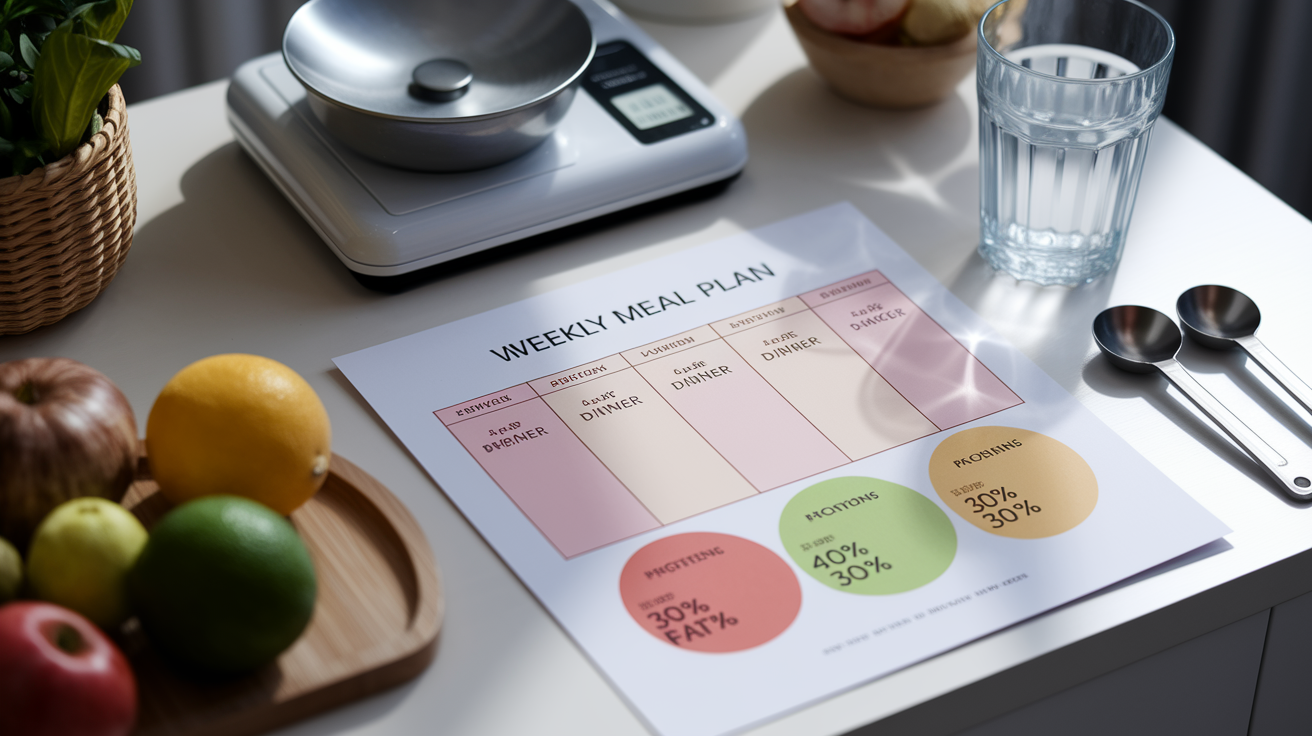
You’ve got to start with figuring out how many calories you actually need. Most adults sit somewhere between 1,500 and 2,200 calories a day just to maintain their current weight. Drop that by 500 calories and you’re looking at roughly 1,200 to 1,700 per day for steady weight loss.
But here’s the thing. Plans that hover near 1,000 to 1,200 calories can be brutal to stick with. You’re hungry, you’re dragging, and it’s not sustainable. If you’re planning to eat under 1,500 calories for more than a week or two, check with a doctor first.
Once you know your daily budget, split those calories across meals and snacks so you’re eating every three to four hours. That keeps muscle protein synthesis humming and stops you from getting so hungry you blow past your portion at the next meal. A simple breakdown might be 300 calories at breakfast, 400 at lunch, 400 at dinner, and one or two small snacks totaling 100 to 200 calories.
Get three to four ounces of protein at lunch and dinner. That’s about the size of your palm. Then add an equal or double portion of starchy carbs like rice or potatoes and an equal or double portion of fibrous vegetables like broccoli or peppers.
Macros do different jobs. Protein keeps you full and protects muscle while you’re in a deficit. Carbs fuel your workouts and your day. Healthy fats support hormones and satiety. Start with 30 percent protein, 40 percent carbs, and 30 percent fat. On a 1,200 calorie plan, that’s about 90 grams of protein, 120 grams of carbs, and 40 grams of fat. You don’t need perfection, but tracking for a week or two teaches you what portions look like.
Here’s how to set up your week:
-
Pick your recipes. Go with two to three main protein sources, one or two grain or starchy carb batches, and a few vegetable sides you’ll actually eat. Keep it simple at first.
-
Calculate total calories and macros. Use a food log app or nutrition labels to add up the calories, protein, carbs, and fat in each recipe. Divide the batch into servings so you know what one portion delivers.
-
Assign meals to days. Map out which breakfast, lunch, dinner, and snacks you’ll eat each of the seven days. Repeating the same breakfast daily or alternating two lunches cuts cooking time and decision fatigue.
-
Create a shopping list. Write down exact quantities based on your recipe servings. Only buy what you need for the week.
-
Schedule your prep day. Block off 90 minutes to three hours, usually Sunday afternoon, to batch cook proteins, grains, and vegetables all at once. Use your oven and stovetop simultaneously to speed things up.
-
Portion and label. Once everything’s cooked and cooled, divide meals into individual containers. Label each with the meal name and the date you prepped it. Store in the fridge for the next few days or freeze extras for later.
Choosing Weight Loss Friendly Foods for Weekly Meal Prep
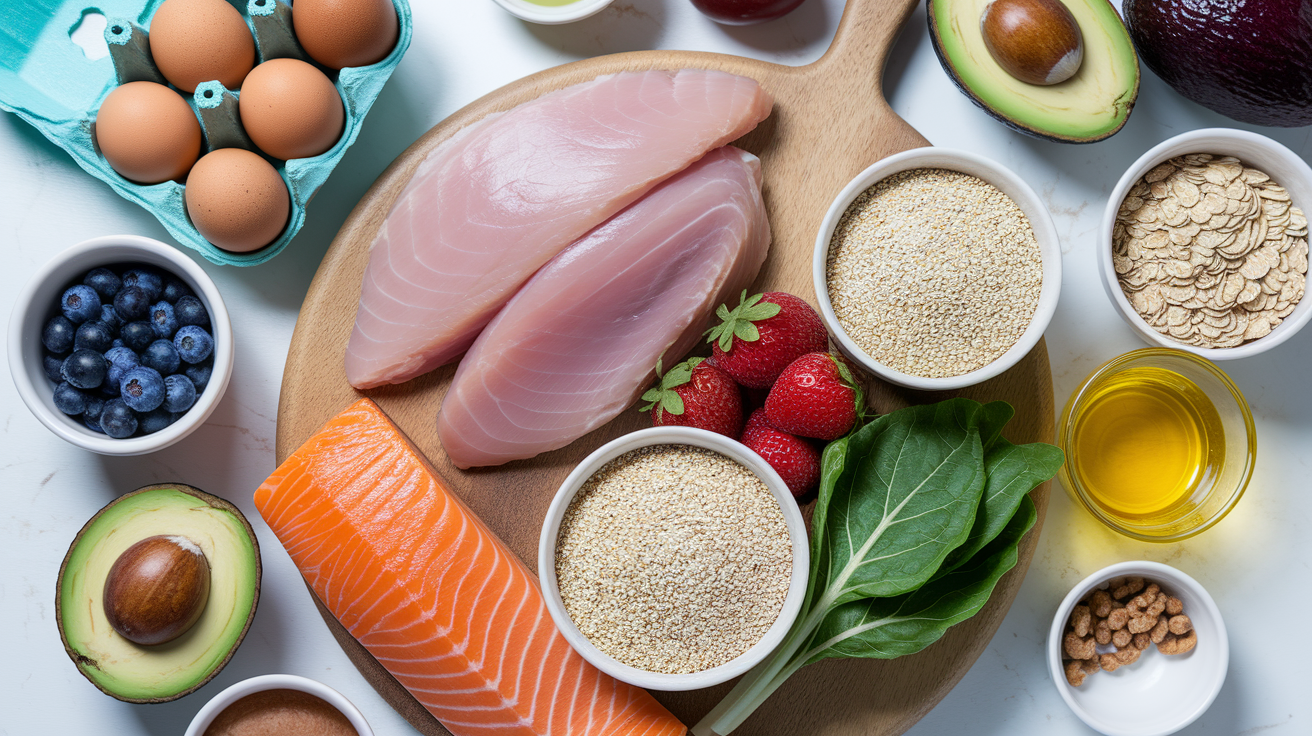
Protein should anchor every meal. It’s the most filling macro and it protects muscle while you’re in a calorie deficit. Lean proteins like boneless skinless chicken breast, lean ground turkey, eggs, canned tuna, and canned salmon are affordable, easy to batch cook, and versatile. Each four ounce serving of cooked chicken delivers about 35 grams of protein and around 180 calories.
Whole grains and starchy vegetables give you the carbs you need without spiking blood sugar as fast as refined grains. Brown rice, quinoa, oats, sweet potatoes, and regular potatoes all work well for batch cooking. Pair them with non-starchy vegetables like spinach, bell peppers, zucchini, broccoli, cauliflower, and mixed salad greens to add fiber, volume, and micronutrients without piling on calories. Fibrous vegetables keep you full and help you hit your daily fiber target.
Healthy fats like avocado, nuts, seeds, olive oil, and natural nut butters round out your meals by slowing digestion and keeping you satisfied between eating windows. You don’t need much. One tablespoon of olive oil or a quarter of an avocado adds about 40 to 60 calories and enough fat to help absorb vitamins A, D, E, and K.
Ultra processed foods and added sugars should make up only a small part of your week. You don’t have to ban candy, soda, fried snacks, or sugary cereals completely, but keeping most of your meals nutrient dense makes it way easier to stay within your calorie budget and feel good.
Ten essential weekly staples:
Boneless skinless chicken breast or lean ground turkey, eggs (hard boiled for snacks, scrambled for breakfast), rolled oats for overnight oats or cooked oatmeal, quinoa or brown rice, mixed salad greens or fresh spinach, frozen broccoli or green beans or mixed vegetables, fresh or frozen berries and bananas, plain Greek yogurt (0% or 2% fat), canned black beans or chickpeas, olive oil or avocado or natural peanut butter.
How to Create a Weekly Grocery List for Weight Loss Meal Planning
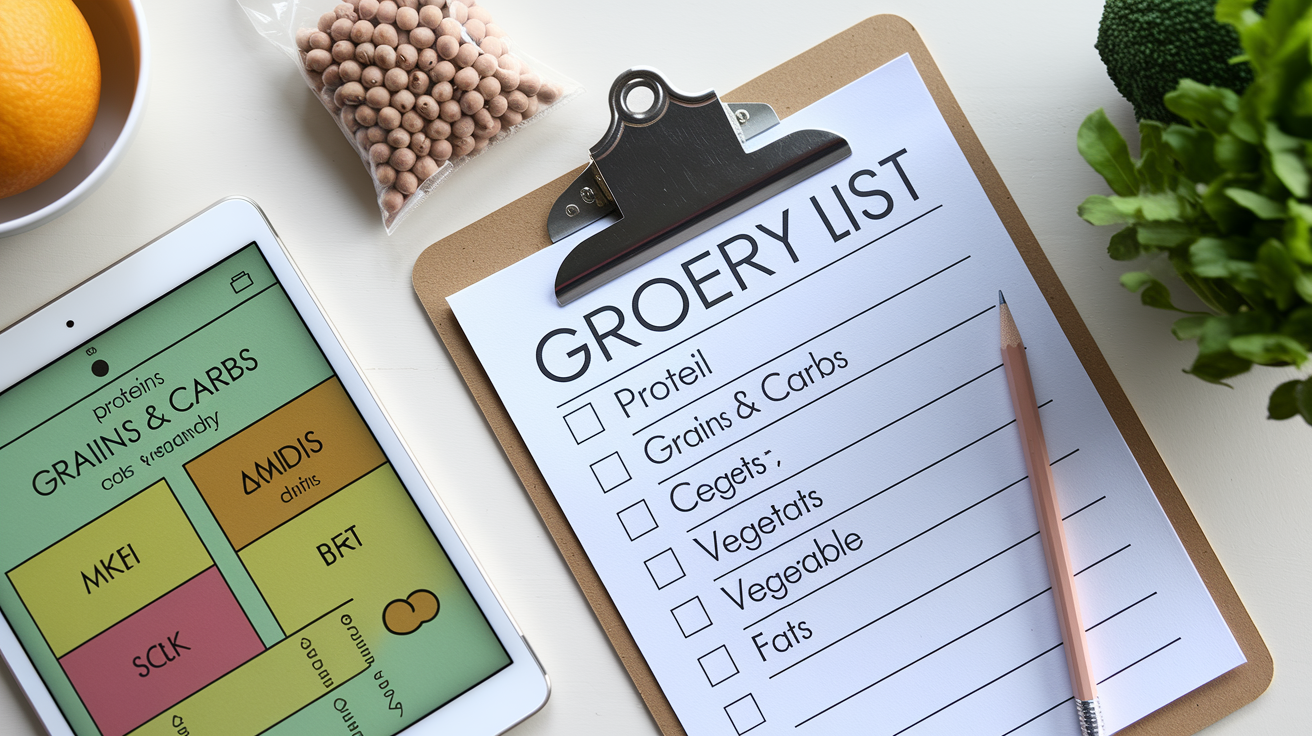
An organized grocery list keeps you from wandering the aisles and picking up extras that blow your budget or your calorie target. Start by writing down every ingredient you need for your chosen recipes, then add quantities based on the number of servings you’re prepping. If you’re making seven chicken salads and each one uses four ounces of cooked chicken, you’ll need about 2.5 to 3 pounds of raw boneless skinless chicken breast to account for cooking loss.
Group items by category. Proteins, grains, produce, dairy, pantry staples. That way you can move through the store quickly.
Most weekly grocery hauls for one person run between $45 and $95 depending on where you live, whether you buy organic, and which proteins you choose. Chicken breast and eggs are usually cheaper than beef or fresh fish. Frozen vegetables cost less than fresh and last longer, so stock your freezer with bags of broccoli, spinach, and mixed peppers. Canned beans and canned tomatoes are pantry heroes that add protein and fiber without the prep work of dried beans.
| Item Category | Example Foods | Qty Needed for 7 Days |
|---|---|---|
| Proteins | Chicken breast, eggs, canned tuna | 2.5–3 lb chicken, 12 eggs, 2 cans tuna |
| Grains & Starches | Quinoa, brown rice, oats | 2 cups dry quinoa/rice, 2–3 cups oats |
| Vegetables | Spinach, peppers, broccoli, zucchini | 10–12 cups greens, 2–3 lb mixed veg |
| Fruits | Bananas, berries, apples | 7–10 servings total |
| Fats & Dairy | Olive oil, Greek yogurt, nuts | 3–4 tbsp oil, 32–42 oz yogurt, 3–4 tbsp nuts |
Batch Cooking Techniques for a Weekly Weight Loss Plan
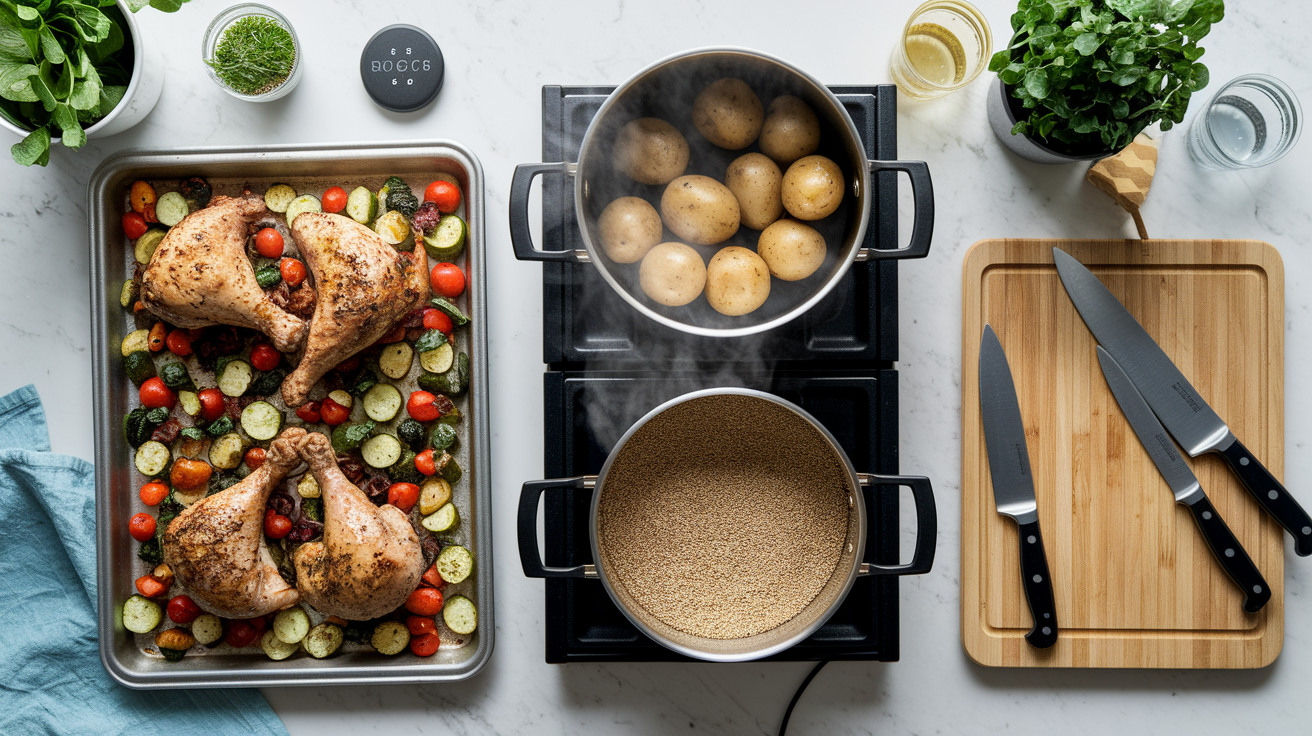
Batch cooking means you cook large amounts of a few core ingredients all at once, then mix and match them into different meals throughout the week. The biggest win is time. Instead of cooking every night, you spend 90 minutes to three hours on one designated prep day and then just reheat or assemble meals on busy weeknights. Most people pick Sunday afternoon or evening, but any day that gives you a couple of uninterrupted hours works.
Use your oven and stovetop at the same time to cut down on total cook time. Roast a big batch of boneless skinless chicken breast on a sheet pan at 400°F for 20 to 30 minutes while you simmer quinoa on the stovetop for 15 to 20 minutes. At the same time, you can roast a second sheet pan of chopped vegetables (bell peppers, zucchini, broccoli) at the same temperature for 20 to 30 minutes. That overlapping schedule means you finish all three components in about 30 to 40 minutes instead of an hour and a half if you did them one at a time.
Batch Cooking Time Guide
Roasting proteins in the oven is hands off and predictable. Boneless chicken breast takes 20 to 30 minutes at 400°F until the internal temperature hits 165°F. Salmon fillets bake faster, about 12 to 15 minutes at 425°F. On the stovetop, quinoa cooks in 15 to 20 minutes, and brown rice takes 35 to 45 minutes (or 22 minutes in an Instant Pot). Sheet pan vegetables roast in 20 to 30 minutes, and you can do two pans at once if your oven has space.
Six batch friendly meals to prep in bulk:
Turkey or beef chili (one pot, freezes well, high protein and fiber), roasted chicken breast (slice for salads, grain bowls, wraps), sheet pan roasted vegetables (peppers, zucchini, broccoli, cauliflower), baked egg frittata with spinach and cheese (slice into portions, refrigerate or freeze), Instant Pot grains (quinoa, brown rice, farro) for the week, one pot vegetable soup with beans or lentils (make a big batch, freeze half).
Portioning and Assembling Your Weekly Weight Loss Meals
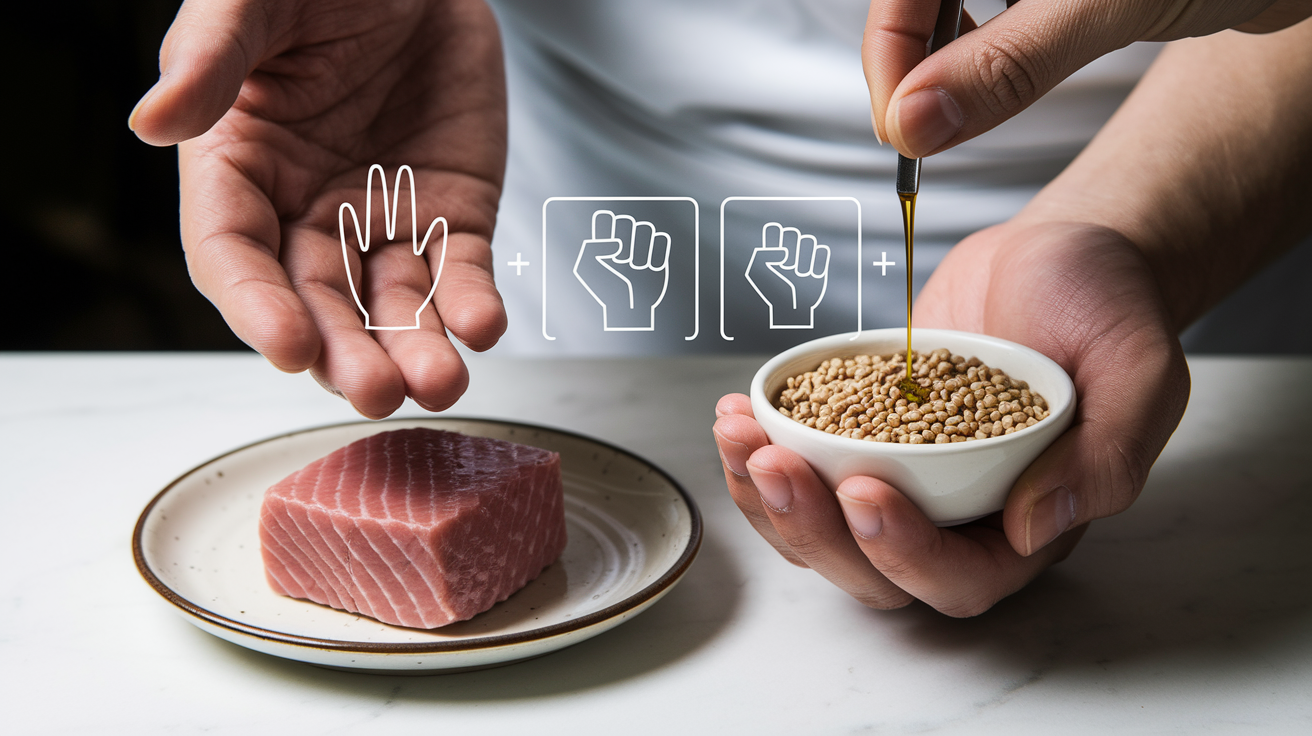
Accurate portions are the backbone of calorie control. You can’t eyeball portions reliably when you’re just starting out, so use a kitchen scale for the first week or two to learn what four ounces of cooked chicken or half a cup of cooked rice actually looks like on your plate. After a few rounds of weighing, you’ll get better at estimating by sight, but checking in with the scale every few weeks keeps you honest.
Recommended portion sizes for weight loss meals look like this. Three to four ounces of cooked protein (about 20 to 35 grams of protein), one half to one cup of cooked grains or starchy vegetables, one to two cups of non-starchy vegetables, and one teaspoon to one tablespoon of added fats like olive oil or a quarter of an avocado. Those amounts fit comfortably into a 24 to 32 ounce three compartment meal prep container and deliver roughly 350 to 450 calories per meal, depending on your protein and fat choices.
When you don’t have a scale handy, use hand based visual cues. Your palm (without fingers) is about the size of a three to four ounce protein serving. Your clenched fist is roughly one cup, which works for measuring cooked grains or a large serving of vegetables. A cupped hand (like you’re holding water) is about half a cup, good for portioning starchy carbs. Your thumb from the tip to the base is close to one tablespoon, useful for measuring fats like nut butter or oil.
Four hand size visual portion guides:
Palm: three to four ounces cooked protein (chicken, fish, turkey, tofu). Fist: one cup cooked grains or two cups raw vegetables. Cupped hand: half cup cooked starchy carbs (rice, quinoa, sweet potato). Thumb: one tablespoon healthy fat (olive oil, nut butter, avocado).
Storage, Containers, and Food Safety for a Week of Prepped Meals
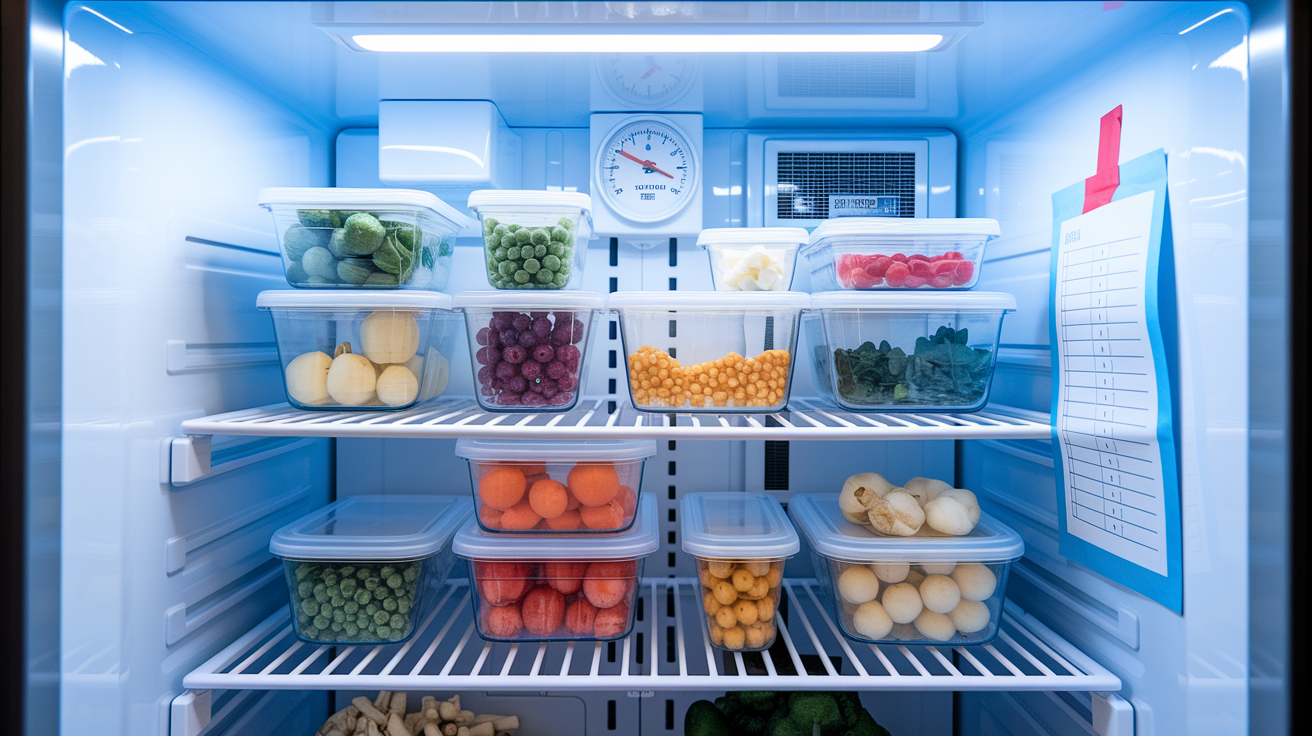
Cooked proteins like chicken, turkey, and lean beef stay safe in the refrigerator for three to four days, so if you’re prepping on Sunday, plan to eat those meals by Wednesday or Thursday. Cooked grains and legumes last a bit longer, three to five days in the fridge, and hard boiled eggs are good for up to one week. If you want to prep a full seven days of meals, freeze half your batch right after cooking. Frozen cooked meals keep for up to three months and thaw overnight in the fridge or reheat from frozen in the microwave.
Glass or stainless steel containers are the best long term investment because they don’t stain, don’t hold odors, and are dishwasher safe. For main meals, use 24 to 32 ounce containers with three compartments to keep protein, grains, and vegetables separate. For batch cooked grains or proteins, two cup glass containers with snap lids work well. Small four to eight ounce containers are perfect for dressings, sauces, and snacks like Greek yogurt or nut portions. Always label each container with the meal name and the date you prepped it so you use the oldest meals first.
When reheating, make sure the internal temperature of your food reaches 165°F, especially for poultry and meat. Microwave on medium power with a lid or damp paper towel to keep moisture in. If you’re reheating from frozen, add an extra minute or two and stir halfway through to avoid cold spots. Never leave cooked food at room temperature for more than two hours (one hour if it’s hot outside), and cool batches quickly by spreading them on a sheet pan before portioning into containers.
| Storage Time | Food Type | Notes |
|---|---|---|
| 3–4 days refrigerated | Cooked chicken, turkey, beef | Reheat to 165°F; freeze extras if prepping full week |
| 3–5 days refrigerated | Cooked grains, beans, legumes | Store in airtight containers; freezes well for 3 months |
| Up to 1 week refrigerated | Hard-boiled eggs | Keep in shell until ready to eat; peel and eat within 1 day once peeled |
Sample Seven Day Weight Loss Meal Prep Menu
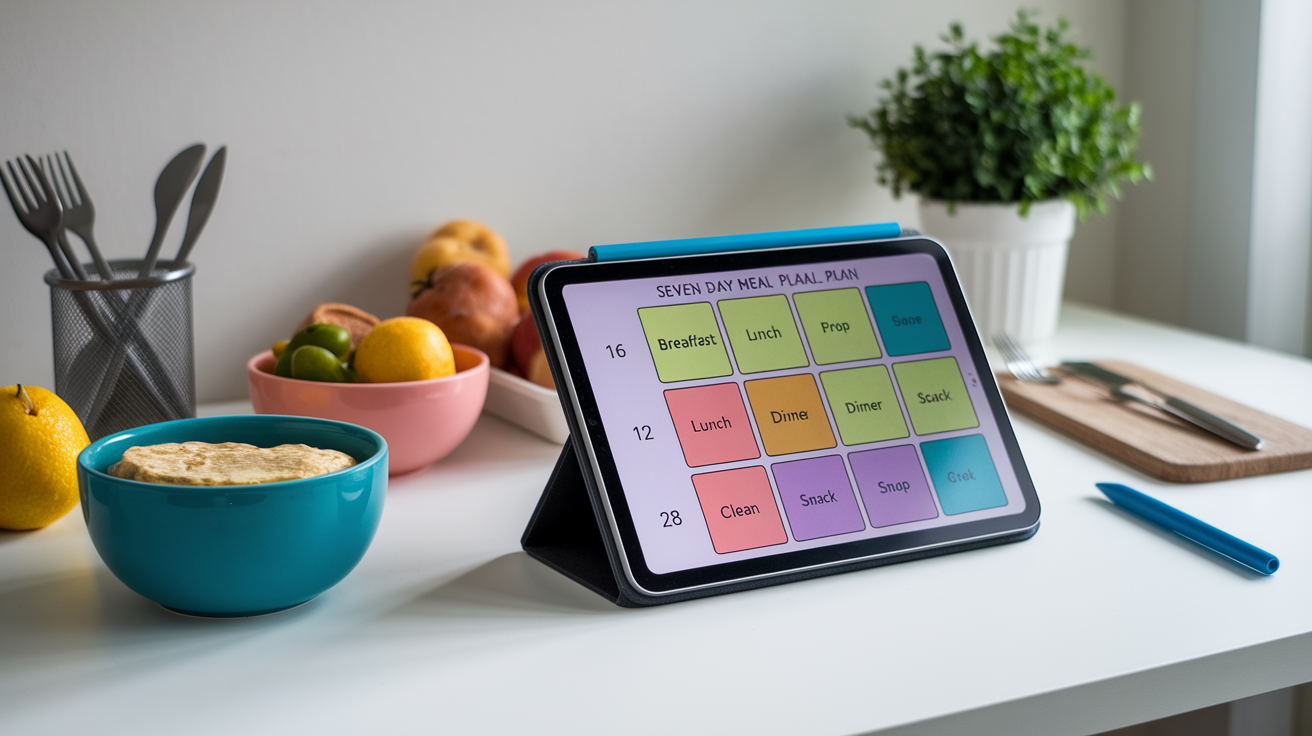
A 1,200 calorie daily target splits into about 300 calories at breakfast, 400 at lunch, 400 at dinner, and 100 for a snack. That rhythm keeps you eating every three to four hours without long gaps that lead to hunger spikes. Each meal includes a palm sized portion of protein, a fist sized portion of grains or starchy vegetables, and one to two fists of non-starchy vegetables, plus a small amount of healthy fat. This sample menu uses repeatable meals to keep cooking time under two hours and grocery costs around $50 to $70 for one person.
| Day | Breakfast (kcal) | Lunch (kcal) | Snack (kcal) | Dinner (kcal) | Total |
|---|---|---|---|---|---|
| Monday | Overnight oats (315) | Grilled chicken salad (420) | Greek yogurt (100) | Turkey chili (400) | 1,235 |
| Tuesday | Overnight oats (315) | Grilled chicken salad (420) | Apple + 1 tsp peanut butter (100) | Baked salmon + roasted veg (380) | 1,215 |
| Wednesday | Overnight oats (315) | Turkey chili (400) | Greek yogurt (100) | Grilled chicken + quinoa + broccoli (400) | 1,215 |
| Thursday | Overnight oats (315) | Grilled chicken salad (420) | Apple + 1 tsp peanut butter (100) | Turkey chili (400) | 1,235 |
| Friday | Overnight oats (315) | Baked salmon + roasted veg (380) | Greek yogurt (100) | Grilled chicken + quinoa + broccoli (400) | 1,195 |
| Saturday | Overnight oats (315) | Turkey chili (400) | Apple + 1 tsp peanut butter (100) | Baked salmon + roasted veg (380) | 1,195 |
| Sunday | Overnight oats (315) | Grilled chicken salad (420) | Greek yogurt (100) | Turkey chili (400) | 1,235 |
Substitutions keep you from getting bored. Swap grilled chicken for baked tofu or lean ground beef. Replace quinoa with brown rice or a small sweet potato. Trade broccoli for zucchini, bell peppers, or green beans. Rotate your breakfast by alternating overnight oats with a veggie packed frittata or a protein smoothie made with Greek yogurt and frozen berries.
To avoid flavor fatigue, change up your spices and sauces each week. One week use lemon and herbs on your chicken. Next week try chili powder and cumin for a Southwest vibe. Then switch to garlic and ginger for an Asian inspired bowl. Keep the base ingredients the same (protein, grain, vegetables) but shift the seasonings so each week feels a little different.
Weekly Meal Prep Templates, Checklists, and Time Saving Systems
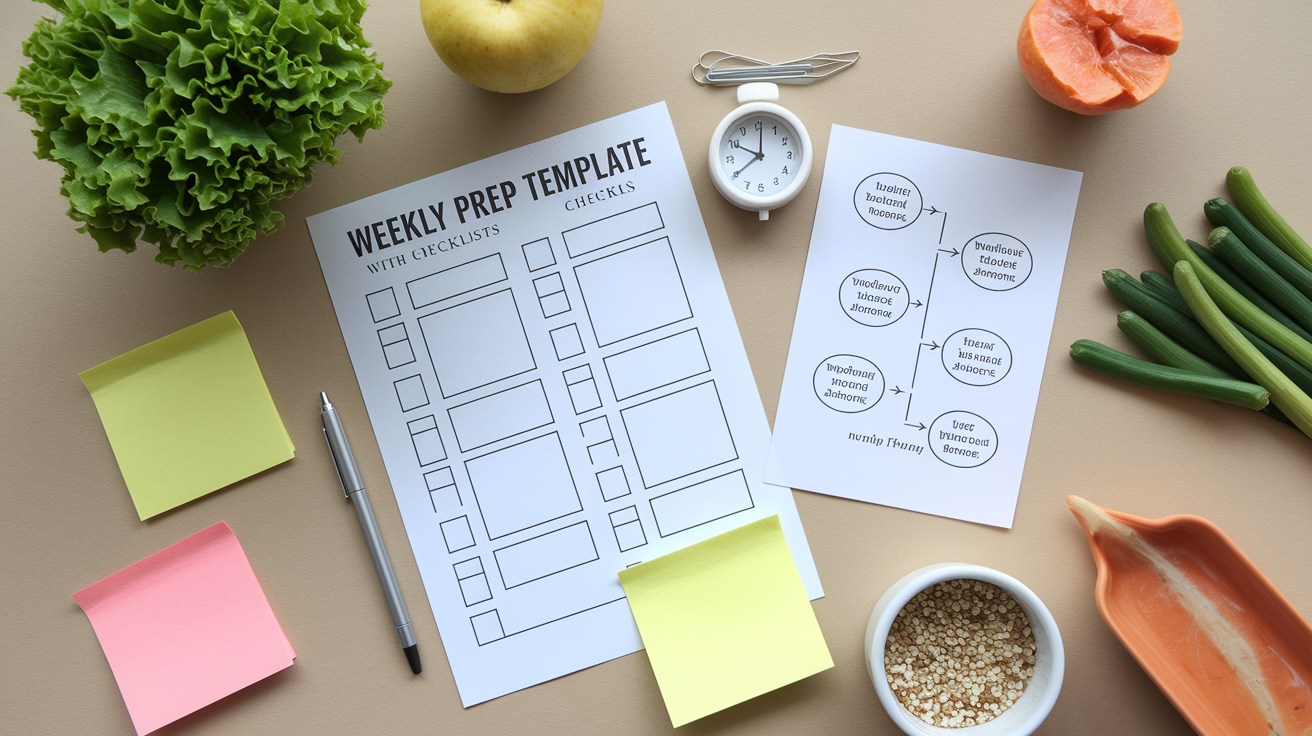
A weekly meal prep template is just a reusable structure that tells you what to cook, when to cook it, and how to divide it into meals. The simplest template is a one page grid with seven days down the left side and breakfast, lunch, snack, and dinner across the top. Fill in each cell with your chosen recipe and the calorie count so you can see at a glance whether your day adds up to your target. Print it or keep it in a note on your phone, then check off each meal as you prep it.
Checklists prevent you from forgetting a step or running out of time halfway through your prep session. A basic weekly prep checklist includes planning your recipes on Friday or Saturday, writing your grocery list, shopping one or two days before your cook day, gathering all your containers and labels, cooking proteins and grains simultaneously, portioning everything into containers while it’s still warm, labeling each container with the meal name and date, and storing meals in the fridge or freezer based on when you’ll eat them. Sticking to the same checklist every week turns meal prep into a routine instead of a scramble.
Two Hour Meal Prep Flow
Start with proteins because they take the longest. Preheat your oven to 400°F and put your chicken breast or salmon on a sheet pan while you prep your vegetables. While the protein roasts, start your grains on the stovetop. Quinoa or brown rice in a pot with water and a pinch of salt. Chop your vegetables and spread them on a second sheet pan, then slide them into the oven alongside the protein.
By the time the protein finishes (20 to 30 minutes), your grains are almost done and your vegetables are tender. Let everything cool for five to 10 minutes, then portion into containers, snap on the lids, label, and refrigerate or freeze.
Five item weekly prep checklist:
Choose two to three protein batches, one to two grain batches, and two to three vegetable sides. Write a grocery list with exact quantities and shop one to two days before cook day. Gather all containers, lids, labels, and a permanent marker before you start cooking. Cook proteins, grains, and vegetables at the same time using oven and stovetop together. Portion, label (meal name plus date), and store in fridge or freezer immediately after cooling.
Troubleshooting Your Weekly Weight Loss Meal Prep Plan
Portion drift is the most common reason meal prep stops working after a few weeks. You start measuring carefully, but after a while you eyeball portions and they creep up by 10 or 20 percent without you noticing. An extra tablespoon of olive oil here, a slightly larger chicken breast there, and suddenly your 400 calorie lunch is closer to 500. Pull out your kitchen scale once a week to spot check portions and make sure you’re still hitting your calorie target.
Sneaky calories hide in dressings, sauces, cooking oils, and “healthy” snacks. Two tablespoons of most salad dressings add 100 to 150 calories. A handful of almonds is closer to a quarter cup (about 200 calories) than the one ounce serving (160 calories) you think you’re eating. Cooking spray might seem negligible, but a two second spray delivers around 20 calories, and most people use more like a five second spray. Track everything you add to your meals for a few days to find the culprits, then swap high calorie condiments for lower calorie versions or measure them with a spoon instead of pouring freely.
If your weight loss stalls after two to four weeks, reassess your calorie needs. Your body adapts to a lower calorie intake by burning slightly fewer calories at rest, and you might also move a little less without realizing it. Before dropping your calories even lower, try adding 10 to 15 minutes of walking each day or swapping one rest day for a light workout.
If you’re already eating 1,200 calories and not losing, talk to a healthcare professional before cutting further. Going much lower can backfire by slowing your metabolism, increasing hunger, and making it harder to stick with the plan long term.
Four low calorie substitutions to reduce sneaky calories:
Swap regular pasta for zucchini noodles or spaghetti squash (saves about 150 calories per cup). Use riced cauliflower instead of white rice (saves about 180 calories per cup). Choose balsamic vinegar or lemon juice over creamy dressings (saves about 100 calories per serving). Bake or air fry instead of pan frying in oil (saves 80 to 120 calories per meal).
Final Words
Jump in: you now have the core steps—set weekly calorie targets, pick weight‑loss friendly foods, build a grocery list, batch cook, portion meals, store safely, and use simple templates so this repeats.
Use the sample seven‑day menu as a starting point. Follow the two‑hour prep flow and track portions and protein every 3–4 hours. Make small swaps to avoid boredom.
Tonight, pick three recipes and write a grocery list. That tiny action turns how to create a weekly meal prep plan for weight loss into real momentum—and it adds up fast.
FAQ
Q: How do I create a weekly meal prep plan for weight loss?
A: Creating a weekly meal prep plan for weight loss means picking recipes, calculating calories and macros, scheduling meals every 3–4 hours, prepping on one cook day, and portioning into containers for the week.
Q: How do I set weekly calorie targets, and are very low calorie plans safe?
A: Setting weekly calorie targets means matching intake to goals; most adults aiming to lose weight stay above 1,200–1,500 kcal/day unless supervised, and adjust by activity, size, and progress checks.
Q: What foods should I include for weight‑loss‑friendly meal prep?
A: Weight‑loss‑friendly meal prep includes lean proteins (chicken, tuna, eggs), whole grains (brown rice, oats), lots of non‑starchy veg, fruit, beans, and small amounts of healthy fats like avocado and olive oil.
Q: How do I create a weekly grocery list that stays on budget?
A: Creating a weekly grocery list on budget means grouping items by category, buying frozen or canned to save money, and shopping for about 2.5–3 lb protein, 2 cups dry grains, and 7–10 fruit servings.
Q: What batch cooking techniques save time and what are typical cook times?
A: Batch cooking saves time by roasting proteins, baking grains, and sheet‑pan roasting veg together; typical times: roast chicken 20–30 minutes, salmon 12–15, quinoa 15–20, brown rice 35–45, veg 20–30 minutes.
Q: How should I portion meals without a kitchen scale?
A: Portioning meals without a scale uses hand visual cues: palm for 3–4 oz protein, fist for 1–2 cups veggies, cupped hand for carbs, and thumb for fats; upgrade to a scale when you can.
Q: How long do prepped meals keep and how should I store them safely?
A: Prepped meals keep 3–4 days for cooked meat, 3–5 days for grains/legumes, and freeze up to 3 months; label dates, use glass containers, and reheat to 165°F for safety.
Q: How can I avoid sneaky calories and deal with plateaus?
A: Avoid sneaky calories by measuring dressings and oils, choosing low‑sugar snacks, and watching portion drift; if a plateau appears, reassess calories, swap lower‑calorie subs, or add activity.
Q: What’s a simple two‑hour meal prep flow and checklist?
A: A two‑hour meal prep flow follows proteins → grains → vegetables → assembly; checklist: pick recipes, organize containers, cook proteins/grains together, roast veg, portion, and label dates.
Q: What is a simple seven‑day calorie structure I can use tonight?
A: A simple seven‑day calorie structure uses about 1,200 kcal daily: breakfast ~300, lunch ~400, dinner ~400, snack ~100; swap recipes and rotate proteins to prevent boredom and keep variety.