

Think you need a barbell to build serious squat strength?
Think again.
If you’re new to training or stuck without gym access, you can still progress safely and get stronger.
This post lays out squat progression alternatives that teach depth, control, and strength using bodyweight, goblet holds, bands, sandbags, and single-leg moves.
You’ll get a clear step-by-step ladder, easy equipment swaps, and simple tempo tweaks so you can practice good form and keep improving week to week.
Start where you are – no barbell required.
Foundational Bodyweight Squat Progressions for Beginners

Starting with bodyweight gives you time to learn the pattern before you add load. Rush into weighted squats and you’ll probably lose depth, let your knees drift, or lean too far forward. That’s what happens when you skip the basics. Box squats teach you to sit back. Tempo and pause squats put you under tension longer and force you to stabilize. Split-stance variations prep you for harder single-leg work down the road.
Bodyweight also shows you where your mobility sucks without putting you at risk. Can’t hit parallel with just your body? Adding weight won’t fix that. You’ll just compensate with bad form, knees caving in or your lower back rounding. Start light, progress slowly, and you’ll build something that carries over to every loaded squat you touch later.
Here’s a progression ladder that takes you from supported depth to real control:
- Chair squat – Sit onto a chair and stand back up. Teaches the hip hinge and gets you comfortable with full depth.
- Box squat – Lower to a box, pause, then drive up. Removes the bounce and trains explosive power from a dead stop.
- Air squat – Bodyweight squat to parallel or lower. Focus on keeping your weight in your midfoot and your torso upright.
- Tempo squat – Three to four second descent, fast up. More time under tension and better eccentric control.
- Pause squat – Hold the bottom for two to three seconds before you stand. Builds stability and kills any bouncing.
- Split-stance squat – One foot slightly forward. Gets you ready for Bulgarian split squats and loading one leg at a time.
Move to the next step when you can hit 3 sets of 10 to 12 reps with consistent depth, knees tracking over your toes, and a torso that stays upright the whole way. Heels lifting? Knees collapsing? Chest dropping? Spend another week where you are and add some mobility work before you move on.
Simple Equipment Substitutes That Enhance Squat Progressions
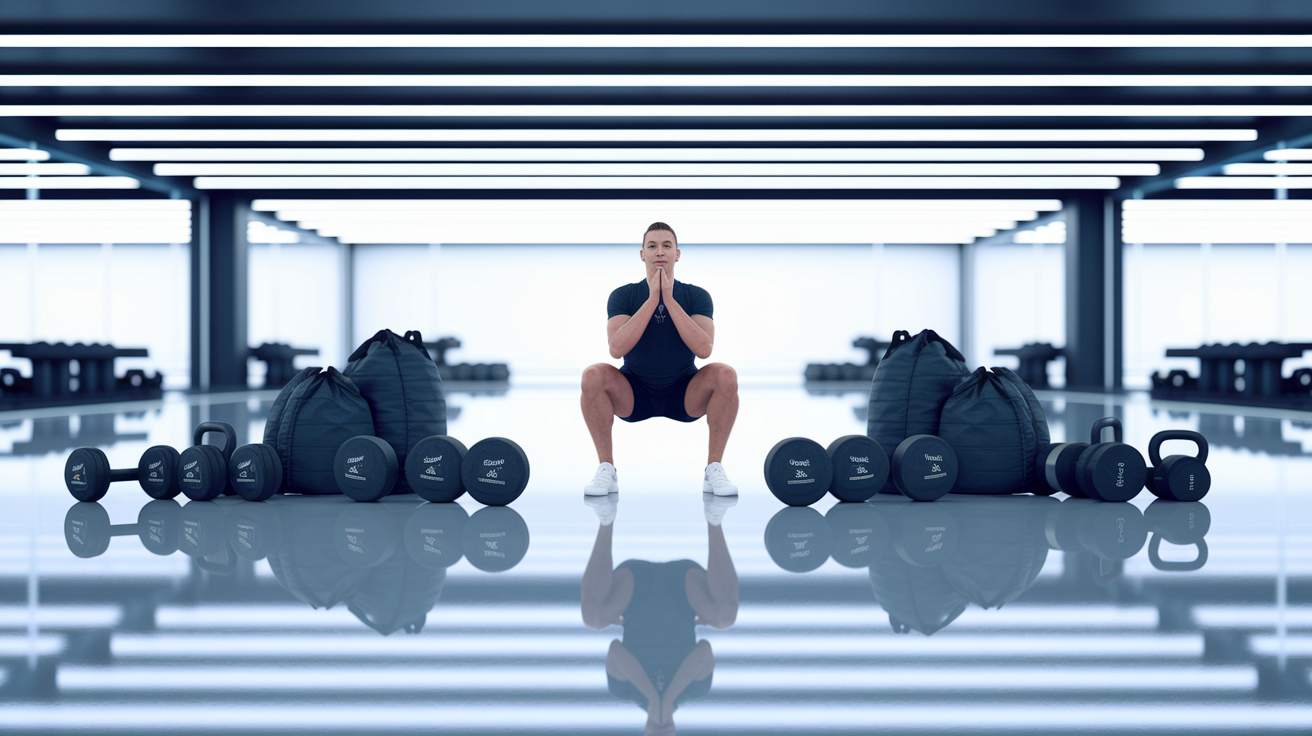
Once you’ve nailed bodyweight squats, simple tools let you keep progressing without a barbell. Dumbbells, kettlebells, resistance bands, sandbags, even a weighted backpack all give you external load while keeping things beginner friendly. Goblet squats are probably the easiest loaded variation because holding the weight at chest height keeps your torso upright and helps you find depth naturally.
Resistance bands add tension that peaks at the top, making the lockout harder while reducing stress at the bottom. Sandbags and backpacks work well for higher reps and you can adjust them in tiny increments. These tools also build your grip, your core, and your coordination in ways machines can’t touch.
Here’s what each tool brings to the table:
- Dumbbells and kettlebells – Easy to hold in a goblet position. Small load jumps. Widely available.
- Resistance bands – Accommodating resistance. Great for pause and tempo work. Portable.
- Sandbags – Shift during the movement so your core has to work harder. Can be loaded to exact weight.
- Weighted backpack – Household option. Can progress sissy squats and cyclist squats. Low cost.
- Medicine balls – Comfortable to hold at your chest. Good for goblet squats and wall balls.
Start with a load you can control for 3 sets of 8 to 10 reps while keeping the same depth and form you had with bodyweight. For most people that’s a 10 to 20 pound dumbbell or kettlebell in a goblet position. Add 2.5 to 5 pounds every week or two, or push to 12 to 15 reps before you jump to the next weight. If your torso leans forward or your heels lift, the load’s too heavy. Drop back and build another week of volume before you try again.
Unilateral Squat Alternatives to Build Strength Without a Barbell
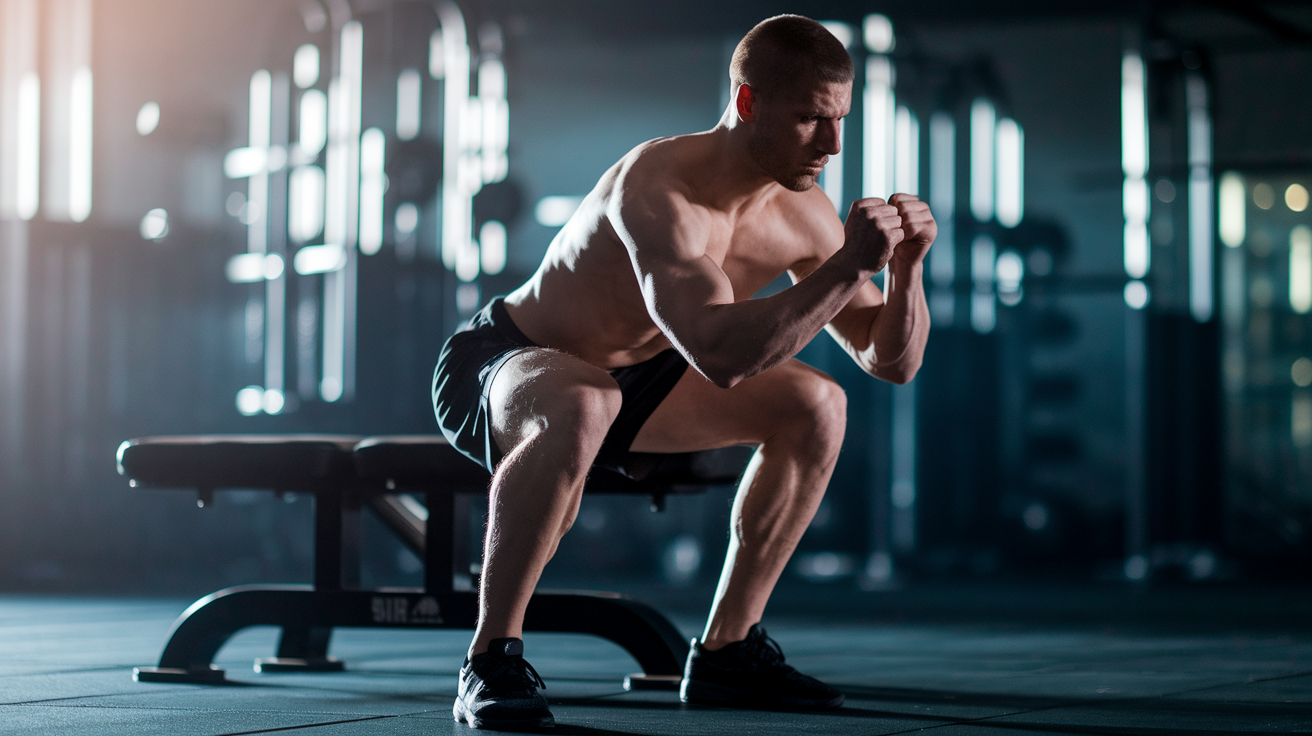
Single-leg squat variations let you progressively overload each leg without needing heavy barbells or machines. They also fix strength imbalances, improve stability, and deliver a strong stimulus even with lighter loads. Bulgarian split squats produce strength and size gains comparable to barbell squats while giving you extra benefits for grip, mobility, and athletic carryover.
Bulgarian Split Squat Progression
Set up by putting your rear foot on a bench or box about knee height. Step your front foot forward until you feel a light stretch in your back hip when you lower. Keep your torso upright, drop your back knee toward the floor, and drive through your front heel to stand. The elevation creates a longer range and shifts more load onto your front leg.
Start with bodyweight for 3 sets of 8 to 10 reps per leg. Once you can knock out 12 reps with solid control, add load by holding a dumbbell or kettlebell at your chest or one in each hand at your sides. Adjust bench height and front foot distance to change the emphasis. Closer stance and lower bench hit the quads harder. Longer stride and higher bench target glutes and hamstrings. This variation rivals barbell squats for building leg strength and size while also improving stability and exposing any left-right imbalances that bilateral squats can hide.
Pistol Squat and Assisted Variations
The pistol squat is an advanced single-leg movement that demands mobility, balance, and serious quad and glute strength. Most people can’t do a full pistol on day one, so use regressions to build up. Start with box-assisted pistols. Lower to a box or bench with one leg extended, tap the surface lightly, and stand. Gradually lower the box height as you get stronger.
Eccentric-only pistols are another useful regression. Hold a rack or doorframe for light balance support, lower slowly on one leg over three to four seconds, then use both legs to stand back up. Once you can control 5 slow eccentrics per leg, start practicing the standing phase with assistance. Over four to six weeks, reduce the amount of support until you can complete a full unassisted pistol.
When you’re ready to add volume, integrate reverse lunges and step-ups into your weekly plan. Reverse lunges are easier to balance than forward lunges and let you focus on the front leg without as much knee stress. Step-ups onto a box or bench build single-leg strength in a more stable environment and can be loaded with dumbbells or a weighted backpack. Pairing Bulgarian split squats, assisted pistols, reverse lunges, and step-ups gives you a complete unilateral progression that keeps challenging your legs without requiring a barbell.
Time Under Tension Progressions for Increasing Difficulty Safely

You don’t always need more weight to make things harder. Manipulating tempo, pauses, and eccentric speed lets you progress intensity while keeping the load light and joint stress low. Tempo squats use a controlled descent, typically three to four seconds down, then a quick drive up. This increases the time your muscles spend under tension, builds eccentric strength, and reinforces proper movement. Pause squats add a two to three second hold at the bottom, eliminating the stretch reflex and forcing you to generate power from a dead stop.
Both strategies work across bodyweight, dumbbell, and kettlebell variations. Belt squat setups and goblet squats are especially well suited to high-rep tempo work because the load’s easier to control and places less stress on your spine and shoulders. Eccentric-focused training also reduces injury risk by strengthening the muscle-lengthening phase, which is where most strains happen.
| Method | Primary Benefit |
|---|---|
| Tempo (3–4 sec descent) | Increases time under tension and builds eccentric strength |
| Pause (2–3 sec hold at bottom) | Eliminates stretch reflex and improves concentric power from dead stop |
| Eccentrics only | Strengthens muscle-lengthening phase and reduces injury risk |
| Isometrics (static hold) | Builds stability and positional strength at specific joint angles |
Progress by first increasing pause duration. Move from 2 seconds to 3 to 4 seconds over two to three weeks. Once you can hold a 4-second pause for 10 reps, add another set or increase the descent tempo to 5 seconds. Only after you’ve exhausted tempo and pause progressions should you add external load. This keeps your joints safe while building strength and control that transfers directly to heavier loaded variations later.
Quad-Dominant Variations That Don’t Require a Barbell
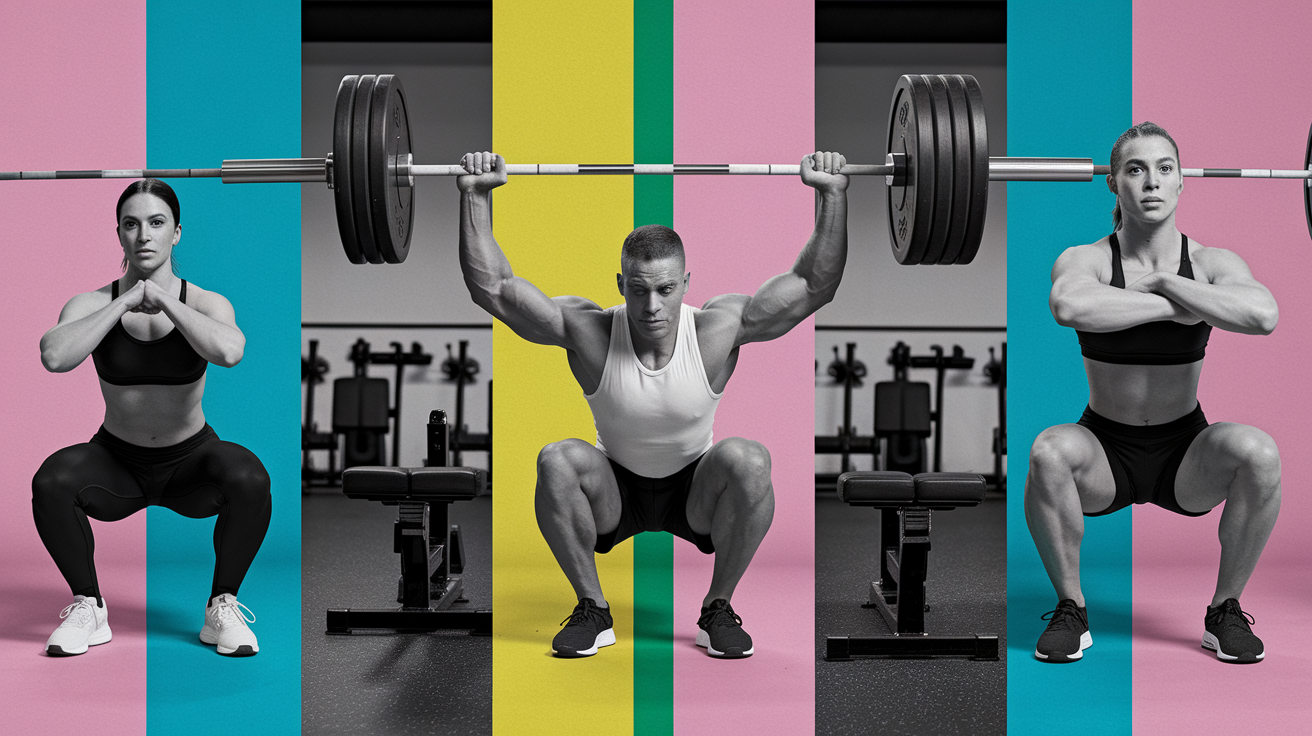
Quad-dominant squat variations let you target the front of your thighs without needing a barbell on your back. Sissy squats deliver high quad stimulus with relatively low joint stress by emphasizing the knees-over-toes position and a backwards lean. Start by holding a rack or doorframe for balance, lower your torso back while letting your knees travel forward, and focus on controlling the descent. Sissy squats require good baseline mobility and strength, so begin with partial reps and progress to full range over several weeks.
Cyclist squats and heel-elevated goblet squats also bias the quads by reducing the hip hinge and forcing your knees forward. Elevate your heels on small weight plates, a wedge, or a slanted board, then perform a goblet squat with a dumbbell or kettlebell held at chest height. The elevation compensates for limited ankle mobility and shifts load onto the quads. Goblet squats are particularly useful for moderate to high reps, 10 to 15, and help reinforce consistent depth.
Here’s a quick breakdown of quad-focused alternatives and their safety considerations:
- Sissy squat – High quad activation, minimal equipment. Requires strong ankle and knee stability. Start assisted and progress slowly.
- Cyclist squat (heel elevated) – Reduces hip hinge, increases quad load. Compensates for tight ankles. Use small plates or wedge.
- Goblet squat – Front-loaded, beginner-friendly. Encourages upright torso and full depth. Works well for 10 to 15 rep sets.
- Hack squat (dumbbell or machine) – Quad-focused hypertrophy tool. Machine version is more stable. Free-weight version demands more coordination.
- Knees-over-toes squat – Advanced quad and foot stability drill. Start with assisted regressions. Add load via backpack or weight vest.
Because these variations heavily target the quads, pair them with glute-focused exercises like Romanian deadlifts, glute bridges, or step-ups to maintain balanced leg strength and reduce injury risk.
Mobility Essentials to Improve Squat Progressions Without a Barbell
Mobility limitations, especially in the ankles and hips, are the most common reasons beginners struggle to reach full squat depth or maintain an upright torso. If your heels lift off the floor or your knees collapse inward, the issue is usually restricted ankle dorsiflexion or tight hip flexors. Machine hack squats reduce the stability demand but don’t replace the need for mobility work. Heel elevation can temporarily compensate for limited dorsiflexion, but improving your actual range of motion expands your progression options and reduces injury risk.
Ankle dorsiflexion is the ability to bring your shin forward over your toes while keeping your heel on the ground. If your ankles are stiff, your torso will lean forward to compensate, shifting load away from your quads and onto your lower back. Hip mobility affects how deep you can squat and whether your knees track properly. Tight hip flexors pull your pelvis forward, limiting depth and causing your lower back to round at the bottom.
Key Mobility Drills for Beginners
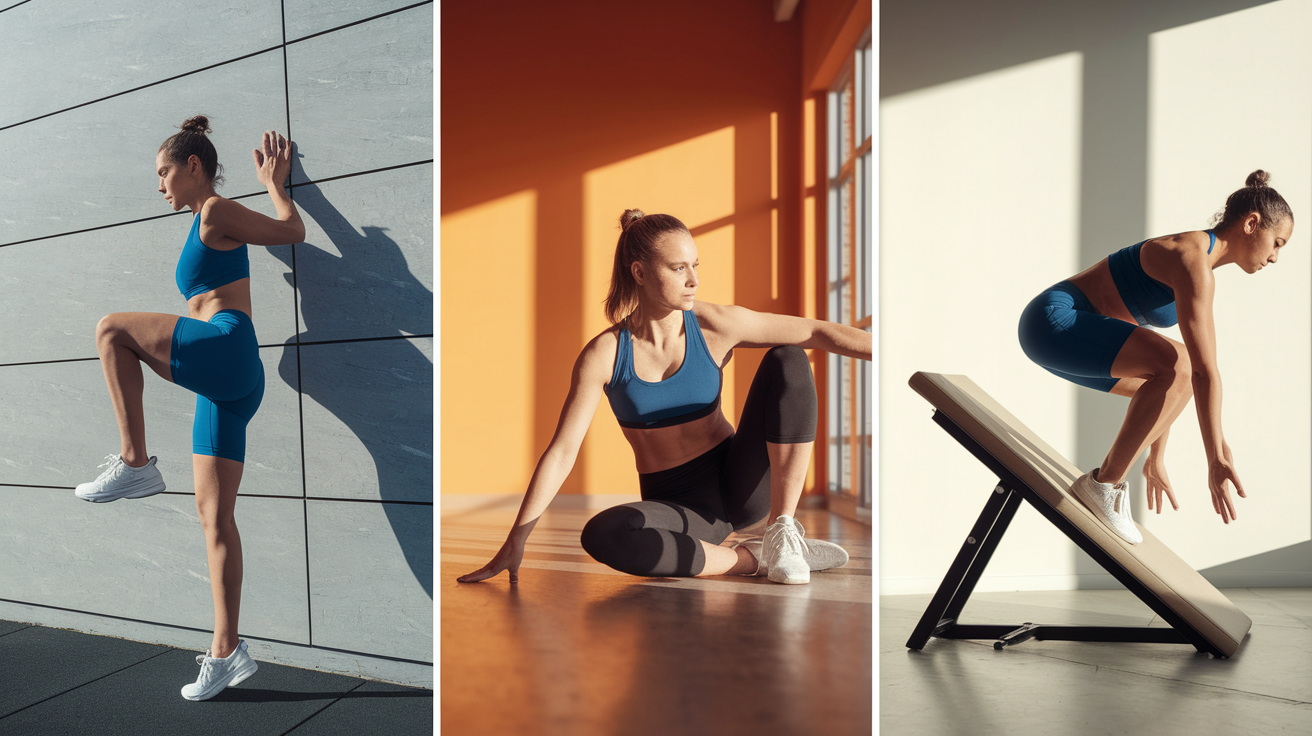
Ankle dorsiflexion drill – Face a wall and place your toes about 4 inches away. Drive your knee forward to touch the wall while keeping your heel down. Can’t touch the wall? Move closer and work on achieving contact. Perform 10 to 15 reps per side daily.
Hip external rotation stretch – Sit on the floor with one ankle crossed over the opposite knee, figure-4 position. Gently press the raised knee toward the floor and lean forward slightly. Hold for 30 to 60 seconds per side.
Calf mobility focus – Use a slant board, step, or curb to lower your heel below toe level and hold a gentle stretch for 20 to 30 seconds. Repeat 3 to 4 times per leg before squatting.
Improved mobility directly expands your progression options. Once your ankles allow your knees to travel forward freely, you can perform deeper goblet squats, cyclist squats, and sissy squats without compensation. Better hip mobility lets you sit into Bulgarian split squats and pistol squats with a more upright torso, reducing lower-back stress and improving quad and glute activation.
Programming Squat Progressions Without a Barbell for Measurable Gains

Programming your squat alternatives correctly ensures steady progress and prevents stagnation. For most beginners, 2 to 3 squat sessions per week provides enough stimulus to build strength and muscle while allowing recovery. Start each session with your hardest variation, Bulgarian split squats or weighted goblet squats, then add volume with tempo squats, pause squats, or reverse lunges. Moderate to high rep ranges work well for goblet squats, 10 to 15 reps, and lighter weights with higher reps for DIY setups like backpack-loaded squats.
You can progress any squat variation by manipulating these six variables:
- Reps – Increase from 8 to 12, then to 15 before adding load or difficulty.
- Sets – Add a third or fourth set once you can complete all reps with good form.
- Tempo – Slow the descent from 2 seconds to 3 to 4 seconds to increase time under tension.
- Range of motion – Progress from box squats to full-depth air squats, or lower the box height over time.
- Unilateral difficulty – Move from split-stance squats to Bulgarian split squats, then to pistol squat regressions.
- Pauses – Add 2 to 3 second pauses at the bottom to eliminate momentum and build strength from a dead stop.
| Goal | Rep Range |
|---|---|
| Strength | 4–6 reps (heavier load, Bulgarian split squats or weighted goblet squats) |
| Hypertrophy | 8–12 reps (moderate load, tempo squats, pause squats, goblet squats) |
| Power | 1–3 reps with full rest (jump squats, box jumps) |
| Endurance | 15–20 reps (light load, air squats, resistance band squats) |
Tracking progress without adding weight is simple. Record video of your sets every 2 to 3 weeks and compare depth, knee tracking, and torso angle. Measure depth by placing a marker at parallel height and ensuring your hip crease drops below your knee. Count total reps completed across all sets, or track tempo changes. Moving from a 2-second descent to a 4-second descent at the same rep count is measurable progress. Adding a 3-second pause, completing an extra set, or moving from a higher box to a lower box are all objective improvements that don’t require heavier weights.
Common Mistakes to Avoid When Using Squat Alternatives

The most common mistakes beginners make with squat alternatives involve letting form break down as fatigue sets in or progressing too quickly before earning the movement pattern. Excessive forward lean, relying on the stretch reflex by bouncing out of the bottom, knees caving inward, heels lifting off the ground, and sloppy eccentric phases that increase injury risk. Paused squats help fix poor depth habits, box squats teach you to control torso angle, and heel elevation temporarily compensates for ankle limitations while you work on mobility.
Front-loaded movements like goblet squats can also encourage errors if you let the weight pull you forward. Keep your elbows high and your chest up throughout the movement. If your torso drops, the load’s too heavy or your core isn’t engaged enough.
Here are six specific errors and quick fixes to keep your progressions safe and effective:
- Knees caving inward – Push your knees out in line with your toes. Use a resistance band around your thighs as a cue.
- Heels lifting – Work on ankle mobility daily and temporarily elevate your heels on plates until dorsiflexion improves.
- Forward torso lean – Use goblet squats or front-loaded variations to force a more upright position. Strengthen your upper back.
- Incomplete depth – Use box squats to practice sitting back to a consistent target. Gradually lower the box height.
- Bouncing out of the bottom – Add 2 to 3 second pauses at the bottom to eliminate momentum and build concentric strength.
- Ignoring knee pain – Reduce range of motion, check foot position, and ensure knees track over toes. Stop if sharp pain occurs.
If pain or significant imbalance shows up during your progressions, return to the mobility drills and unilateral work outlined earlier. Single-leg variations expose weaknesses that bilateral squats can hide, and fixing those imbalances early prevents compensations that lead to injury later.
Final Words
Start moving through the simple steps we gave: bodyweight progressions, easy equipment substitutes, single‑leg variations, tempo and pause work, quad‑dominant options, mobility drills, and a basic program to follow.
Check form each week—depth consistency, knee tracking, and a stable torso tell you when to progress. Track reps, tempo, and balance with a short video or quick note.
Use these squat progression alternatives for beginners without a barbell and you’ll gain strength and confidence over weeks. One small step tonight. You’re set.
FAQ
Q: What is a good alternative to squats without a barbell?
A: A good alternative to squats without a barbell is goblet squats, box or chair squats, split squats, or loaded backpack squats—start with chair squats and progress by depth, tempo, or added weight.
Q: Can squatting help sciatica?
A: Squatting can help sciatica by strengthening hips, glutes, and core to reduce nerve stress; use shallow, pain-free variations and mobility work, and stop or see a clinician if pain radiates or worsens.
Q: Can squats help with bone density?
A: Squats can help with bone density because they provide weight-bearing load; progressive loading (goblet, backpack, machines) over weeks and months provides better bone stimulus than bodyweight alone.
Q: Are squats bad for hip impingement?
A: Squats aren’t automatically bad for hip impingement but deep or poorly cued squats can irritate it; modify depth, try a wider stance or box squat, avoid painful ranges, and consult a clinician if needed.