

Think your gym time does the heavy lifting? It doesn’t—your sleep does.
The hours between your last meal and your alarm decide if your workouts turn into strength or just soreness.
This post lays out a simple, science-backed bedtime plan to boost overnight muscle repair: a small slow-digesting protein snack, a low-dose magnesium habit, five to ten minutes of gentle stretching, and a cool, dark room with steady bedtimes.
No fancy gear. Start tonight and let those hours work for your gains.
The Best Nighttime Routine for Muscle Recovery (Start Here)
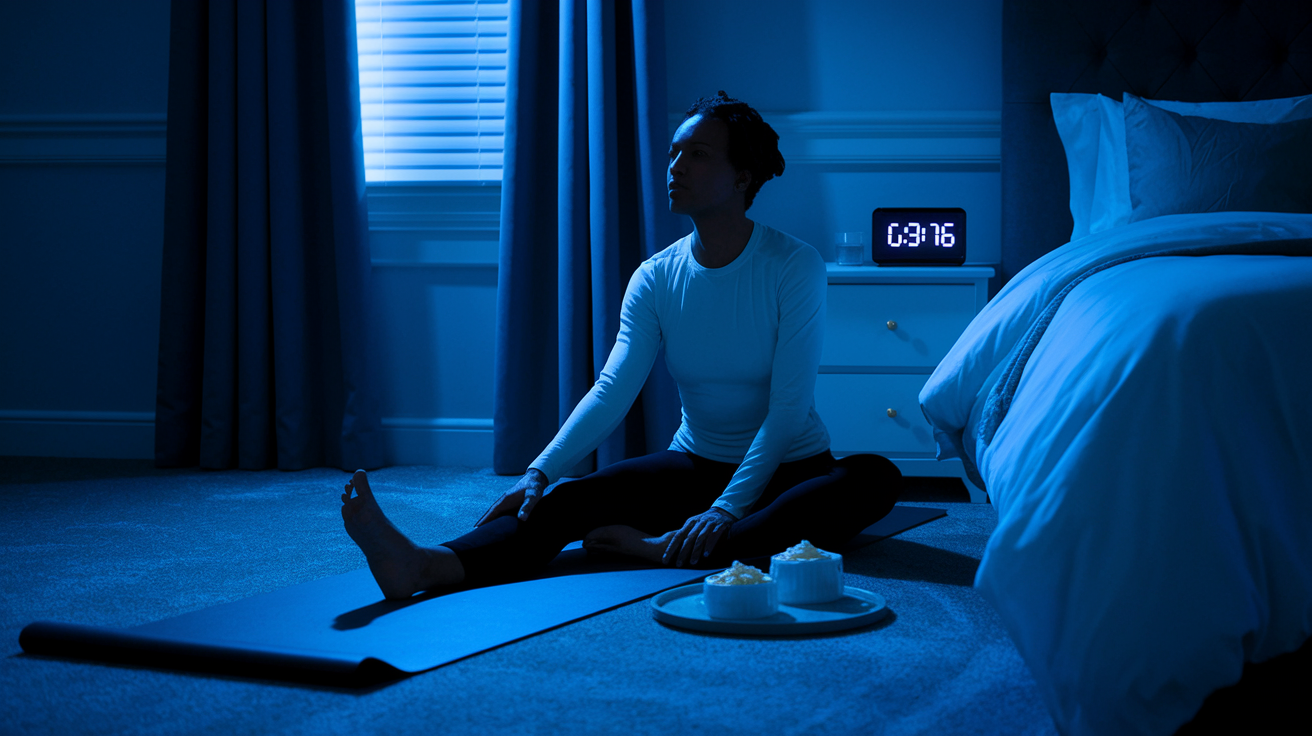
Your body doesn’t build muscle in the gym. It builds muscle while you sleep. The hours between your last meal and your alarm clock decide whether your training effort turns into actual strength or just wasted recovery.
During deep sleep, your body releases growth hormone, repairs damaged muscle fibers, and builds new protein to make tissues stronger. Skip pre-bed nutrition, ignore your sleep environment, or stare at screens until midnight? You’re shutting down the exact processes that make you stronger. A simple nighttime routine fixes all three in about 20 minutes.
The right bedtime routine supports overnight muscle protein synthesis, keeps recovery hormones like testosterone and growth hormone balanced, and cuts down next-day soreness. It doesn’t need expensive gear or complicated steps. You need a consistent sleep schedule, a small protein snack, a few minutes of light stretching, and a cool, dark room.
Here’s the complete routine you can start tonight:
• Eat 20 to 40 grams of slow-digesting protein 30 to 60 minutes before bed. Cottage cheese, Greek yogurt, or casein powder all work.
• Take 200 to 400 mg of magnesium glycinate to relax muscles and improve sleep quality.
• Spend 5 to 10 minutes doing gentle static stretches on tight or sore areas.
• Dim all lights and stop using screens at least 60 minutes before your target bedtime.
• Set your bedroom temperature between 60 and 67°F. Use blackout curtains or an eye mask.
• Go to bed and wake up at the same time every day, even on weekends, to stabilize your circadian rhythm.
That’s it. No exotic supplements, no hour-long foam rolling sessions, no special equipment. Just six repeatable steps that turn your sleep into an active recovery window instead of wasted hours.
How Sleep Quality Impacts Muscle Repair
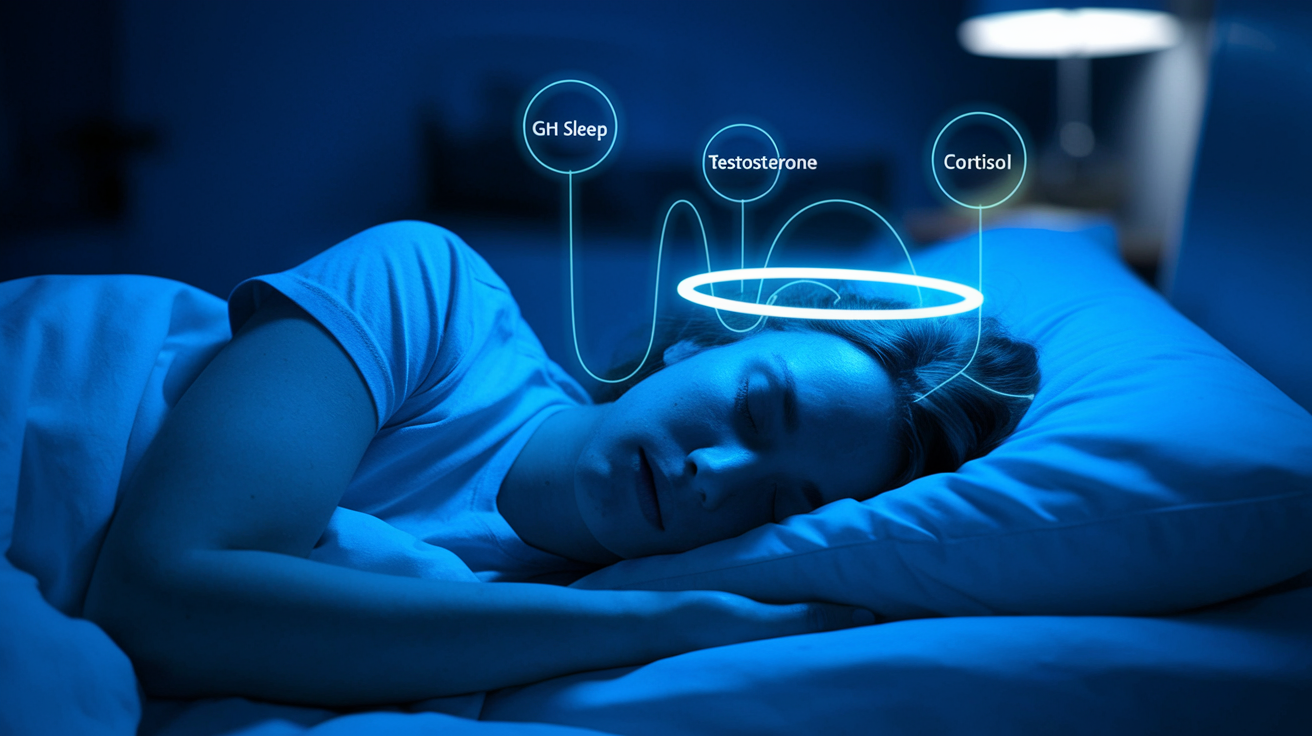
Sleep isn’t downtime. It’s when your body does most of its rebuilding work. During the first few hours of sleep, you cycle through deep sleep stages (also called slow-wave sleep), and that’s when growth hormone levels peak. Growth hormone drives muscle repair, pushes protein synthesis, and helps your body recover from the mechanical damage caused by training. Without enough deep sleep, growth hormone release drops. So does your ability to build or maintain muscle tissue.
REM sleep, which happens later in the night, plays a different role. It supports hormone regulation, including testosterone and cortisol balance. High cortisol at night messes with muscle repair and fat metabolism. Stable testosterone levels support muscle protein synthesis. If you cut your sleep short or wake up repeatedly, you spend less time in both deep and REM stages. Your hormonal environment shifts away from recovery and toward stress.
Poor sleep also reduces your body’s efficiency at repairing muscle damage. Studies show that insufficient or fragmented sleep can lower recovery capacity by up to 30 percent. The same workout produces less adaptation when you’re under-slept. You don’t need perfect sleep every night. But you do need consistent, uninterrupted windows of 7 to 9 hours to let your muscles rebuild at full capacity.
Pre-Bed Nutrition for Better Muscle Recovery

Your muscles need amino acids overnight to repair and grow, but most people stop eating three or four hours before bed. That creates a long fasting window right when your body’s trying to synthesize new protein. A small serving of slow-digesting protein before bed solves that problem by providing a steady release of amino acids for six to eight hours while you sleep.
Casein protein is the most research-backed option because it forms a gel in your stomach and digests slowly. Aim for 20 to 40 grams about 30 to 60 minutes before bed. If you don’t use protein powder, whole-food sources work just as well. One cup of cottage cheese delivers roughly 25 grams of casein. A serving of thick Greek yogurt provides a similar amount. A couple of hard-boiled eggs or a small piece of chicken also work, though they digest slightly faster.
Timing matters less than consistency. But eating too close to bedtime can interfere with falling asleep if your digestion is slow or you’re sensitive to large meals at night. If you feel uncomfortable, move your protein snack earlier in the evening and keep the portion moderate.
Ideal pre-bed protein sources:
• Cottage cheese (1 cup = about 25 g casein)
• Greek yogurt, plain and unsweetened (1 cup = about 20 g)
• Casein protein powder (1 scoop = about 20 to 25 g)
• Hard-boiled eggs (2 large = about 12 g)
• Turkey or chicken breast (3 oz = about 25 g)
Supplements That Support Overnight Muscle Recovery
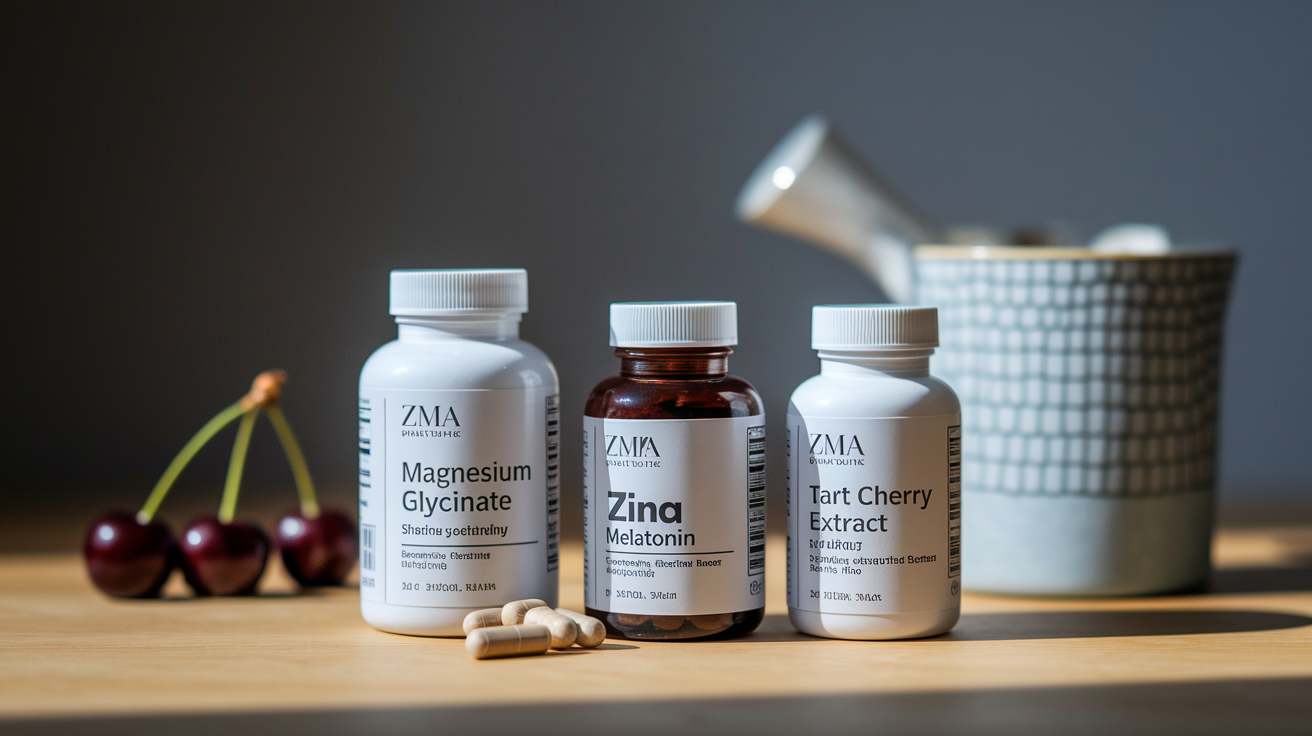
Magnesium is the single most useful supplement for nighttime recovery. It relaxes muscles, supports deeper sleep, and plays a role in over 300 enzymatic reactions, including protein synthesis. Most people don’t get enough from food. The glycinate form is well-absorbed and gentle on digestion. A dose of 200 to 400 mg taken 30 to 60 minutes before bed improves sleep quality and reduces muscle cramping or tension.
ZMA formulations combine zinc, magnesium, and vitamin B6. They’re popular among athletes for supporting testosterone levels and recovery. A typical serving provides about 30 mg of zinc and 300 to 450 mg of magnesium. If you already take a standalone magnesium supplement, you probably don’t need ZMA unless you’re low in zinc. Follow the product’s dosing instructions, and take it on an empty stomach or with a light snack for better absorption.
Melatonin helps regulate your sleep-wake cycle and may reduce inflammation, but it’s not a muscle-building supplement. It’s most useful if you struggle to fall asleep at a consistent time or if you’re adjusting to a new schedule. Start with a low dose (0.5 to 1 mg) about 30 to 60 minutes before bed, and don’t rely on it long-term. Tart cherry extract is another option that naturally raises melatonin and may reduce post-exercise soreness, though the effect is modest.
Supplements help. But they don’t replace the basics: consistent sleep, adequate protein, and a calm pre-bed routine.
Stretching and Mobility Work Before Bed
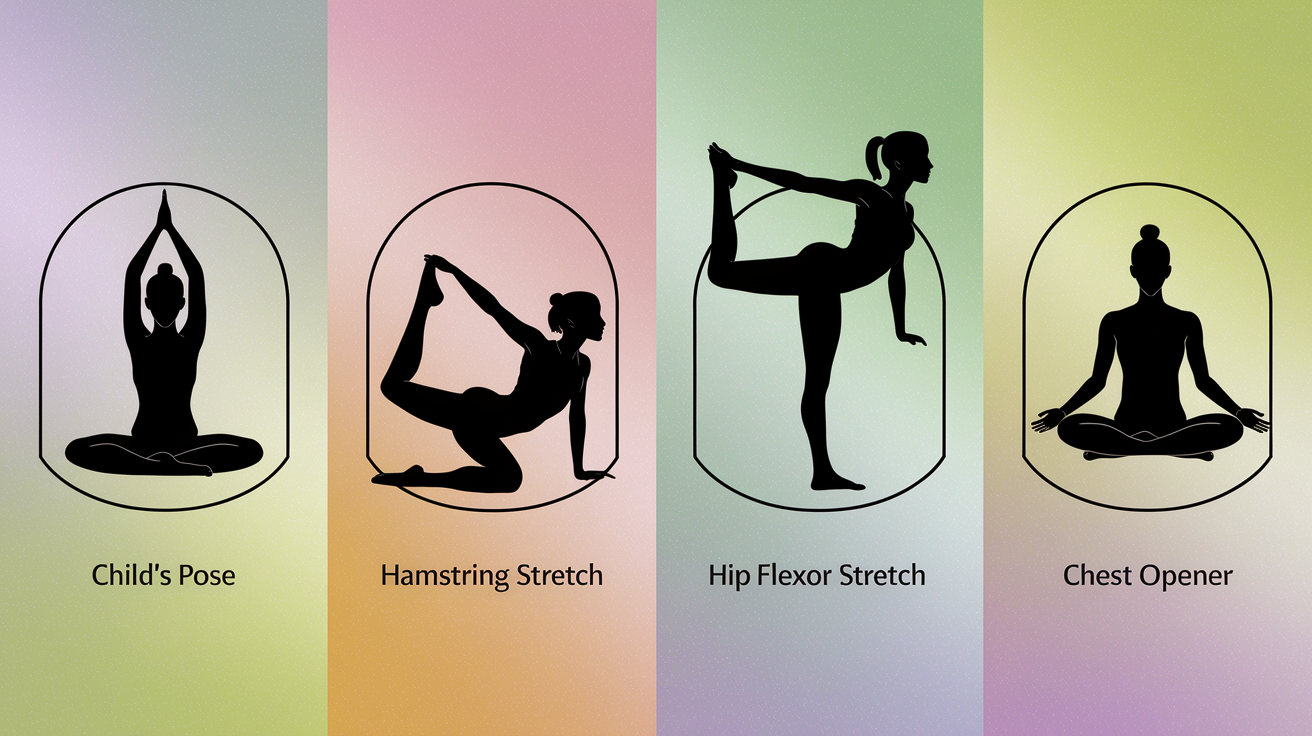
Light stretching before bed reduces muscle tension, improves circulation, and primes your nervous system to shift into recovery mode. You’re not trying to increase flexibility or push through discomfort. The goal is to release tightness from the day’s training or from sitting, and to signal to your body that it’s time to slow down. Five to ten minutes is enough.
Static stretches work best at night because they’re slow and calming. Hold each position for 20 to 30 seconds, breathe steadily, and stay relaxed. Focus on areas that feel tight or sore from your workout. If you trained legs, stretch your hamstrings, hip flexors, and calves. If you trained upper body, open up your chest, shoulders, and lats. Gentle movement also helps flush metabolic waste from muscles and reduces next-day stiffness.
Four effective bedtime stretches:
• Child’s Pose: Kneel on the floor, sit back on your heels, and reach your arms forward. Relax your forehead to the ground. Hold for 1 to 2 minutes.
• Hamstring Stretch: Lie on your back, loop a towel around one foot, and gently pull your leg toward your chest. Hold 30 seconds per side.
• Hip Flexor Stretch: Kneel on one knee, push your hips forward slightly, and hold for 30 seconds per side.
• Chest Opener: Stand in a doorway, place your forearms on the frame, and lean forward gently. Hold for 30 seconds.
Optimizing Your Sleep Environment for Recovery

Your bedroom should feel like a recovery lab, not a living room. Small adjustments to temperature, light, and sound make a measurable difference in how deeply you sleep and how well your muscles repair overnight. Most people ignore these details and then wonder why they wake up tired or sore.
Temperature is the easiest fix. Your core body temperature needs to drop slightly to enter deep sleep, and a cool room helps that process. Set your thermostat between 60 and 67°F, or use a fan if you can’t control the temperature directly. If you wake up sweating or shivering, adjust by a degree or two until it feels comfortable under light bedding.
Light exposure after sunset delays melatonin release and pushes your sleep window later. Use blackout curtains, cover any LED lights on electronics, or wear a simple eye mask. Even small amounts of ambient light can reduce sleep quality. Noise is harder to control, but white noise machines, earplugs, or a fan can mask disruptive sounds and keep you asleep longer.
Your mattress and pillow also matter. If you wake up stiff or your joints ache, your bedding might not be supporting proper alignment.
| Factor | Optimal Condition |
|---|---|
| Temperature | 60 to 67°F (15 to 19°C) |
| Lighting | Complete darkness or eye mask |
| Sound | Quiet or consistent white noise |
| Bedding | Supportive mattress and pillow aligned to your sleep position |
Stress Reduction Techniques to Improve Overnight Recovery

High cortisol at night is one of the fastest ways to wreck muscle recovery. Cortisol is a stress hormone that breaks down tissue, raises blood sugar, and competes with growth hormone and testosterone. If you go to bed wired, anxious, or mentally replaying the day, your body stays in a sympathetic (fight-or-flight) state instead of shifting into the parasympathetic (rest-and-digest) mode that supports repair.
Deep breathing is the simplest way to lower cortisol and calm your nervous system before bed. Try box breathing for two to three minutes: inhale for four seconds, hold for four, exhale for four, hold for four, and repeat. You can also try progressive muscle relaxation, where you tense and then release each muscle group from your feet to your head. Both techniques reduce heart rate, lower stress hormones, and make it easier to fall asleep quickly.
Building a consistent unwinding routine also helps. Your brain responds to patterns, so doing the same calming activities in the same order each night trains your body to expect sleep. That might be a warm shower, five minutes of stretching, ten minutes of reading a physical book, and then lights out. Avoid anything stimulating, stressful, or decision-heavy in the last hour before bed.
The goal is to create a predictable transition from activity to rest, so your recovery hormones can do their job while you sleep.
Final Words
Do this tonight: set your room to 60–67°F, eat 20–40 g slow-release protein (Greek yogurt or cottage cheese), take magnesium if it helps you, do 5–10 minutes of light stretching, and dim or turn off screens 30 minutes before bed.
These steps boost deep sleep, support growth-hormone release, and keep muscle protein synthesis working while you sleep—so repair happens more efficiently and soreness drops.
Follow this simple plan as the best bedtime routine for muscle recovery and track sleep or protein for a week. Little consistency adds up—you’re building better recovery.
FAQ
Q: What is the 3 2 1 rule for bedtime?
A: The 3‑2‑1 rule for bedtime is a simple wind‑down plan: finish large meals 3 hours before bed, avoid stimulants like caffeine 2 hours before, and stop screens 1 hour before sleep.
Q: Can I build muscle while on zepbound?
A: You can build muscle while on Zepbound, but you’ll need consistent resistance training, enough protein and calories, and to monitor appetite or weight changes with your prescriber or clinician.
Q: Is 7 hours of sleep enough to repair muscle?
A: Seven hours of sleep can support muscle repair for many people, but 7–9 hours is ideal since deeper sleep boosts growth hormone and muscle protein synthesis, especially after hard training.
Q: What to take before bed for muscle recovery?
A: Before bed for muscle recovery, take a slow‑release protein (about 20–40g casein like cottage cheese or Greek yogurt) and consider magnesium for relaxation; check with your clinician before new supplements.