

Think food is just fuel?
It’s also your strength plan.
Start with a modest calorie surplus—about 200–500 calories above maintenance—and aim for roughly 0.7 to 1.0 grams of protein per pound of bodyweight.
That combo gives beginners the energy and building blocks to add muscle and lift more without piling on unnecessary fat.
In this post you’ll get concrete targets, simple meal examples, and an easy tracking plan you can use tonight.
Key Calorie and Protein Targets That Drive Beginner Strength Progression
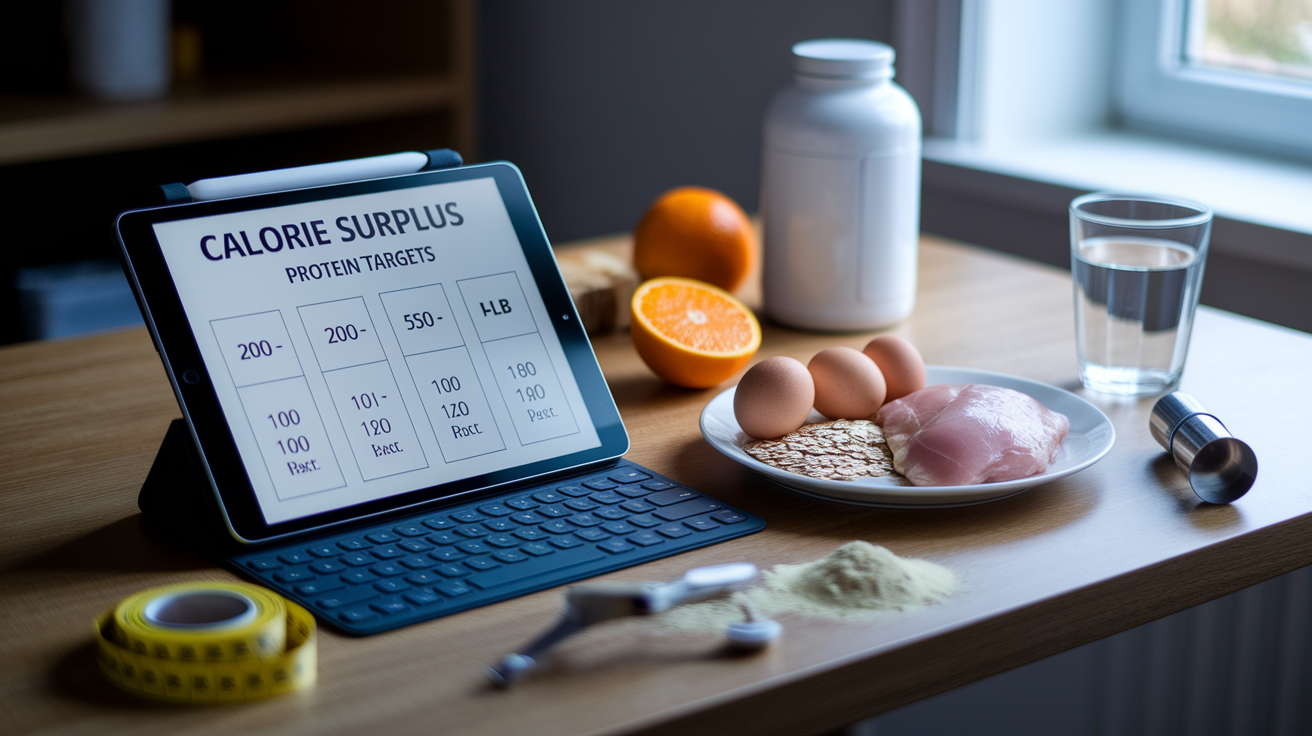
You’ll want to eat about 200 to 500 calories more per day than what keeps your weight steady. That gives your body the fuel it needs to build muscle without piling on unnecessary fat. Protein should sit around 0.7 to 1.0 grams per pound of bodyweight every day. If you weigh 160 lbs, you’re looking at roughly 112 to 160 grams daily.
| Target | Range |
|---|---|
| Calorie surplus | 200–500 kcal above maintenance |
| Daily protein | 0.7–1.0 g per lb bodyweight |
| Protein per meal | 20–40 g |
| Meal frequency | 3–5 meals spread out |
| Weekly weight gain | 0.25–1 lb per week |
Spread that protein across the day in chunks of 20 to 40 grams. Breakfast with 3 eggs and a cup of oats gets you about 25 to 30 grams. Lunch might be 6 oz of grilled chicken with rice for another 40 to 50 grams. Eat every 3 to 5 hours, include a protein source each time, and you’ll hit your number without making it complicated. Most beginners find 3 to 5 meals easier than grazing nonstop or skipping food until dinner.
Calculating Beginner-Friendly Calorie Targets for Strength Progression

Start with a rough estimate of how many calories you burn at rest. For men, multiply your bodyweight in pounds by 10, then tack on 200 calories. Women can use bodyweight times 9.5, plus 200. Next, factor in your activity. If you’re training 2 to 4 days per week, multiply that base number by 1.3 to 1.5. That’s your total daily energy expenditure, the calories you burn on an average day. Add 200 to 500 on top of that to create a surplus. A 160 lb beginner burning around 2,500 calories would aim for 2,700 to 3,000 per day.
| Weight (lb) | Estimated Maintenance (kcal) | Example Surplus Target (kcal) |
|---|---|---|
| 140 | 2,200 | 2,400–2,700 |
| 160 | 2,500 | 2,700–3,000 |
| 180 | 2,800 | 3,000–3,300 |
Check your weight once a week under the same conditions. First thing in the morning, after the bathroom, works best. If you’re gaining 0.25 to 1 lb per week and your lifts are climbing, leave your calories alone. If the scale doesn’t budge for 2 to 4 weeks and your training log shows a stall, bump up by 100 to 200 calories. Gaining more than 1 lb per week or noticing your waist getting tight fast? Pull back by 100 to 200. Slow, steady beats fast swings that mostly add fat.
Setting Protein Intake Targets to Support Beginner Strength Gains
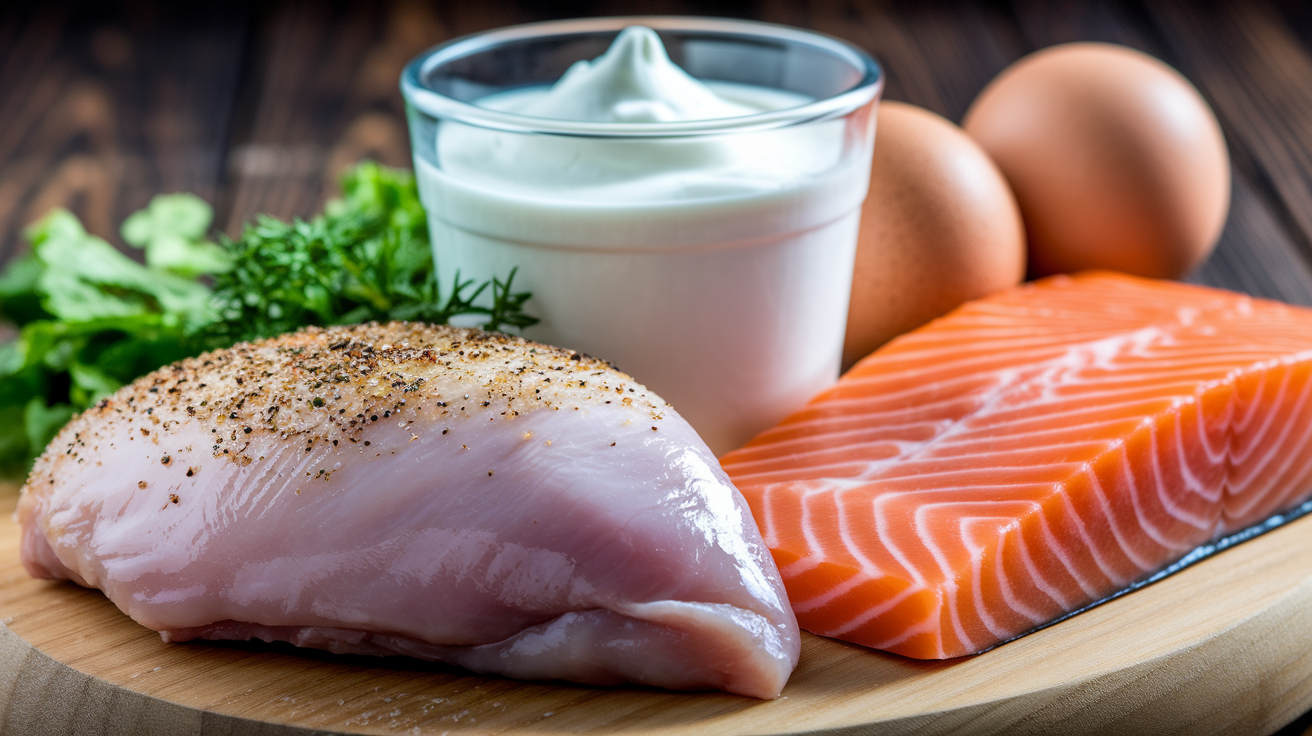
Protein gives your muscles what they need to repair and get stronger after each session. Research lands around 1.6 to 2.2 grams per kilogram of bodyweight daily, or about 0.7 to 1.0 grams per pound. That’s enough for most beginners. Going over 1.0 gram per pound won’t hurt, but the extra benefit is small if you’re training 2 to 4 days per week. Multiply your bodyweight in pounds by 0.8 and you’re in the middle of that range. A 150 lb beginner would shoot for about 120 grams of protein each day.
Each meal should deliver 20 to 40 grams to trigger muscle protein synthesis, the repair process that rebuilds tissue. One driver of that process is leucine, an amino acid found in animal proteins, dairy, and some plant options. Most complete protein servings, a palm-sized piece of chicken or a cup of Greek yogurt, give you enough leucine to flip the switch. Eating protein every few hours keeps synthesis running throughout the day. But there’s no magic window. If you miss a meal or shift your schedule, you won’t wreck progress. Consistency over weeks matters more than perfect timing every day.
Quick protein reference:
- Chicken breast: 6 oz cooked gets you around 50 g
- Eggs: 3 large whole eggs give you about 18 g
- Greek yogurt: 1 cup plain delivers roughly 20 g
- Salmon: 5 oz cooked lands near 35 g
Splitting protein across 3 to 5 meals works for most schedules. Breakfast might be eggs and oats, lunch a chicken and rice bowl, an afternoon snack of yogurt, dinner with fish or lean beef. Still hungry before bed? A serving of cottage cheese adds another 15 to 20 grams and supports overnight recovery. The main thing is hitting your daily total, not stressing over grams per hour.
Distributing Calories Across Carbs and Fats to Support Training Energy
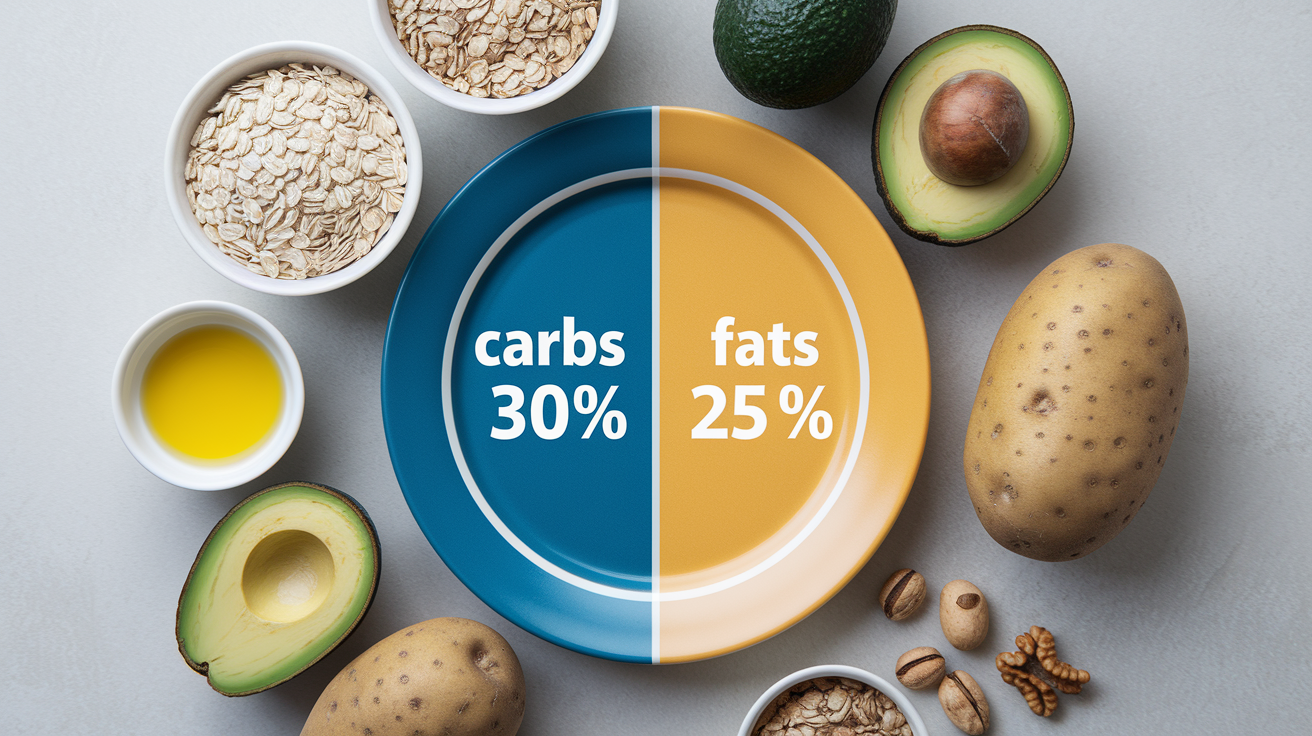
After you set calories and protein, the rest splits between carbs and fats. Carbs fuel your workouts and refill muscle glycogen, the stored sugar your muscles burn during hard sets. Most beginners do well with carbs at 30 to 50 percent of daily calories. If you’re eating 2,800 calories and already allocated 500 to protein, you might aim for 1,100 to 1,400 from carbs. That’s roughly 275 to 350 grams per day. Stick with complex sources like rice, oats, potatoes, and whole grains for steady energy. Save faster carbs, fruit or white rice, for the few hours around training when your body burns them quickly.
Fats support hormone production, testosterone included, and help you absorb vitamins. Aim for about 15 to 25 percent of daily calories from fat. For the same 2,800 calorie target, that’s around 420 to 700 calories, or 47 to 78 grams of fat. Mix your sources: olive oil on veggies, avocado in a meal, a handful of nuts as a snack, fatty fish like salmon a few times per week. You don’t need to measure fat to the gram. If you cook with a tablespoon of oil, add cheese to a meal, or eat whole eggs instead of just whites, you’ll hit the range naturally. Keep fried foods, trans fats, and heavily processed snacks rare. They add calories without the nutrients your muscles and recovery systems actually need.
Practical Meal Timing and Pre/Post-Workout Nutrition for Strength Progression

Eat a full meal 2 to 3 hours before you train. That gives your stomach time to settle and your body time to digest and push nutrients into your bloodstream. Grilled chicken, a cup of rice, and some vegetables is a standard pre-workout meal. Training early or don’t have 2 hours? A lighter snack 30 minutes beforehand works fine. A banana with a tablespoon of peanut butter or a quick protein shake gives you a small boost without making you feel stuffed. The goal is starting your session with stable blood sugar and enough fuel.
After you finish training, your muscles are ready to absorb protein and carbs. Try to eat within 30 to 60 minutes of your last set. A protein shake with 20 to 30 grams plus a piece of fruit or a scoop of fast-digesting carbs works well. Prefer whole food? Grilled salmon with a baked potato hits the same marks. This post-workout window helps jumpstart recovery and glycogen refill. But it’s not a magic deadline. If you can’t eat until 90 minutes later, you’ll still recover. Consistency across the week beats perfect timing on one day.
Quick timing guide:
- Eat a full mixed meal 2 to 3 hours before training
- Use a light snack 30 minutes pre-workout if needed
- Get protein plus carbs within 30 to 60 minutes after training
- Space meals roughly 3 to 5 hours apart on non-training days
On rest days, keep your meal timing regular. Your body’s still repairing tissue and adapting to the stress you put on it in the gym. Eating every 3 to 5 hours with protein at each meal supports that. You don’t need special timing rules for off days. Just hit your daily calorie and protein targets and let your schedule decide when you sit down to eat.
Building Beginner-Friendly Meals to Hit Daily Targets

Turning numbers into actual food is simpler than it sounds. Start by picking a protein source for each meal, then add a carb portion and a small amount of fat. For breakfast, 3 scrambled eggs with a cup of cooked oats and a banana delivers about 25 to 30 grams of protein, 75 to 85 grams of carbs, and around 600 to 650 calories. At lunch, 6 oz of grilled chicken with 1.5 cups of cooked rice and a serving of vegetables gives you roughly 40 to 50 grams of protein, 65 to 70 grams of carbs, and 500 to 650 calories depending on added oil or sauces.
Sample day breakdown:
- Breakfast: 3 whole eggs, 1 cup oats, 1 banana
- Mid-morning snack: Greek yogurt, handful of almonds
- Lunch: 6 oz chicken, 1.5 cups rice, vegetables
- Post-workout: Protein shake (25 to 30 g), banana
- Dinner: 6 oz salmon, baked potato, steamed broccoli
| Meal | Approx Protein (g) | Approx Carbs (g) | Approx Calories |
|---|---|---|---|
| Breakfast (eggs + oats + banana) | 25–30 | 75–85 | 600–650 |
| Lunch (chicken + rice + veggies) | 40–50 | 65–70 | 500–650 |
| Post-workout (shake + banana) | 25–30 | 25–30 | 200–300 |
| Dinner (salmon + potato + broccoli) | 35–40 | 35–45 | 450–550 |
Don’t want to weigh food? Use simple portion cues. A palm-sized piece of protein is about 3 to 4 oz cooked. A fist-sized serving of rice or potato is roughly a cup. A thumb of oil or butter is close to a tablespoon. These estimates get you close enough to make steady progress without logging every gram. As you build the habit of eating consistent meals, you’ll learn what your portions look like and how they stack up across the day.
Tracking Calories and Protein: Simple Systems for Beginners

The easiest route is a smartphone app that logs food and calculates totals. Apps like MyFitnessPal or Cronometer let you scan barcodes, search for foods, and save meals you eat regularly. Spend a few minutes after each meal entering what you ate. After a week or two, you’ll have a library of saved items and the whole thing takes less than 5 minutes per day. If you eat the same breakfast most mornings, you can duplicate the entry with one tap.
Tracking options that work:
- Smartphone app: Scan barcodes and build a meal library
- Food journal: Write down meals and estimate portions
- Hand-portion cues: Palm for protein, fist for carbs, thumb for fats
- Weekly weigh-ins: Same time, same conditions, track the trend
If apps feel like too much, use a simple food journal. Write down each meal, estimate portions using hand cues, and add up protein servings at the end of the day. You won’t get perfect accuracy, but you’ll see patterns. Did you skip protein at breakfast? Did you forget a snack and fall 30 grams short? Small tweaks become obvious when you see your day on paper. Weigh yourself once per week under the same conditions, first thing in the morning, and log it. If your weight and strength are both moving up, your system’s working. If not, the journal shows you where to adjust portions or add a meal.
Adjusting Nutritional Targets Based on Progress in Strength and Body Composition

Check your progress every 2 to 4 weeks. Look at three things: bodyweight trend, strength performance in your main lifts, and how your clothes fit. If the scale’s moving up slowly, your lifts are improving, and your waist isn’t expanding fast, keep your current calorie and protein targets. No change needed. If your weight’s been flat for 3 weeks and your squat or bench press has stalled, add 100 to 200 calories per day. An extra snack, a larger portion of rice at dinner, or an additional tablespoon of oil will get you there. Give the new intake another 2 to 3 weeks and reassess.
Gaining more than 1 lb per week consistently and noticing rapid increases in waist size or bodyfat? Pull back your surplus. Drop 100 to 200 calories by cutting one snack or trimming carb portions slightly. You want steady progress, not rapid swings. Gaining too fast usually means you’re adding more fat than muscle, which makes the next phase harder. Keep protein steady even when you adjust calories up or down. Protein supports recovery and muscle retention, so cutting it to save calories almost always backfires.
Your training log matters just as much as your food log. If your reps and weights are going up week to week, your nutrition’s doing its job. Performance flatlines or drops? Check your sleep, stress, and total training volume first. Sometimes the issue isn’t food. But if everything else is solid and you’re still stalled, a small calorie increase usually gets things moving again. Progress in strength is the signal that your body’s adapting. Food, rest, and consistent training create that adaptation. Adjust one thing at a time, wait a few weeks, and let the results guide your next step.
Final Words
Start with a simple plan: add ~200–500 kcal to maintenance, aim for 0.7–1.0 g protein per pound, and spread 20–40 g protein across 3–5 meals. Track weight and strength weekly and tweak calories by ~100–200 kcal if progress stalls.
Keep carbs and fats set to fuel training, time a snack or meal around workouts, and choose whole-food protein sources so recovery’s solid.
Use these basic nutrition targets to support beginner strength progression (calorie and protein guidance). You’ll make steady gains without overcomplicating things.
FAQ
Q: What calorie surplus should a beginner use?
A: The calorie surplus for beginners is roughly 200–500 kcal above maintenance, enough to support steady muscle gain while keeping extra fat modest and progress consistent.
Q: How much protein should beginners eat per pound of bodyweight?
A: Beginners should aim for about 0.7–1.0 grams of protein per pound of bodyweight to support recovery and growth, with many starting near 0.8–0.9 g/lb.
Q: How much protein per meal and how many meals a day should I eat?
A: Protein per meal should be about 20–40 grams, and eating 3–5 protein-containing meals a day helps spread intake and support muscle repair across the day.
Q: How do I calculate maintenance calories and set a beginner calorie target?
A: To calculate maintenance, estimate your BMR, multiply by an activity factor to get TDEE, then add a 200–500 kcal surplus to set a beginner calorie target for strength gains.
Q: What is a safe weekly weight-gain target for beginners?
A: A safe weekly weight-gain target for beginners is about 0.25–1 pound per week, which supports steady muscle growth while minimizing excess fat gain.
Q: How should I split carbs and fats to support training energy?
A: Aim for carbs to provide about 30–50% of calories for training energy and fats about 15–25% for hormone support, then tweak based on hunger and performance.
Q: What should I eat before and after workouts as a beginner?
A: Before workouts, have a full meal 2–3 hours prior or a small snack 30 minutes before; after, prioritize protein plus carbs within 30–60 minutes to aid recovery.
Q: What are the best complete protein sources for beginners?
A: The best complete protein sources for beginners include lean chicken, eggs, dairy (milk or Greek yogurt), and salmon—easy to use and provide all essential amino acids.
Q: How should beginners track calories and protein without overcomplicating things?
A: Beginners can track with a simple app, quick food notes, or portion-size cues; weigh weekly, log strength, and adjust calories ±200 kcal based on trends.
Q: When should I increase or decrease my calorie target based on progress?
A: Increase calories by about 100–200 kcal if strength stalls or weight stays flat for several weeks; decrease the surplus if unwanted fat gain or poorer clothing fit appears.