

You don’t need a fancy routine to get strong.
A simple linear progression will do it: add a small, fixed amount of weight to each lift every workout when you finish all sets and reps with good form.
For complete beginners this predictability unlocks fast gains because the nervous system learns quickly and small jumps compound over weeks.
This post shows exactly how it works, how much to add, and how to keep progressing without guesswork, so you can actually see the numbers climb.
Core Explanation of Linear Progression for Beginners
Linear progression is a strength training method where you add a small, fixed amount of weight to each lift every single workout. If you completed all your sets and reps with solid form today, you add weight next session. That’s it. No guessing when to increase load or waiting for the right mood. For beginners, this predictable schedule creates consistent strength gains because your body hasn’t adapted to training stress yet. Even small increases trigger new growth.
The method works because it keeps everything else stable. Same exercises. Same number of sets. Same number of reps every workout. The only variable that changes is the weight on the bar. This narrow focus lets you measure progress clearly and removes decision fatigue. You know exactly what to do each session, and you know whether you’re getting stronger by checking if the weight went up.
Here’s how the mechanics work:
Add weight to each lift after every successful session, typically 2.5 to 5 pounds depending on the exercise. Keep sets and reps constant across all sessions so volume remains predictable and trackable. Allow 48 to 72 hours between training sessions to recover fully, enabling your muscles and nervous system to adapt before the next workout.
Why Linear Progression Works Especially Well for New Lifters

Beginners respond to linear progression faster than any other group because their nervous systems learn movement patterns rapidly. When you first practice a squat or bench press, your brain recruits muscle fibers inefficiently. After a few sessions, coordination improves, motor pathways strengthen, and you can lift significantly more weight even before muscle size changes. This neural adaptation phase drives most of your early strength gains and allows session-to-session increases that seem almost automatic.
Your training age (the total time you’ve spent lifting) also determines how quickly you adapt. A complete beginner sits far below their genetic strength ceiling, so the gap between current ability and potential is enormous. Every workout creates enough stimulus to push you closer to that ceiling without requiring complex programming or high volumes. Recovery happens quickly because the absolute load is still light relative to what your body will eventually handle.
This combination of rapid motor learning, low training age, and fast recovery creates the “novice effect.” A brief window where gains come easily and consistently. Linear progression capitalizes on this window by adding weight as often as your body can handle it, which for most new lifters means every single workout for the first several weeks or months.
Typical Weekly Increases and Expected Progression Rates

Most beginners can sustain different progression rates depending on the size of the muscle groups involved. Upper body lifts like the bench press and overhead press typically increase by 2.5 pounds per session because the shoulders and arms contain less muscle mass and recover slightly slower than the legs. Lower body lifts like the squat and deadlift can handle 5 to 10 pounds per session because the glutes, quads, and hamstrings generate more force and adapt to heavier loads more quickly.
If you train three times per week and add weight every session, your squat might increase by 15 pounds per week and your bench press by 7.5 pounds per week. These numbers sound small, but they compound rapidly. A lifter who starts squatting 95 pounds and adds 5 pounds per workout will squat 155 pounds after just twelve sessions. That’s about four weeks of consistent training. That 60 pound gain represents measurable, visible strength improvement in less than a month.
Here are the key progression benchmarks:
Upper body increments of 2.5 pounds per session for bench press, overhead press, and barbell row. Lower body increments of 5 to 10 pounds per session for squat and deadlift, depending on starting strength and recovery capacity. Typical program length before slowing is 8 to 12 weeks of uninterrupted session-to-session increases for most lifts. Expected milestone timelines show noticeable strength gains within 3 to 4 weeks, and visible muscle changes plus significant load increases by week 8 to 10.
Simple Linear Progression Structure (Sets, Reps, Frequency)

Most beginner linear progression programs use three sets of five repetitions for each main lift. This set and rep scheme balances force production with enough volume to build muscle size, and it keeps each session short enough to recover from before the next workout. Five reps per set let you lift heavier weight than higher rep schemes while still practicing the movement enough to improve technique quickly. Three sets provide sufficient stimulus without creating excessive fatigue that would interfere with the next session.
Training frequency for beginners typically follows a full body schedule three times per week, with at least one rest day between sessions. A common pattern is Monday, Wednesday, Friday, giving you 48 to 72 hours between workouts. During that recovery window, your muscles repair microtears, your nervous system consolidates motor patterns, and your energy systems restore glycogen. If you trained more frequently, recovery wouldn’t finish before the next session. If you waited longer, you’d miss opportunities to add weight.
The structure stays the same week after week. You perform the same exercises in the same order, complete the same number of sets and reps, and rest the same amount of time between sets. The only change is the weight on the bar, which increases by a small fixed amount after every successful session. This predictability removes guesswork, makes tracking simple, and lets you focus entirely on effort and technique instead of deciding what to do next.
Exercise Selection for a Beginner Linear Program

Beginner linear progression programs focus on five foundational compound lifts because they train the most muscle mass through the longest effective range of motion.
Squat trains quads, glutes, hamstrings, and core. Used in nearly every session to drive lower body strength and overall work capacity. Bench press builds pressing strength in the chest, shoulders, and triceps, alternating with overhead press across the week. Deadlift targets the posterior chain (hamstrings, glutes, lower back) and grip, performed less frequently than squats due to higher recovery cost. Overhead press strengthens shoulders, triceps, and upper back, complementing bench press and improving overall pressing ability. Barbell row balances pressing work by developing upper back, lats, and biceps while maintaining shoulder health and posture.
These lifts work best for linear progression because you can add small increments of weight using standard barbell plates, and every rep trains multiple joints and muscle groups simultaneously. Single joint exercises like bicep curls or leg extensions don’t provide the same full body stimulus, and they’re harder to progress consistently because smaller muscles fatigue faster and recover more slowly. Compound movements also teach your body to produce force as a coordinated system rather than isolating individual muscles, which translates better to real world strength and reduces injury risk by distributing load across many joints.
When to Add Weight and How to Know You’re Progressing

You add weight to a lift when you complete all prescribed sets and reps with controlled technique. If your program calls for three sets of five reps and you finish all fifteen reps without breaking form, you increase the load by the planned increment next session. If you miss even one rep or compromise technique to finish a set, you repeat the same weight next time instead of increasing. This simple rule ensures you’re always working at a load your body can handle while still challenging yourself enough to trigger adaptation.
Progression isn’t only about adding weight. You can also track improvements in bar speed, perceived effort, and recovery between sets. If the weight that felt heavy and slow three weeks ago now moves quickly and feels manageable, that’s measurable progress even before you add another plate. Reduced soreness after workouts, faster heart rate recovery between sets, and the ability to maintain form under fatigue all signal that your body is adapting. These subjective markers help you distinguish between a tough day caused by poor sleep and a true strength plateau that requires a program adjustment.
Managing Stalls, Missed Reps, and Early Plateaus
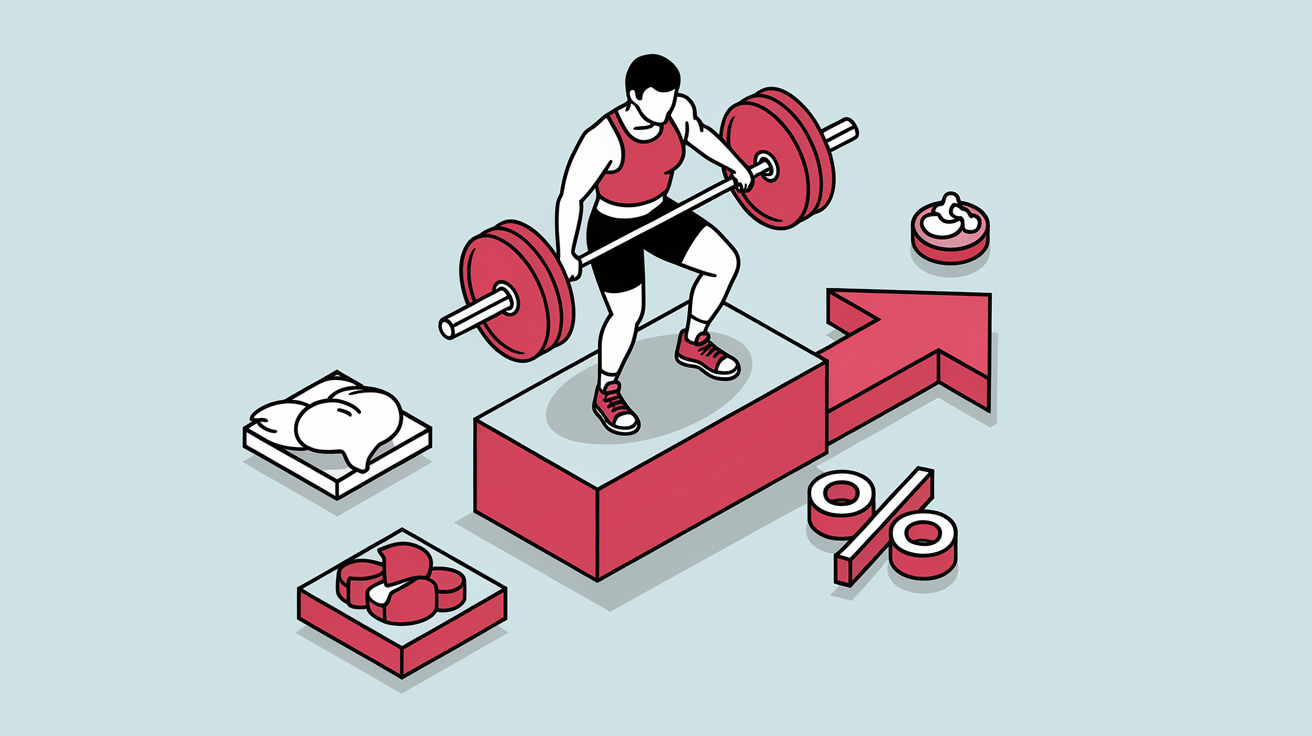
When you fail to complete all your reps or can’t add weight for two sessions in a row, you’ve hit a temporary stall. The first response is to repeat the same weight at the next workout without changing anything else. Many stalls resolve on their own after one session, especially if the failed workout followed poor sleep, high stress, or inadequate food. If the stall persists for a second session, assess your recovery. Are you sleeping seven to nine hours nightly? Are you eating enough protein and total calories? Are you resting two to five minutes between heavy sets? Fixing these variables often clears the stall without needing to reduce weight.
If the stall continues after addressing recovery, reduce the working weight by 10 percent and rebuild from that lighter load. For example, if you stalled at 135 pounds on the bench press, drop to 120 pounds and add 2.5 pounds per session until you surpass 135. This reset allows your body to adapt to slightly lower intensity while still practicing the movement, and the gradual rebuild often carries you past the previous stall point. Resets work because they temporarily reduce fatigue, let connective tissues catch up to muscle strength, and give you extra sessions to refine technique at manageable loads.
Here are the primary solutions for handling stalls:
Repeat the same weight for one more session and ensure full recovery before deciding the stall is real. Reduce working weight by 10 percent and rebuild using the same small increments you’ve been using all along. Add an extra rest day between workouts or increase rest time between sets to improve recovery and energy availability.
Example 3 Day Linear Progression Plan for Complete Beginners

A standard beginner linear progression program alternates between two workouts, labeled A and B, across three training days per week. You perform workout A on Monday, workout B on Wednesday, and workout A again on Friday. The following week you flip the order: B on Monday, A on Wednesday, B on Friday. This alternating schedule ensures each lift is trained frequently while allowing enough recovery between sessions.
| Day | Exercises | Notes |
|---|---|---|
| Monday (Week 1: A) | Squat 3×5, Bench Press 3×5, Barbell Row 3×5 | Add 5 lb to squat, 2.5 lb to bench and row if all reps completed |
| Wednesday (Week 1: B) | Squat 3×5, Overhead Press 3×5, Deadlift 1×5 | Add 5 lb to squat and deadlift, 2.5 lb to press |
| Friday (Week 1: A) | Squat 3×5, Bench Press 3×5, Barbell Row 3×5 | Continue adding weight each session |
| Monday (Week 2: B) | Squat 3×5, Overhead Press 3×5, Deadlift 1×5 | Deadlift often progresses every other session due to higher fatigue |
| Wednesday (Week 2: A) | Squat 3×5, Bench Press 3×5, Barbell Row 3×5 | Squat appears every session, driving rapid lower body strength |
| Friday (Week 2: B) | Squat 3×5, Overhead Press 3×5, Deadlift 1×5 | Bench and press alternate, each trained 1.5 times per week |
The squat appears in every session because it recovers quickly and drives overall strength gains. Bench press and overhead press alternate to balance upper body pushing work without overloading the shoulders. Deadlift uses only one set of five reps instead of three because it starts from a dead stop on the floor, creating more stress per rep and requiring longer recovery. Rest two to five minutes between sets of the main lifts to ensure you can complete all reps with good form, and keep the workout focused by limiting additional accessory exercises until the main lifts begin to stall.
Final Words
Add a little weight when you hit the reps, keep sets and frequency steady, and pick big compound lifts—that’s the core we walked through in this post.
You saw why beginners progress fast, the typical 2.5–10 lb increases, a simple 3x/week 3×5 structure, when to add load, how to handle stalls, and a ready 3‑day plan.
This linear progression program for complete beginners (how it works) works if you stay consistent. Start small, track one thing, and expect real progress.
FAQ
Q: What is linear progression and how does it work for beginners?
A: Linear progression is a simple plan that adds small weight each workout; beginners improve fast because they’re far from their strength ceiling and learn movement patterns quickly.
Q: Why does linear progression work especially well for new lifters?
A: Linear progression works for new lifters because rapid neural adaptation, motor learning, and low training age let them add weight frequently while technique and coordination improve.
Q: How much weight should beginners add per session and how long will progress last?
A: Beginners can usually add 2.5–5 lb per upper‑body lift and 5–10 lb per lower‑body lift per session; steady progress typically continues 8–12 weeks before slowing.
Q: What is a simple linear progression structure for sets, reps, and frequency?
A: A common structure is three sets of five reps, full‑body three times per week, adding weight each session while keeping volume stable to measure progress.
Q: Which exercises should beginners use in a linear progression program?
A: Beginners should focus on compound lifts: squat, bench press, deadlift, overhead press, and barbell row—these give full‑body stimulus and easy, consistent weight increases.
Q: When should I add weight and how do I know I’m progressing?
A: Add weight when you complete all prescribed reps with good form; signs of progress include faster bar speed, lower perceived effort, and consistent rep completion across sessions.
Q: What should I do if I stall, miss reps, or hit an early plateau?
A: If you stall or miss reps, drop about 10% on that lift, fix technique, improve recovery, add rest between sets, then try the previous weight again in 1–2 sessions.
Q: What does a basic 3‑day linear progression plan look like?
A: A basic plan alternates Day A (squat, bench, row) and Day B (squat, overhead press, deadlift), done three times a week, adding small weight each applicable lift.