

Think naps are just for kids and slackers?
For athletes, a well-timed nap can be one of the fastest ways to speed recovery and sharpen performance.
A quick 20–30 minute nap fights fatigue and clears your head, while a full 90‑minute nap completes a sleep cycle for hormonal repair.
Timing matters: aim to rest within one to two hours after training, refuel first, then nap.
This post shows when to nap, how long to sleep by workout type, and simple steps you can use tonight to get more recovery from your next session.
Optimal Post-Workout Nap Strategy (Quick Answer)

The sweet spot for post-workout napping is either 20 to 30 minutes for a quick alertness boost, or a full 90 minutes to complete one sleep cycle and push hormonal recovery. Shorter naps help you dodge grogginess and fit into busy schedules. Longer naps let your body move through slow-wave sleep and REM, which drive muscle repair and growth hormone release. If you’re time-limited or just need to shake off fatigue, stick with the shorter option.
Aim to nap within one to two hours after you finish training. This window matches your body’s natural dip in core temperature and circadian drive, making it easier to fall asleep. Post-workout, your nervous system is still winding down. A strategically timed nap can accelerate that process. Before you lie down, refuel with a small carbohydrate plus protein snack and drink some water, then wait about 20 to 30 minutes so your digestive system doesn’t keep you awake.
The benefits stack up quickly: reduced perceived fatigue, faster muscle repair, sharper cognitive function, and better hormonal balance. Napping isn’t a luxury reserved for elite athletes. It’s a practical recovery tool that anyone can use to support consistency and long-term progress.
Top four recovery benefits supported by research:
- Reduced muscle soreness. Naps lower inflammation markers and ease delayed-onset muscle soreness (DOMS) by supporting anti-inflammatory pathways.
- Enhanced protein synthesis. Slow-wave sleep increases human growth hormone (HGH), which drives muscle repair and adaptation.
- Restored cognitive function. Even short naps replenish executive function, reaction time, and decision-making capacity depleted by intense training.
- Lower stress hormones. Daytime sleep reduces circulating cortisol, helping your body shift from a catabolic (breakdown) state to an anabolic (building) state.
How Post-Workout Naps Support Physiological Recovery

During sleep, especially slow-wave sleep, your pituitary gland releases pulses of human growth hormone (HGH). Roughly 70 percent of your daily HGH secretion happens during deep sleep stages. This hormone directly stimulates protein synthesis, the process that rebuilds damaged muscle fibers into stronger ones.
A 90-minute nap gives your body a chance to cycle through slow-wave and REM phases, triggering a mini-version of the hormonal repair cascade you’d get overnight. Short naps don’t reach slow-wave sleep, but they still reduce cortisol, your primary stress hormone. Without that reduction, cortisol keeps your body in breakdown mode.
Your central nervous system takes a beating during high-intensity or long-duration workouts. Motor neurons fire thousands of times to coordinate movement, and your brain burns through glucose and ATP to maintain focus and effort. Napping replenishes neurotransmitter pools and restores executive function, the mental machinery you need for technique, pacing decisions, and even gym safety.
One study found that athletes who napped showed faster visual reaction times and better processing speed compared to those who stayed awake. That’s not just recovery. It’s a performance edge for your next session.
Inflammation spikes after hard training as part of the natural repair response. White blood cells flood damaged tissue, cytokines circulate, and oxidative stress rises. Sleep, including naps, dials down pro-inflammatory signals and ramps up anti-inflammatory pathways. This shift accelerates muscle repair and reduces residual soreness.
Naps also help clear metabolic byproducts like lactate and hydrogen ions that accumulate during exercise. By giving your cardiovascular system a rest, you improve nutrient delivery to fatigued muscles. That speeds glycogen repletion and restores cellular energy (ATP).
Choosing the Right Nap Length Based on Training Intensity
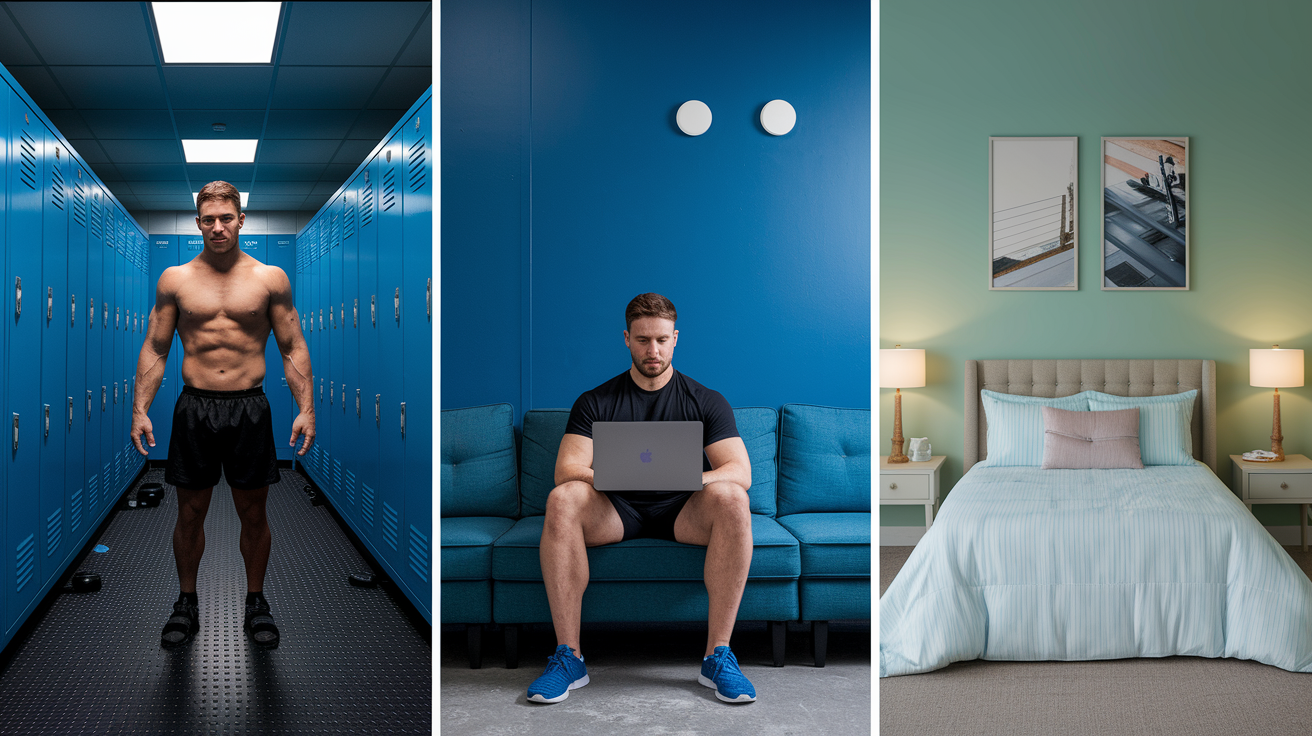
Not every workout demands the same recovery protocol. A light yoga session or easy 20-minute walk doesn’t deplete your system the way a heavy squat day or interval sprint session does. Matching your nap length to the training stimulus helps you recover without oversleeping or waking up groggy.
| Training Type | Recommended Nap Length | Reason |
|---|---|---|
| High-intensity strength or power (heavy squats, Olympic lifts, max-effort sets) | 60–90 minutes | Full sleep cycle captures slow-wave sleep for HGH release and nervous-system reset |
| Moderate cardio or circuit training (tempo runs, metabolic conditioning, typical gym session) | 20–30 minutes | Restores alertness and reduces perceived fatigue without deep-sleep inertia |
| Low-impact or skill work (walking, stretching, technique drills, easy bike ride) | Optional or skip | Recovery demands are minimal; prioritize nighttime sleep instead |
Individual sleep needs vary. If you’re chronically under-rested, getting fewer than seven hours most nights, a longer nap after any intense session can help chip away at your sleep debt. On the flip side, if you already sleep eight to nine hours and feel rested, a short power nap might be all you need to clear residual fatigue.
Pay attention to how you feel 30 minutes after waking. If you’re sharper and less sore, the nap worked. If you’re groggy or it interfered with your nighttime sleep, dial back the duration or shift the timing earlier in the day.
Timing Strategies for Morning, Afternoon, and Evening Training

Morning Workouts
If you train before work or first thing after waking, your body is already running on overnight recovery. A post-workout nap around midday, say between noon and 1:00 p.m., can restore the energy you spent early and carry you through the afternoon without a caffeine crash.
Keep it short. 20 to 30 minutes. Don’t let it bleed into your afternoon tasks or make it harder to fall asleep that night. Refuel with a balanced snack right after training, then slot your nap into your lunch break or a quiet window at home if your schedule allows. Many remote workers and shift workers find this pattern easy to sustain.
Afternoon Workouts
Training between 1:00 p.m. and 4:00 p.m. aligns well with your natural circadian dip, the window when most people experience a drop in alertness. If you work out during this time, consider a pre-workout nap instead of a post-workout one. A 20-minute nap before you head to the gym can boost your session intensity, reaction time, and focus.
After your workout, prioritize your evening routine and nighttime sleep. If you’re genuinely exhausted and it’s still early, say 4:00 or 5:00 p.m., a brief 20-minute rest is fine. Just set an alarm to avoid sleeping into the evening.
Evening Workouts
Late-day training, especially high-intensity sessions after 6:00 p.m., can spike adrenaline and core body temperature. That makes it harder to fall asleep at your normal bedtime. A post-workout nap in this scenario often backfires, delaying your circadian rhythm and cutting into your total nighttime sleep.
If you train late and feel wrecked, skip the nap. Focus on a solid cool-down, hydration, and a lighter evening meal. Low-key evening exercise, like a walk or gentle yoga, usually improves sleep quality. So the issue isn’t movement itself but intensity and stimulation.
If your schedule forces evening workouts and you’re chronically tired, consider banking sleep by going to bed 30 minutes earlier on non-training nights instead of trying to patch fatigue with late naps.
Practical Tips for Effective Post‑Workout Napping
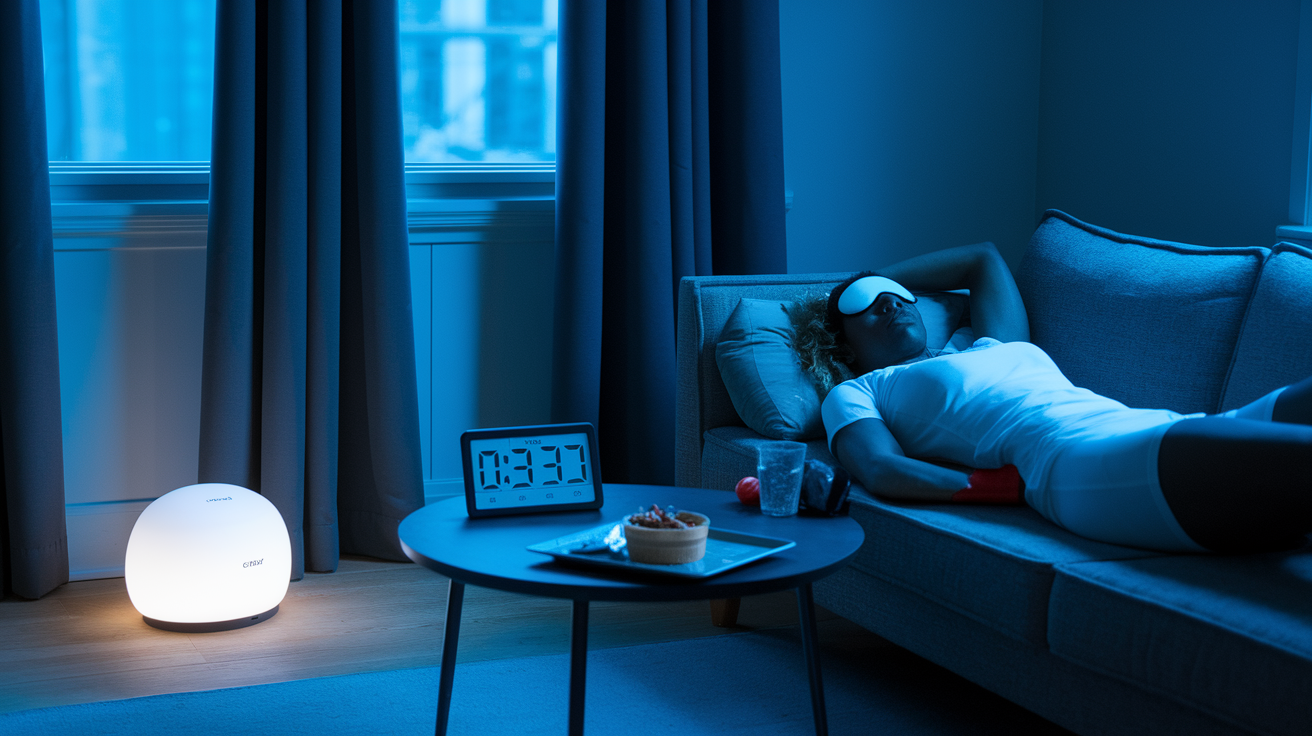
1. Cool down properly before lying down. Your heart rate and core temperature are still elevated right after training. Walk for five to ten minutes, do some light stretching, or sit quietly until your breathing returns to normal. Trying to nap while your cardiovascular system is still revved makes it nearly impossible to fall asleep.
2. Hydrate, but not excessively. Drink about 16 to 20 fluid ounces of water after your session to replace sweat losses, but avoid chugging a full liter right before your nap. A full bladder will wake you up halfway through. Sip steadily during your cool-down and stop about ten minutes before you lie down.
3. Eat a small recovery snack and wait. A carbohydrate plus protein combo, something like a banana with a handful of almonds or a slice of toast with peanut butter, kick-starts glycogen repletion and protein synthesis. Wait about 20 to 30 minutes after eating before you try to nap so your digestive system doesn’t keep you alert.
4. Set up your environment for speed. Nap in a dark, cool, quiet space. Use blackout curtains or an eye mask, and keep the room around 65 to 68 degrees Fahrenheit if possible. White noise or earplugs help if your home or gym is noisy. The faster you fall asleep, the more recovery time you capture in a short nap.
5. Use an alarm to control duration. Set your alarm for exactly 20 or 90 minutes, depending on your goal. Waking naturally from a 45-minute nap often leaves you groggy because you’re pulling yourself out of deep sleep. An alarm keeps you honest and prevents accidental two-hour crashes that wreck your nighttime sleep.
6. Try box breathing to accelerate sleep onset. Inhale for four counts, hold for four, exhale for four, hold for four, and repeat. This simple technique calms your nervous system and shifts you out of the sympathetic (fight-or-flight) mode that lingers after hard training.
Stack these steps into a consistent routine. The more predictable your post-workout nap process, the faster your body learns to fall asleep on cue. And the more recovery benefit you extract from each session.
When Post‑Workout Naps May Not Be Beneficial

Napping too close to your target bedtime can slice hours off your nighttime sleep and disrupt your circadian rhythm. If you normally go to bed at 10:00 p.m., a nap after 5:00 or 6:00 p.m. can make it hard to feel sleepy when you need to. Protecting your seven to nine hours of nighttime sleep is always the priority. Daytime naps are a supplement, not a replacement.
Longer naps, especially those that push past 30 minutes but stop short of a full 90-minute cycle, increase the risk of sleep inertia. You wake up feeling foggy, slow, and sometimes more tired than before you lay down. If you’re napping for performance and need to be sharp immediately after, stick with the 20 to 30-minute window. If you choose a 90-minute nap, plan for about 30 minutes of grogginess after waking before you train or compete.
Situations when you should limit or skip post-workout naps:
- You already struggle with insomnia or nighttime sleep quality. Adding daytime sleep can make it even harder to fall asleep at night and may worsen long-term sleep patterns.
- You’re napping late in the day (after 5:00 p.m.). Late naps interfere with circadian drive and cut into total nighttime sleep, reducing overall recovery.
- You feel alert and recovered without one. If your energy, focus, and soreness are manageable after a workout, prioritize your nighttime sleep instead of forcing an unnecessary nap.
Final Words
Take a 20–30 minute nap about 1–2 hours after training for a quick alertness lift, or a 90‑minute cycle after very hard sessions.
This post showed why naps help (hormones, nervous system reset, inflammation control), how to match nap length to workout intensity, timing tips for morning/afternoon/evening, practical setup steps, and when to skip naps.
Try this tonight: dim the room, cool down, set a 25‑minute alarm. Small, consistent nap strategies for post-workout recovery add up—you’ll feel the difference.
FAQ
Q: What is the 3 3 3 rule at the gym?
A: The 3 3 3 rule at the gym is a simple beginner plan: pick three compound exercises, do three sets of each, and train them three times per week to build strength and consistency.
Q: Does napping after a workout help recovery? Is a 30-minute nap or the 30–90 rule best?
A: Napping after a workout helps recovery, and the 30–90 rule says choose 30 minutes for quick alertness or 90 minutes for a full sleep cycle and deeper physical repair; nap within 1–2 hours post‑exercise.