

Think losing weight on a tight budget means bland meals or expensive grocery trips?
Not true.
This post gives one practical, short grocery list you can use to meal prep for a full week without breaking the bank.
It focuses on affordable proteins, long-lasting vegetables, bulk grains, and simple pantry staples that mix and match across recipes.
You’ll save money, cut food waste, and eat meals that keep you full so weight loss is easier to stick with.
Read on for the exact shopping list, simple batch-cook steps, and a low-effort backup plan for busy nights.
Key Budget-Friendly Items for a Weight‑Loss Meal Prep Grocery List

A complete grocery list for weight loss meal prep on a budget covers lean proteins, long-lasting vegetables, whole grains, and simple pantry staples that work across multiple recipes. The items below fit into a single shopping trip and support a full week of batch cooking.
Each item was chosen for shelf life, versatility, and cost effectiveness. No specialty ingredients or expensive superfoods required.
- Chicken thighs (bone-in or boneless)
- Canned tuna (packed in water)
- Eggs (large, any grade)
- Dry beans (black, pinto, or navy)
- Brown rice or quinoa (buy in bulk bags)
- Oats (old-fashioned or quick)
- Broccoli, carrots, onions, cabbage
- Sweet potatoes (3 lb bags)
- Frozen mixed vegetables (any variety)
- Greek yogurt (plain, full-fat or low-fat)
- Cottage cheese (low-fat)
- Olive oil (store brand)
Budget Meal Prep Staples That Stretch Across a Week
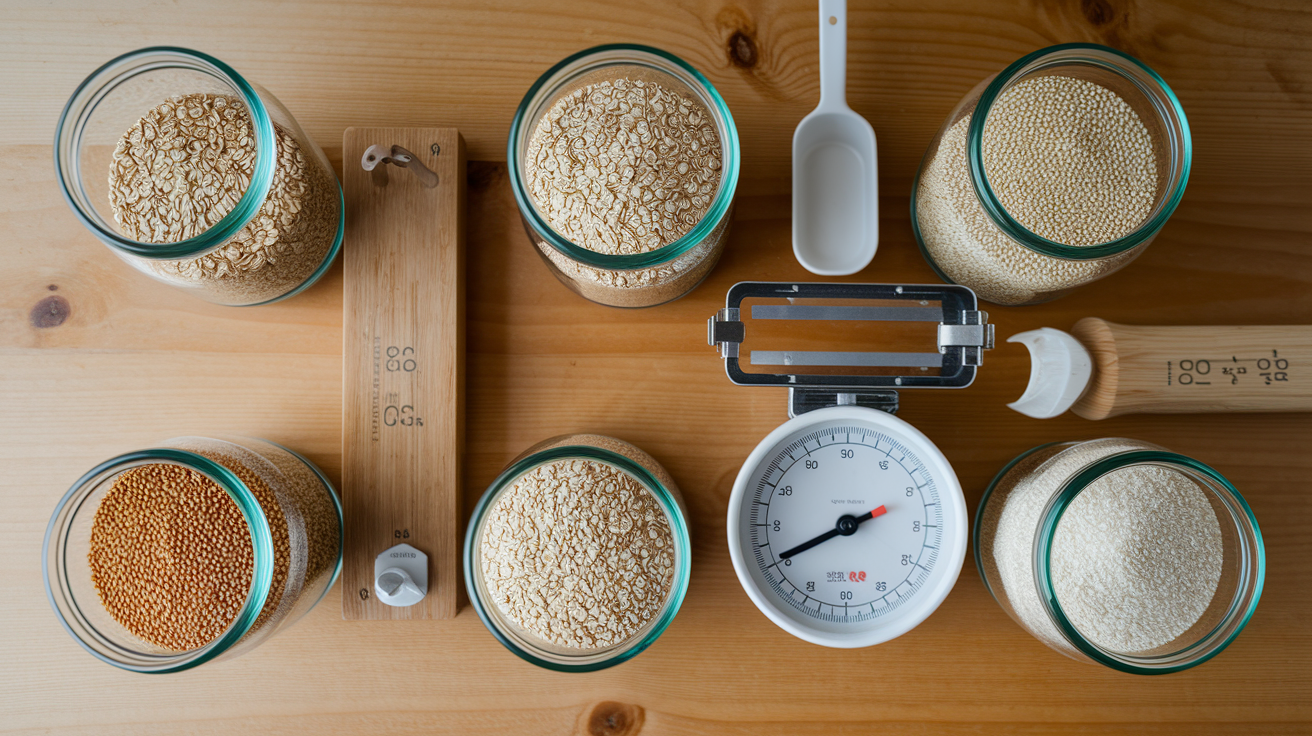
Buying grains and legumes in bulk cuts your per-serving cost and gives you a base for at least four or five different meal prep recipes. A 3 lb bag of brown rice costs less than individual microwave pouches and delivers 20 or more servings when you cook a large batch. Dry beans run about half the price of canned beans per pound, and you can cook a week’s worth in one session using a pot or pressure cooker.
Frozen vegetables and shelf-stable proteins prevent waste because they don’t spoil before you use them. A bag of frozen broccoli or mixed vegetables stays fresh for months and works in stir-fries, soups, grain bowls, or scrambled eggs. Store-brand canned goods, dry pasta, and oats all have long shelf lives and adapt to sweet or savory recipes without adding complexity.
| Item Category | Example Food | Budget Advantage |
|---|---|---|
| Whole grains (bulk) | Brown rice, oats, quinoa | Long shelf life, batch-cook and freeze, low cost per serving |
| Dry legumes | Black beans, lentils, chickpeas | Half the price of canned, stores for months |
| Frozen vegetables | Broccoli, mixed veg, spinach | No spoilage waste, equal nutrition to fresh |
| Canned proteins | Tuna, salmon, beans | Ready to use, no refrigeration needed until opened |
| Eggs | Any grade large eggs | Protein and fat in one item, dozens of meal uses |
| Store-brand staples | Pasta, broth, oil, spices | Same quality as name brands, 20–40% cheaper |
Low-Cost Protein Options for Weight Loss Meal Prep

Chicken thighs cost less per pound than chicken breasts and stay moist during reheating, which matters when you meal prep four or five days ahead. Bone-in, skin-on thighs run even cheaper if you’re willing to trim them yourself. Ground turkey and ground chicken offer similar savings and work in meatballs, tacos, stir-fries, and pasta sauces.
Watch for manager’s markdowns on fresh meat and freeze individual portions the same day you buy them.
Plant-based proteins bring your weekly grocery total down further. A 1 lb bag of dry lentils costs about the same as a single chicken breast but delivers triple the servings after cooking. Tofu and tempeh average less than $3 for a 14 oz block in most grocery stores, and each block makes two or three full meal prep servings. Canned tuna delivers roughly 20 grams of protein per serving and requires zero cooking.
Stretching protein across the week means planning recipes that share the same base ingredient. Cook 2 lbs of chicken thighs on Sunday, then use half in a grain bowl, a quarter in tacos, and the rest in soup. Buy one block of tofu and split it between a stir-fry and a scramble. This keeps your shopping list short and your cost per meal low.
- Chicken thighs (bone-in or boneless)
- Canned tuna or salmon
- Eggs (any grade)
- Dry beans or lentils
- Tofu or tempeh
Affordable Produce for Meal Prep and Weight Loss

Carrots, cabbage, broccoli, onions, and sweet potatoes hold up in the fridge for a full week or longer. You won’t throw out wilted greens halfway through your meal prep cycle. Bell peppers and cucumbers last nearly as long if you store them in the crisper drawer. Kale stays crisp even after you dress it in a salad, and a head of cabbage can fill out soups, stir-fries, and slaw for multiple meals.
Frozen vegetables cost the same or less than fresh and deliver equal nutrition because they’re flash-frozen at peak ripeness. A bag of frozen broccoli, green beans, or mixed vegetables sits in your freezer for months without losing quality, so you only thaw what you need each time you cook. Buying frozen reduces the pressure to use everything within three or four days and cuts waste to nearly zero.
Seasonal produce appears on sale racks and farmers’ market tables at lower prices than out-of-season imports. In summer, zucchini and tomatoes drop in price. In fall and winter, squash and root vegetables become the budget picks. Shopping what’s in season and supplementing with frozen staples keeps your produce spending low and your nutrient variety high.
Structuring a Weekly Meal Prep on a Tight Grocery Budget

Planning meals before you shop prevents impulse purchases and keeps your cart focused on items that work across multiple recipes. Check your pantry and fridge before you leave so you don’t buy duplicates of rice, oil, or spices you already own. Choosing versatile ingredients like onions, eggs, and sweet potatoes means each item appears in two or three different meals during the week.
Designating one specific shopping day and one prep day creates a repeatable routine that reduces decision fatigue and keeps costs predictable week to week.
- Plan four or five recipes that share common ingredients (example: chicken thighs, brown rice, broccoli, onions, beans).
- Check your pantry and fridge inventory for spices, oils, grains, and produce you already have.
- Build a focused shopping list organized by category (proteins, produce, grains, pantry items).
- Buy ingredients that work in at least two recipes to maximize versatility and reduce total items.
- Batch cook grains, proteins, and chopped vegetables in large quantities on your designated prep day.
- Portion meals into individual containers and label with the meal name and date before refrigerating or freezing.
Budget-Friendly Meal Prep Recipes Built from One Grocery List
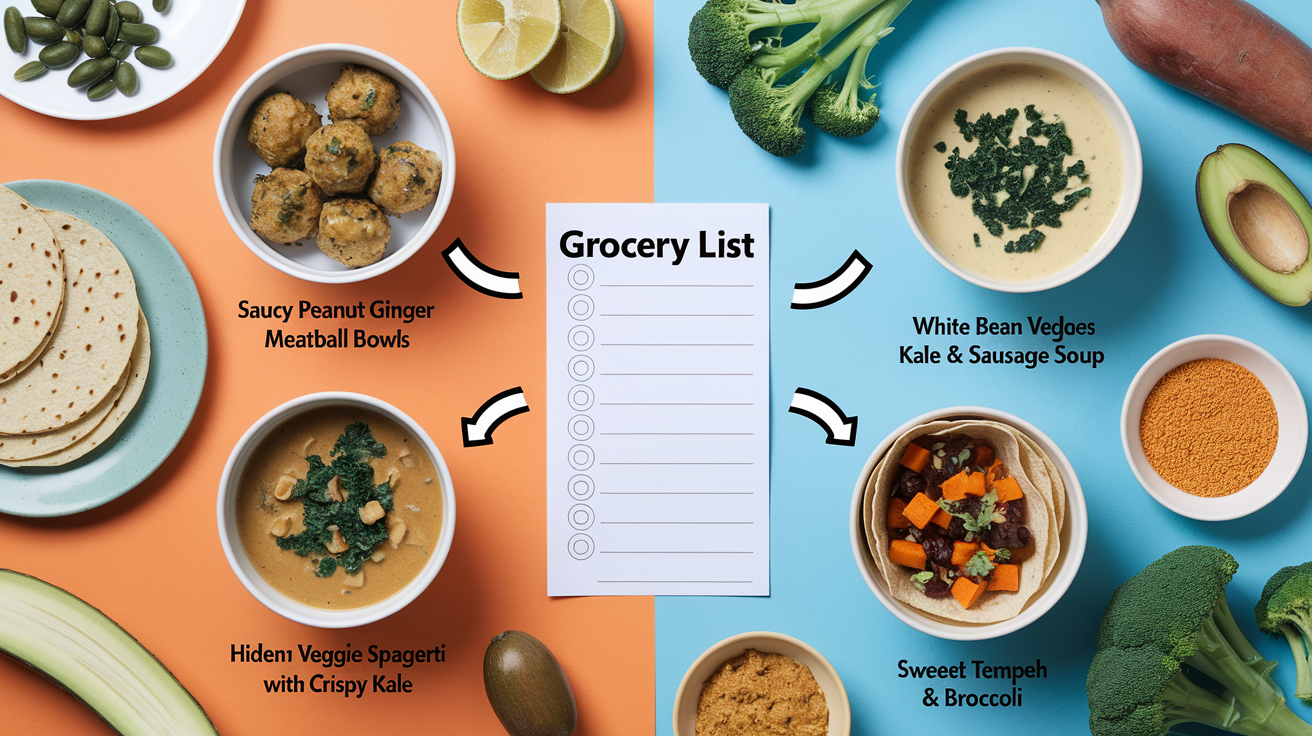
Saucy Peanut Ginger Chicken Meatball Bowls
Ground chicken, brown rice, broccoli, and a simple peanut-ginger sauce made from pantry staples create a complete meal for under $3 per serving. The meatballs freeze well, so you can double the batch and save half for a future week. Serve over rice with steamed or roasted broccoli for a fast lunch or dinner that reheats in three minutes.
White Bean, Kale & Sausage Soup
A 15 oz can of white beans, a bunch of kale, and a half-pound of Italian sausage stretch into four hearty servings when you add broth, onions, and garlic. This recipe uses long-lasting vegetables and pantry cans, so nothing spoils if you prep it midweek. The soup tastes better the next day and stays fresh in the fridge for five days.
Hidden Veggie Spaghetti with Crispy Kale
Whole wheat pasta, canned tomatoes, onions, carrots, and kale blend into a sauce that hides extra vegetables without adding cost. A 14 oz box of pasta and a 32 oz can of tomatoes form the base, and you finish with crispy baked kale for texture. Each of the four servings delivers fiber, vitamins, and filling carbohydrates for less than $2.50 per plate.
Sweet Potato Black Bean Tacos with Chipotle Sauce
A 3 lb bag of sweet potatoes and a 15 oz can of black beans make eight tacos when paired with corn tortillas and a quick chipotle sauce from canned peppers. The sweet potatoes roast in one batch, the beans warm on the stove in five minutes, and the sauce blends in seconds. These tacos hold up well for grab-and-go lunches throughout the week.
Peanut Tempeh & Broccoli Skillet
Tempeh, broccoli, and a peanut-based stir-fry sauce come together in one pan for a plant-based meal that costs under $3 per serving. Tempeh absorbs flavor quickly and adds protein without the prep time of dried beans. Serve over brown rice or eat it straight from the skillet for a simple, filling dinner that works hot or cold.
Portion Control, Storage, and Freezing Tips for Budget Meal Prep

Portioning meals into individual containers before you refrigerate or freeze them prevents overeating and keeps your calorie goals on track without daily measuring. Use the same container size for each meal so you know exactly how much you’re eating at lunch or dinner. Freezing extra portions extends the life of batch-cooked grains, proteins, and complete meals. A single Sunday prep session can cover two weeks instead of one.
Glass containers resist staining and hold up to repeated heating and freezing cycles, though they cost more upfront. Plastic containers with snap-on lids weigh less and travel easily but may absorb odors over time. Label every container with the meal name and date so you rotate stock and eat older meals first.
| Container Type | Best Use | Budget Benefit |
|---|---|---|
| Glass with snap lids | Freezer and microwave meals | Long lifespan reduces replacement cost |
| Plastic BPA-free | Grab-and-go lunches, transport | Lightweight, inexpensive, stackable |
| Silicone bags | Freezing soups, sauces, grains | Reusable alternative to disposable freezer bags |
| Muffin tins for portioning | Freezing single servings of rice, beans, sauce | Pop out frozen portions as needed, no container waste |
| Mason jars | Salads, overnight oats, yogurt parfaits | Multi-use, dishwasher safe, stackable in fridge |
Smart Grocery Shopping Tactics for a Lower Weekly Budget

Store brands deliver the same quality as name brands for staples like canned beans, pasta, rice, and frozen vegetables but cost 20 to 40 percent less. Most grocery chains print the unit price on shelf labels, so compare cost per ounce or per pound instead of package price to find the real savings.
- Buy bulk bags of rice, oats, quinoa, and dry beans instead of single-serving pouches or boxes.
- Use store loyalty programs and digital coupons before you check out to stack discounts on proteins and produce.
- Compare the cost per unit printed on shelf tags to identify which package size saves the most money.
- Skip “buy more, save more” promotions unless you’ll use the product before it spoils or you can freeze the extra.
- Choose seasonal produce and check reduced-price racks for ripe fruits and vegetables you can use within two days.
- Avoid gluten-free substitutes unless medically necessary because they typically cost two to three times more than standard versions.
- Freeze bread, cheese, cooked grains, and chopped vegetables on the day you buy them to prevent waste and extend your grocery budget across two weeks.
Final Words
Use the short grocery list and budget staples to plan one shopping trip this week.
You learned the must-buy items, bulk and frozen strategies, low-cost protein picks, five budget recipes, and storage and shopping tactics to stretch your dollars.
Grab the meal prep grocery list for weight loss on a budget, choose one recipe, and batch cook tonight. Portion and freeze, and you’re set for easy, satisfying meals all week. Small wins stack. You’ve got this.
FAQ
Q: What is the 5 4 3 2 1 grocery rule?
A: The 5-4-3-2-1 grocery rule is a simple shopping framework: buy 5 produce items, 4 proteins, 3 whole-grain or pantry staples, 2 dairy/healthy fats, and 1 versatile condiment or treat.
Q: What is the 3-3-3 rule for weight loss and groceries?
A: The 3-3-3 rule for weight loss and groceries is a shopping-and-meal plan: pick 3 proteins, 3 vegetables, and 3 pantry staples, then build meals that prioritize protein and veggies to lower calories.
Q: How to feed a family of 4 for $100 a week?
A: Feeding a family of 4 for $100 a week is done by planning meals, buying bulk grains and beans, choosing cheap proteins (chicken thighs, canned tuna), using frozen produce, batch-cooking, and limiting snacks.