

Meal prep beats willpower.
Most plans fall apart by Thursday, and that’s why fat loss stalls.
These high-protein meal prep recipes save time, cut calorie guessing, and keep muscle by giving 30 to 45 grams of protein per meal.
Each recipe batches into multiple servings, lists per-serving calories and macros, and reheats fast so you stick to the plan on busy nights.
Read on for simple, real-life meals you can make on Sunday and use all week.
Why High-Protein Meal Prep Makes Fat Loss Easier
Meal prep gets rid of the daily “what should I eat?” question and replaces it with something simpler: open the fridge, grab what you made.
When you’re trying to lose fat, that clarity matters more than you’d think.
High-protein meal prep works because it fixes three problems at once. First, it keeps your protein steady through the week. Most people nail their protein Monday and Tuesday, then fall apart by Thursday. When meals are already portioned and waiting, you eat what you planned instead of what’s easiest. Second, it kills the calorie guessing game. You weighed and logged everything once, on Sunday. Third, it saves decision energy. After a long day, you’re not picking between takeout and willpower. You’re just reheating dinner.
Here’s what happens when you skip prep: you rush past breakfast, grab whatever’s in the break room for lunch, then overeat at dinner because you’re starving. Your protein lands around 60 grams instead of the 140 you need, and your calorie deficit vanishes into snacks and guesswork. Meal prep stops that cycle.
The recipes below are built for fat loss while keeping muscle. That means 30 to 45 grams of protein per meal, moderate carbs, and enough fat to keep meals satisfying. Every recipe includes per-serving calories and macros so you can tweak portions to fit your target. Most batch into 4 to 6 servings, store in the fridge for 3 to 4 days, and reheat in under 3 minutes.
You don’t need perfect adherence. You need something that works on tired weeknights and busy mornings. That’s what these do.
How Much Protein You Actually Need for Fat Loss
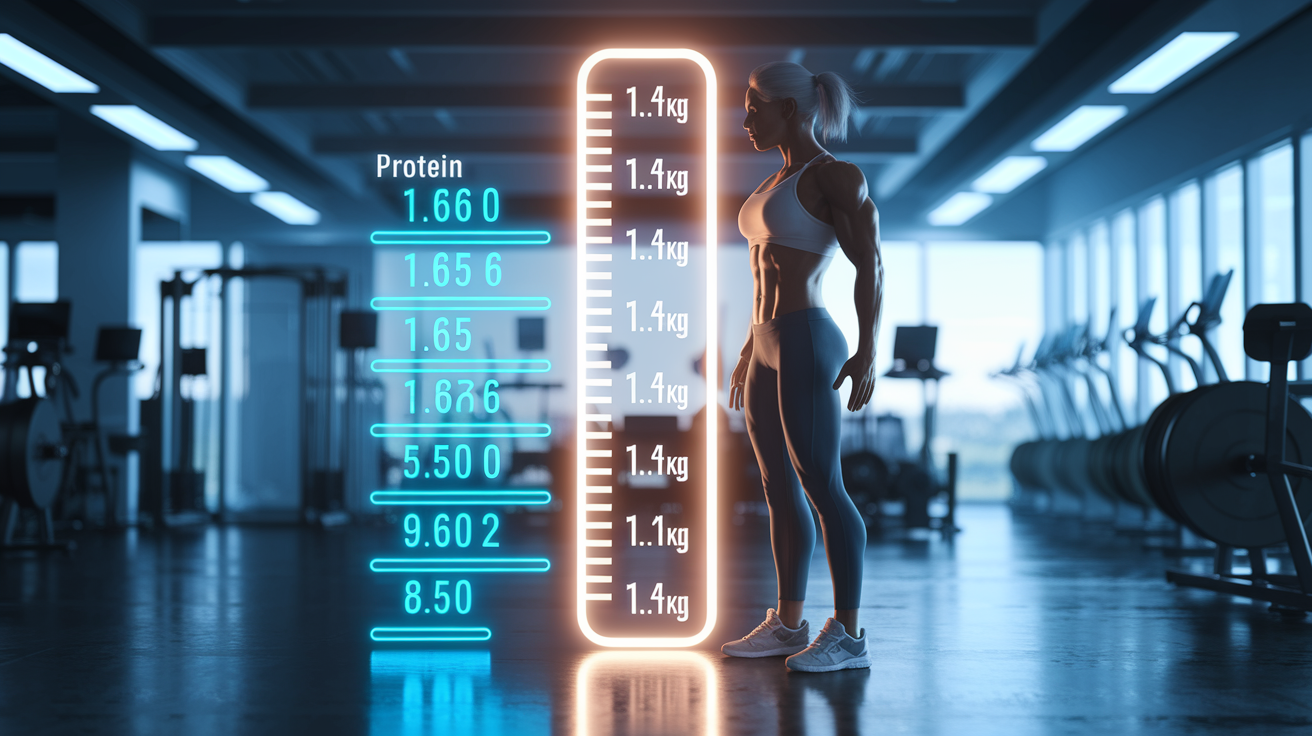
The common advice “eat more protein” doesn’t help unless you know what “more” means in grams.
For fat loss, you’re looking at 1.6 to 2.2 grams of protein per kilogram of body weight (0.73 to 1.0 grams per pound). That range comes from research showing it preserves muscle during a calorie deficit and keeps you fuller longer than lower-protein diets.
Here’s what that looks like:
If you weigh 150 pounds (68 kg), you need 110 to 150 grams of protein per day.
If you weigh 180 pounds (82 kg), you need 130 to 180 grams per day.
If you weigh 200 pounds (91 kg), you need 145 to 200 grams per day.
Pick a number in the middle of your range and build meals around it. If you weigh 150 pounds, start with 130 grams per day. That’s roughly 40 grams at breakfast, 45 grams at lunch, 40 grams at dinner, and a 15 gram snack.
Spreading protein across the day matters because your body can only use about 25 to 40 grams per meal for muscle protein synthesis. Eating 100 grams at dinner and 10 grams at breakfast doesn’t work as well as three balanced meals. Aim for at least 30 grams per main meal.
| Body Weight | Daily Protein Target (grams) | Example Meal Split |
|---|---|---|
| 150 lb (68 kg) | 110–150 g | Breakfast 40 g, Lunch 45 g, Dinner 40 g, Snack 15 g |
| 180 lb (82 kg) | 130–180 g | Breakfast 45 g, Lunch 50 g, Dinner 45 g, Snack 20 g |
| 200 lb (91 kg) | 145–200 g | Breakfast 50 g, Lunch 55 g, Dinner 50 g, Snack 20 g |
Don’t overthink the decimal points. Pick your target, split it across three meals and one snack, and track it for a week. If you’re hitting within 10 grams of your goal most days, you’re fine.
The recipes below are designed around these targets. Each main meal delivers 30 to 50 grams of protein. Tweak portion sizes if your target’s higher or lower.
High-Protein Breakfast Meal Prep Recipes

Breakfast is where most people fall short on protein. A bowl of oatmeal or toast with jam gives you 5 to 10 grams. Nowhere near the 30 to 40 grams you need to stay on track.
These three recipes fix that. All of them store for at least 4 days, reheat fast, and hit 30+ grams of protein per serving.
Egg White and Turkey Sausage Frittata
This is make-ahead breakfast that works cold or reheated. Faster than scrambling eggs every morning and easier to portion.
Ingredients (6 servings):
- 1,200 grams egg whites (about 36 egg whites or 3 cartons of liquid egg whites)
- 450 grams lean turkey sausage (cooked and crumbled)
- 240 grams fresh spinach (chopped)
- 180 grams diced bell peppers (red or green)
- 120 grams shredded reduced-fat cheese (cheddar or mozzarella)
- Salt, pepper, garlic powder to taste
Per serving: 320 kcal | Protein 36 g | Carbs 6 g | Fat 14 g | Fiber 2 g
Prep: Preheat oven to 350°F (175°C). Cook and crumble the turkey sausage in a skillet. Whisk egg whites with spices. Spray a 9×13 inch baking dish with oil. Layer spinach, peppers, and sausage in the dish. Pour egg whites over the top. Sprinkle cheese evenly. Bake 25 to 30 minutes until set. Cool, slice into 6 portions, and store in airtight containers.
Storage: Refrigerate up to 4 days. Reheat one slice in the microwave for 60 to 90 seconds, or eat cold.
Greek Yogurt Protein Bowl
This takes 5 minutes to assemble and doesn’t need cooking. Fastest high-protein breakfast you can prep.
Ingredients (5 servings):
- 1,125 grams nonfat Greek yogurt (about 5 cups)
- 150 grams whey protein powder (5 scoops, vanilla or unflavored)
- 200 grams mixed berries (fresh or frozen)
- 100 grams chopped almonds or walnuts
- 50 grams honey or sugar-free syrup (optional)
Per serving: 350 kcal | Protein 40 g | Carbs 20 g | Fat 12 g | Fiber 3 g
Prep: Divide Greek yogurt into 5 single-serve containers. Stir one scoop of protein powder into each. Top with berries and nuts. Drizzle honey if using. Seal and refrigerate.
Storage: Refrigerate up to 5 days. Stir before eating. No reheating needed.
Overnight Oats with Whey
Lowest-effort breakfast on the list. Mix it the night before, grab it on your way out.
Ingredients (5 servings):
- 250 grams rolled oats (about 2.5 cups dry)
- 150 grams whey protein powder (5 scoops)
- 1,250 mL unsweetened almond milk (5 cups)
- 75 grams chia seeds (5 tablespoons)
- 100 grams mixed berries per serving (add fresh at serving)
Per serving: 380 kcal | Protein 32 g | Carbs 40 g | Fat 10 g | Fiber 8 g
Prep: In each of 5 jars or containers, combine 50 grams oats, 1 scoop protein powder, 250 mL almond milk, and 15 grams chia seeds. Stir well. Seal and refrigerate overnight. In the morning, top with fresh berries.
Storage: Refrigerate up to 3 days. Oats thicken over time. Add a splash of almond milk if too thick.
High-Protein Lunch Meal Prep Recipes

Lunch needs to be portable, easy to reheat at work, and filling enough to prevent afternoon snacking. These three recipes check all those boxes.
Grilled Lemon-Herb Chicken Quinoa Bowl
Most versatile lunch on the list. You can swap the vegetables or grain and the macros stay close.
Ingredients (4 servings):
- 680 grams boneless skinless chicken breast (raw weight, about 1.5 lb)
- 600 grams cooked quinoa (about 3 cups cooked, from 1.5 cups dry)
- 800 grams mixed roasted vegetables (broccoli, bell peppers, zucchini)
- 4 tablespoons olive oil (for cooking and roasting)
- Lemon juice, garlic, thyme, salt, pepper
Per serving: 520 kcal | Protein 46 g | Carbs 46 g | Fat 14 g | Fiber 6 g
Prep: Marinate chicken in lemon juice, garlic, and thyme for 15 minutes. Grill or bake at 400°F (200°C) for 20 to 25 minutes until internal temperature reaches 165°F (74°C). Slice into strips. Roast chopped vegetables on a sheet pan with 2 tablespoons olive oil at 425°F (220°C) for 20 minutes. Cook quinoa according to package directions. Divide quinoa, chicken, and vegetables into 4 containers.
Storage: Refrigerate up to 4 days. Reheat in microwave for 2 to 3 minutes, or in oven at 350°F (175°C) for 10 minutes to restore texture.
Tuna and White Bean Salad with Mixed Greens
No-cook, no-reheat lunch. Assemble it once, eat it all week.
Ingredients (5 servings):
- 750 grams canned tuna in water (5 cans, drained)
- 800 grams canned white beans (2 cans, drained and rinsed)
- 500 grams mixed salad greens
- 250 grams cherry tomatoes (halved)
- 150 grams cucumber (diced)
- 5 tablespoons olive oil and vinegar dressing (1 tablespoon per serving, pack separately)
Per serving: 410 kcal | Protein 38 g | Carbs 30 g | Fat 14 g | Fiber 6 g
Prep: In each of 5 containers, layer greens on the bottom. Add tuna, white beans, tomatoes, and cucumber. Pack dressing in a small separate container or cup. Seal and refrigerate.
Storage: Refrigerate up to 4 days. Keep dressing separate until eating to prevent sogginess. Add dressing and shake or toss before eating. Eat cold.
Tofu Stir-Fry with Brown Rice and Mixed Vegetables
The vegetarian lunch option. Reheats well and stays interesting with different sauces.
Ingredients (4 servings):
- 800 grams extra-firm tofu (2 blocks, pressed and cubed)
- 600 grams cooked brown rice (about 3 cups cooked, from 1.5 cups dry)
- 800 grams mixed stir-fry vegetables (snap peas, carrots, bell peppers, broccoli)
- 4 tablespoons sesame oil or avocado oil
- Soy sauce, garlic, ginger, chili flakes
Per serving: 420 kcal | Protein 30 g | Carbs 50 g | Fat 12 g | Fiber 8 g
Prep: Press tofu for 15 minutes to remove excess water, then cube. Heat 2 tablespoons oil in a large skillet or wok over medium-high heat. Cook tofu until golden on all sides, about 8 minutes. Remove tofu. Add remaining oil and stir-fry vegetables for 5 to 7 minutes. Return tofu to pan, add soy sauce, garlic, and ginger. Toss and cook 2 more minutes. Cook brown rice. Divide rice, tofu, and vegetables into 4 containers.
Storage: Refrigerate up to 4 days. Reheat in microwave for 2 to 3 minutes, or reheat on stovetop in a nonstick pan over medium heat for 5 minutes with a splash of water.
High-Protein Dinner Meal Prep Recipes
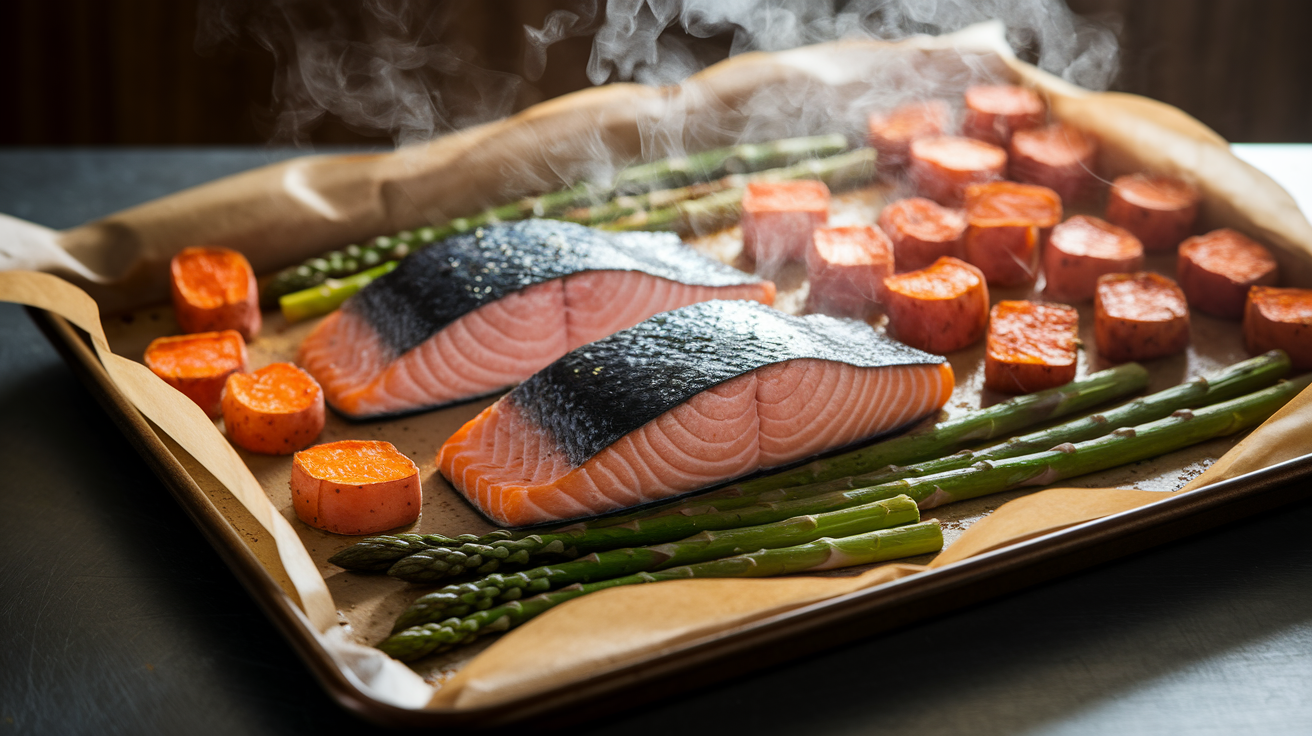
Dinner’s your last chance to hit your protein target for the day. These recipes deliver 40+ grams per serving and store well for 3 to 4 days.
Baked Salmon with Asparagus and Sweet Potato
One-pan dinner. Everything roasts together, and cleanup takes 2 minutes.
Ingredients (4 servings):
- 560 grams salmon fillets (4 fillets, about 140 grams each)
- 800 grams sweet potato (3 medium, cubed)
- 600 grams asparagus (trimmed)
- 3 tablespoons olive oil
- Lemon slices, garlic, dill, salt, pepper
Per serving: 480 kcal | Protein 40 g | Carbs 36 g | Fat 20 g | Fiber 7 g
Prep: Preheat oven to 400°F (200°C). Toss sweet potato cubes with 2 tablespoons olive oil, salt, and pepper. Spread on one side of a large baking sheet. Roast 15 minutes. Add asparagus and salmon fillets to the other side of the sheet. Drizzle salmon with remaining oil, top with lemon slices and dill. Roast another 12 to 15 minutes until salmon reaches 145°F (63°C) internal temperature. Divide into 4 portions.
Storage: Refrigerate up to 2 days for best quality. Salmon can be frozen in airtight portions for up to 8 weeks. Reheat gently in microwave for 90 seconds or in oven at 300°F (150°C) for 8 minutes to avoid drying out.
Lean Beef and Black Bean Chili
High-protein, one-pot dinner that freezes perfectly. Make a big batch and eat it for weeks.
Ingredients (6 servings):
- 900 grams lean ground beef (90/10 or leaner, about 2 lb raw)
- 800 grams canned black beans (2 cans, drained and rinsed)
- 800 grams canned diced tomatoes (2 cans)
- 200 grams diced onion
- 150 grams diced bell pepper
- 2 tablespoons chili powder, cumin, garlic powder, paprika
- Salt, pepper, optional hot sauce
Per serving: 520 kcal | Protein 42 g | Carbs 40 g | Fat 18 g | Fiber 10 g
Prep: In a large pot over medium-high heat, cook ground beef until browned, about 8 minutes. Drain excess fat if needed. Add onion and bell pepper, cook 5 minutes. Add black beans, tomatoes, and spices. Stir well. Bring to a boil, then reduce heat and simmer 30 to 40 minutes, stirring occasionally. Divide into 6 portions.
Storage: Refrigerate up to 4 days. Freeze individual portions in airtight containers for up to 3 months. Reheat on stovetop over medium heat for 6 to 8 minutes, or microwave for 3 to 4 minutes, stirring halfway.
Turkey Meatballs with Zucchini Noodles and Marinara
Lowest-carb dinner option. Swap zucchini noodles for regular pasta if you need more carbs.
Ingredients (5 servings):
- 1,000 grams lean ground turkey (about 2.2 lb)
- 100 grams breadcrumbs or almond flour
- 100 grams grated Parmesan
- 2 eggs
- Garlic, Italian seasoning, salt, pepper
- 1,000 grams zucchini noodles (5 medium zucchini, spiralized)
- 750 grams marinara sauce (low-sugar)
Per serving: 460 kcal | Protein 36 g | Carbs 28 g | Fat 18 g | Fiber 5 g
Prep: Preheat oven to 375°F (190°C). In a large bowl, mix ground turkey, breadcrumbs, Parmesan, eggs, and spices. Form into 25 meatballs (5 per serving). Place on a lined baking sheet. Bake 20 to 25 minutes until internal temperature reaches 165°F (74°C). While meatballs bake, heat marinara sauce in a pot. Spiralize zucchini into noodles. Divide zucchini noodles raw into 5 containers. Top each with 5 meatballs and marinara.
Storage: Refrigerate up to 4 days. Reheat in microwave for 3 to 4 minutes (zucchini will soften and release water, drain if needed), or reheat meatballs and sauce separately in oven at 350°F (175°C) for 10 minutes, then add to fresh or lightly sautéed zucchini noodles.
Snacks and Protein Add-Ons

Even with three solid meals, most people need a snack to hit their protein target. These add-ons are simple and portable.
Protein shake: 1 scoop whey or plant protein (25 to 30 grams protein), 250 mL unsweetened almond milk, ice. Blend and drink. 150 kcal, 25+ grams protein. Keep a shaker bottle at work or in your car.
Greek yogurt: 1 cup (225 grams) nonfat Greek yogurt. 100 kcal, 18 grams protein. Add a sprinkle of cinnamon or a few berries if you want flavor.
Hard-boiled eggs: 2 large eggs. 140 kcal, 12 grams protein. Boil a dozen on Sunday, peel them, and store in the fridge for grab-and-go snacks.
Cottage cheese: 1 cup (225 grams) low-fat cottage cheese. 180 kcal, 28 grams protein. Eat plain or with cucumber slices and a pinch of salt.
Beef or turkey jerky: 1 ounce (28 grams). 70 to 100 kcal, 12 to 15 grams protein. Check the label for added sugar and sodium. Some brands are better than others.
Keep two or three of these on hand. If you’re 10 to 15 grams short at the end of the day, a protein shake or a couple of hard-boiled eggs closes the gap without adding much effort.
5-Day Shopping List for High-Protein Meal Prep

This shopping list covers the recipes above for one person for 5 days. Adjust quantities if you’re cooking for more people or want a full week.
| Item | Quantity (5 days, 1 person) | Estimated USD Price Range |
|---|---|---|
| Boneless skinless chicken breast | 1.5 kg (3.3 lb) | $9–$15 |
| Salmon fillets | 560 g (1.2 lb) | $10–$14 |
| Lean ground beef (90/10) | 900 g (2 lb) | $8–$12 |
| Lean ground turkey | 1 kg (2.2 lb) | $6–$12 |
| Extra-firm tofu | 800 g (2 blocks) | $4–$6 |
| Egg whites (carton or fresh) | 1.2 L or 36 egg whites | $5–$9 |
| Nonfat Greek yogurt | 1.1 kg (about 5 cups) | $4–$7 |
| Whey protein powder | 500 g (about 15 servings) | $12–$25 |
| Canned tuna in water | 5 cans (750 g drained) | $5–$10 |
| Canned black beans | 2 cans (800 g) | $2–$4 |
| Canned white beans | 2 cans (800 g) | $2–$4 |
| Quinoa (dry) | 300 g (1.5 cups dry) | $3–$6 |
| Brown rice (dry) | 300 g (1.5 cups dry) | $2–$4 |
| Rolled oats | 250 g (2.5 cups) | $2–$4 |
| Sweet potatoes | 3 medium (about 800 g) | $3–$5 |
| Mixed salad greens | 500 g | $4–$7 |
| Broccoli | 600 g | $3–$5 |
| Asparagus | 600 g | $4–$8 |
| Bell peppers | 4 medium | $3–$6 |
| Zucchini | 5 medium (for noodles) | $4–$7 |
| Spinach (fresh) | 240 g | $2–$4 |
| Cherry tomatoes | 250 g | $2–$4 |
| Mixed berries (fresh or frozen) | 300 g | $4–$8 |
| Olive oil | 250 mL (if not on hand) | $5–$10 |
| Almonds or walnuts | 100 g | $3–$6 |
| Chia seeds | 75 g | $3–$5 |
| Marinara sauce (low-sugar) | 750 g (1 jar) | $3–$6 |
| Spices and seasonings (garlic, lemon, soy sauce, chili powder, etc.) | As needed | $5–$12 |
| Estimated Total | $95–$180 |
Prices vary by region, store, and whether you buy organic or conventional. Shop sales for proteins and buy frozen vegetables if fresh is too expensive. The total drops by $20 to $40 if you already have pantry staples like oil, spices, and grains.
If you’re cooking for two people, multiply protein quantities by 2. If you’re meal-prepping for a full 7 days, add about 30% to the quantities above.
Batch-Cook Schedule and Time Breakdown
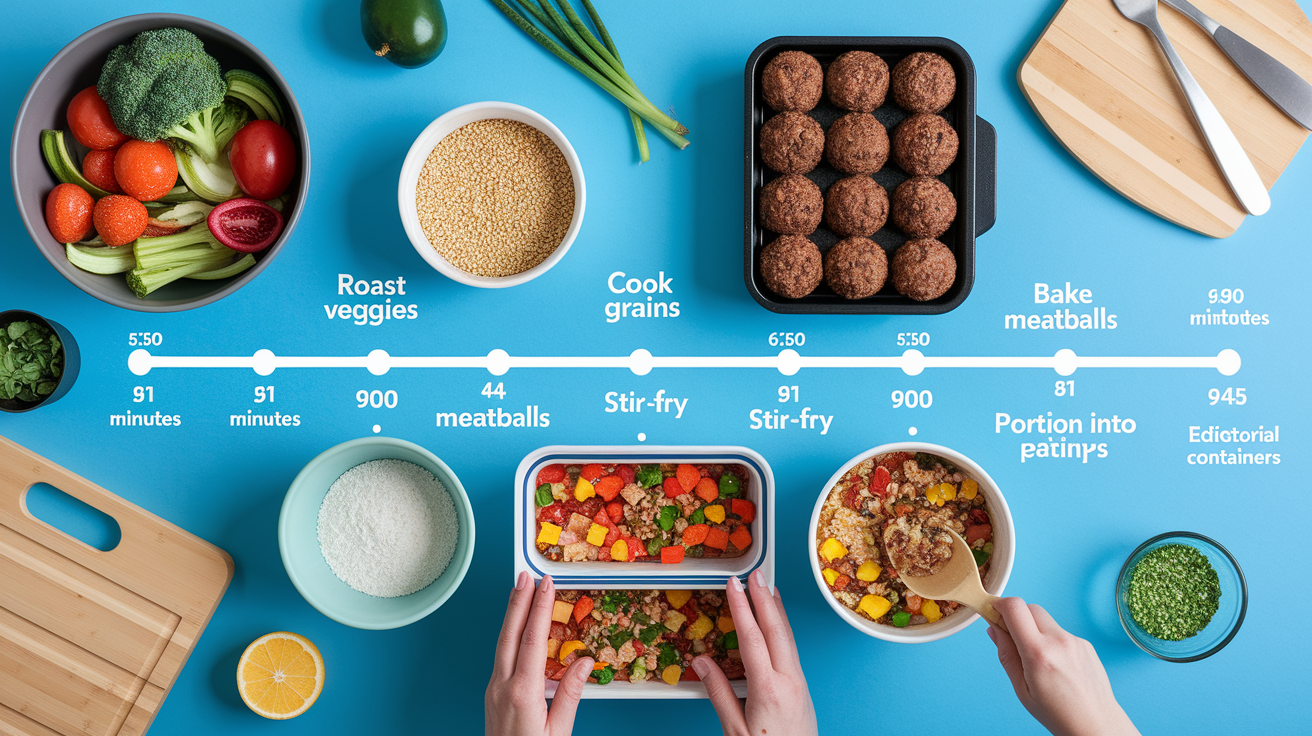
The biggest barrier to meal prep isn’t the recipes. It’s finding the time. This schedule shows you how to cook all five recipes in one 90 to 120 minute session.
Sunday afternoon batch-cook plan:
0 to 10 minutes: Preheat oven to 400°F (200°C). Chop all vegetables: sweet potatoes, asparagus, bell peppers, zucchini, spinach. Season chicken breasts and salmon fillets with oil, lemon, garlic, and spices. Set aside.
10 to 35 minutes: Place sweet potato cubes on one baking sheet, drizzle with olive oil, salt, and pepper. Roast for 15 minutes. Meanwhile, start cooking quinoa and brown rice on the stovetop according to package directions (usually 15 to 20 minutes). While grains cook, mix turkey meatball ingredients in a bowl, form meatballs, and set on a second baking sheet.
35 to 55 minutes: After 15 minutes, add asparagus and salmon to the sweet potato sheet (push potatoes to one side). Roast another 12 to 15 minutes. Put meatballs in the oven on the second rack. Bake 20 to 25 minutes. While those cook, start the chili: brown ground beef in a large pot, add onions, peppers, beans, tomatoes, and spices. Bring to a boil, then reduce to simmer.
55 to 75 minutes: Remove salmon and meatballs from oven. Let cool. Check quinoa and rice, turn off heat and let sit covered. Press tofu, cube it, and cook in a hot skillet with oil until golden (about 8 minutes). Add stir-fry vegetables to the same pan, cook 5 to 7 minutes, then add soy sauce and garlic. Turn off heat. Chili should be simmering, stir occasionally.
75 to 90 minutes: Assemble meals into containers. Portion chicken, quinoa, and roasted vegetables into 4 lunch containers. Divide salmon, sweet potato, and asparagus into 4 dinner containers. Portion tofu stir-fry into 4 containers. Ladle chili into 6 containers. Portion meatballs and marinara into 5 containers, add raw zucchini noodles. Label each container with the meal name and date.
90 to 100 minutes: Clean up. Put all containers in the fridge except any you plan to freeze (freeze extra chili or salmon portions in airtight containers).
Total active cooking time: 60 to 75 minutes. Total elapsed time including oven and stovetop: 90 to 120 minutes.
If you’re new to batch cooking, expect the first session to take closer to 2 hours. By the third week, you’ll finish in 90 minutes.
Storage, Reheating, and Food Safety
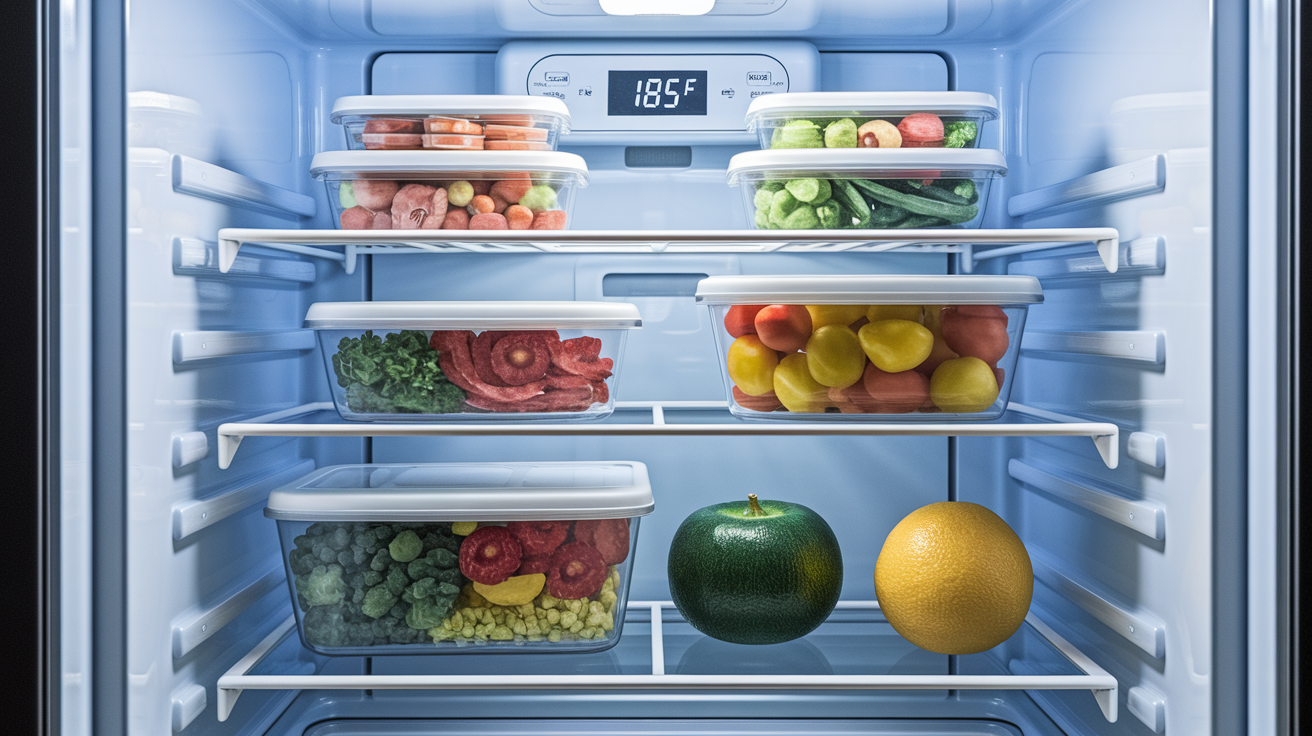
Proper storage keeps your meals safe and tasting good all week. Follow these rules to avoid food waste and foodborne illness.
Refrigerator storage:
Cooked chicken, beef, turkey, and tofu: up to 4 days.
Cooked salmon and other fish: up to 2 days (freeze if you need longer).
Egg-based dishes (frittatas): up to 4 days.
Cooked grains (quinoa, rice, oats): up to 4 days.
Salads with dressing packed separately: up to 4 days.
Chili and stews: up to 4 days.
Always store meals in airtight containers. Let hot food cool to room temperature before sealing and refrigerating, but don’t leave food out longer than 2 hours.
Freezer storage:
Cooked proteins, grains, and stews freeze well for 8 to 12 weeks.
Portion meals into single-serving airtight containers before freezing.
Label each container with the meal name and date.
Freeze chili, meatballs, and cooked chicken in flat portions for faster thawing.
Thawing frozen meals:
Thaw overnight in the fridge, not on the counter.
Thaw in the microwave using the defrost setting if you’re in a hurry.
Do not refreeze thawed food unless you cook it first.
Reheating methods:
Microwave (fastest): Place meal in a microwave-safe container. Cover loosely. Heat on high for 2 to 3 minutes, stirring halfway through. Let sit 1 minute before eating. Egg-based meals reheat better at 60 to 80% power for 90 seconds to avoid rubbery texture.
Oven (best for texture): Preheat to 350°F (175°C). Place meal in an oven-safe dish, cover with foil. Heat 8 to 12 minutes until warmed through. This method works well for salmon, chicken, and roasted vegetables to restore crispness.
Stovetop (for stir-fries and chili): Heat a nonstick pan over medium heat. Add meal and a splash of water or broth to prevent sticking. Stir frequently. Reheat for 3 to 5 minutes until steaming.
Always reheat food to an internal temperature of 165°F (74°C) to ensure safety. Use a food thermometer if you’re unsure.
Tips to keep meals from getting boring:
Vary your sauces and seasonings. The same grilled chicken tastes different with salsa, hot sauce, curry paste, or tahini dressing.
Add fresh ingredients at serving time: a handful of fresh greens, sliced avocado, or a squeeze of lemon brightens up reheated meals.
Rotate recipes week to week. Cook three new recipes and two repeats each Sunday.
Adjusting Calories and Macros for Your Goals
These recipes are built around moderate fat-loss calorie targets (1,600 to 2,000 kcal per day) and high protein (130 to 160 grams per day). If your targets are different, adjust portion sizes.
To lower calories (aggressive fat loss):
Reduce carb portions by one-quarter. Cut quinoa or rice from 3/4 cup to 1/2 cup per meal. This saves about 60 kcal per meal.
Use less oil. Measure oil carefully. 1 tablespoon is 120 calories. Cutting back saves you 50 to 100 calories per meal.
To increase calories (muscle gain or maintenance):
Add more carbs. Bump rice or quinoa portions by 1/2 cup per meal for an extra 100 calories.
Add healthy fats.
Final Words
You’re opening your Tupperware, ready to eat without guessing. This post gave simple high-protein meal templates, a straight shopping list, batch-cook tips, easy swaps, and quick tracking ideas so your meals actually support fat loss.
Pick one recipe, shop once, and cook once for a few meals. If nights get busy, do the minimum-effective version we suggested.
Try one of these high-protein meal prep recipes for fat loss this week and track portions—small, steady steps add up, and you’ll build momentum fast.
FAQ
Q: Which option do you want for number of H2 sections?
A: The number of H2 sections you want sets the article depth. Pick 6, 8, 10, or 12+ H2 sections, or send the article topic or People Also Ask items so I can create the FAQ.