

Think adding weight every workout means progress? Most beginners should wait for clear signals before increasing weight.
The clearest signs are hitting target reps with solid form across sessions, smoother rep speed, and easier perceived effort without lingering soreness.
In this post you’ll get simple, practical rules and five performance signals that tell you when to add load safely so you keep getting stronger without risking setbacks.
No guesswork here.
Key Signals That Tell Beginners It’s Time to Increase Weight

The clearest sign you’re ready to add weight? You’re hitting your target reps with solid form across multiple sessions. When the same weight that felt hard two weeks ago now feels manageable in your last set, your muscles have adapted. That’s what you’re after.
Most beginners can safely increase weight every one to three weeks if their form stays clean. The timing depends on how often you train, how well you recover, and how fast your body responds. Someone squatting three times per week will progress faster than someone training once per week. More practice, more exposure.
Track your perceived effort on a simple 1 to 10 scale. If you finish your working sets at a 6 or 7 out of 10, and you could’ve done one or two more reps without grinding, you’re in the progression zone. When that same effort level repeats for two or three consecutive workouts, it’s time to add load.
Here are five reliable signals that support adding weight:
You complete all planned reps and sets with full range of motion for at least two sessions in a row. Your perceived exertion for the same weight drops noticeably, with your last rep feeling controlled instead of maxed out. Form stays stable throughout all working sets, with no compensation patterns like excessive arching, knee wobble, or shoulder shrugging. Recovery time between sets stays consistent or decreases, and you’re not dealing with lingering soreness beyond 48 hours. Bar speed or rep tempo stays smooth on the eccentric (lowering) phase, showing you’re controlling the load instead of fighting it.
Performance Indicators That Support Safe Weight Increases

Rep speed reveals adaptation before you even feel stronger. When the bar moves noticeably faster on reps two through six compared to your first week at that weight, your nervous system has learned the movement pattern and recruited muscle fibers more efficiently.
This speed improvement, combined with being able to pause briefly at the bottom of a squat or at chest level during a bench press, shows you own the weight. Owning a weight means controlling it through the full range of motion without momentum doing the work.
Session to session repeatability is another strong indicator. If you hit three sets of ten reps on Monday, then repeat that exact performance on Thursday without extra fatigue, your body has absorbed the training stress and recovered fully. Beginners often see wild swings in performance. Completing ten reps one day and only seven the next. When those swings flatten into consistent output across three or more workouts, you’ve built a stable foundation for adding load.
The eccentric phase, where you lower the weight, offers a final checkpoint. Smooth, controlled lowering for a count of three on every rep signals full muscular control and readiness to handle more resistance.
Safety Checks Before Adding Load

Joint alignment and core stability must stay intact under your current weight before you consider heavier loads. Watch for compensations like your lower back rounding during the bottom of a squat, your elbows flaring excessively on a bench press, or your knees caving inward on a lunge. These breakdowns signal that your current weight is already challenging your ability to maintain safe positions. Adding load on top of faulty mechanics accelerates wear on connective tissue and increases injury risk.
Core stability acts as the anchor for nearly every compound lift. If your torso shifts, twists, or collapses during the working sets, your trunk isn’t strong enough yet to support the load you’re using.
Practice bracing. Take a deep breath into your belly and tighten your abs as if preparing for a light punch before each rep. When that brace holds firm through the entire set without excessive strain or breath holding that makes you dizzy, your core is ready for more weight.
Film yourself or ask a training partner to watch your final set. If technique on rep eight looks identical to rep one, you pass the form test. If your hips rise faster than your chest out of a squat, or your wrists bend backward during a press, stay at your current weight and refine those patterns. Technique regression under fatigue is the single best predictor of injury risk when loads increase. Protect your progress by earning each weight jump with flawless movement quality.
Recommended Progression Amounts for Major Lifts
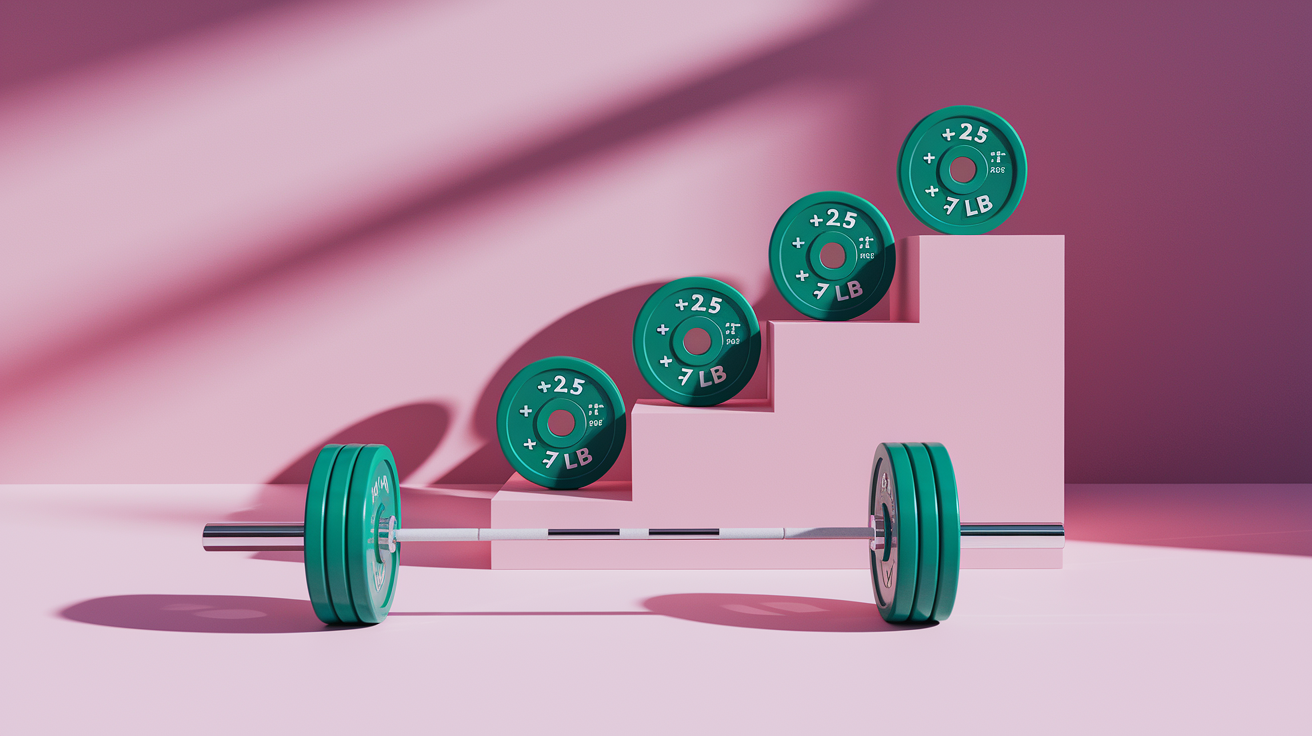
Upper body exercises tolerate smaller jumps than lower body movements because the involved muscle groups are smaller and recover more slowly. Lower body lifts use larger muscle groups and a stronger skeletal structure, allowing faster load increases without the same injury risk. The percentages that follow give you a reliable starting framework, but use the smallest available plates or dumbbells in your gym to stay within safe ranges.
| Exercise Type | Typical Increase | Notes |
|---|---|---|
| Barbell Bench Press | 2.5–5 lb (≈2.5–5%) | Add 5 lb total (2.5 lb per side) when hitting top reps for two sessions |
| Barbell Back Squat | 5–10 lb (≈5–10%) | Larger jumps are safe due to leg strength; monitor knee and hip alignment |
| Conventional Deadlift | 5–10 lb (≈5–10%) | Often progresses fastest; prioritize flat back position over load |
| Overhead Press (Barbell or Dumbbell) | 2–5 lb (≈2.5–5%) | Slowest progressing lift; consider micro-plates (1.25 lb) for barbell versions |
| Dumbbell Exercises (Rows, Curls, Lateral Raises) | 2–5 lb per dumbbell | Smallest jumps available; 2.5 lb increases are often ideal for isolation moves |
| Bodyweight Progressions (Push-Ups, Pull-Ups) | 1–2 reps per set or easier variation | Add reps before adding external weight; progress from assisted to full bodyweight |
When your gym doesn’t stock 2.5 lb plates, consider buying a pair of fractional plates (1.25 lb or 0.5 kg) to keep upper body progression smooth. A ten pound jump on a bench press can feel enormous for a beginner pressing 95 pounds, but a 2.5 pound increase keeps the challenge manageable. For dumbbells, accept that you’ll sometimes need to stay at a weight slightly longer until you’re ready for the next increment in the rack.
Common Mistakes Beginners Make When Increasing Weight

The most damaging mistake is chasing a heavier number before your body has fully adapted to your current load. Adding weight feels like progress, but real progress comes from training consistently at a weight that challenges you without breaking your form. Impatience leads to technique compromises, joint stress, and eventually a forced break from training.
Here are five frequent errors beginners make when progressing load:
Adding weight too frequently. Increasing every single workout might work for the first two weeks of training, but most beginners need one to three weeks at each weight to build solid adaptations. Jumping up every session leads to form breakdown and stalled progress within a month.
Ignoring recovery signals. Persistent soreness beyond 48 hours, joint aches that don’t resolve with warm up sets, and performance drops across multiple sessions all indicate your body hasn’t recovered. Adding weight on top of incomplete recovery compounds fatigue and increases injury risk.
Changing multiple variables at once. If you increase weight and add an extra set in the same workout, you won’t know which change caused your performance to drop or improve. Adjust one variable per training block, whether that’s load, reps, sets, or tempo, so you can measure its effect clearly.
Using ego or comparison as the guide. What another lifter uses for their working sets has zero relevance to your progression. Your joints, connective tissue, and nervous system adaptation follow their own timeline. A weight that’s too light today builds the foundation for the weight that will challenge you in four weeks.
Skipping deload weeks. Pushing forward every single week without planned recovery leads to accumulated fatigue that eventually forces an unplanned break. Every four to six weeks, reduce load by ten to twenty percent for one week while maintaining reps and sets. This allows full recovery and often leads to better performance when you return to normal loads.
Exercise-Specific Examples of Proper Weight Increases
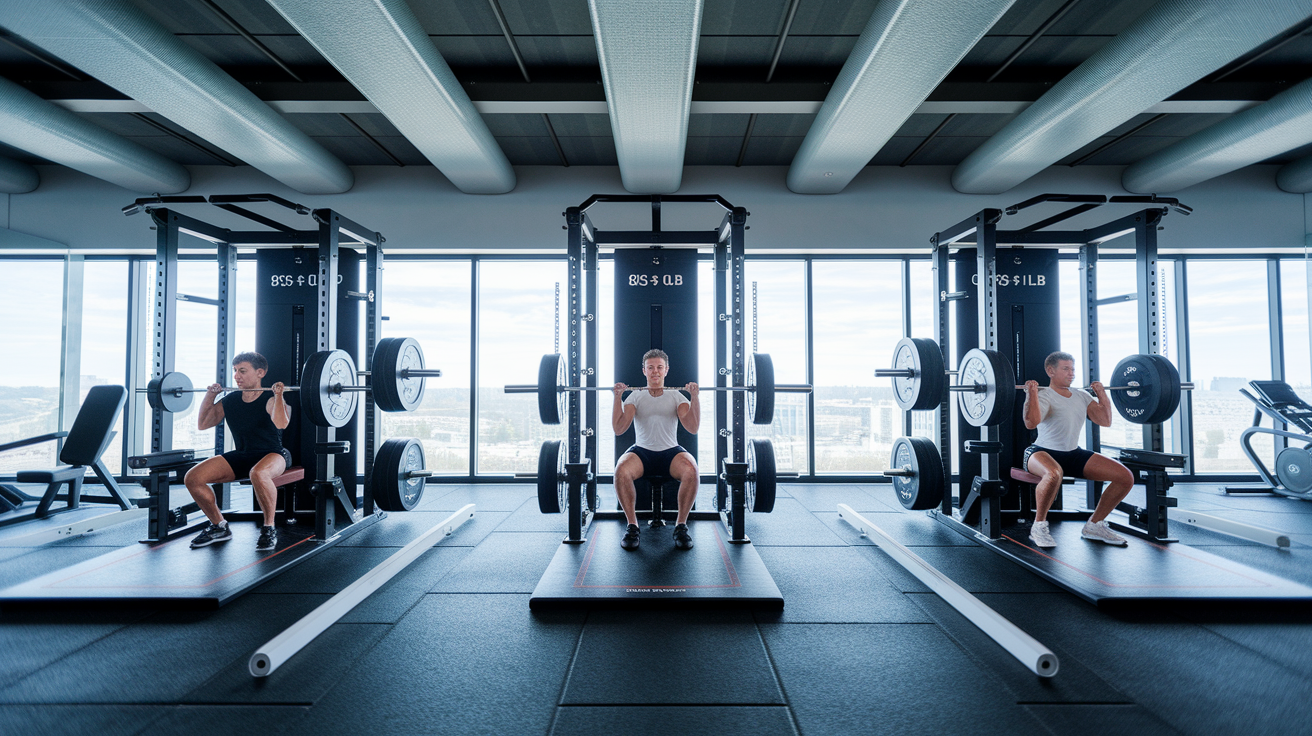
Squats and deadlifts allow the fastest beginner progression because they engage the largest muscle groups and benefit from favorable leverage. A beginner squatting 95 pounds for three sets of eight reps can often add five to ten pounds every one to two weeks for the first two months. Once you hit three sets of eight with solid depth and no knee cave, increase to 100 or 105 pounds.
Expect your reps to drop to five or six on the first session at the new weight, then rebuild back to eight over the next two to three workouts before increasing again.
Bench press progression moves more slowly due to smaller muscle groups and longer recovery needs. If you’re pressing 95 pounds for three sets of eight, plan to stay at that weight until you can complete three sets of ten with controlled descent and full lockout. Then add five pounds, moving to 100, and rebuild your reps from six or seven back up to ten. Upper body lifts often require two to three weeks at each weight for beginners, especially if training frequency is only two sessions per week.
Overhead press demands the smallest and slowest increases of any major barbell lift. Beginners often stall quickly because shoulder musculature is smaller and more vulnerable to fatigue. If you’re pressing 65 pounds, adding even five pounds can feel like a massive jump. Use 2.5 pound increments (1.25 lb plates per side) and aim to add weight every three to four weeks rather than weekly. Patience on the overhead press protects shoulder health and builds the stability needed for long term progress.
| Lift | Typical Beginner Progression Rate | Key Technique Check |
|---|---|---|
| Back Squat | 5–10 lb every 1–2 weeks | Knees track over toes; chest stays upright; depth reaches hip crease below knee |
| Deadlift | 5–10 lb every 1–2 weeks | Flat or neutral spine from setup through lockout; hips and shoulders rise together |
| Bench Press | 2.5–5 lb every 2–3 weeks | Shoulder blades stay retracted; bar path travels in straight line; elbows at 45-degree angle |
| Overhead Press | 2.5–5 lb every 3–4 weeks | Core stays braced; bar clears head without excessive lean; lockout is complete overhead |
| Barbell Row | 2.5–5 lb every 2–3 weeks | Torso angle stays consistent; bar touches sternum or upper abdomen; no excessive hip drive |
Final Words
When you’re ready to add weight, trust the clear signals: you finish all reps, reps stay controlled, and your form doesn’t wobble.
We covered the key signals, performance indicators, safety checks, recommended jump sizes, common mistakes, and exercise-specific examples so you can make safe choices.
Stick to simple rules—2–3 session confirmations, an RPE around 6–8, and small increases—while tracking one metric each week.
That’s the core of when should beginners increase weight rules and signals — use them as your checklist, add small loads, and you’ll build strength steadily and safely.
FAQ
Q: What is the 3 3 3 rule at the gym / for lifting?
A: The 3-3-3 rule at the gym is a simple progression cue: if you complete the prescribed reps and sets (or add about 3 reps) for three workouts in a row, raise the weight slightly.
Q: How often should a beginner increase weight?
A: A beginner should increase weight roughly every 1–3 weeks, as long as form stays solid, planned reps are completed without major struggle, and recovery feels OK.
Q: What is the 5-3-1 rule in gym?
A: The 5-3-1 rule is a strength program using four-week cycles: a block with 5 reps, then 3 reps, then heavy singles, with weights set as percentages of your one-rep max to build strength.