

You don’t need to grind out a true max to pick the right starting weights—testing heavy singles is overrated and risky.
Submaximal rep-max testing lets you lift a moderate weight for several clean reps, then estimate a one-rep max with simple formulas.
It’s safer, keeps your form, and gives beginners or returners a usable baseline without wrecking the rest of the week.
This post shows a quick, step-by-step method to test, convert reps into an estimated 1RM, and pick conservative starting loads you can use tonight.
Quick Method to Choose Starting Weights Using Submaximal Rep-Max Testing
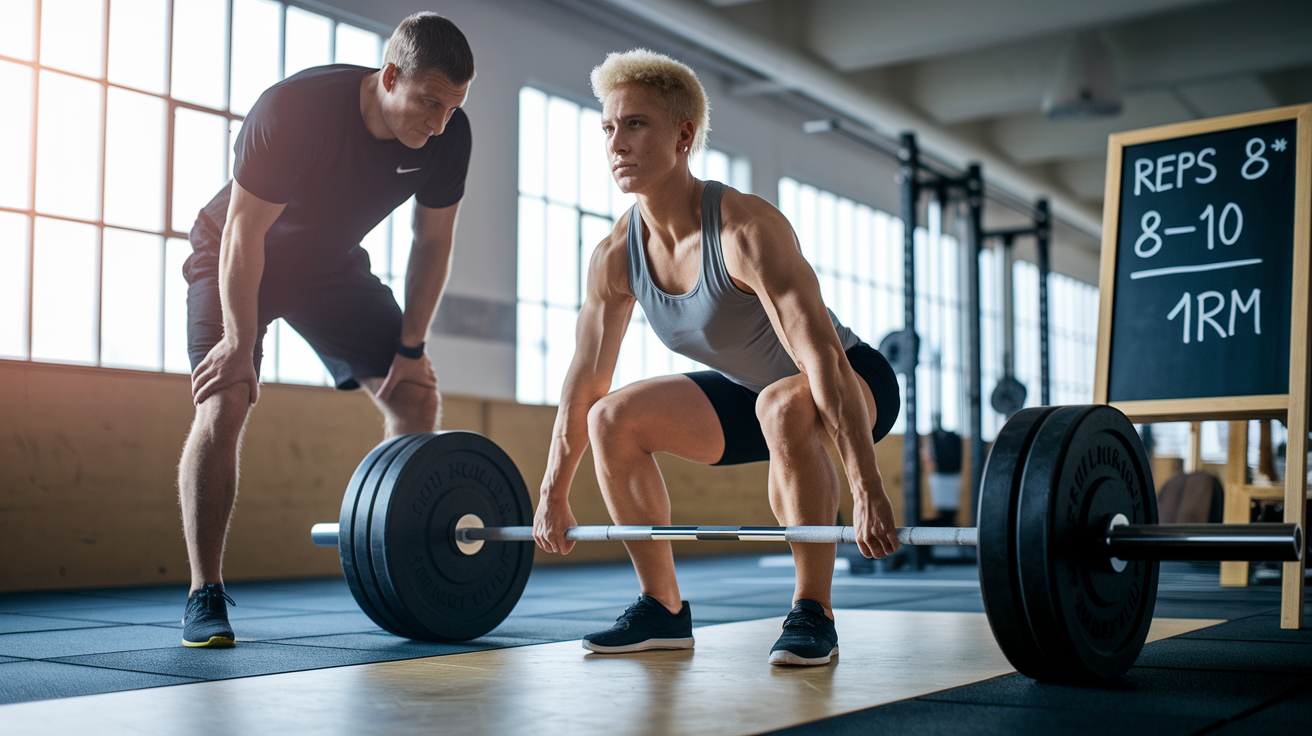
You don’t need to test your absolute max to pick a smart starting weight. Submaximal rep-max testing lets you lift a moderate weight for several reps, then estimate your one-rep max without the risk or fatigue of grinding through a heavy single.
This approach works better for beginners, people coming back after time off, and anyone who wants a solid baseline without the stress of a true max attempt. Most coaches prefer submaximal tests because your form stays cleaner, injury risk drops, and the math still gets you close enough.
The main thing? Choose a weight you can lift somewhere between 5 and 10 good reps. Go much higher and the formula gets fuzzy. Go lower and you’re basically doing a near-max lift anyway.
Here’s how to do it:
- Warm up with light sets, then pick a weight you think you can lift for 8 to 10 reps with tight form.
- Knock out as many reps as you can while keeping your technique clean. Stop when your speed slows or your form starts to slip.
- Write down the weight and the number of reps you hit.
- Plug those numbers into a standard formula. Epley or Brzycki both work well.
- Pick your starting training load as a percentage of that estimated 1RM.
Once you’ve got your estimated one-rep max, beginners usually start training sessions at 50 to 65 percent of that number. If you’re returning to lifting after a break, 60 to 70 percent gives you enough challenge without frying your system. Intermediate lifters who already move well can often start closer to 70 to 75 percent. These percentages let you hit your target reps with solid form, build consistency, and progress safely week to week.
Rep-Max Conversion Charts for Selecting Training Loads

A rep-max conversion chart translates how many reps you can perform into a percentage of your one-rep max. These charts come from decades of strength research and give you a quick reference without needing to remember formulas or dig out a calculator.
The basic idea’s simple. If you can lift a weight for exactly 5 reps and no more, that weight’s roughly 85 percent of your one-rep max. If you can lift it for 10 clean reps, it’s closer to 70 percent. The chart below shows the most common rep-to-percentage pairings.
| Reps | Percent of 1RM | Notes |
|---|---|---|
| 1 | 100% | True max; not recommended for regular testing |
| 3 | 95% | Heavy triple; good for experienced lifters |
| 5 | 85% | Common test rep range; reliable estimate |
| 6 | 83% | Slight fatigue begins to affect accuracy |
| 8 | 80% | Standard moderate-load training zone |
| 10 | 75% | Most popular submaximal test rep count |
| 12 | 70% | Higher-rep range; less accurate for pure strength |
| 15 | 65% | Endurance-strength zone; formulas vary widely |
| 20 | 60% | Very high reps; estimates become unreliable |
These percentages work best for compound barbell movements like squats, bench presses, and deadlifts. They’re less accurate for isolation exercises, dumbbell work, and really high-rep sets. Individual variation matters too. Someone with more fast-twitch muscle might hit fewer reps at a given percentage, while an endurance-trained lifter might squeeze out an extra rep or two. Use the chart as a starting point, then adjust based on how the weight actually feels.
Formulas for Estimating 1RM from Submaximal Reps
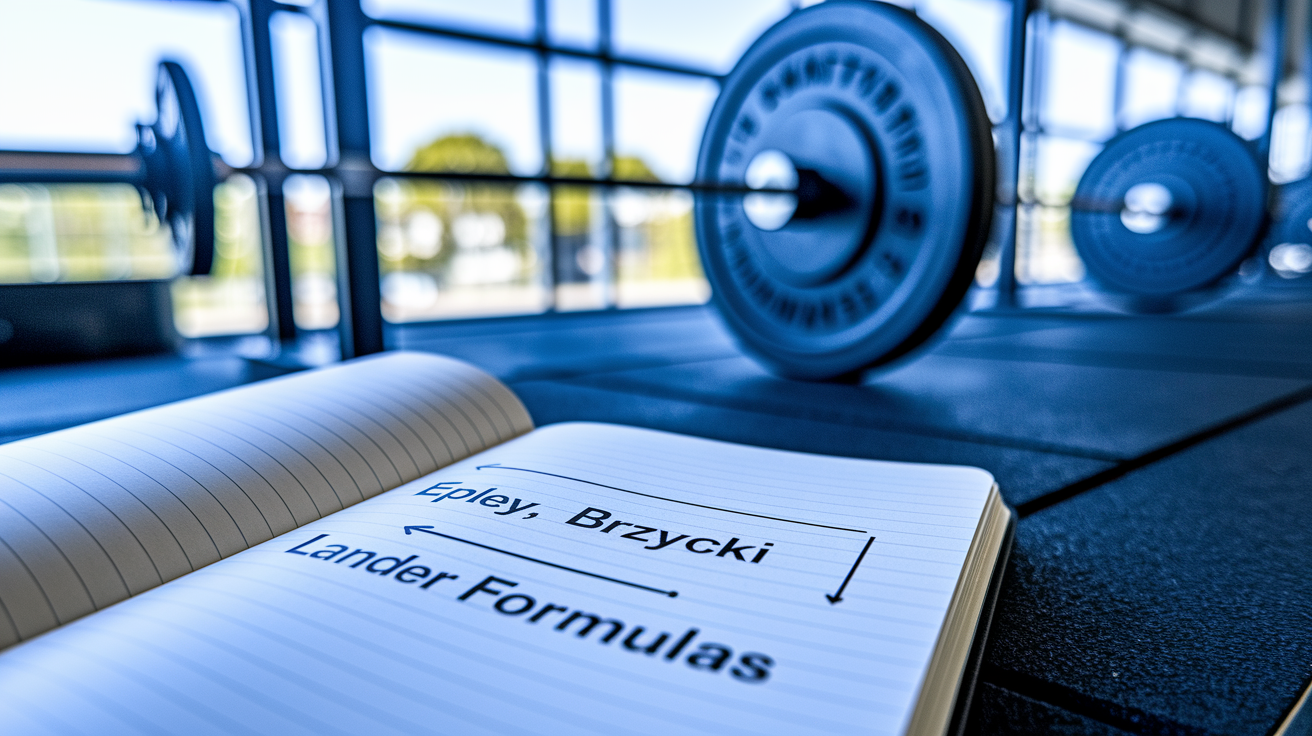
If you want a more precise estimate than a chart gives you, plug your numbers into a standard rep-max formula. These equations use the weight you lifted and the reps you completed to calculate your estimated one-rep max.
The most popular formulas:
-
Epley Formula – Estimated 1RM = weight × (1 + reps ÷ 30). Simple to calculate and accurate for most people in the 3 to 10 rep range. Example: 150 pounds for 8 reps gives 150 × (1 + 8 ÷ 30) = 150 × 1.267 = 190 pounds.
-
Brzycki Formula – Estimated 1RM = weight ÷ (1.0278 − 0.0278 × reps). A bit more conservative than Epley and often preferred by strength coaches. Example: 150 pounds for 8 reps gives 150 ÷ (1.0278 − 0.2224) = 150 ÷ 0.8054 = 186 pounds.
-
Lander Formula – Estimated 1RM = (100 × weight) ÷ (101.3 − 2.67123 × reps). Less common but useful for very low rep counts like 2 to 4 reps. Example: 150 pounds for 3 reps gives (100 × 150) ÷ (101.3 − 8.01) = 15,000 ÷ 93.29 = 161 pounds.
All three formulas lose accuracy outside the 3 to 10 rep window. If you grind out 15 or 20 reps, fatigue skews the math and your estimate will probably be too high. If you only manage 1 or 2 reps, you’re basically doing a max test anyway. Stick to moderate rep counts for the most reliable starting-weight calculations.
Safety and Fatigue Considerations When Testing Rep-Maxes

Testing your rep-max only works if you stay healthy enough to train afterward. That means warming up properly, keeping your technique tight, and stopping the set before form falls apart.
Start with at least two warm-up sets. The first should be light, around 25 to 40 percent of what you think you’ll lift, for 8 to 10 easy reps. The second warm-up should be closer to 50 to 60 percent for 5 to 6 reps. If you’re testing a complex lift like a squat or deadlift, add a third warm-up at 70 percent for 2 to 3 reps. These sets prepare your nervous system, rehearse the movement, and cut down injury risk when you push into higher effort.
Stop your test set the moment your rep speed slows noticeably or your position shifts. A submaximal test isn’t about grinding. If your hips shoot up early on a squat or your shoulders roll forward on a bench press, that rep doesn’t count and the set’s over. Write down the last clean rep you completed. Forcing one more ugly rep to hit a round number defeats the purpose and raises your chance of a tweak or strain that sidelines you for weeks.
Fatigue clouds your numbers too. If you’re testing after a hard training week or on minimal sleep, your rep-max estimate will be artificially low. Test on a day when you’re rested, fed, and feeling normal. One conservative test beats three aggressive attempts that leave you sore and confused about your real capacity.
Beginner Guidelines for Choosing Initial Loads

If you’re new to structured strength training, your first goal is learning the movements with weights that feel manageable. Estimating your one-rep max is helpful, but you won’t train anywhere near that number for the first few weeks.
Here are the core principles for beginners choosing starting loads:
Start at 50 to 60 percent of your estimated 1RM for compound lifts like squats, presses, and rows. Use an even lower percentage, maybe 40 to 50 percent, for technically complex movements like deadlifts or overhead presses until your form is consistent. Prioritize hitting your target reps with perfect technique over adding weight to the bar.
Plan to add only 2.5 to 5 pounds per session on upper-body lifts and 5 to 10 pounds on lower-body lifts. If a weight feels easy for all your sets, that’s fine. Easy reps build the movement pattern and prepare your tissues for heavier loads later.
Most beginners underestimate how quickly they’ll progress once their nervous system adapts. Starting lighter doesn’t mean staying weak. It means you avoid early burnout, soreness that disrupts your schedule, and the discouragement that comes from failing reps in week two. A conservative first month sets you up for steady, measurable progress through month three and beyond.
Your body needs time to strengthen tendons, coordinate muscles, and build work capacity. Jumping straight to 75 or 80 percent of your estimated max might feel impressive on day one, but it usually leads to excessive fatigue, inconsistent form, and a higher chance of a minor injury that costs you training time. Start where you can move well, track your sessions, and let the weight climb as your technique becomes automatic.
Practical Worked Examples
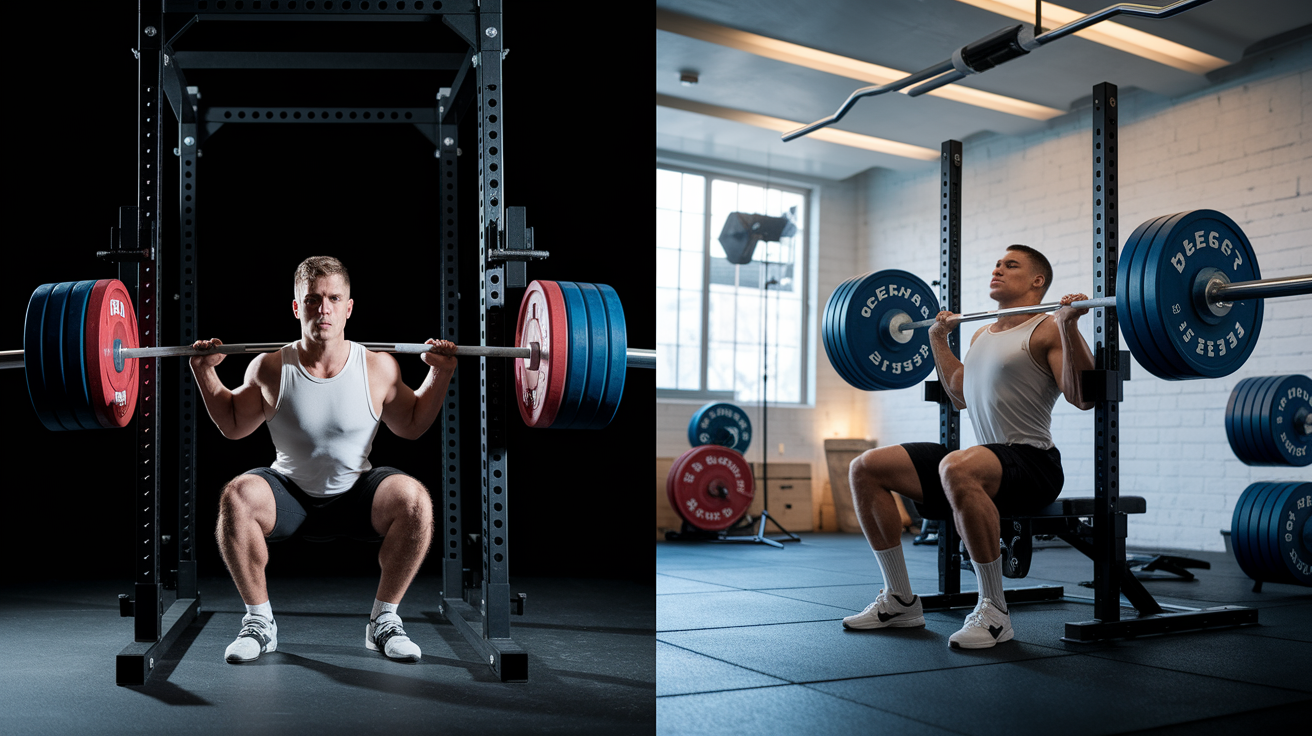
Seeing the math in action makes the process clearer. Here are two full examples showing how to estimate your one-rep max and choose a starting training load.
Squat Example – You warm up and perform a working set of back squats with 185 pounds. You complete 6 clean reps and feel like a 7th rep would compromise your form. Using the Epley formula: 185 × (1 + 6 ÷ 30) = 185 × 1.2 = 222 pounds estimated 1RM. If you’re a beginner, you’d start your training sessions at 60 percent of 222, which is 133 pounds. Round to 135 pounds (a standard barbell load). That’s your working weight for week one.
Bench Press Example – You load 115 pounds and press it for 8 solid reps. Using the Brzycki formula: 115 ÷ (1.0278 − 0.0278 × 8) = 115 ÷ 0.8054 = 143 pounds estimated 1RM. As an intermediate lifter returning after a break, you choose 70 percent of 143, which is 100 pounds. You round to 100 pounds and use that weight for your first working sets of 3 sets of 8 reps.
Both examples show conservative starting points that leave room for weekly increases. If 135 pounds feels light on your squat sets, you’ll add 5 or 10 pounds the following week and still stay well below your estimated max. If 100 pounds on the bench feels challenging by set three, you know you’ve chosen an appropriate load and can hold that weight for another session before progressing. The key is using your rep-max estimate to anchor your starting point, not to dictate your absolute ceiling.
Progression Strategy After Choosing Starting Weights
Once you’ve picked your starting load, the next step is adding weight in a way that keeps you progressing without stalling or getting hurt. A clear progression plan turns your starting estimate into months of steady strength gains.
Here are four reliable progression methods:
Percentage Increases – Add 2.5 to 5 percent to your working weight each week if you’re hitting all your target reps with good form. On a 100-pound lift, that’s 2.5 to 5 pounds per week.
Rep-Based Progression – If your program calls for 3 sets of 8 reps, add weight once you can complete 3 sets of 10 reps at your current load. This gives you a built-in buffer.
Reps in Reserve (RIR) Adjustments – Track how many reps you could’ve done beyond your target. If you finish a set of 8 and feel like you had 4 more reps available, increase the weight next session. If you finish with only 1 rep left, hold the current load.
Technical Consistency Checks – Only increase weight if your form on the last rep matches your form on the first rep. If technique starts to drift, stay at the current load until it’s locked in.
Add weight when your sessions feel controlled and repeatable. If you hit your rep targets across all sets for two consecutive workouts, it’s usually safe to add 5 pounds to a lower-body lift or 2.5 pounds to an upper-body lift. If you’re struggling to complete the low end of your rep range, hold your current weight for another week or drop 5 to 10 percent and rebuild. Progress isn’t always linear, but a clear decision rule keeps you moving forward without guessing every session.
Final Words
Use a quick submaximal AMRAP set, record reps and weight, then plug the numbers into a Brzycki or Epley formula. That gives an estimated 1RM you can convert to a safe starting load.
Pair that with a rep‑max chart, conservative percentages (50–65% for beginners, 65–70% for intermediates), and simple safety checks. Track reps and nudge up 2.5–5% when reps feel solid.
This post showed step‑by‑step testing, charts, formulas, safety tips, and progression so you can quickly learn how to choose your starting weights using rep-max estimates. Small, consistent steps win. You’ve got this.
FAQ
Q: How do I choose starting weights using submaximal rep‑max testing?
A: Choosing starting weights uses a submaximal AMRAP set (5–10 reps): record weight and reps, estimate 1RM with Brzycki/Epley, then pick a training percentage based on experience.
Q: What is the step‑by‑step submaximal testing method?
A: The 5‑step method is: warm up, pick a manageable weight, perform an AMRAP set (5–10), record reps and weight, plug values into a formula, then choose a starting percentage.
Q: Which formulas estimate 1RM and when should I use them?
A: Brzycki, Epley, and Lander estimate 1RM from weight and reps; they’re most accurate for 3–10 reps. Use Brzycki for moderate reps and Epley for slightly higher rep sets.
Q: What percentage of estimated 1RM should beginners and intermediates use?
A: Beginners should start about 50–65% of estimated 1RM to prioritize technique; intermediates commonly choose 60–70% depending on goals and training history.
Q: How accurate are rep‑max estimates and what are their limits?
A: Rep‑max estimates work best for 3–10 reps but lose accuracy with fatigue, very high reps, or unfamiliar lifts. Treat estimates as a starting point, not an exact number.
Q: How do I use rep‑max percentage charts to pick loads?
A: Rep‑max charts map reps to percent of 1RM (for example, 5RM ≈85%, 10RM ≈70%); use them for quick load choices, then adjust for the lift and your background.
Q: How do I test safely and manage fatigue when doing rep‑max tests?
A: Test safely by doing proper warm‑ups, keeping strict technique, stopping when form breaks, avoiding true max attempts, and spacing tests to limit cumulative fatigue.
Q: What progression strategy should I use after choosing starting weights?
A: Progress with small, steady steps: add 2.5–5% per week, increase reps when appropriate, use reps‑in‑reserve (RIR) to judge readiness, and only raise load if technique stays solid.
Q: Can you give quick worked examples for squat and bench?
A: Example: squat 5 reps at 200 lb → Epley 1RM ≈233 lb → start at 70% ≈163 lb. Bench 8 reps at 135 lb → 1RM ≈169 lb → start at 65% ≈110 lb.
Q: What should I do if the chosen starting load feels too hard in early sessions?
A: If a load feels too hard, drop it 5–10%, cut sets or reps, or use the minimum option (e.g., two sets of the first three moves) until form and confidence improve.