

Think taking a lighter week means you’re weak?
It doesn’t, it’s smart planning.
A deload is a short, planned drop in training stress to help muscles, joints, and your nervous system recover without losing technique.
This post walks beginner lifters through three safe deload methods: volume cuts, intensity cuts, and mixed approaches, shows the clear signs you need one, and gives a simple deload week you can use after a 6 to 8 week cycle.
Read on to learn which method fits your fatigue and how to schedule it so you keep making steady gains.
Immediate Breakdown of Safe Deload Methods and Timing for Beginner Lifters

A deload is a planned reduction in training stress, usually lasting 5 to 10 days. You drop either the weight, the number of sets, or both. The point? Give your body time to catch up on recovery so you can keep making progress long term. It’s not a week off. You still train, just back off enough to let your muscles, joints, and nervous system recover.
Beginners should plan deloads every 4 to 8 weeks. Most new lifters can push hard for 6 to 8 weeks before fatigue starts piling up and performance slows or stalls. Scheduling a deload before you feel completely wrecked keeps training consistent and lowers injury risk. There are specific warning signs (covered later), but the easiest approach is just marking a deload week on your calendar after every 6 to 8 weeks of steady progression.
Three main deload methods exist. All three are safe when you use them correctly. You can cut volume by reducing sets and reps by 20 to 50 percent while keeping weights similar. You can drop intensity by lowering the weight to 60 to 75 percent of your usual working load while keeping sets and reps the same. Or you can reduce both slightly in a mixed approach. Each method targets a different layer of fatigue. Most beginners benefit from cutting volume first.
Common triggers for scheduling a deload:
- Performance slowdown across multiple sessions
- Completion of a planned 6 to 8 week training cycle
- Fatigue that doesn’t clear with a rest day
- Drop in effort quality even when motivation is present
- Disrupted recovery rhythms like worse sleep or lingering soreness
Understanding Deload Fundamentals for Beginner Lifters

Volume is the total amount of work you do in a session or week. You count it as sets multiplied by reps. Most fatigue in beginner programs comes from volume, not from lifting heavy weights. Repeatedly performing sets close to failure creates muscle damage, depletes energy stores, and stresses connective tissue. Cutting sets by 30 to 50 percent during a deload week lets tissues repair and adapt without losing your movement patterns. This is the safest first option for new lifters because it reduces the main driver of fatigue without removing the neural stimulus that keeps you strong.
Intensity is the load on the bar relative to your maximum. Heavy weights demand high neural output and put more stress on joints and tendons. When you lower intensity to 60 to 75 percent of your usual working weight, you give your nervous system and joints a break while still moving through the full range of each lift. This works well when you feel beat up in specific areas, like your knees or elbows, but volume alone isn’t the main issue. Beginners on linear progression programs often pile up intensity fatigue after 6 to 8 weeks of adding weight every session.
| Method | Typical Reduction |
|---|---|
| Volume cut | Reduce sets/reps by 30–50% |
| Intensity cut | Drop weight to 60–75% of usual |
| Mixed cut | Reduce both by 20–40% each |
Recognizing Early Signs You Need to Deload Safely

Performance trends are the clearest indicator. If your main lifts stall for 2 to 3 weeks despite eating and sleeping well, fatigue has probably caught up. Another sign is slower bar speed. Weights that used to move quickly now grind, even on your first working set. Warmup sets that normally feel easy start to feel heavy or require more focus than usual. These trends tell you your body isn’t bouncing back between sessions.
Recovery markers show up outside the gym. Soreness that lasts longer than 48 to 72 hours after a session means your muscles aren’t clearing waste or repairing well. Your resting heart rate, measured first thing in the morning, may rise by 5 to 10 beats per minute above your normal baseline. Sleep quality often drops. You might wake up more often, take longer to fall asleep, or feel unrested even after 7 to 8 hours. These signs point to systemic stress, not just muscle tiredness.
Emotional and psychological indicators matter just as much as physical ones. If you start dreading heavy sets or feel unmotivated to train even when your schedule is clear, mental fatigue has set in. Irritability, brain fog, or a short temper lasting more than a week can signal elevated cortisol and incomplete recovery. These feelings don’t mean you’re weak. They mean your body is asking for a break.
Early warning signs:
- Main lifts plateau or regress for 2 to 3 consecutive weeks
- Bar speed slows noticeably on usual working weights
- Warmup sets feel unexpectedly heavy or require extra mental effort
- Muscle soreness persists beyond 72 hours after training
- Resting heart rate rises 5 to 10 beats above baseline
- Sleep disruption or poor sleep quality lasting several nights
Practical Safe Deload Methods for Beginner Lifters
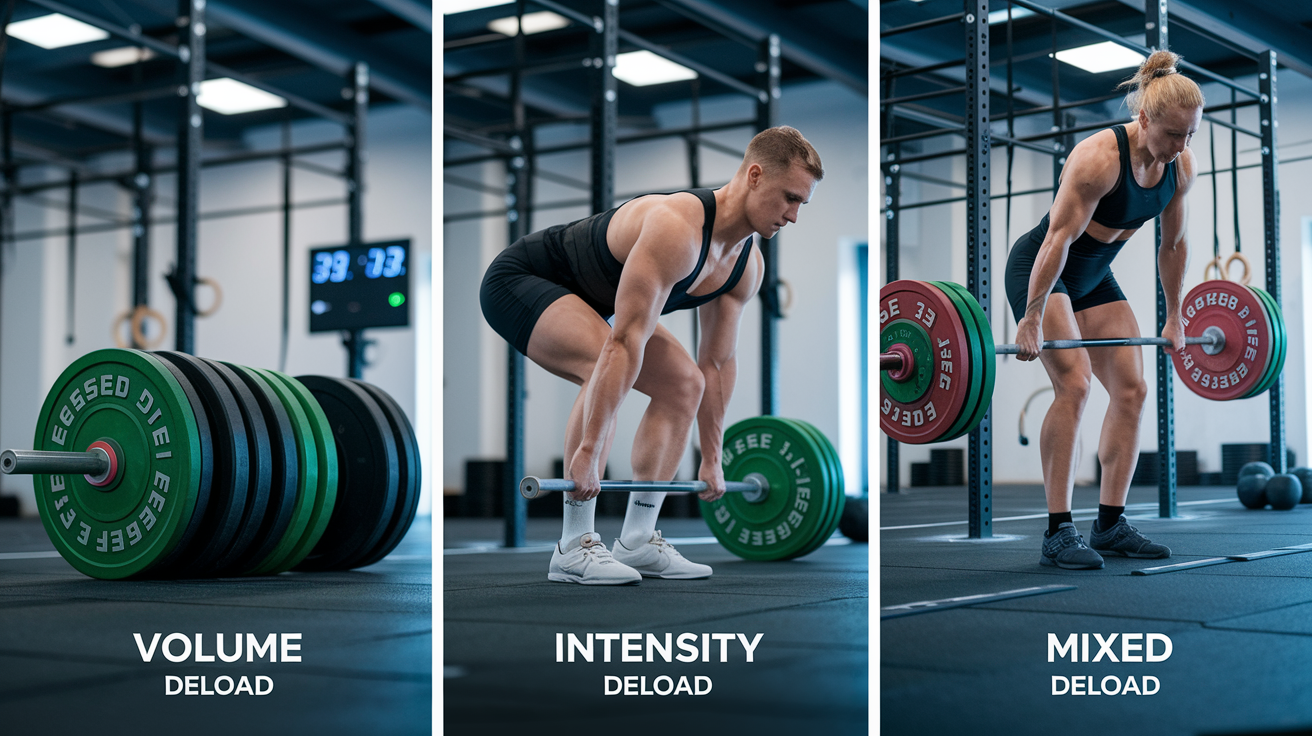
Each deload method reduces stress in a specific way. Choosing the right one depends on what feels hardest during your training. If your muscles feel beaten up and your sessions feel long, reduce volume. If your joints ache or heavy weights feel grinding, reduce intensity. If both feel taxing, use a mixed approach. All methods keep you training, which preserves habit and technique while giving your body room to recover.
Volume-Based Deload
Cut your working sets by 30 to 50 percent and keep the weight on the bar close to your usual loads. For example, if you normally squat 5 sets of 5 reps at 185 pounds, drop to 2 or 3 sets of 5 at 180 to 185 pounds. This approach is the safest for beginners because it directly targets the main fatigue driver without messing with your strength adaptations. You still lift heavy enough to maintain neural efficiency and movement quality.
Intensity-Based Deload
Lower the weight to 60 to 75 percent of your usual working load and keep your sets and reps similar. If you typically bench press 3 sets of 5 at 135 pounds, use 90 to 100 pounds for the same 3 sets of 5. Focus on controlled tempo and perfect form. This method gives your joints and nervous system a break while keeping training volume similar, which helps if you feel structurally stressed but not completely exhausted.
Mixed Deload Method
Reduce both intensity and volume moderately. Drop your weight to 70 to 80 percent of usual and cut sets by 30 to 40 percent. For example, if you deadlift 4 sets of 5 at 225 pounds, try 2 or 3 sets of 5 at 160 to 180 pounds. This works well when you’re dealing with both accumulated fatigue and joint stress. It’s a middle ground that reduces total weekly strain without completely backing off either variable.
Technique & Mobility-Focused Deload
Use lighter loads, slower tempos, and include mobility drills between sets. Perform your main lifts at 50 to 60 percent of usual weight with deliberate pauses and controlled eccentric phases. Add extra stretching, foam rolling, or yoga sessions during the week. This method is useful when you want a mental break from heavy lifting but still want to maintain movement patterns and address tight areas. It’s not a complete rest week, but it shifts the focus from loading to movement quality.
Structuring a Sample Deload Week for New Lifters
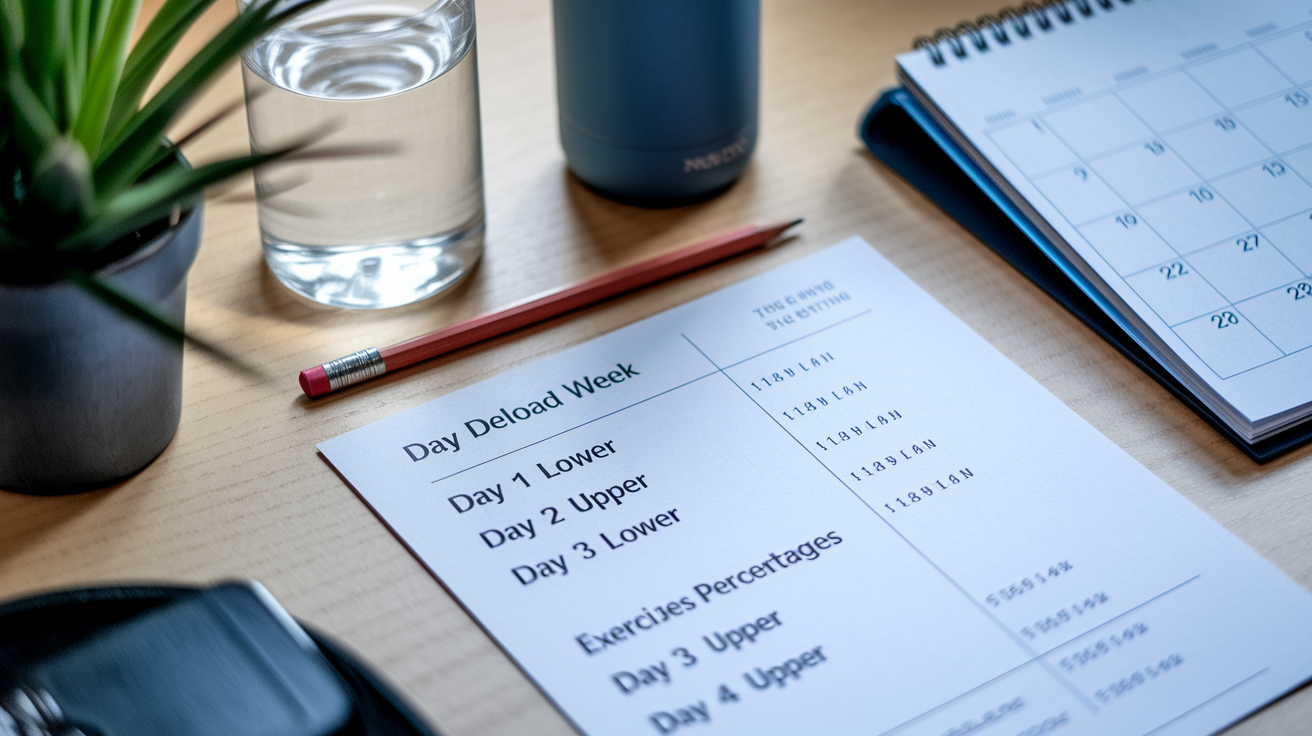
A deload week should mirror your normal training structure with reduced stress. Keep the same number of sessions per week and use the same exercises you’ve been training. The difference is in the load and volume. This preserves your routine and keeps movement patterns sharp while giving your body time to catch up. Most beginners feel ready to return to full training after 5 to 7 days.
Select percentages based on the method you’re using. For a volume-based deload, use 85 to 95 percent of your usual working weight and cut sets in half. For an intensity-based deload, use 60 to 75 percent of your usual weight and keep sets the same. For a mixed deload, use 70 to 80 percent of your weight and reduce sets by about 30 percent. All sets should feel controlled and leave you with 3 to 4 reps in reserve. Nothing should feel like a grind.
Sample 4-day deload week using a mixed approach:
- Day 1 (Lower): Squat 3×5 at 70% of usual working weight, Romanian deadlift 2×6 at 60%, core work 2×10 at light resistance
- Day 2 (Upper): Bench press 3×5 at 70%, barbell row 3×8 at 65%, face pulls 2×12 light
- Day 3 (Lower): Deadlift 2×4 at 75%, walking lunges 2×8 bodyweight only, calf raises 2×12
- Day 4 (Upper): Overhead press 3×5 at 70%, pull-ups 2×6 to 8 (not close to failure), triceps work 2×10 light
When Not to Use Deload Methods (Beginner-Specific)

A single bad session isn’t a reason to deload. Everyone has off days caused by poor sleep the night before, work stress, or just feeling flat. If one workout feels hard but the next session returns to normal, keep training as planned. Deloads are for consistent fatigue trends that last 1 to 2 weeks or longer, not random fluctuations in daily performance.
Illness or acute injury requires full rest, not a deload. If you’re sick with a fever, respiratory infection, or gastrointestinal issue, stop training completely until symptoms clear. If you injure a joint or muscle, see a healthcare provider and follow their guidance. A deload reduces training stress but still involves movement and load. Pushing through illness or injury with light training can delay healing and make things worse.
Situations where a deload isn’t appropriate:
- One or two rough sessions without a consistent downward trend
- Active illness with fever, infection, or systemic symptoms
- Acute injury requiring medical assessment or complete rest from loading
Safe Return to Training After a Deload

After a 5 to 10 day deload, most lifters notice warmup sets move faster and feel lighter. Joint aches that were nagging before the deload often fade or disappear. Sleep quality improves, and motivation to train returns. These are signs that your body has caught up on recovery and is ready for progressive overload again. Many beginners hit rep PRs or small weight increases within 1 to 2 weeks after a deload because fatigue no longer masks their true strength.
Ramp back into full training gradually over 1 to 2 sessions. Don’t jump straight to the heaviest weights you were using before the deload. Start your first session back at 90 to 95 percent of your pre-deload working weights and see how it moves. If bar speed is good and nothing feels grinding, resume your normal progression the following session. If things still feel slightly sluggish, take one more lighter session before returning to full loads.
Steps for gradually returning to full intensity:
- Resume training with 90 to 95 percent of your pre-deload working weights
- Monitor bar speed and joint comfort on your first session back
- Add back full volume and intensity by the second or third session if movement quality is sharp
- Continue normal progression after confirming recovery cues are present
Final Words
Start your next deload by cutting volume, lowering intensity, or doing a mixed week for about 5–10 days—it’s a planned break that helps you recover without losing gains.
We covered when to deload (usually every 4–8 weeks or when performance slips), the three safe methods, common warning signs, a sample week, and how to ramp back safely.
Use this as a simple guide. These safe deload methods for beginner lifters and when to use them are easy to try next week—start small, track one thing, and you’ll come back stronger.
FAQ
Q: What is a deload and how long should it last?
A: A deload is a planned 5–10 day reduction in training stress to let you recover while keeping progress. For beginners, a one‑week (7‑day) deload is the typical sweet spot.
Q: When should beginner lifters deload?
A: Beginner lifters should deload every 4–8 weeks or when a training cycle finishes, or if consistent fatigue builds up over time. Specific fatigue signs are covered in the signs section.
Q: What are safe deload methods for beginners?
A: Safe deload methods are to reduce volume by about 20–50% (fewer sets/reps), lower intensity to roughly 60–75% of usual working weight, or use a mixed approach cutting both slightly.
Q: How much should I reduce volume or intensity during a deload?
A: You should cut sets/reps by 20–50% for volume reductions and drop working weights to about 60–75% for intensity reductions. Mixed deloads reduce both moderately.
Q: What common triggers mean I should take a deload?
A: Common deload triggers include consistent performance slowdown, finishing a training block, accumulating fatigue, a sustained drop in training effort, and disrupted recovery rhythms.
Q: What are early signs I need a deload?
A: Early signs you need a deload are stalled lifts for 2–3 weeks, heavy warmups, soreness >48–72 hours, elevated resting heart rate, poor sleep, or low motivation.
Q: How should a beginner structure a sample deload week?
A: A sample beginner deload week is full‑body: squat/bench/rows 60–70% for 3×5, deadlift 2×5 at 60–70%, accessories cut 30–60%, RPE capped around 6–7, over seven days.
Q: When shouldn’t beginners use deloads?
A: Beginners shouldn’t deload after a single bad session, during acute illness or injury (rest instead), or for one‑off tiredness. Deloads are for consistent fatigue across 1–2+ weeks.
Q: How do I return safely to full training after a deload?
A: After a 5–10 day deload you’ll usually feel fresher and may hit better lifts. Ramp back loads over 1–2 sessions, add small increases, and track how your body responds.
Q: What’s the simplest deload option for very busy days?
A: The simplest deload is cutting total volume roughly 50% while keeping weight similar, or working to RPE 6 and trimming sets—keeps movement without eating much time.