

What if faster muscle recovery didn’t start in the gym or with a supplement, but with how you breathe before bed?
Slow, diaphragmatic (deep belly) breathing switches your body from fight-or-flight to rest-and-repair.
That lowers cortisol, improves oxygen delivery, and helps you get more deep sleep, when muscles do most of their fixing.
In this post I’ll show three simple, science-backed breathing routines you can do 5–20 minutes before sleep, when to use them, and an easy fallback for busy nights.
Do one tonight and you may wake noticeably less sore.
Core Breathing Method for Better Sleep and Faster Muscle Recovery

Diaphragmatic breathing is the single best thing you can do before bed if you want your muscles to actually recover overnight. It flips your nervous system out of fight-or-flight and into rest-and-repair mode. When you breathe slowly and deeply using your diaphragm, you’re activating the parasympathetic nervous system, the part that handles all your recovery processes: dropping your heart rate, lowering blood pressure, improving circulation, and telling your body it’s safe to start fixing damaged tissue. Most people only use their diaphragm about 10 percent of the time during normal breathing. The rest is shallow chest breathing that keeps stress hormones up and limits how much oxygen reaches tired muscles.
The mechanics are simple. Slow diaphragmatic breathing increases oxygen saturation in your blood, which means more oxygen gets to muscle cells during those first few hours of sleep when your body clears out waste and starts protein synthesis. At the same time, this breathing pattern reduces cortisol, the stress hormone that directly blocks muscle repair by interfering with growth hormone release and protein synthesis. Studies from 2016 through 2021 show that just five minutes of diaphragmatic breathing can lower cortisol, reduce anxiety, improve heart-rate variability, and cut the time it takes to fall asleep.
Here’s exactly how to do it before bed:
-
Lie on your back with your knees bent, or sit in a chair with your feet flat. Put one hand on your stomach just below your rib cage and the other on your chest above your heart.
-
Inhale slowly through your nose for about four seconds. Your stomach should rise while your chest stays mostly still. You want the hand on your belly to move more than the hand on your chest.
-
Exhale slowly through your mouth with slightly pursed lips for about six seconds. Your stomach should fall as your lungs empty and your rib cage gently contracts.
-
Repeat for five to ten minutes, keeping a smooth, steady rhythm. If your mind wanders, just bring your focus back to the rise and fall of your belly.
Additional Effective Breathing Exercises for Nighttime Recovery

Box breathing is a simple four-part pattern that helps regulate your autonomic balance and can drop your heart rate in minutes. The default pattern is four seconds in, four seconds hold, four seconds out, four seconds hold. It forms a “box” of equal sides. Repeat this for three to five minutes when you need to calm down quickly after a workout or before bed. If you feel lightheaded, reduce each count to three seconds or skip the holds until your body adapts.
Paced breathing targets about six breaths per minute, which research shows is the sweet spot for increasing heart-rate variability and promoting deep relaxation. Inhale through your nose for two to four seconds, then exhale through your mouth for four to six seconds, making the exhale noticeably longer. A single 20-minute session of paced breathing before bed has been shown to reduce the time it takes to fall asleep and cut down on nighttime awakenings in people with insomnia.
Resonance breathing (also called coherent breathing) follows a similar idea but uses a fixed five- to six-second inhale and exhale cycle, with no holds. Start with five minutes and work up to 20 minutes as it gets easier. Combined with consistent practice over 8 to 12 weeks, resonance breathing has been linked to improved mood, lower anxiety, and higher levels of GABA, a neurotransmitter that supports relaxation and deep sleep.
Here are three exercises to rotate into your nightly routine:
4-7-8 breathing: Inhale for four seconds, hold for seven seconds, exhale for eight seconds. Repeat for four to six cycles. This pattern comes from pranayama techniques and works really well for rapid stress reduction and lowering blood pressure.
Cyclic sighing: Take two short inhales (the second one can be even shorter), then one long exhale. Repeat for five minutes. A 2023 study found this improved mood and lowered breathing rate more effectively than mindfulness meditation in the same time frame.
Nasal breathing drills: Breathe normally through your nose, then pinch your nose and hold your breath while nodding your head gently up and down and side to side. Release when you feel the urge to breathe, rest for 30 to 60 seconds, and repeat six times. This exercise helps retrain nasal breathing habits, which reduce snoring and improve self-reported sleep quality.
How Breathing Impacts Muscle Repair During Sleep

Parasympathetic activation is the gateway to every recovery process your body runs overnight. When you practice slow, controlled breathing before bed, you stimulate the vagus nerve, which sends a direct signal to your brain and organs that it’s time to shift into rest-and-digest mode. This lowers your heart rate, reduces circulating stress hormones, and diverts energy away from alertness and toward cellular repair. Without that parasympathetic switch, your muscles stay in a low-grade stress state even while you sleep. That slows healing and limits strength gains.
Growth hormone is the primary driver of muscle repair, and most of it gets released during slow-wave sleep, the deepest phase of NREM sleep. Slow breathing before bed increases your odds of entering and staying in slow-wave sleep by calming the nervous system and reducing the micro-arousals that fragment sleep cycles. When growth hormone pulses through your system during deep sleep, it stimulates protein synthesis, accelerates tissue repair, and helps clear metabolic byproducts like lactate that pile up during training.
Cortisol suppression is just as important as growth hormone release. High cortisol directly blocks protein synthesis and promotes muscle breakdown, the opposite of what you need after a hard workout. Diaphragmatic and paced breathing have been shown in multiple studies to lower cortisol within minutes. When practiced consistently over several weeks, they produce measurable reductions in baseline cortisol levels. Lower cortisol at night means your body can dedicate more resources to rebuilding muscle fibers instead of managing stress.
NREM sleep depth determines how much repair actually happens. Breathing exercises don’t just help you fall asleep faster. They also improve the quality and architecture of your sleep by increasing the proportion of time you spend in deep, restorative stages. A 2020 study found that hospitalized patients who practiced diaphragmatic breathing reported better sleep quality and fewer disturbances. A 2021 trial in high-stress nurses showed reductions in both anxiety and sleep latency after just a few weeks of nightly practice.
When and How Long to Practice Pre-Sleep Breathing
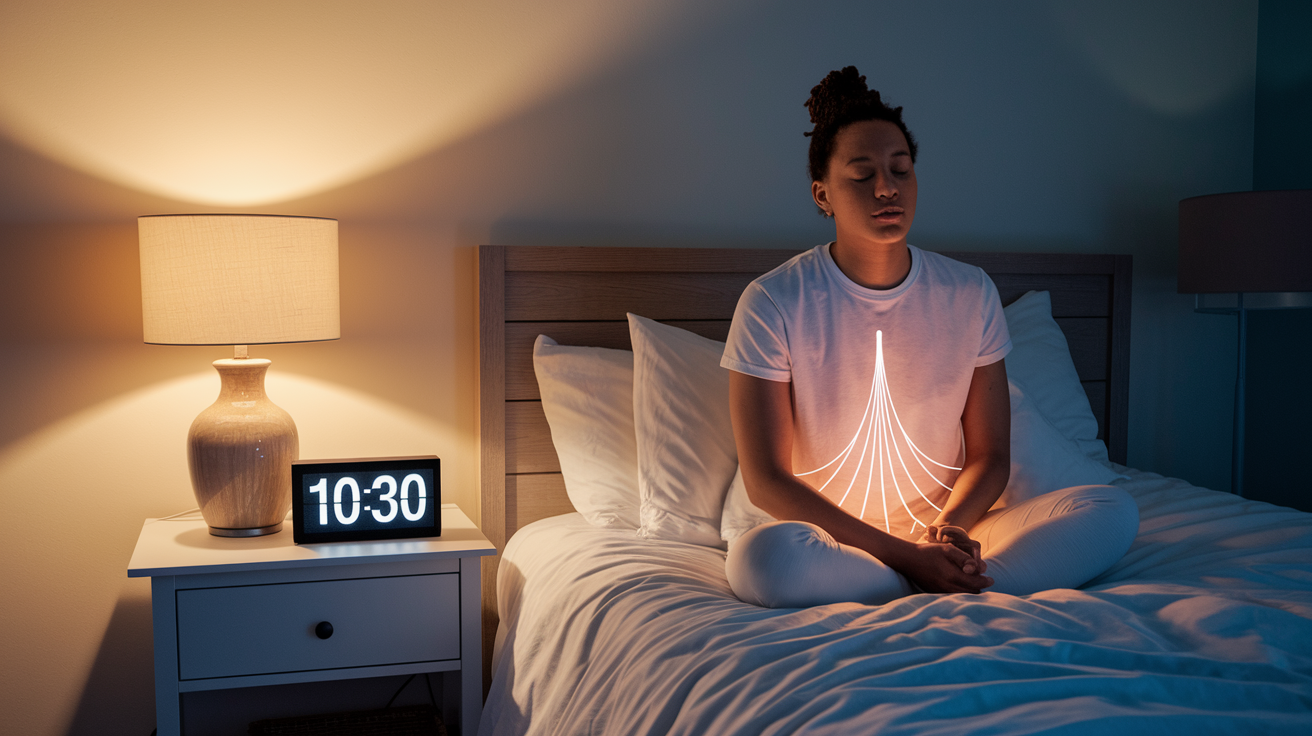
Timing your breathing practice correctly makes a noticeable difference in how quickly you fall asleep and how deeply you recover. The ideal window is 10 to 30 minutes before your target sleep time, which gives your nervous system enough runway to downshift without rushing. If you practice too early, the calming effect can wear off before you’re actually in bed. If you wait until your head hits the pillow, you may not give your body enough time to fully transition out of the day’s stress and into rest mode.
Consistency beats intensity when it comes to breathing for recovery. Practicing at the same time every night trains your autonomic nervous system to anticipate the wind-down, which makes the relaxation response faster and deeper over time. Studies measuring heart-rate variability and cortisol have found that multi-week programs produce cumulative benefits that a single session can’t, so aim to make this a nightly habit rather than an occasional tool.
Here are three timing strategies to layer breathing into your recovery routine:
-
Before bed (primary window): Practice five to ten minutes of diaphragmatic or 4-7-8 breathing in the 10 to 30 minutes before you want to be asleep. This is your main recovery session and should happen every night for best results.
-
Post-workout (optional secondary session): Immediately after training, spend five to ten minutes on box breathing or paced breathing to speed the shift from sympathetic to parasympathetic and help clear metabolic waste. This stacks well with foam rolling or stretching.
-
Evening wind-down (transition aid): If you have a high-stress evening or trouble letting go of the day, add a short three- to five-minute coherent breathing session 60 to 90 minutes before bed to begin the downshift early and smooth out the transition.
Common Mistakes That Reduce the Effectiveness of Breathing Exercises
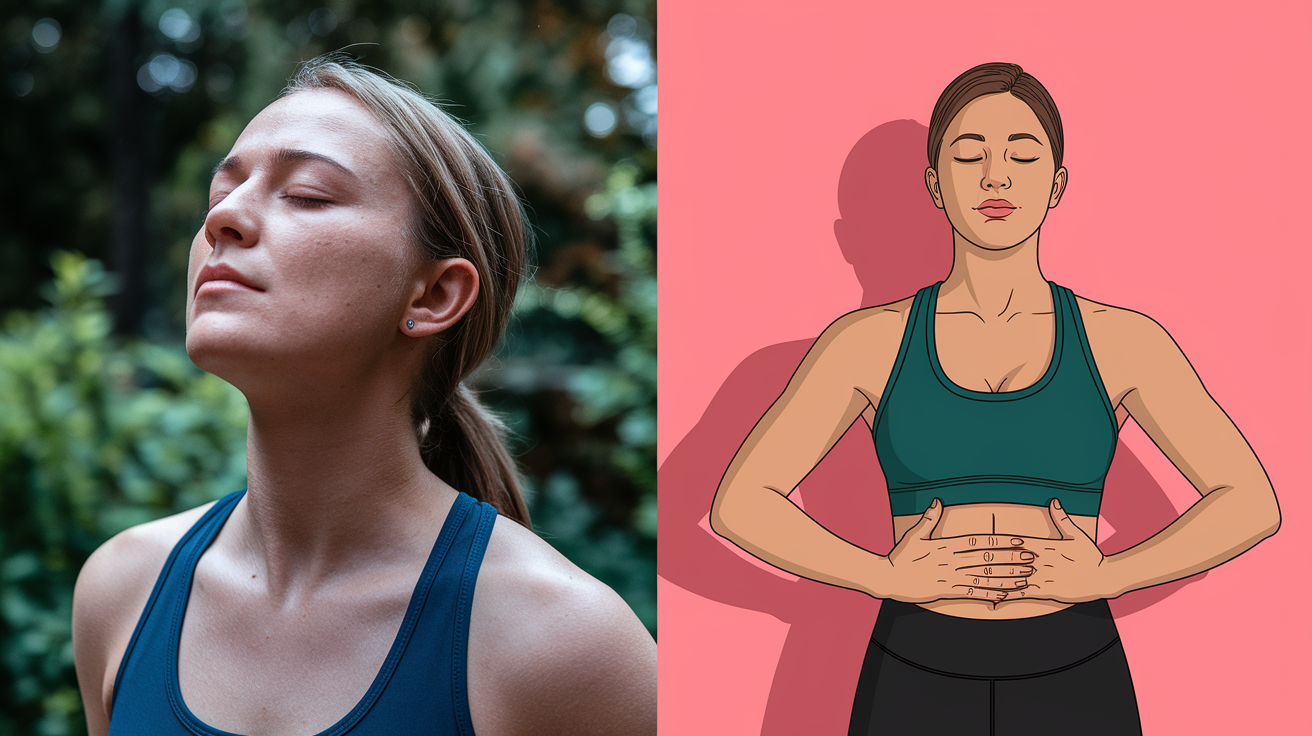
Shallow chest breathing is the most common mistake and it completely reverses the benefit you’re trying to create. When you breathe into your chest instead of your belly, you engage accessory muscles in your neck and shoulders that signal stress rather than relaxation. That keeps your heart rate elevated and your nervous system on alert. The fix is simple: place one hand on your stomach and one on your chest, then make sure the belly hand moves more than the chest hand on every breath.
Poor posture limits how much air you can actually pull into your lungs and makes diaphragmatic breathing feel harder than it should. If you’re slumped forward or lying in a twisted position, your diaphragm can’t expand fully and your ribs can’t move freely. Lie flat on your back with your knees bent or sit upright in a chair with your feet flat on the floor and your shoulders relaxed. A small pillow under your knees can make the supine position more comfortable and help your lower back release tension that interferes with deep breathing.
Here are four mistakes and how to fix them:
Breathing too fast or forcing the pace: If you feel lightheaded or anxious, slow down. Start with whatever count feels natural (even three seconds in, four seconds out) and gradually extend the timing over several nights as your lung capacity and comfort improve.
Skipping the exhale emphasis: A lot of people inhale deeply but exhale quickly, which doesn’t give the parasympathetic system enough time to activate. Make your exhale at least as long as your inhale, and ideally a second or two longer.
Practicing only when stressed: Breathing exercises work best when they’re a daily habit, not a rescue tool. If you only practice on bad nights, your nervous system won’t build the conditioning that makes the response automatic and powerful.
Ignoring nasal breathing during the day: If you mouth-breathe all day, switching to nasal breathing at night will feel awkward and you may not get the full benefit. Practice nasal breathing during low-intensity activity (walking, light work) to retrain the habit before bed.
Quick Comparison of Popular Breathing Techniques for Recovery
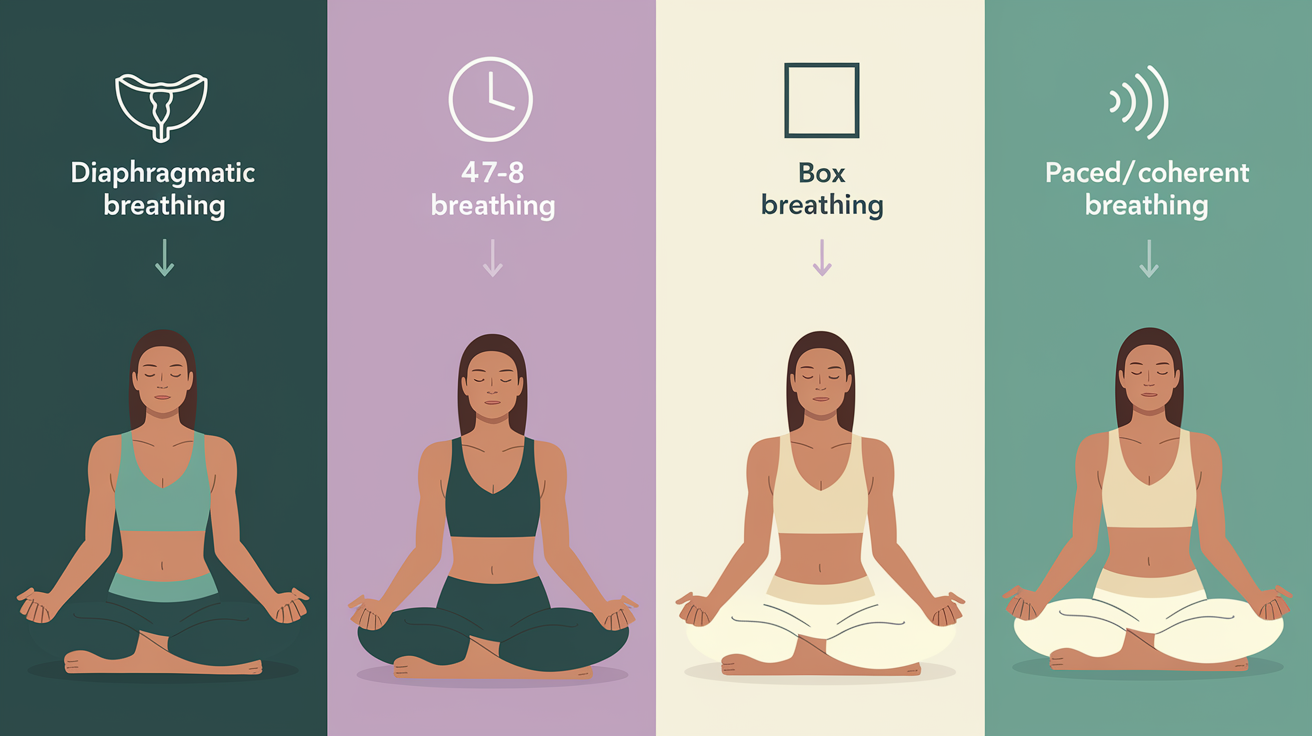
| Technique | Primary Benefit | Best Use Timing |
|---|---|---|
| Diaphragmatic breathing | Activates parasympathetic system, lowers cortisol, improves oxygen delivery | 10–30 minutes before bed (5–10 min session) |
| 4-7-8 breathing | Rapid stress reduction, lowers heart rate and blood pressure quickly | Immediately before sleep or post-workout (4–6 cycles, 2–5 min) |
| Box breathing | Regulates autonomic balance, calms nervous system fast | Post-workout or mid-evening wind-down (3–5 min) |
| Paced/Coherent breathing | Increases heart-rate variability, deepens relaxation, improves sleep onset | Evening wind-down or before bed (5–20 min for cumulative effect) |
Diaphragmatic breathing is the foundational exercise and works for nearly everyone as a nightly pre-sleep routine. If you’re short on time or need a fast effect, 4-7-8 breathing delivers noticeable calm within a few minutes and is easy to remember. Box breathing is ideal right after a workout when your heart rate is still elevated and you want to speed recovery before you shower or eat. Paced and coherent breathing require a bit more focus and time but produce the strongest improvements in heart-rate variability and sleep architecture when practiced consistently over weeks, making them the best choice if you’re willing to invest 10 to 20 minutes most nights.
Final Words
Start tonight with the diaphragmatic breathing routine: 10 to 15 minutes, slow and belly-driven. It lowers heart rate, cuts cortisol, and boosts oxygen where muscles need it.
This post gave the core method and step-by-step practice, quick alternatives (4-7-8, box, paced), timing tips, common mistakes, and a simple comparison so you know what to use.
Try one short session before bed and note sleep quality and soreness. Regular breathing exercises before bed for faster muscle recovery add up—small habit, steady gains.
FAQ
Q: What is the 4 7 8 rule for breathing?
A: The 4‑7‑8 rule for breathing is a paced pattern: inhale for 4 seconds, hold for 7, then exhale for 8, which slows heart rate and promotes quick relaxation before bed.
Q: Can breathwork help with pots?
A: Breathwork can help with POTS by improving autonomic balance and reducing heart‑rate spikes; paced or diaphragmatic breathing often helps, but check with your clinician before starting if you have fainting or meds.
Q: Can breathing exercises lower BP?
A: Breathing exercises can lower blood pressure by slowing respiration to about six breaths per minute, improving autonomic tone; regular paced breathing sessions can produce modest, measurable BP reductions over weeks.
Q: Can breathing exercises reduce cortisol?
A: Breathing exercises can reduce cortisol by activating the parasympathetic nervous system and lowering stress hormones; regular slow, deep breathing shows modest cortisol drops that support better sleep and muscle repair.