

What if the secret to getting stronger isn’t more gym time but more sleep?
Beginners build muscle faster than anyone, yet most blow that window by focusing only on workouts.
Sleep and recovery are when your body repairs muscle, balances hormones, and locks in movement patterns.
Aim for 7 to 9 hours and consistent bedtimes—those are the baseline.
This post shows five simple sleep and recovery habits you can start tonight to turn rest into faster beginner strength gains.
Core Sleep and Recovery Principles That Accelerate Beginner Strength Gains
When you start lifting, your muscles grow faster than at any other stage. Most beginners waste that window because they focus on workouts and ignore the 16 hours a day when muscles actually repair and adapt.
Sleep isn’t passive rest. It’s when growth hormone pulses through your system, when protein synthesis peaks, and when your nervous system locks in the movement patterns you practiced under the bar. You need 7 to 9 hours every night. That’s not a suggestion. It’s the minimum if you want reliable strength gains in your first 12 weeks.
Sleeping less than 7 hours per night creates a catabolic environment. Your body dials down protein synthesis and cranks up protein degradation. Cortisol stays elevated. Insulin sensitivity drops. The amino acids you ate never fully reach your muscle cells. One study found that five consecutive nights of restricted sleep blunted glucose metabolism and lowered testosterone while raising afternoon cortisol. You can train perfectly and eat enough protein, but if you’re sleeping 5 to 6 hours a night, you’re leaving most of your potential behind.
Here are the 5 core sleep and recovery actions beginners should start tonight:
- Sleep 7 to 9 hours every night, measured from lights out to final wake.
- Keep your bedtime and wake time within a 30 minute window, even on weekends.
- Stop all caffeine by early to mid afternoon (around 2:00 PM works for most people).
- Allow 48 to 72 hours of recovery before training the same muscle group hard again.
- Track one subjective recovery marker daily, like morning energy or muscle soreness.
Consistent circadian timing is the most underrated lever for faster strength gains. When you go to bed and wake up at roughly the same time every day, your body syncs hormone release, core temperature cycles, and hunger signals to that rhythm. Growth hormone pulses happen on schedule. Deep sleep arrives earlier in the night. Your workouts feel better because your nervous system expects the demand at that hour. A stable schedule turns sleep from a variable into a reliable training tool.
Practical Sleep Quality Assessment for Beginners

You can’t improve what you don’t measure. Most beginners assume they’re sleeping enough because they’re in bed for 8 hours. But time in bed isn’t the same as time asleep.
Track three things every morning: the time you turned off the lights, the time you woke up for good, and how many times you remember waking during the night. Write those numbers in your phone’s notes app or on a simple paper log next to your training journal. After one week, patterns will emerge. You might discover that you go to bed at wildly different times, or that you wake up three times every night after drinking water at 10:00 PM, or that your actual sleep duration averages 6.5 hours even though you’re in bed for 8.
Subjective measures often reveal recovery gaps before any device does. Rate your morning energy on a scale of 1 to 5 as soon as you stand up. Note whether your legs still feel sore from the squat session two days ago. Note whether you feel irritable for no clear reason. These ratings are rough, but they expose trends. If energy drops for three mornings in a row and soreness lingers past 72 hours, you’ve got a recovery problem that sleep duration alone won’t solve. You might need an extra rest day, more protein, or a deload week.
Consumer sleep trackers and simple logs both help beginners adjust training over time. A wrist device will estimate when you were in light sleep versus deep sleep, but the exact percentages matter less than the overall pattern. If your tracker shows you woke up six times last night and only twice the night before, ask what changed: did you drink more water late, train later in the evening, or skip your wind down routine? A basic written log works just as well. The goal is to link poor sleep to specific habits or training decisions so you can fix them before they cost you a week of progress.
| Metric | What It Measures | Ideal Range | How It Helps Strength Gains |
|---|---|---|---|
| Sleep Duration | Total hours from lights out to final wake | 7–9 hours | Ensures sufficient time for growth hormone pulses and protein synthesis |
| Bedtime Consistency | Daily variance in lights out time | ±30 minutes | Stabilizes circadian rhythm and hormone release timing |
| Nighttime Awakenings | Number of times you wake and remember it | 0–2 per night | Fewer interruptions mean more consolidated deep sleep and recovery |
| Morning Energy Rating | Subjective 1–5 scale on waking | 4–5 most days | Low scores flag inadequate recovery or overtraining before performance drops |
Evening Habits and Sleep Hygiene That Boost Beginner Strength Recovery

Light is the single strongest external cue that tells your brain whether to stay alert or prepare for sleep. Blue wavelengths from phones, computer monitors, and bright overhead LEDs suppress melatonin and delay sleep onset by 30 to 90 minutes.
Stop looking at bright screens 30 to 60 minutes before your target bedtime. If you need to work or watch something in the evening, dim the screen to the lowest usable brightness or wear blue light blocking glasses. Real world test: if you normally scroll your phone until 11:00 PM and feel wired at 11:30, try putting the phone down at 10:00 PM and reading a book under a warm lamp instead. Most people fall asleep faster and wake up feeling more recovered.
Your bedroom should be cool and completely dark. Set your thermostat between 60 and 65°F. A cooler room helps your core body temperature drop, which is a biological signal for deep sleep. Even a small night light or the glow from a charging cable can disrupt sleep architecture. Use blackout curtains or a simple sleep mask if your room isn’t fully dark. These adjustments cost almost nothing and produce measurable improvements in sleep quality within three nights.
A hot bath or shower 30 to 90 minutes before bed amplifies the cool down effect. Soak in water heated to 104 to 109°F for 20 to 30 minutes. When you step out, your body rapidly sheds heat, and your core temperature drops faster than it would on its own. This mimics the natural pre sleep temperature curve and has been shown to improve sleep onset and reduce nighttime disturbances. Pair the hot soak with your cool bedroom for a one two combination that consistently works.
An effective 60 to 90 minute wind down routine includes these 4 elements:
- A fixed start time every evening that you defend against phone calls, work emails, or late training sessions.
- One or two calming activities repeated in the same order: reading, listening to quiet music, light stretching, or journaling.
- The hot bath or shower described above, timed so you finish 30 to 60 minutes before lights out.
- A final 5 to 10 minutes in dim lighting, lying in bed without a screen, using slow breathing or progressive muscle relaxation.
Consistency compounds recovery faster than any single tactic. Your nervous system learns the sequence. After one week of the same routine, your body begins preparing for sleep as soon as you start the first step. After two weeks, you fall asleep faster and wake less often. After four weeks, the routine becomes automatic, and you protect it because you can feel the difference in your morning energy and your next day training performance.
Nutrition Timing and Hydration Habits That Improve Sleep and Overnight Repair
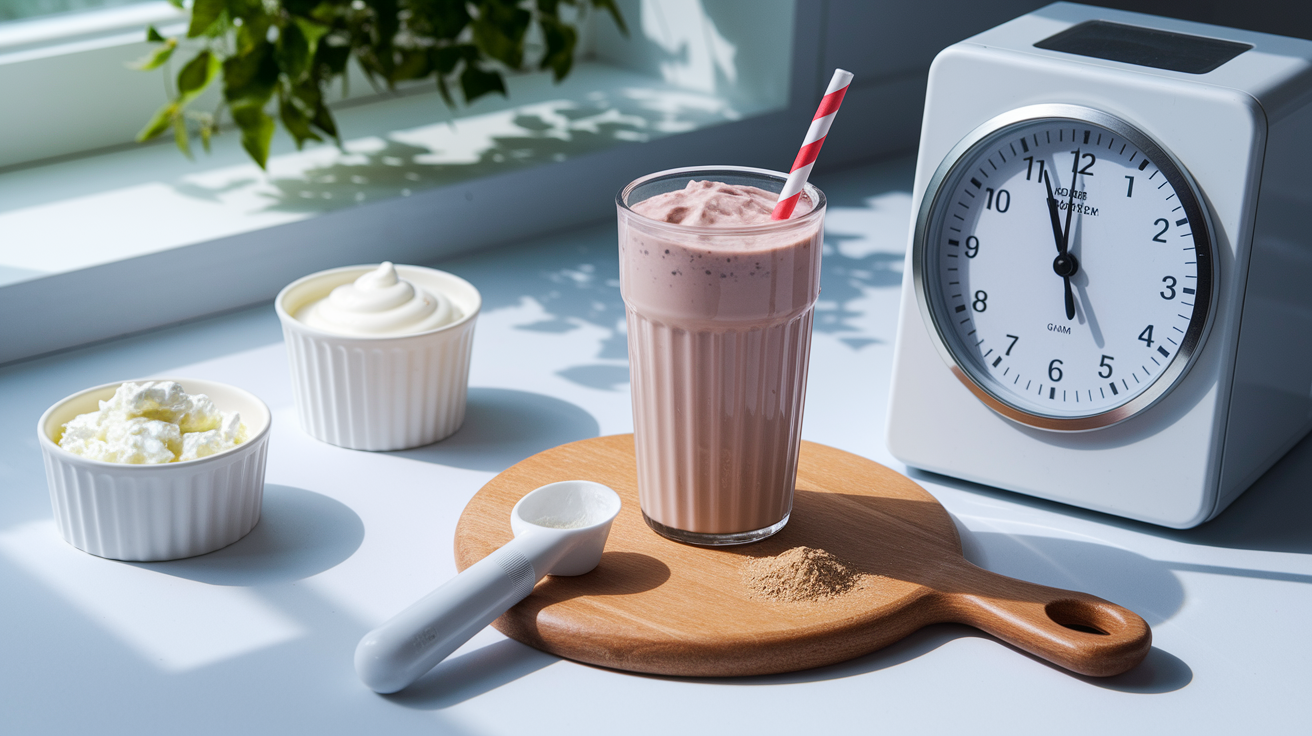
Protein timing matters most in the first few hours after a workout and across the full 24 hour cycle. Consume 20 to 40 grams of high quality protein within 1 to 2 hours after training. Then repeat protein doses every 3 to 4 hours throughout the day.
For a beginner eating three meals and one snack, that might look like 30 grams at breakfast, 35 grams at lunch, 25 grams in an afternoon snack, and 30 grams at dinner. Total daily protein should land around 1.6 to 2.2 grams per kilogram of bodyweight. Hit the lower end if you’re in a calorie deficit, the higher end if you’re focused on muscle gain. Sleep deprivation blunts your body’s glucose response after meals, so even perfect nutrition timing loses effectiveness if you only sleep 5 hours a night.
A small protein rich snack 30 to 60 minutes before bed can support overnight muscle protein synthesis without disrupting sleep. A scoop of casein protein powder, a cup of Greek yogurt, or a handful of cottage cheese all work. Casein digests slowly and provides a steady trickle of amino acids while you sleep. Keep the portion modest. A heavy meal within 2 to 3 hours of bedtime often causes discomfort, reflux, or restless sleep. If you train late in the evening, eat your post workout meal and then a lighter pre bed snack rather than one large dinner right before lights out.
Hydration supports recovery, but drinking too much water in the 2 hours before bed will wake you up to urinate. Finish most of your daily water intake by early evening. If you’re very thirsty at night, take small sips rather than a full glass. Track how often you wake to use the bathroom. If it’s more than once per night, reduce evening fluid intake by one cup and reassess after three nights.
Follow these 4 rules to align nutrition with sleep quality:
- Eat your post workout protein within 2 hours of training, even if that meal falls late in the evening.
- Space your daily protein into 4 to 5 doses roughly 3 to 4 hours apart to maintain muscle protein synthesis throughout the day.
- Keep your final meal at least 2 to 3 hours before bedtime, or make it lighter if you must eat closer to sleep.
- Limit evening fluids to small sips after 8:00 PM to minimize nighttime bathroom trips.
Training Stress, Rest Day Structure, and Active Recovery Techniques for Strength Gains

Beginners gain strength fastest when they train each major muscle group 2 to 3 times per week with at least 48 to 72 hours of recovery between sessions that heavily tax the same muscles. If you squat hard on Monday, your next heavy lower body session should land on Thursday at the earliest, ideally Friday.
During that 72 hour window, your muscle fibers repair microtears, replenish glycogen, and adapt to the load you placed on them. Cutting recovery short by training the same muscles again on Wednesday will interrupt that process and slow your progress. Many beginner programs alternate upper and lower days or use full body sessions with varied intensity to respect these windows automatically.
Active recovery fills the days between hard training sessions without adding new stress. A 20 to 30 minute walk, easy cycling, or a mobility routine increases blood flow to sore muscles and helps clear metabolic byproducts without causing more damage. These sessions should feel easy. Your heart rate stays low, you breathe through your nose, and you finish feeling looser rather than fatigued. Scheduling active recovery in the evening also supports better sleep because light rhythmic movement reduces nervous system arousal and lowers cortisol.
Foam rolling and stretching after every workout accelerate the repair process and prepare your body for the next session. Reserve 10 to 15 minutes post training to roll the prime movers you just worked. For example, after a leg session, slowly roll your calves, quadriceps, and glutes using continuous up and down strokes. Follow with 5 to 10 minutes of static stretching focused on the same muscle groups. This combination improves tissue quality, reduces next day soreness, and signals your nervous system that the training stress is over and recovery can begin.
Simple Beginner Friendly Recovery Session
Set aside 20 to 30 minutes on a rest day or light training day. Start with 5 minutes of easy movement: walk around your house, march in place, or pedal a stationary bike at a conversational pace.
Next, spend 10 minutes foam rolling. Roll each major muscle group for 30 to 60 seconds: calves, hamstrings, quadriceps, glutes, lats, and upper back. Use slow, controlled strokes and pause on any tender spots for 10 to 15 seconds.
Finish with 5 to 10 minutes of static stretching. Hold each stretch for 20 to 30 seconds without bouncing: hip flexor stretch, hamstring stretch, quad stretch, chest opener, and lat stretch. End the session with 2 to 3 minutes of slow nasal breathing while lying on your back. This sequence reduces residual soreness, improves range of motion, and sets you up for deeper sleep that night.
Stimulants, Alcohol, and Evening Energy Management for Better Sleep and Strength Recovery
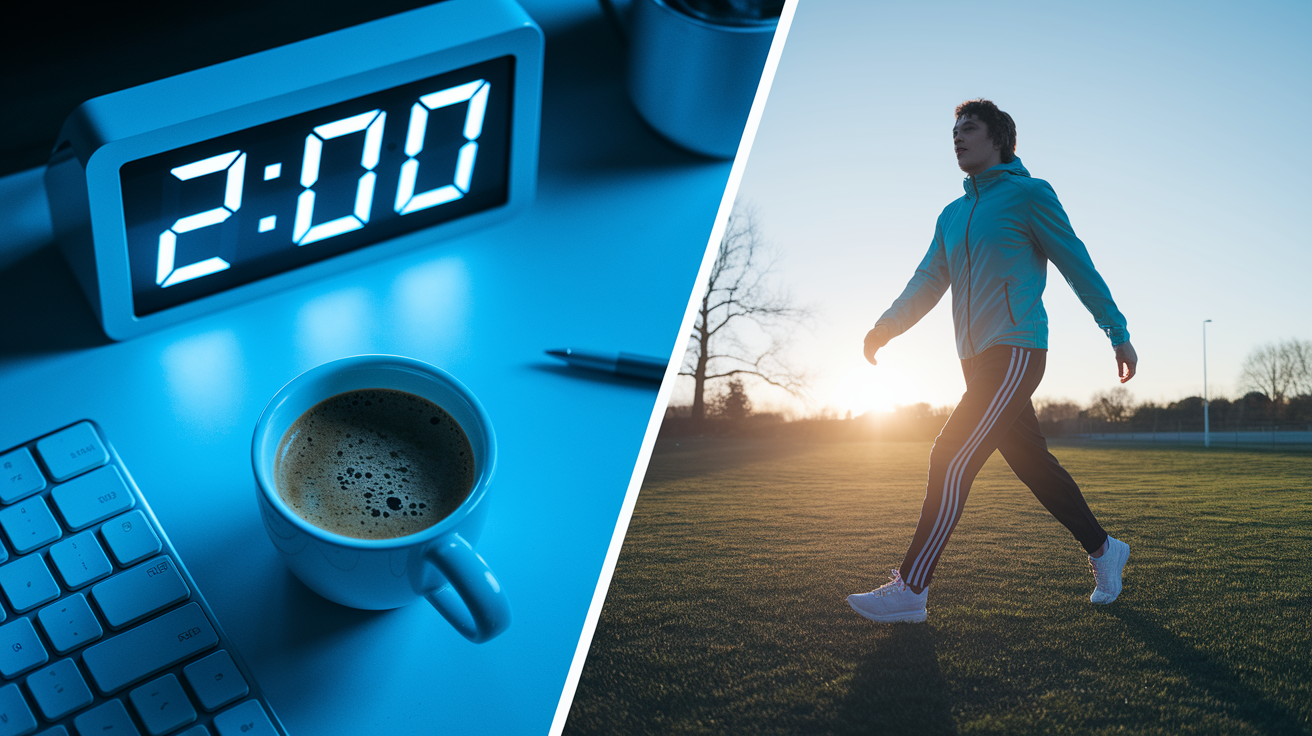
Caffeine has a half life that ranges from roughly 6 to 48 hours depending on your genetics, but for most people it sits around 5 to 6 hours. That means if you drink 200 milligrams of caffeine at 2:00 PM, about 100 milligrams are still active in your system at 8:00 PM.
Even if you fall asleep on time, caffeine reduces the amount of deep sleep you get and increases the number of brief awakenings you don’t remember. The result is lighter, more fragmented sleep and slower recovery. Cut off all caffeinated drinks by early to mid afternoon. For most schedules, that means no coffee, tea, or pre workout after 2:00 PM. If you’re very sensitive, move the cutoff to noon and reassess your sleep quality after one week.
Alcohol disrupts sleep architecture even in small doses. One or two standard drinks, such as two beers or two glasses of wine, will initially make you drowsy, but as your body metabolizes the alcohol a few hours later, your sleep becomes lighter and more disrupted. You wake more often, spend less time in REM sleep, and your growth hormone release is blunted.
Limit alcohol to no more than 2 drinks, and consume them earlier in the evening so your body has time to clear most of the alcohol before you lie down. If you drink at 6:00 PM, your sleep at 11:00 PM will be less affected than if you drink at 9:00 PM.
If you need energy in the evening to handle work, family, or a late training session, choose strategies that don’t rely on stimulants. A 10 minute walk outside in natural light can raise alertness without affecting sleep hours later. A cold shower or splashing cold water on your face provides a short energy boost. Eating a small protein and carbohydrate snack stabilizes blood sugar and prevents the mid evening crash. These alternatives keep your sleep window clean.
- Stop all caffeine intake by 2:00 PM as a default rule. Move it earlier if you’re sensitive or sleep poorly.
- Limit alcohol to 2 standard drinks or fewer, and finish drinking at least 3 to 4 hours before bedtime.
- Use non stimulant energy tactics in the evening: brief walks, cold water exposure, and balanced snacks instead of coffee or energy drinks.
Stress Reduction, Breathwork, and Mindfulness Techniques That Improve Sleep Depth

High stress keeps your sympathetic nervous system activated long after the stressor is gone. Your heart rate stays elevated, your thoughts loop, and your body treats bedtime like another challenge to solve rather than a time to recover.
Spending 5 to 10 minutes on diaphragmatic breathing or 10 to 20 minutes on a mindfulness exercise in the evening lowers cortisol, shifts you into parasympathetic mode, and prepares your brain for sleep. Diaphragmatic breathing is simple: lie on your back, place one hand on your chest and one on your belly, and breathe slowly so only your belly rises. Inhale for 4 seconds, hold for 2, exhale for 6. Repeat for 5 minutes. This pattern reduces heart rate and signals safety to your nervous system.
Journaling for 5 to 10 minutes before bed reduces cognitive arousal and stops the mental replay of tomorrow’s to do list. Write three things that went well today, one thing you’re grateful for, and one concern you’ll handle tomorrow. The act of putting worries on paper tells your brain it doesn’t need to hold them overnight. Pair journaling with your wind down routine so it becomes a predictable cue that sleep is near.
Use this 4 step evening relaxation routine to downregulate your nervous system and improve sleep depth:
- Finish all work, screens, and stimulating tasks at least 60 minutes before your target bedtime.
- Spend 5 to 10 minutes journaling: list what went well, note one source of stress, and write a single action you’ll take tomorrow to address it.
- Practice 5 minutes of diaphragmatic breathing lying in bed or on the floor, focusing only on the rhythm of your breath.
- End with 5 minutes of progressive muscle relaxation: tense each muscle group for 5 seconds then release, starting with your feet and moving up to your face.
Monitoring Recovery: Signs of Overtraining and When to Adjust Training or Sleep
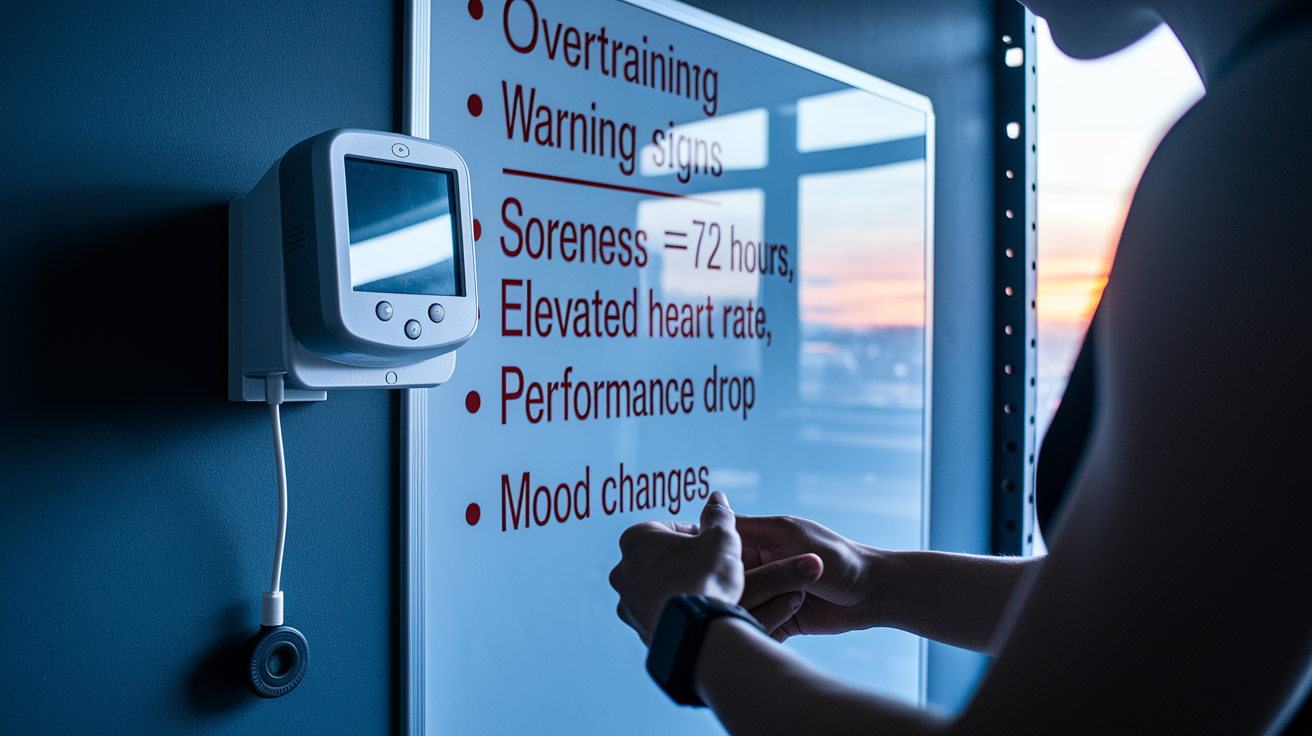
Overtraining in beginners usually shows up as poor recovery rather than true overtraining syndrome. The earliest and most reliable sign is persistent muscle soreness that lasts longer than 72 hours after a workout. If your quads are still sore on Thursday from a Monday squat session, you either pushed too hard or didn’t recover enough.
A second warning is an elevated resting heart rate. Measure your pulse each morning before getting out of bed. If it’s 5 to 10 beats per minute higher than your normal baseline for three mornings in a row, your nervous system is still under stress.
Performance decline is another clear flag. If your squat weight or rep count drops across two sessions in the same week without an obvious cause, you’re not recovering. Mood changes, irritability, loss of appetite, and trouble falling asleep despite being tired all point to insufficient recovery. These signs often cluster together. When you see two or more at the same time, act immediately. Add an extra rest day, increase your sleep target by 30 to 60 minutes, boost daily protein by 20 to 30 grams, or drop your training volume by one set per exercise for the next week.
Poor sleep quality often precedes overreaching by several days. If you notice fragmented sleep, frequent waking, or low morning energy for three nights running, treat it as an early signal. Review your training log, check your evening habits, and look for changes in caffeine, alcohol, or stress. Catching the problem early lets you adjust before it costs you a week of progress or forces a full deload.
| Sign | What It Indicates | What to Adjust |
|---|---|---|
| Muscle soreness lasting longer than 72 hours | Insufficient recovery time or excessive training volume | Add one full rest day; reduce sets by 20–30% for one week |
| Elevated resting heart rate (5–10 bpm above baseline for 3+ mornings) | Nervous system stress and incomplete recovery | Increase sleep by 30–60 minutes; consider a deload week |
| Performance drop across two consecutive sessions | Accumulated fatigue outpacing adaptation | Take an extra rest day; increase daily protein by 20–30 g |
| Persistent low morning energy (rated 1–2 for 3+ days) | Poor sleep quality or overtraining | Review evening routine; cut caffeine earlier; add active recovery |
| Mood disturbances, irritability, or loss of appetite | Chronic stress and inadequate recovery | Reduce training intensity; prioritize 7–9 hours sleep; practice daily stress reduction techniques |
Quick, High Impact Sleep and Recovery Habits That Boost Strength Gains Fast

Most beginners try to optimize everything at once and end up doing nothing consistently. Start with one or two changes that produce immediate results, then add more as the first habits become automatic. The fastest wins come from fixing sleep duration, controlling evening light, and timing protein around workouts. These three levers move the needle within one week and cost almost nothing.
Implement these 6 high impact recovery habits immediately to accelerate beginner strength gains:
- Sleep 7 to 9 hours every night by setting a consistent bedtime and defending it against distractions. Measure actual sleep duration with a log or device.
- Take a hot bath or shower at 104 to 109°F for 20 to 30 minutes, finishing 30 to 60 minutes before bedtime, then sleep in a room set to 60 to 65°F.
- Stop all screens and bright lights 30 to 60 minutes before your target bedtime. Use a book, music, or stretching to fill that wind down window.
- Consume 20 to 40 grams of high quality protein within 1 to 2 hours after every training session, and repeat protein doses every 3 to 4 hours across the day.
- Allow 48 to 72 hours of recovery before training the same muscle group with high intensity again. Use active recovery or full rest days between hard sessions.
- Cut off caffeine by 2:00 PM and limit alcohol to 2 drinks or fewer, consumed earlier in the evening, to protect sleep quality and overnight repair.
Final Words
Aim for 7–9 hours nightly, keep sleep and wake times within about 30 minutes, and use a short 60–90 minute wind-down before bed. We covered how sleep speeds early strength gains, how to track sleep quality, evening habits, nutrition timing, recovery spacing, and quick wins you can use right away.
Tonight, pick a consistent bedtime that gives you 7–9 hours, turn off screens 30–60 minutes before bed, and note your morning energy. These sleep and recovery habits that boost beginner strength gains are small, repeatable, and add up fast. Keep it simple—you’re making real progress.
FAQ
Q: How many hours of sleep do beginners need to speed strength gains?
A: Beginners need 7–9 hours of sleep nightly to support growth‑hormone pulses and muscle protein synthesis, which together speed early strength gains and improve recovery between workouts.
Q: What happens to muscle growth and recovery if I don’t sleep enough?
A: Not sleeping enough reduces muscle protein synthesis, raises cortisol, and slows adaptation, so you recover worse, feel more tired, and make noticeably slower strength gains over weeks.
Q: What five sleep-and-recovery actions should beginners start today?
A: Start these five actions: aim for 7–9 hours, keep bed/wake times within 30 minutes, avoid screens 30–60 minutes pre-bed, cool bedroom to 60–65°F, and eat timely post‑workout protein.
Q: How does a consistent sleep schedule help training adaptation?
A: A consistent sleep schedule stabilizes your circadian rhythm, which improves hormone timing and recovery efficiency, making training adaptations more reliable and helping strength increase faster.
Q: What simple daily sleep metrics should beginners track?
A: Track sleep duration consistency, wake time, sleep latency, nighttime awakenings, and morning energy; these daily metrics quickly reveal recovery trends and when to ease or push training.
Q: Should I use a device or a sleep log to monitor recovery?
A: Use both: devices estimate sleep patterns, while a simple subjective log (energy, soreness, notes) often catches recovery gaps devices miss and guides sensible training tweaks.
Q: What evening habits improve sleep and recovery?
A: Evening habits that improve sleep include stopping screens 30–60 minutes before bed, dimming lights, keeping the room 60–65°F, taking a hot soak 30–90 minutes pre-bed, and a short wind‑down routine.
Q: What should I eat and drink around workouts and bedtime to aid recovery?
A: Eat 20–40 g protein within 1–2 hours after workouts, consider a light casein snack before bed, avoid heavy meals 2–3 hours pre-sleep, and sip fluids to prevent nighttime wakings.
Q: How should I schedule workouts and rest days for better recovery?
A: Schedule heavy sessions 48–72 hours apart for the same muscles, include 20–30 minutes of active recovery on rest days, and use 10–15 minutes of foam rolling after workouts to speed repair.
Q: When should I stop caffeine and limit alcohol to protect sleep?
A: Avoid caffeine after early–mid afternoon because its half‑life can be long; limit alcohol to two drinks max and finish them earlier in the evening to protect sleep and recovery.
Q: What quick relaxation techniques help sleep depth?
A: Quick relaxation that helps sleep depth includes 5–10 minutes of diaphragmatic breathing, 10–20 minutes of mindfulness, or brief journaling to lower mental arousal before bed.
Q: What signs show I’m overtraining or not recovering enough, and what should I adjust?
A: Signs of poor recovery are soreness over 72 hours, higher resting heart rate, persistent fatigue, mood shifts, and falling performance; adjust by adding rest days, more sleep, or cutting workout intensity.
Q: What quick sleep and recovery habits give fast strength gains?
A: Quick habits that give fast gains: time a hot bath right before wind‑down, stick to 7–9 hours, prioritize post‑workout protein, space sessions 48–72 hours, enforce a screen curfew, and do light evening mobility.