

Think mobility is optional? That’s why so many new lifters quit in a few weeks.
Mobility habits cut the pain that makes lifting feel hard and unsafe.
This post gives short, repeatable moves: a 5-minute morning routine, quick pre-workout drills, and simple habit stacks you can do on busy days.
Do these consistently and your joints will move cleaner, your lifts will feel easier, and you’ll be less likely to skip sessions.
Try the 6-minute morning routine tomorrow and build from there.
Foundational Daily Mobility Habits That Support Beginner Lifting Consistency

Mobility is your ability to move a joint through its full range with control. Strength, motor control, and tissue health all play a part. Here’s a 5-minute morning routine you can start tomorrow: 30 seconds on neck rolls (full circles clockwise, then switch), 30 seconds on shoulder rolls (10 forward, 10 back), 1 minute on cat-cow (inhale on cow, exhale on cat), 1 minute on hip circles (5 each direction while standing), 1 minute in a seated forward fold (reach toward your toes and hold), and 1 minute on ankle circles (rotate each foot 10 times per direction). That’s it. Before you check your phone. Before coffee. Right after you get out of bed.
Your daily mobility sessions should last 5 to 10 minutes at the same time and in the same spot. Morning works best for most people because it resets your body after sleep. But late evening is fine if your mornings are chaotic. Pick one location (bedroom floor, living room, garage) and keep it simple enough that you never need equipment. Frequency beats duration, so a quick 6-minute session every single day will deliver better results than a 30-minute session once a week.
Neck rolls reduce screen-time stiffness and tension headaches. Shoulder rolls counter rounded posture from sitting and driving. Cat-cow stretch mobilizes your spine and engages your core through breath control. Hip circles open hip joints for squatting, walking, and sitting transitions. Seated forward fold lengthens hamstrings and calms your nervous system. Ankle circles improve balance and ankle range for stairs and squats.
Daily mobility reduces the small compensations your body builds up when you skip movement. Tight hips force your lower back to twist during a squat. Stiff shoulders make you lean too far forward on a press. Restricted ankles shift weight onto your toes and wreck your balance. All of those patterns make lifting feel harder, hurt more, and push beginners to quit within a few weeks. When you move every joint gently each morning, you preserve the clean movement your lifting sessions need.
Dynamic Mobility Routines Used Specifically Before Lifting Sessions

Dynamic warm-ups are movement prep for workout days only. They raise your body temperature, wake up your nervous system, and take your joints through ranges you’re about to load with weight. This section covers what to do in the 5 to 10 minutes before you touch a barbell, not what you do on rest days or in the morning.
Leg swings: stand near a wall, swing one straight leg forward and back 10 to 15 reps per leg. This primes hip flexion and extension for squats and deadlifts. Arm circles: extend both arms and make big circles 20 to 30 seconds in each direction. Warms shoulder joints and upper-back muscles for pressing. Walking lunges with a twist: step forward into a lunge, rotate your torso toward the front leg, then step again. 8 to 12 steps per side. Activates hips, glutes, and thoracic rotation. Ankle circles and calf pumps: rotate each ankle 10 to 20 times per direction, then rise onto your toes 10 times. Prepares ankles and calves for loaded squatting and walking movements.
Start with the listed rep counts for the first two weeks. In weeks three and four, add a second round of each movement or increase your range (swing your leg higher, lunge deeper, make bigger arm circles). By weeks five and six, add one or two extra drills that target your tightest areas or the lift you’re doing that day. If you’re squatting, add a set of bodyweight squats and some hip openers. If you’re pressing, add wall slides and a few band pull-aparts. The goal is controlled readiness, not exhaustion.
| Movement | Primary Lift Supported |
|---|---|
| Leg swings (forward/back and side-to-side) | Squat and deadlift |
| Arm circles and wall slides | Overhead press and bench press |
| Walking lunges with twist | Squat, deadlift, and core-loaded movements |
Pain-Reducing Mobility Patterns for Common Beginner Tightness Areas
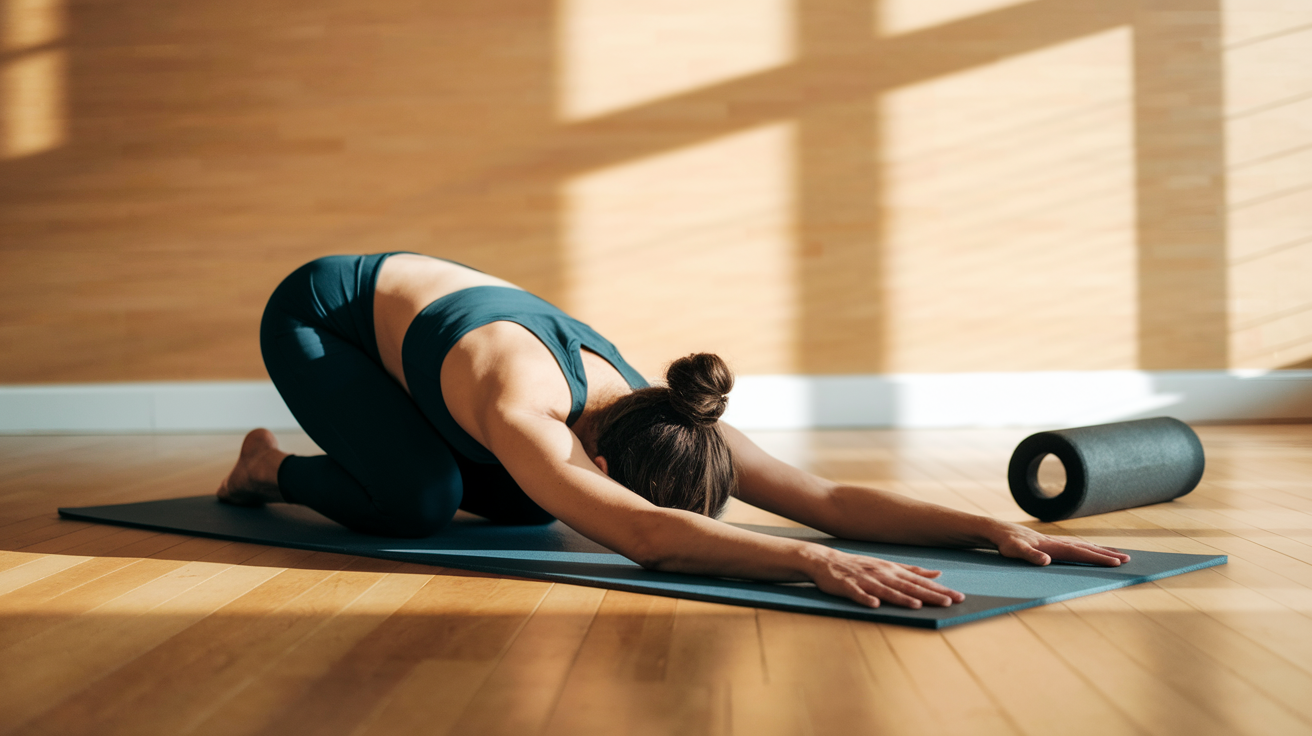
Tight hips are the most common mobility block for new lifters. When your hip flexors and glutes are stiff, you can’t sit back into a full squat without your lower back rounding or your heels lifting. Use pigeon pose to open your hips: kneel on all fours, bring one knee forward and angle it out to the side, extend the opposite leg straight behind you, then sink your hips toward the floor and hold for 30 to 90 seconds per side. If your knee hurts, place a towel under it or reduce the angle. Pigeon pose also reduces the compensatory pull on your lower back that causes post-squat soreness.
Stiff shoulders and a locked-up upper back prevent safe overhead lifting and solid bench press position. When your thoracic spine can’t extend, your lower back arches too much to make up the difference. That leads to pain and injury risk. Cat-cow mobilizes your entire spine: start on hands and knees, inhale and let your belly drop (cow), then exhale and round your back like a scared cat. Do 10 slow reps, breathing fully with each position. For shoulders specifically, use wall slides: stand with your back against a wall, press your lower back flat, raise both arms overhead while keeping contact with the wall, then slide your arms up and down 10 times. Wall slides train your shoulders to move without compensating through your neck or lower back.
Tight hamstrings create a chain reaction that stresses your lower back during deadlifts. Makes it nearly impossible to hinge at your hips with a neutral spine. Use a seated hamstring stretch: sit on the floor with both legs extended, hinge forward at your hips (not your lower back), and reach toward your toes. Hold for 30 to 60 seconds per leg. If you can’t reach your toes, loop a towel around your foot and gently pull. The stretch should feel like mild tension in the back of your thigh, not sharp pain behind your knee.
Ankle dorsiflexion restrictions prevent you from reaching a 90-degree ankle angle in a squat. Forces your heels to lift and shifts all your weight forward onto your toes. Poor ankle mobility also increases knee strain and reduces squat depth. Use an ankle dorsiflexion stretch: face a wall, place one foot a few inches back, bend your front knee and try to touch it to the wall without lifting your heel. Hold for 20 to 30 seconds, then move your foot an inch farther back and repeat. Work up to 3 to 4 inches of distance over a few weeks. Pair this with ankle circles: sit or stand, extend one leg, and rotate your foot slowly 10 to 20 times in each direction per side.
Thoracic spine stiffness affects nearly every lift because your mid-back sets the foundation for shoulder position, rib position, and core bracing. When your thoracic spine is locked, you lose safe posture on squats, deadlifts, rows, and presses. Use thoracic rotations: kneel on all fours, place one hand behind your head, and rotate your elbow toward the ceiling while keeping your hips square. Do 8 to 10 slow reps per side, focusing on the twist in your mid-back, not your lower back or neck. You can also use a foam roller: lie on your back with the roller under your shoulder blades, support your head with your hands, and gently extend backward over the roller for 1 to 2 minutes.
Habit-Stacking Strategies to Help Beginners Stay Consistent With Mobility Work
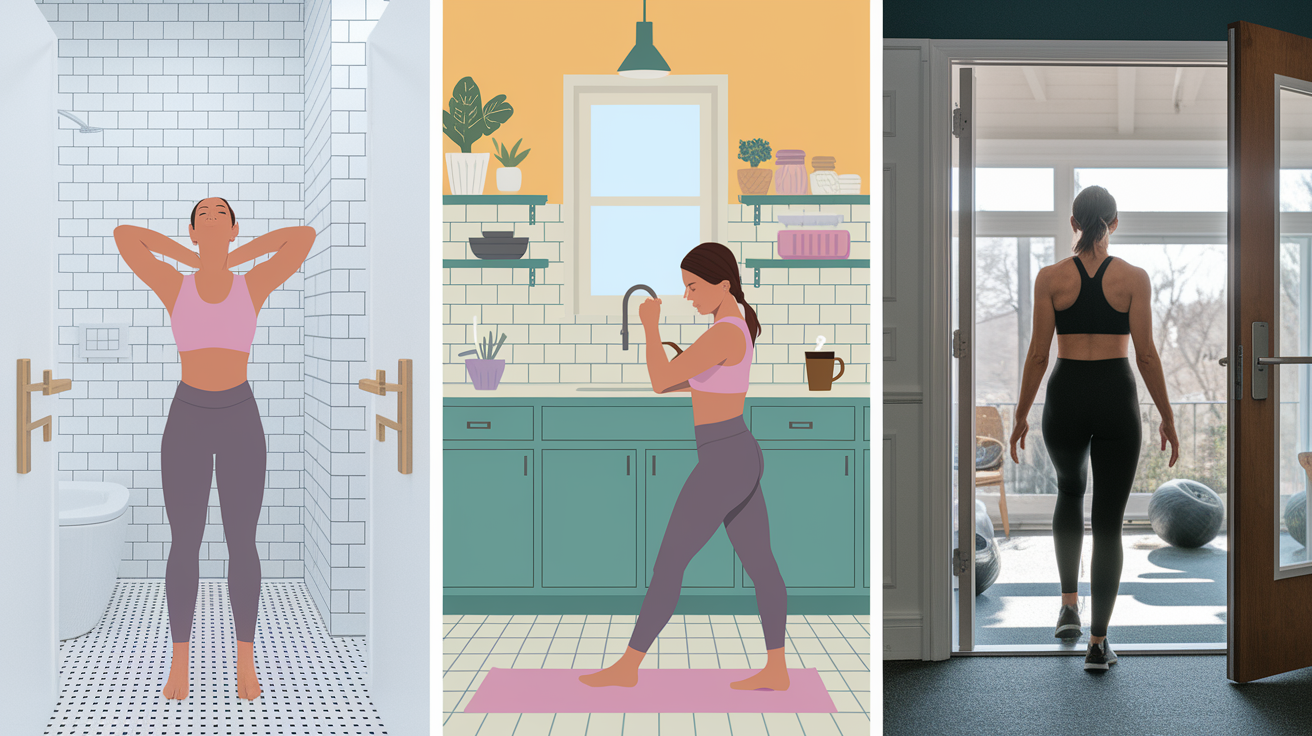
Habit stacking improves adherence by linking a new behavior (mobility) to an existing automatic action (brushing teeth, making coffee, unlocking the gym door). When you stack mobility onto something you already do every day, you remove the decision step that causes most beginners to skip sessions. Your brain doesn’t have to decide whether to do mobility, it just flows into the routine you’ve already built.
After brushing your teeth in the morning, do 3 to 5 minutes of neck rolls, shoulder rolls, and hip circles while standing in the bathroom. While your coffee brews, use those 4 to 6 minutes for cat-cow, seated forward fold, and ankle circles on the kitchen floor. The second you arrive at the gym and change shoes, run through 5 minutes of dynamic warm-up drills before touching any weights. Right after your last lift of the session, perform 3 to 5 minutes of static stretches (hamstrings, hip flexors, shoulders) before you leave the gym floor. Before bed while watching TV or winding down, spend 5 to 10 minutes foam rolling or doing gentle stretches on the living room floor.
The psychology of repetition and low-barrier entry makes habit stacking work. When the effort to start is tiny (you’re already in the bathroom, the foam roller is already on the floor), you’re far more likely to follow through. Most beginners fail at mobility because they treat it as a separate 30-minute event that requires motivation and planning. Stack it onto what you already do, keep sessions short, and let the routine become automatic within two to three weeks.
Pre- and Post-Workout Mobility Templates for Pain Reduction and Recovery

Pre-workout actions are dynamic, short-hold, and designed to prepare your joints and muscles for loaded movement. Post-workout actions are static, longer-hold, and designed to reduce tension and support recovery. The difference matters because dynamic stretching before lifting increases readiness and blood flow, while static stretching after lifting helps reset muscle length and calm your nervous system.
Pre-workout: Leg swings, 10 reps forward and back, then 10 side-to-side per leg. Wakes up hip flexors, glutes, and hamstrings. Ankle circles and calf pumps, 10 to 20 circles each direction per ankle, then 10 calf raises. Primes ankle dorsiflexion and plantarflexion for squats and deadlifts. Shoulder rolls and arm circles, 10 rolls forward, 10 rolls back, then 20 to 30 seconds of arm circles each direction. Loosens shoulders and upper back for pressing.
Post-workout: Seated hamstring stretch, sit with legs extended, hinge at hips, hold 30 to 60 seconds per leg. Reduces post-deadlift tightness. Pigeon pose, hold 30 to 90 seconds per side. Opens hips and relieves lower-back tension after squats. Child’s pose, kneel and reach forward, hold 30 to 60 seconds. Stretches lower back, shoulders, and lats after pressing or rowing.
Core bracing cues and posterior chain activation start before you lift. During your dynamic warm-up, practice pulling your ribcage down, bracing your abs like you’re about to take a punch, and squeezing your glutes. Use 2 to 3 bodyweight squats or hip bridges with a 2-second hold at the top to activate your glutes and teach your hips to extend without overarching your lower back. These priming actions reduce compensatory patterns that cause pain during loaded lifts.
Recovery strategies complement your post-workout mobility. After your static stretches, spend 1 to 2 minutes lying on your back with your knees bent, breathing slowly into your belly (inhale for 4 counts, exhale for 6 counts). This down-regulates your nervous system and helps your body shift from training mode to recovery mode. Pair gentle stretching with hydration and a basic cool-down walk if time allows. Consistency with post-workout routines typically produces noticeable improvements in soreness and stiffness within 2 to 4 weeks.
Simple Movement Screens Beginners Can Use to Identify Mobility Limits

Movement screens are fast self-assessments that catch mobility restrictions before they turn into pain or injury. Use these tests once every two to four weeks to track progress and identify which joints need extra attention. Each screen takes 30 to 90 seconds and requires no equipment.
| Screen | What It Measures | What Poor Results Mean |
|---|---|---|
| Overhead reach test | Thoracic extension and shoulder mobility | You may struggle with overhead press; add wall slides and thoracic rotations |
| Ankle knee-to-wall test | Ankle dorsiflexion range | Heels will lift in squats; add ankle stretches and calf work |
| Bodyweight squat (depth and heel position) | Hip, ankle, and thoracic mobility combined | Limited depth or heels up signal tight hips or ankles; prioritize hip circles and pigeon pose |
| Hip hinge pattern test | Ability to hinge at hips with neutral spine | Rounding or difficulty hinging means tight hamstrings or weak glutes; add hamstring stretches and hip bridges |
If a screen reveals poor results, modify your training to protect that area while you improve mobility. For example, if your ankle dorsiflexion is limited, use a slightly elevated heel (small weight plate under your heels) during squats until your ankle range improves. If your overhead reach is restricted, skip heavy overhead presses and focus on landmine presses or dumbbell presses at an incline until your thoracic spine and shoulders open up. Retest every few weeks and adjust your program as your mobility improves.
Tools, Accessories, and Soft-Tissue Methods That Support Beginner Mobility Progress
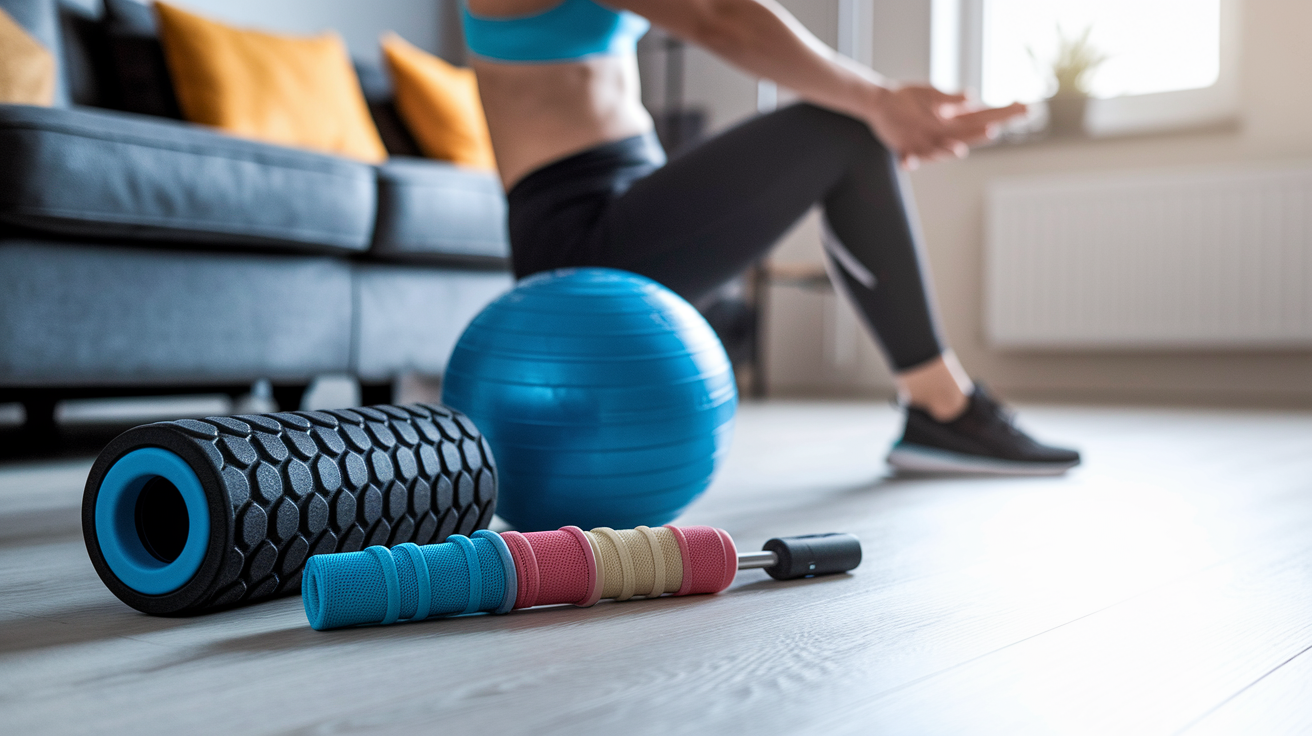
Soft-tissue tools help release local tightness and improve blood flow, but they should supplement movement work, not replace it. Foam rollers, massage balls, resistance bands, and mobility sticks all have a place in a beginner’s toolkit. But none of them fix mobility on their own. Use tools to prepare for movement or to recover after training, then rely on the actual mobility drills to build lasting range and control.
Foam roller: roll each major muscle group (quads, hamstrings, calves, upper back) for 1 to 2 minutes. Use before workouts to reduce stiffness or after workouts to aid recovery. Massage ball (lacrosse or tennis ball): press into tight trigger points (glutes, feet, shoulders) for 30 to 90 seconds per spot. Helps release localized knots that foam rolling can’t reach. Resistance bands: use light bands for banded stretches (banded hamstring stretch, banded shoulder distraction) or for dynamic warm-up drills like band pull-aparts and banded squats. 10 to 20 reps per movement. Mobility stick or yoga strap: use a strap to assist with stretches you can’t reach on your own (loop a strap around your foot during a hamstring stretch). Helps beginners access full range without compensating.
Tools influence readiness by reducing the perception of tightness and helping you access ranges you couldn’t reach cold. Spending 2 minutes foam rolling your quads and hip flexors before a squat session can improve your depth and reduce knee discomfort. Using a massage ball on your glutes after deadlifts can reduce soreness the next day and help you stay consistent across the week.
Integrate tools without overwhelming yourself by starting with just one or two. Most beginners do well with a basic foam roller and a lacrosse ball. Use the roller for 5 to 10 minutes total (spread across a few muscle groups) either before or after training, and use the ball for 1 to 3 minutes on any spot that feels especially tight. Add bands or straps only when you identify a specific limitation that needs assistance. Keep it simple, keep it short, and let the tools support your movement practice.
Progressions and Regressions to Maintain Pain-Free Mobility Improvements Over Time

Short-term improvements in stiffness and movement quality typically show up within 2 to 4 weeks of daily 5 to 10-minute mobility sessions. Larger changes in squat depth, overhead range, and hamstring flexibility usually take 4 to 8 weeks of consistent practice. Expect small wins first: less morning stiffness, easier warm-ups, reduced soreness. Then build toward measurable range improvements like touching your toes or squatting below parallel with heels down.
Regressions keep you moving when pain, fatigue, or life stress limits your capacity. If a movement hurts, reduce the range of motion, shorten the hold time, or use a supported version. If pigeon pose causes knee pain, switch to a figure-4 stretch lying on your back. If overhead reach feels sharp in your shoulder, regress to wall slides or perform arm circles with a smaller range. The goal is to maintain the habit and the movement pattern without aggravating the issue. Regressions are not failures. They’re intelligent adjustments that keep you consistent.
Add 1 to 2 new exercises every 1 to 2 weeks. Once your baseline routine feels easy, layer in one or two drills that target your tightest areas or support your current lifting focus. Increase hold times by 10 to 15 seconds every week. If you start with 30-second hamstring stretches, move to 40 seconds in week two, 50 seconds in week three, and so on until you reach 60 to 90 seconds. Add a second set of each movement. After 2 to 4 weeks, perform each drill twice instead of once. This doubles your volume without adding new complexity.
Increase range of motion gradually. Reach a little farther in your forward fold, sink a little deeper in pigeon pose, or swing your leg a little higher during leg swings. Progress only when the movement is pain-free. Layer in loaded mobility. Once bodyweight drills feel controlled, add light resistance with bands or a PVC pipe (banded hip circles, PVC overhead squats). Use minimal load and focus on clean movement.
Set realistic mobility goals by tracking one or two measurable benchmarks every two weeks. Measure how far your knee can travel past your toes in the ankle wall test, or note whether you can touch your toes in a seated forward fold. Progress photos or short video clips also help you see postural changes and range improvements that feel subtle day-to-day. Celebrate small wins: your first pain-free squat, your first overhead press without shoulder discomfort, your first week without missing a mobility session. Those wins stack into long-term consistency and keep you lifting without setbacks.
Final Words
You left with a plug-and-play 5–10 minute daily mobility routine and a simple definition: mobility is active range with control. You also got dynamic pre-lift drills and targeted moves for hips, shoulders, hamstrings, ankles, and the thoracic spine.
Plus habit-stacking tips, quick movement screens to spot limits, beginner-friendly tools, and clear progressions so you can scale safely.
Start five minutes after your coffee, check one movement screen, and repeat a single drill daily. These mobility habits to improve beginner lifting consistency and reduce pain give a small, measurable habit that adds up fast. You’ll move better and stay consistent.
FAQ
Q: What are the best daily mobility habits to support beginner lifting consistency and reduce pain?
A: The best daily mobility habits to support beginner lifting consistency and reduce pain are a 5–10 minute daily routine of controlled joint moves plus 1–3 minute micro-sessions after long sitting; try tonight.
Q: What does “mobility” mean for new lifters?
A: Mobility for new lifters means active range of motion with control, not just flexibility; it’s the ability to move joints usefully and safely during lifts.
Q: What is a ready-to-use 5-minute morning mobility routine?
A: A ready-to-use 5-minute morning mobility routine is neck rolls (30s), shoulder rolls (30s), cat-cow (10 reps), hip circles (30s), and ankle circles (30s); do it standing or seated.
Q: How should beginners structure daily mobility habits?
A: Beginners should structure daily mobility habits by picking a consistent time (morning or evening), committing 5–10 minutes, using a quiet space, and adding short micro-breaks after sitting.
Q: Which dynamic mobility drills should I do before lifting?
A: The dynamic mobility drills to do before lifting are leg swings (10–15 each), arm circles (20–30s each direction), walking lunges with twist (8–12 per side), and ankle circles (10–20).
Q: How do I progress pre-workout dynamic warm-ups over 2–4 weeks?
A: Progress pre-workout dynamic warm-ups by slowly increasing reps or time every 1–2 weeks—add 5–10 swings or 5–10 seconds per drill—and re-test movement readiness after two weeks.
Q: What mobility drills reduce pain from tight hips, shoulders, hamstrings, ankles, and thoracic stiffness?
A: Mobility drills to reduce those pains are pigeon (30–90s) for hips, wall slides for shoulders, seated hamstring stretch (30–60s), ankle dorsiflexion drills, and cat-cow for thoracic mobility.
Q: How can I habit-stack mobility into a busy day?
A: Habit-stack mobility by pairing 5 minutes with an existing habit (coffee, brushing teeth, TV), set phone reminders, and use 1–3 minute micro-sessions between tasks to stay consistent.
Q: What simple movement screens can beginners use and how should they respond to poor results?
A: Simple screens are overhead reach, ankle knee-to-wall, bodyweight squat, and hip hinge test; if results are poor, reduce load, shorten range, and work targeted mobility before adding weight.
Q: Which tools help beginner mobility and when should I use them?
A: Helpful tools are foam roller (1–2 minutes per muscle group), massage ball (30–90s per spot), resistance bands for assisted stretches, and light lacrosse ball work; use them to supplement movement work.
Q: How should beginners progress or regress mobility safely over time?
A: Beginners should progress by adding 1–2 exercises or 30–60 seconds every 1–2 weeks; regress by reducing load, shortening range, or using supported/assisted versions to avoid pain flares.