

Think warm-ups are optional?
For beginners, skipping them often means stiff joints, weak muscle firing, and rough first reps.
A short 5 to 10 minute dynamic warm-up fixes that: it raises heart rate, opens tight hips, and primes your nervous system so lifts feel smooth.
This post lays out one simple, 8-step warm-up beginners can use before any strength session—no gadgets, no long holds—just the moves that actually help your first working set.
A Beginner-Friendly Warm-Up Sequence for Strength Sessions

A beginner stepping into a strength session needs a simple, effective warm-up that raises the heart rate, mobilizes joints, and reduces the chance of injury. All in 5 to 10 minutes. This isn’t about fatigue or breaking a sweat. The goal is to shift the body from sitting or standing into a state where muscles fire properly, joints move freely, and movement feels less stiff. Research shows that warming up improves performance in 79% of measured criteria, with gains ranging from 1% to 20%. Most people feel warmed up within 2 to 8 minutes once breathing steadies and movement flows more easily.
Dynamic movements prepare beginners for strength work. Not static holds. Moving through a range of motion (leg swings, lunges, arm circles) increases synovial fluid in the joints and raises muscle elasticity. Static stretching before lifting can reduce acute strength and doesn’t clearly prevent injury. Save those long holds for after the session. Dynamic warm-ups also let you rehearse movement patterns similar to the exercises coming next, so the first working set of a squat or press doesn’t feel like a surprise to your body.
Here’s a complete 8-step warm-up sequence for beginners:
- Jumping jacks – 60 seconds. Start with a controlled pace to raise your heart rate.
- Arm circles – 30 seconds forward, 30 seconds backward. Start small, then widen the circles.
- Leg swings – 8 to 12 reps per leg, front to back and side to side. Hold onto a wall or chair for balance.
- Bodyweight squats – 10 to 15 reps. Push your hips back, keep your chest up, and lower as far as comfortable.
- Walking lunges – 6 to 10 reps per leg. Step forward into a lunge, stand, and repeat with the other leg.
- Spiderman lunges – 6 to 8 reps per side. Lunge forward and place both hands inside your front foot, opening the hip.
- Walkouts – 4 to 8 reps. Bend forward, walk your hands out toward a plank position, walk them back, and stand.
- Light sport-specific drill – 30 to 60 seconds. Examples: light jogging, step-ups onto a low stool, or quarter-depth squat pulses.
This sequence moves from general cardio to full-body mobility to movement-specific prep. It gets the whole body ready for loaded strength work without creating fatigue or confusion.
Understanding Dynamic Warm-Up Principles for Strength Training

A dynamic warm-up raises heart rate, increases blood flow to muscles, and activates the nervous system. As circulation improves, joints receive more synovial fluid (the body’s natural lubricant) and muscles become more elastic. Neural pathways wake up, so the signal from brain to muscle feels sharper. This readiness improves technique and reduces the risk of compensation patterns where stronger muscles take over for weaker, underprepared ones. Most beginners notice this shift within 2 to 8 minutes. Breathing steadies, stiffness fades, and movement feels more controlled.
Dynamic stretching involves continuous movement through a joint’s range of motion. Examples include leg swings, hip circles, and walking lunges. Static stretching (holding a single position for 20 or 30 seconds) is better suited to cool-downs. Long static holds before lifting can temporarily reduce muscle force output and don’t offer clear injury prevention benefits. The warm-up window is short, so every minute should support movement readiness rather than passive flexibility gains.
Core principles for a beginner dynamic warm-up:
- Keep it moving. Don’t hold positions for long.
- Keep it light. This is not the workout. Intensity stays low to moderate.
- Avoid static holds. Save those for after training.
- Mimic upcoming movements. If you’re squatting, include bodyweight squats. If you’re pressing, include arm and shoulder mobility.
Mobility-Focused Exercises to Include in a Simple Warm-Up Routine

Mobility work targets the joints and ranges of motion most needed for strength training: hips, thoracic spine, ankles, and shoulders. These movements reduce stiffness and prepare connective tissues for loaded patterns. A beginner who skips mobility often discovers that tight hips or a stiff upper back make proper squat or overhead press form difficult. Including 2 to 4 mobility drills in a warm-up solves this before the first working set.
Mobility exercises are different from flexibility work. Mobility combines range of motion with control. You’re not just stretching a muscle. You’re teaching the joint to move smoothly through space while muscles stabilize the pattern. Examples include hip rotations that mimic stepping over a fence, thoracic rotations that open the upper back, and Spiderman lunges that stretch the hip flexor while engaging the glutes. These drills take 30 to 60 seconds each and fit naturally between cardio and activation phases.
A well-rounded mobility routine for beginners addresses the ankles (which affect squat depth), hips (which drive most lower-body strength), and thoracic spine (which supports safe overhead and pressing work). Most people carry stiffness in at least one of these areas, especially after sitting for long periods. Adding mobility before strength sessions gradually improves baseline movement quality over weeks and months.
Key Mobility Drills for Beginners
Hip rotations (stepping-over-a-fence pattern) – Stand on one leg and lift the other knee, rotating the hip outward as if stepping over a low barrier. Reverse the motion. Perform 8 to 10 reps per leg. This targets hip capsule mobility and glute engagement.
Thoracic rotations – Start on hands and knees. Place one hand behind your head and rotate your upper body, opening the chest toward the ceiling, then rotating down toward the floor. Perform 6 to 8 reps per side. This drill reduces upper-back stiffness and improves pressing and pulling mechanics.
Spiderman lunges – Lunge forward and place both hands inside your front foot. Hold briefly, feeling a stretch through the hip flexor and inner thigh, then return to standing. Perform 6 to 8 reps per side. This opens the hips and prepares the body for split-stance and single-leg movements.
Ankle mobility drills – Face a wall and place one foot forward. Drive the knee toward the wall while keeping the heel down. Perform 8 to 10 reps per ankle. Better ankle mobility improves squat depth and reduces knee compensation.
Activation Drills to Prepare Key Muscles for Strength Sessions
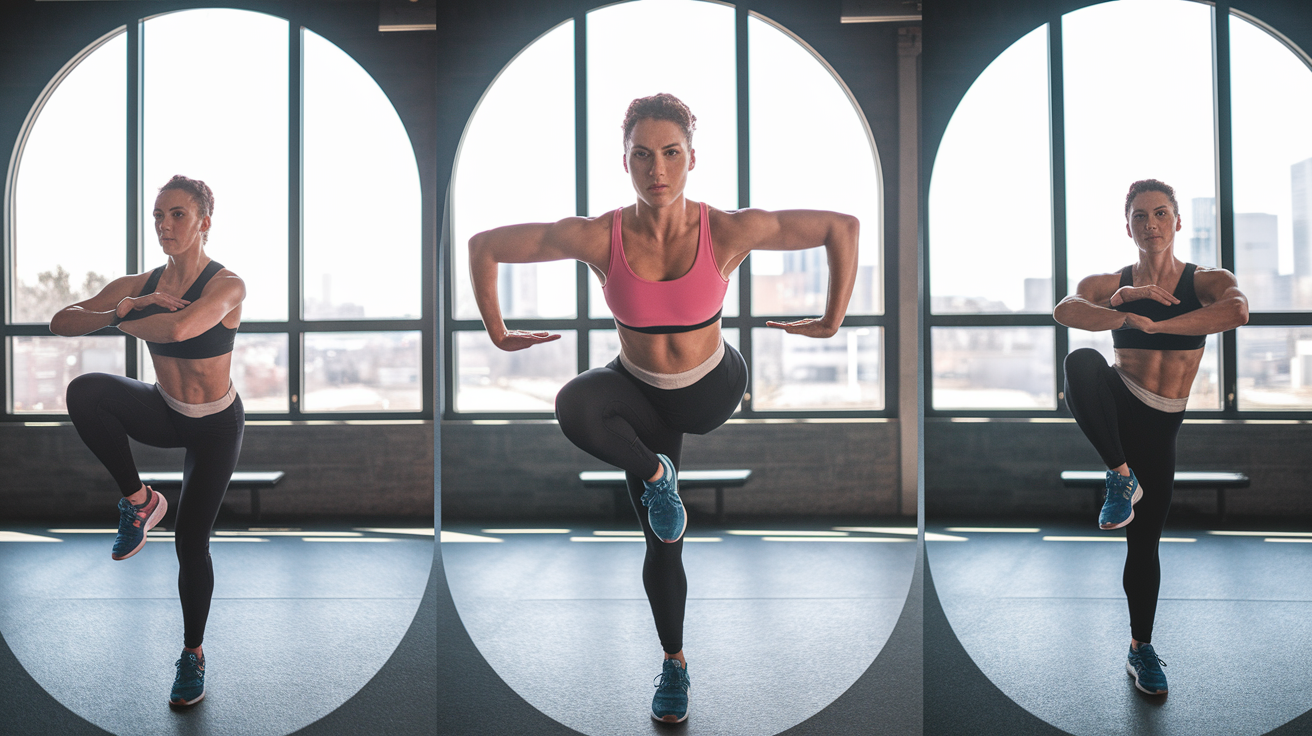
Activation drills wake up muscles that tend to stay quiet during daily life. Especially the glutes, lower traps, and deep core stabilizers. These muscles support proper movement patterns during squats, deadlifts, presses, and rows. When they don’t activate, dominant muscles (quads, lower back, upper traps) take over, increasing injury risk and reducing performance. A few simple activation exercises before lifting can prevent this.
Activation isn’t about fatigue. You’re sending a signal to the nervous system that says, “We’re using this muscle today.” The work is light, controlled, and brief. Usually 8 to 12 reps or 30 to 60 seconds per drill. For example, performing a set of glute bridges before squatting helps the glutes fire earlier and more effectively during the working sets. This improves hip extension mechanics and reduces strain on the lower back. Over time, consistent activation work retrains movement patterns and reduces reliance on compensatory habits.
Simple Activation Options Before Strength Work
Glute bridges – Lie on your back with knees bent and feet flat. Drive your hips up, squeezing the glutes at the top. Lower with control. Perform 10 to 15 reps. This drill prepares the glutes for squats, deadlifts, and single-leg work.
Clamshells – Lie on your side with knees bent. Keep your heels together and lift the top knee, engaging the outer glute. Lower with control. Perform 8 to 12 reps per side. This targets the gluteus medius, which stabilizes the pelvis during single-leg and lateral movements.
Banded side steps – Place a light resistance band around your thighs, just above the knees. Take small steps to the side, maintaining tension on the band. Perform 40 to 60 seconds or 10 to 15 steps in each direction. This reinforces lateral hip stability.
Core bracing drills – Lie on your back with knees bent. Press your lower back gently into the floor and hold for 5 to 10 seconds, breathing normally. Perform 6 to 8 reps. This teaches neutral spine control before loaded lifts.
Superman extensions – Lie face down. Lift your chest and arms slightly off the floor, squeezing your shoulder blades together. Hold briefly, then lower. Perform 8 to 12 reps. This activates the lower traps and scapular stabilizers, which support pulling and pressing movements.
Warm-Up Sets for Beginners Before Lifting Weights
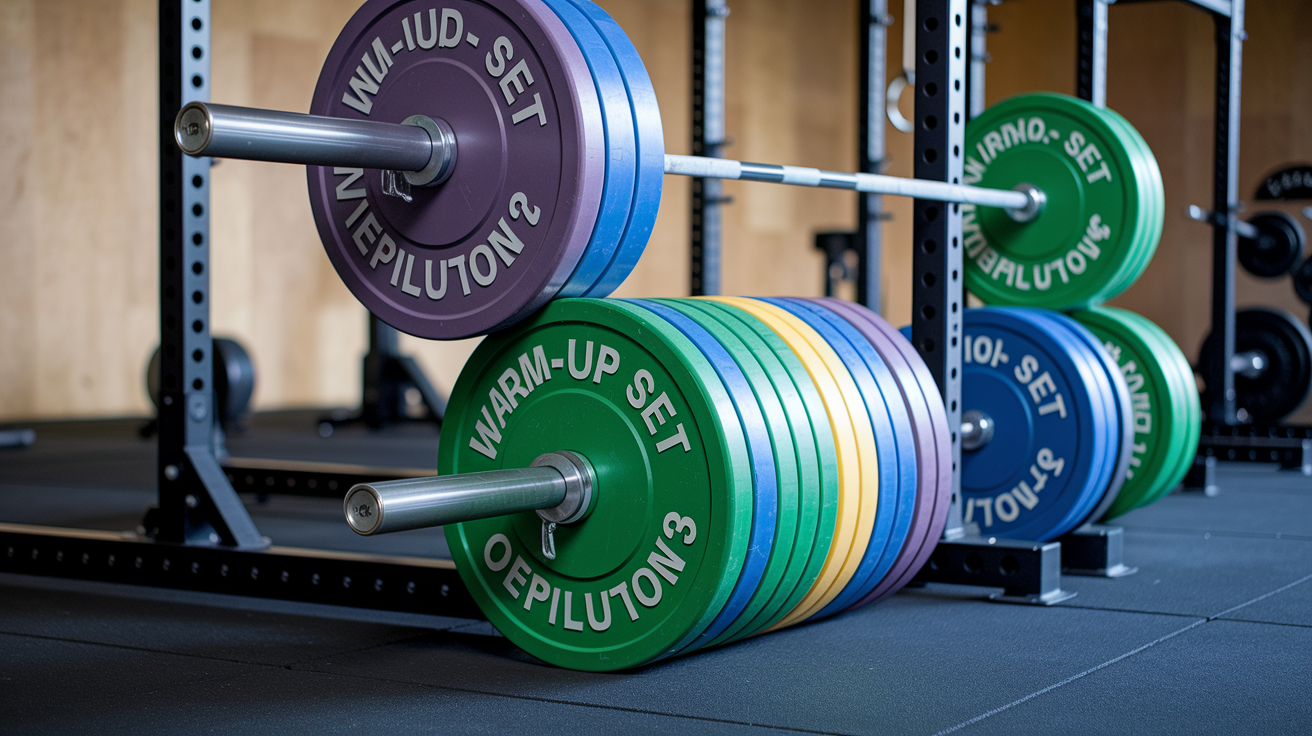
Once the bodyweight warm-up is complete, beginners should perform 2 to 3 progressively heavier warm-up sets for each strength exercise. These sets bridge the gap between an unloaded movement and the working weight. They let the nervous system rehearse the lift, refine technique, and confirm that joints and muscles are ready for load. Skipping warm-up sets and jumping straight to a heavy barbell often results in awkward first reps, poor form, or unnecessary strain.
The structure is simple: start very light, increase moderately, then move to the working weight. The first warm-up set should feel easy, something you could do for 15 to 20 reps if needed. Perform 6 to 8 reps to rehearse the pattern without fatigue. The second set uses a moderate load, something closer to your working weight but still manageable. Perform 3 to 4 reps. If the movement feels smooth and controlled, proceed to the working sets. If technique feels off or joints feel stiff, add one more lighter set before increasing load.
| Set | Load | Reps | Purpose |
|---|---|---|---|
| Warm-Up Set 1 | Very light (bodyweight or ~30–40% of working weight) | 6–8 | Rehearse movement pattern and prime joints |
| Warm-Up Set 2 | Moderate (~60–70% of working weight) | 3–4 | Increase load gradually and confirm technique |
| Optional Set 3 | Near working weight (~80–85%) | 1–2 | Final prep if technique feels uncertain |
Warm-up sets also serve as a daily check-in. Some days, a movement that usually feels easy might feel awkward or tight. Adding an extra light set or adjusting load based on how the warm-ups feel is a simple way to reduce injury risk and improve long-term consistency.
Common Beginner Warm-Up Mistakes and How to Avoid Them

Many beginners skip the warm-up entirely, believing it wastes time or that the first few working sets will serve the same purpose. This approach increases injury risk and reduces performance. A proper warm-up takes 5 to 10 minutes and prepares the body in ways that heavy lifts cannot. If you don’t have time for a warm-up, you don’t have time for the planned workout intensity.
Another common mistake is rushing through the warm-up or making it too intense. The goal is readiness, not fatigue. Jumping jacks performed at a sprint pace or dynamic stretches done with poor form defeat the purpose. Keep the intensity low to moderate, focus on controlled movement, and breathe steadily. The warm-up should feel easy. If you’re breathing hard or sweating heavily before the first working set, you’ve overdone it.
Five mistakes to avoid:
- Skipping the warm-up – Even on busy days, a 5-minute routine makes a measurable difference.
- Using static stretches before lifting – Long holds can reduce strength output. Save them for the cool-down.
- Rushing or using poor form – Speed reduces the benefit. Focus on quality movement.
- Making the warm-up too intense – Low to moderate intensity is enough. This isn’t the workout.
- Ignoring movement-specific prep – If you’re squatting, include bodyweight squats. If you’re pressing, include shoulder mobility.
Choosing Between a 5–10 Minute Warm-Up and a Longer 20–25 Minute Warm-Up Structure
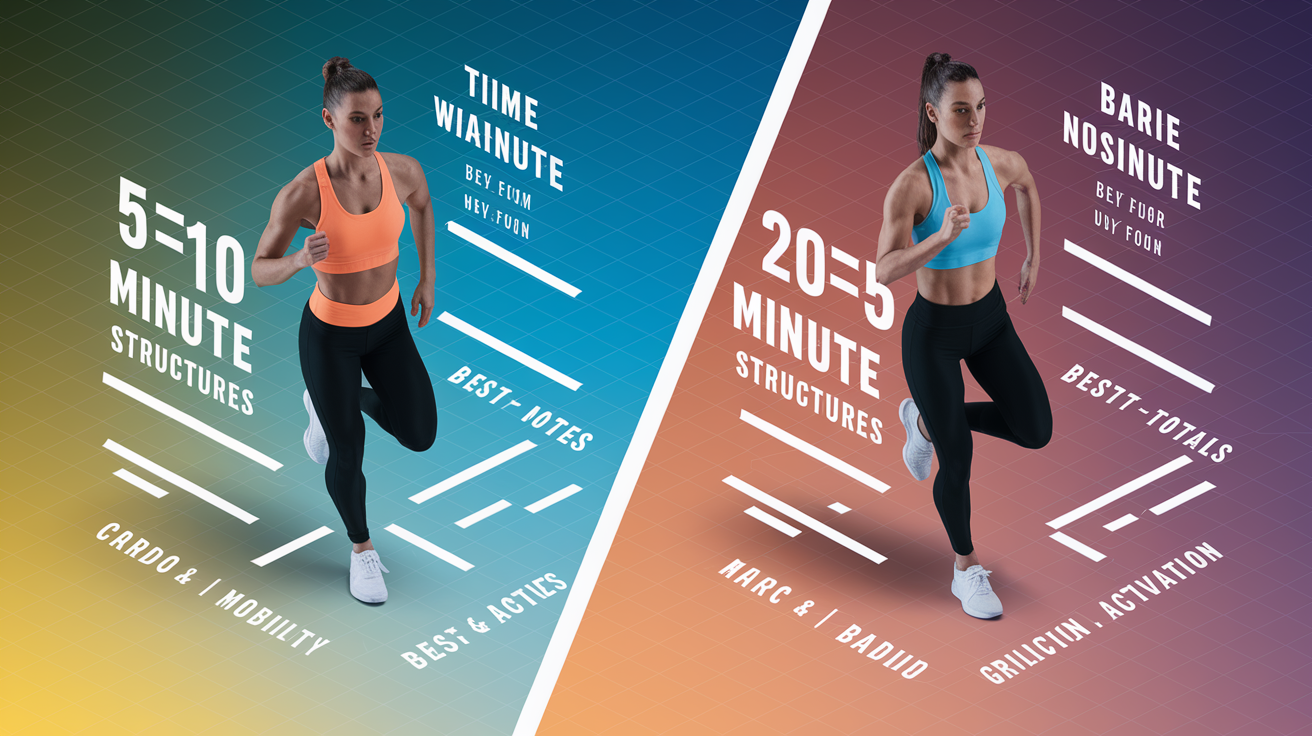
Most beginners benefit from a simple 5 to 10 minute warm-up that covers general cardio, dynamic mobility, and light activation. This approach fits into tight schedules and provides enough stimulus to reduce injury risk and improve performance. On busier days or when energy is lower, this compact routine is the baseline. It includes 6 to 9 exercises performed back to back with minimal rest, covering the full body and preparing the nervous system for strength work.
A longer 20 to 25 minute warm-up offers more thorough preparation and is useful when addressing specific imbalances, preparing for heavy lifts, or focusing on weak or tight areas. This structure splits into three phases: 10 to 12 minutes of low-impact general cardio (elliptical, bike, marching in place, light jogging), 5 to 7 minutes of dynamic range-of-motion work (deep lunges, thoracic rotations, hip openers), and 5 to 7 minutes of goal-specific activation (glute bridges, clamshells, Superman extensions). Beginners returning from injury, working around desk-related tightness, or learning complex lifts like the deadlift or overhead press often benefit from the extra time.
| Warm-Up Type | Total Time | Best For |
|---|---|---|
| Compact 5–10 minute routine | 5–10 minutes | Standard strength sessions, busy schedules, general readiness |
| Full 20–25 minute routine | 20–25 minutes | Heavy lifts, addressing imbalances, thorough prep for complex movements |
The compact routine works for most training days. Use the longer structure when time allows, when warming up for a personal-record attempt, or when recovering from travel or a layoff. Both approaches follow the same principles: start with general movement, add dynamic mobility, include activation, and finish with exercise-specific warm-up sets before the working load.
Final Words
Start with 1–2 minutes of light cardio, then 2–5 minutes of dynamic mobility and 1–3 minutes of movement-specific prep. That sequence raises heart rate, loosens joints, and primes your muscles.
We covered simple mobility drills, activation options, progressive warm-up sets, common mistakes, and the choice between a compact or longer warm-up.
Use this simple warm-up routine to prepare beginners for strength sessions. Small, consistent steps now lead to safer, stronger workouts soon.
FAQ
Q: How long should a beginner warm-up be?
A: A beginner warm-up should last 5–10 minutes to raise heart rate, boost blood flow, mobilise joints, and reduce injury risk before a strength session.
Q: What are the three warm-up phases and how long should each last?
A: The three warm-up phases are 1–2 minutes general aerobic work, 2–5 minutes dynamic mobility and activation, and 1–3 minutes movement-specific prep before lifting.
Q: Which dynamic movements should I use in a warm-up?
A: Dynamic movements to use include jogging on the spot or jumping jacks, arm circles, leg swings, bodyweight squats, walking lunges, Spiderman lunges, and walkouts.
Q: What activation drills should I do to prepare key muscles?
A: Activation drills to use are glute bridges, clamshells, banded side steps, Superman extensions and core bracing—each for about 8–12 reps or 30–60 seconds to wake-up target muscles.
Q: How many warm-up sets should I do before lifting weights?
A: You should do 2–3 progressively heavier warm-up sets per exercise: a very light set (~8 reps), a moderate set (~4 reps), and add another if form feels off.
Q: Give me a simple 8-step warm-up routine with reps and durations I can use now.
A: Use this 8-step sequence: jumping jacks 60s; arm circles 30s; leg swings 8–12/side; bodyweight squats 10–15; walking lunges 6–10/leg; Spiderman lunges 6–8/side; walkouts 4–8; light sport drill 30–60s.
Q: Why choose dynamic warm-ups over static stretching before lifting?
A: Dynamic warm-ups raise blood flow, increase joint lubrication and neural readiness, and improve movement for lifting; save static stretches for cool-downs to avoid reduced strength output.
Q: How will I know when my warm-up is working and I’m ready to train?
A: You’ll know it’s working when breathing steadies, you feel a light sweat, movements feel smoother, and joints feel easier to move—often appearing within 2–8 minutes.
Q: What common warm-up mistakes should beginners avoid?
A: Common mistakes to avoid are skipping warm-ups, rushing them, making them too intense, doing static holds before lifting, and ignoring sport- or exercise-specific prep.
Q: When should I choose a 5–10 minute warm-up vs a 20–25 minute warm-up?
A: Choose 5–10 minutes for most gym sessions and time-crunched days; use a 20–25 minute warm-up for heavy, technical, or sport-specific sessions needing extra cardio, mobility, and activation.