

Think you can fix night-shift tiredness with coffee and a blackout curtain?
It’s not that simple.
Working nights flips your body clock and makes recovery harder, from mood dips to slower healing.
This post gives a step-by-step bedtime routine you can try tonight to actually help you recover.
You’ll get simple, repeatable habits for pre-shift light and naps, post-shift wind-downs, a reliable daytime sleep block, strategic naps, and a sleep-proof room.
Follow these steps and your day-sleep will start doing the job night sleep used to do.
What Night Shift Sleep Actually Means and Why It Matters

Night shift sleep is what happens when you’re trying to rest during the day while working overnight or on a rotating schedule. Your body wants to sleep when it’s dark and wake when it’s light. Sleeping during daylight flips that pattern. The mismatch between your internal clock and your actual sleep window is what sleep researchers call circadian misalignment.
When this becomes a long-term thing, it can turn into Shift Work Sleep Disorder, or SWSD. This isn’t just feeling tired after a rough shift. It’s a persistent pattern where sleep doesn’t improve even when you try, and you feel groggy or sleepy all the time. SWSD affects somewhere between 10% and 40% of shift workers, depending on the schedule and how well your body copes.
The long-term stuff goes beyond being worn out. Years of misaligned sleep bump up your risk for heart disease, type 2 diabetes, and weight gain. Mental health takes a hit too. Depression and anxiety show up more often in people working nights. Your immune system weakens, making you more vulnerable to getting sick and slower to bounce back. Chronic fatigue becomes your new normal.
These aren’t scare tactics. Population studies on long-term shift workers show these patterns clearly. The good news? Intentional sleep strategies can reduce these risks, even if they can’t make the challenge disappear entirely.
Recognizing the Signs of Shift Work Sleep Disorder
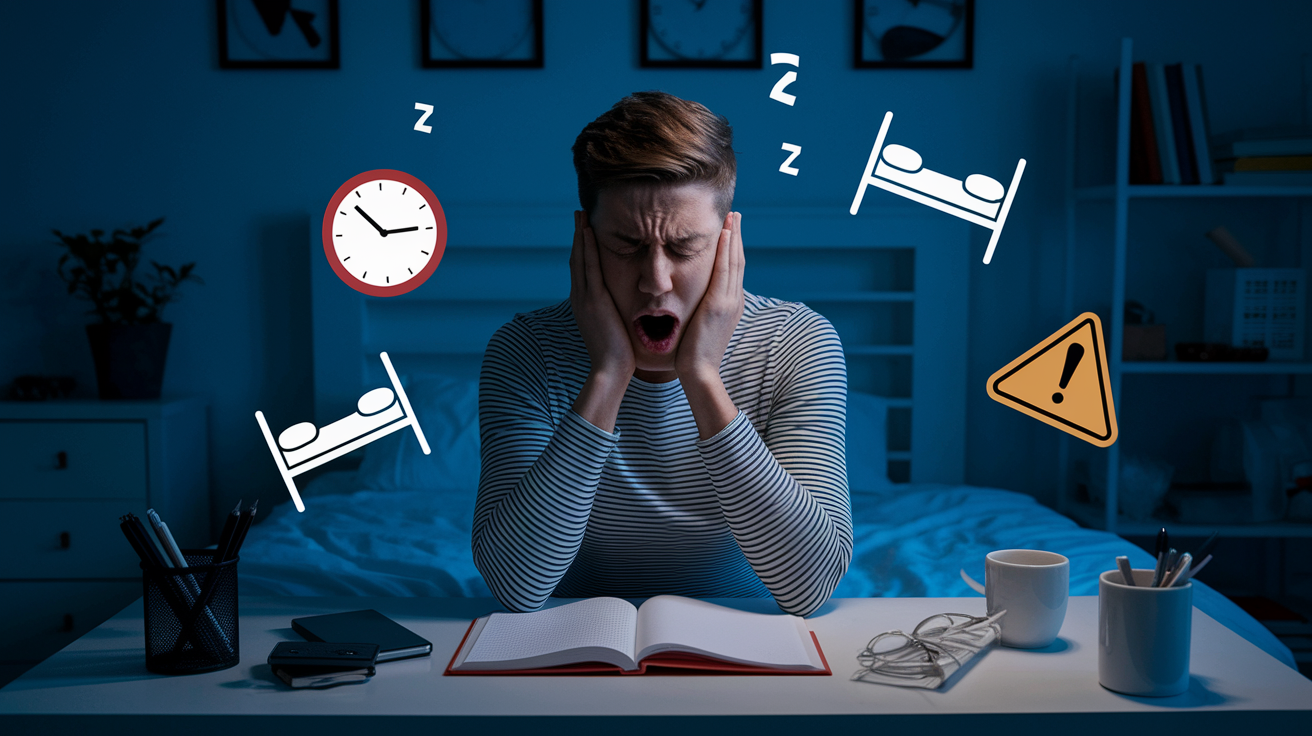
SWSD shows up two ways: insomnia and excessive sleepiness. Insomnia means you can’t fall asleep or stay asleep during your planned daytime rest, even when you’re exhausted. Excessive sleepiness means you feel overwhelmingly tired when you’re supposed to be awake, whether that’s at work or during your time off.
Here’s what to watch for:
- Feeling very sleepy or drowsy when you need to be alert
- Low energy that rest doesn’t fix
- Struggling to finish work tasks or handle daily activities because you’re so tired
- Trouble falling asleep or staying asleep during your designated sleep time
- Difficulty concentrating, remembering things, or making decisions
- Mood changes like irritability, frustration, or feeling flat
These symptoms stick around despite your best efforts to sleep. If you only have trouble occasionally or feel tired after a particularly rough shift, that’s normal. SWSD is the chronic version where the problem doesn’t go away and starts messing with your ability to function.
One useful marker: if you’re getting enough hours in bed but still feel unrested, or you can’t get enough hours no matter what you try, pay attention to that.
Step-by-Step Bedtime Routine for Night and Rotating Shifts

A bedtime routine for shift workers has to account for three timing windows: before your shift, after your shift, and during your main daytime sleep block. Here’s how to structure each one.
Pre-Shift (1 to 2 Hours Before Work)
Start winding up instead of winding down. Use bright light to signal alertness. Position yourself near overhead lights or a window with sunlight if your shift starts in the evening. If your shift starts late at night, use a light therapy box for 20 to 30 minutes while you eat or get ready.
Take a short nap if you didn’t sleep well earlier. Aim for 20 to 30 minutes. Set an alarm. Longer naps leave you groggy, and anything over 90 minutes can interfere with your main sleep period later.
Eat a balanced meal with lean protein, whole grains, and vegetables. Skip heavy, greasy foods that sit in your stomach. Drink water. If you use caffeine, time it so it wears off at least 4 to 6 hours before your planned sleep.
Post-Shift (Immediately After Work)
Wear sunglasses on your way home, even if it’s overcast. Bright morning light is the strongest circadian cue your brain gets, and it’ll push your internal clock in the wrong direction if you’re trying to sleep soon.
When you get home, keep the lights dim. Use lamps instead of overhead lights. Avoid turning on bright kitchen or bathroom lights if possible. This is your wind-down window, and light is the signal you’re controlling.
Change into comfortable sleep clothes. Brush your teeth, do hygiene tasks, but keep the environment low-stimulus. No phone scrolling, no catching up on email, no TV with bright screens.
Wind-Down (30 Minutes Before Sleep)
This is your pre-sleep ritual. Pick two or three low-energy activities and do them in the same order every day.
Examples:
- Light stretching or gentle yoga for 5 to 10 minutes
- Reading a physical book or magazine under a dim lamp
- Listening to calming music, a sleep story, or a guided meditation
- Deep breathing exercises or progressive muscle relaxation
- Journaling a few sentences about your shift or your day
Avoid screens entirely during this window. If you must use your phone, enable a red-light filter and keep brightness at the lowest setting. But phone-free is better.
Set your bedroom temperature before you start winding down. Aim for around 65°F (18°C), or within the 60 to 67°F range. A cool room helps your core body temperature drop, which is one of the physiological signals for sleep onset.
Main Sleep Block
Your goal is 7 to 9 hours of sleep, but 6 to 8 is more realistic for many shift workers. Consistency matters more than perfection.
Go to bed at the same time every day, even on your days off if possible. If you rotate shifts weekly, keep your sleep window stable within each rotation and shift it gradually (by 1 to 2 hours per day) a few days before your schedule changes.
Use blackout curtains or a sleep mask to block all light. Cover or unplug LED lights from chargers, clocks, or electronics. Your room should be as close to total darkness as you can make it.
Use earplugs, a white-noise machine, or a fan to mask daytime sounds. Traffic, birds, lawn mowers, and neighbors are all louder during the day. Continuous sound helps your brain ignore sudden noises.
If you wake up during your sleep block, don’t check your phone or turn on lights. Stay in bed, practice slow breathing, and give yourself 15 to 20 minutes to fall back asleep. If you’re still awake after that, get up briefly, do something boring in dim light, then return to bed.
Strategic Naps
Short naps during your shift can help you stay alert without messing up your main sleep. Aim for 20 to 30 minutes during a break if your workplace allows it. Nap in a dark, quiet space if possible, or use an eye mask and earplugs. Set an alarm so you don’t oversleep.
Avoid napping within 2 to 3 hours of your planned main sleep time. A late nap makes it harder to fall asleep when you get home.
Building the Ideal Sleep Environment for Daytime Sleep
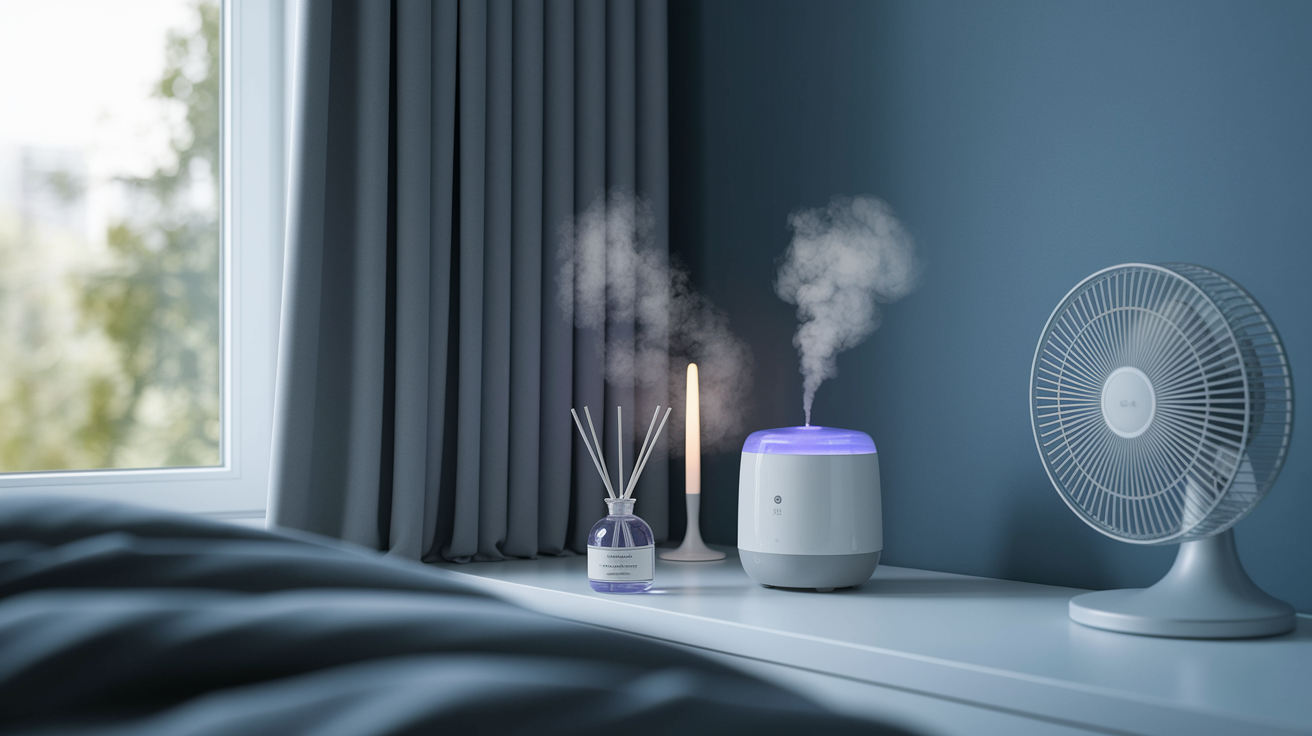
Daytime sleep is harder than nighttime sleep because your environment is working against you. Your job is to create artificial night.
Darkness
Blackout curtains are the single most effective tool. Install them in your bedroom and close them before you go to bed. If you rent or can’t install curtains, use a high-quality sleep mask that blocks light around the edges.
Cover or remove all light sources in the room. This includes alarm clocks, phone chargers, smoke detectors, and power strips with LED indicators. Even small amounts of light can suppress melatonin and fragment your sleep.
If you share your home with others, ask them to keep hallway and bathroom lights off or dimmed during your sleep hours. A strip of draft-blocking foam or a rolled towel at the bottom of your bedroom door can block light from other rooms.
Temperature
Set your thermostat to 60 to 67°F (15 to 19°C) before you go to bed. Most people sleep best around 65°F (18°C). A cool room helps your core body temperature drop, which is part of the natural sleep process.
If you can’t control the thermostat, use a fan for airflow and cooling. A fan also creates white noise, which helps with sound masking.
Use breathable bedding made from natural fibers like cotton or linen. Synthetic materials trap heat and moisture, which can wake you up. If you tend to sleep hot, consider a cooling mattress pad or pillow.
Noise Control
Daytime sounds are unavoidable, so your goal is to mask them with consistent, soothing noise.
White noise is the most common option. It’s a steady, even sound that covers a wide range of frequencies. White-noise machines are inexpensive and effective.
Brown noise and pink noise are alternatives. Brown noise is deeper and feels like a low rumble. Pink noise is softer and closer to the sound of rain or wind. Try each one to see which you prefer.
A fan can serve double duty as both a cooling tool and a noise source. Position it so it doesn’t blow directly on you, which can dry out your airways.
Earplugs are a backup option if noise is extreme or if you can’t use a machine. Foam earplugs are cheap and effective. Molded silicone earplugs are reusable and more comfortable for side sleepers.
If you live in a noisy area, combine strategies. Use earplugs and a white-noise machine together, or use noise-canceling headphones if you can sleep comfortably with them on.
Bedding and Comfort
Invest in a supportive mattress and pillows that match your sleep position. Side sleepers need a firmer pillow to keep the neck aligned. Back sleepers do better with a medium-loft pillow. Stomach sleepers need a very thin pillow or none at all.
Your mattress should support your spine without sagging. If you wake up with back or neck pain, your mattress or pillow is likely the problem. You don’t need an expensive mattress, but you do need one that works for your body.
Use multiple light layers instead of one heavy blanket. This lets you adjust your temperature during sleep without fully waking up.
Aromatherapy
Calming essential oils can help signal your brain that it’s time to sleep. The three most evidence-supported options are lavender, chamomile, and bergamot.
Use a diffuser in your bedroom 20 to 30 minutes before you go to sleep, or apply a diluted oil to your pillow. Don’t apply essential oils directly to your skin without diluting them in a carrier oil.
If scents bother you or trigger allergies, skip this step. It’s optional.
Clutter and Visual Calm
Keep your bedroom clear of work materials, laundry piles, and visual clutter. Your brain associates your bedroom with the activities that happen there. If your bedroom is also your office, gym, and storage room, it’s harder to relax.
If you can, reserve your bed for sleep only. No scrolling, no eating, no working. This builds a mental association between your bed and rest.
Timing Rules for Caffeine, Naps, Meals, and Exercise

Timing is everything when your schedule doesn’t match the sun. Here’s when to do what.
Caffeine
Caffeine has a half-life of about 5 to 6 hours, meaning half of it is still in your system that long after you drink it. Avoid coffee, tea, energy drinks, and caffeinated soda within 4 to 6 hours of your planned sleep time.
If your shift ends at 7:00 AM and you plan to sleep by 8:30 AM, your last caffeine should be no later than 2:30 AM, and ideally earlier.
Use caffeine strategically during the first half of your shift to stay alert, then switch to water or decaf.
Naps
A 20 to 30 minute nap before your shift can improve alertness and performance. Set an alarm and nap in a dark, quiet space.
Short naps during breaks are fine if you need them, but keep them under 30 minutes to avoid sleep inertia (the groggy feeling after waking from deep sleep).
Avoid napping within 2 to 3 hours of your main sleep window. A late nap can delay sleep onset and reduce total sleep time.
Meals
Eat balanced meals with lean protein, vegetables, whole grains, and healthy fats. Stable blood sugar helps maintain energy and prevents crashes.
Avoid heavy, greasy, or very large meals within 2 to 3 hours of sleep. Digestion can interfere with sleep onset and cause discomfort or reflux.
If you’re hungry close to bedtime, choose a light snack with protein and a bit of carbohydrate. Examples: a small handful of nuts, a banana with peanut butter, or yogurt.
Time your meals consistently with your schedule. If you work 11:00 PM to 7:00 AM, eat your main meal before your shift starts, a snack or second meal mid-shift, and a light snack after your shift if needed.
Exercise
Aim for at least 30 minutes of physical activity per day. Exercise improves sleep quality, reduces stress, and supports overall health.
Don’t exercise intensely right before you plan to sleep. Physical activity raises your heart rate, core temperature, and cortisol, all of which make it harder to fall asleep. Finish workouts at least 3 to 4 hours before bed.
Light movement is fine close to bedtime. A short walk, gentle stretching, or yoga won’t interfere with sleep and can help you wind down.
Schedule exercise during your waking hours, ideally a few hours after you wake up or mid-shift if your workplace allows it. Even short movement breaks (walking, stretching, stair climbing) during your shift help reduce fatigue.
Screen-Free Window
Stop using screens 30 to 60 minutes before bed. This includes phones, tablets, computers, and TVs. Blue and white light from screens suppress melatonin, the hormone that signals sleep.
If you must use a screen, enable a red-light filter or “night mode” and reduce brightness to the lowest comfortable level. Phone-free is still better.
Replace screen time with any of the wind-down activities listed earlier: reading, stretching, breathing exercises, journaling, or listening to calming audio.
Recovery-Focused Practices to Improve Sleep Quality

Recovery isn’t just about duration. It’s also about depth, restoration, and reducing the physical toll of shift work. These practices support your body’s ability to repair and recharge.
Light Stretching
Spend 5 to 10 minutes doing gentle stretches before bed. Focus on areas that get tight during your shift: neck, shoulders, lower back, hips, and legs.
Stretching reduces muscle tension, lowers your heart rate, and gives your mind something calm to focus on. It’s a physical signal that work is over and rest is starting.
You don’t need a routine. Just move slowly through whatever feels good. Child’s pose, cat-cow, seated forward fold, and gentle spinal twists are all effective.
Progressive Muscle Relaxation
This technique involves tensing and then releasing each muscle group in sequence, starting with your feet and working up to your face.
Tense each muscle group for 5 seconds, then release and notice the feeling of relaxation for 10 to 15 seconds. Move to the next group.
Progressive muscle relaxation reduces physical tension and gives your mind a repetitive, calming task. It’s especially useful if you tend to lie in bed with a racing mind.
Deep Breathing
Slow, controlled breathing activates your parasympathetic nervous system, which promotes relaxation and lowers your heart rate.
Try this simple pattern: breathe in through your nose for 4 counts, hold for 4 counts, breathe out through your mouth for 6 counts. Repeat for 5 to 10 minutes.
Box breathing (4-4-4-4) and 4-7-8 breathing are also effective. The key is making your exhale longer than your inhale.
Temperature Control
A cool room (60 to 67°F / 15 to 19°C) is one of the most reliable ways to improve sleep onset and reduce nighttime awakenings.
If you sleep hot, use a fan, wear light clothing, and choose breathable bedding. If you sleep cold, layer blankets so you can adjust without waking fully.
A warm shower or bath 60 to 90 minutes before bed can also help. When you get out, your core temperature drops, which mimics the natural temperature decline that happens before sleep.
Calming Aromas
Lavender is the most studied scent for sleep. It reduces heart rate, lowers blood pressure, and promotes relaxation.
Chamomile and bergamot are also effective. Use a diffuser for 20 to 30 minutes before bed, or apply diluted oil to your pillow.
If you don’t like scents or have allergies, skip this step. It’s helpful but not required.
Guided Imagery and Meditation
Guided imagery involves visualizing a calm, peaceful scene in detail. It gives your mind something to focus on instead of worries or to-do lists.
Guided sleep meditations are widely available as apps, podcasts, or YouTube videos. Choose one with a calm voice and slow pacing.
If meditation feels awkward, try a sleep story instead. These are narrative recordings designed to be boring enough to help you drift off.
Consistent Wind-Down Ritual
The specific activities matter less than the consistency. Do the same 2 to 3 things in the same order every day.
Your brain learns the pattern. Over time, starting your ritual becomes a cue that sleep is coming, which makes it easier to relax.
Examples of simple rituals:
- Stretch for 5 minutes, read for 15 minutes, listen to calming music for 10 minutes.
- Take a warm shower, do deep breathing for 5 minutes, journal for 5 minutes.
- Listen to a sleep meditation, apply lavender oil, set your alarm, and lie down.
Pick what works for you and repeat it daily.
Strategies to Maintain Consistency Across Rotating Schedules

Rotating shifts are the hardest to manage because your sleep window keeps moving. You can’t fully stabilize your circadian rhythm, but you can minimize the disruption.
Anchor Your Sleep Window Within Each Rotation
If you work 11:00 PM to 7:00 AM one week, sleep from 8:30 AM to 4:30 PM every day that week. Keep that window stable even on your days off.
If you work a day shift the next week, shift your sleep window gradually over 2 to 3 days before the rotation starts. Move your bedtime and wake time by 1 to 2 hours per day.
Example: if you need to shift from sleeping at 8:30 AM to sleeping at 11:00 PM, start going to bed 2 hours earlier each day for three days before the new rotation begins.
Use Light and Darkness as Anchors
Light is the strongest circadian cue you have. Use it to reinforce your current schedule.
When you’re on night shift, use bright light during your waking hours (at work) and total darkness during your sleep hours (at home). Wear sunglasses after your shift to block morning light.
When you’re on day shift, get bright light in the morning and dim your environment in the evening.
If your schedule changes frequently, consistent light and dark exposure within each schedule helps your brain understand what “night” and “day” mean for that week.
Communicate Your Schedule
Tell your household when you’re sleeping. Post a note on your bedroom door. Ask family or roommates to keep noise down and avoid knocking or opening your door during your sleep window.
If you have kids, explain that your sleep time is like their nighttime. Set up quiet activities they can do without waking you, or arrange childcare during your sleep hours if possible.
Limit Schedule Swings on Days Off
It’s tempting to flip back to a “normal” schedule on your days off, but large swings make it harder to sleep well when you return to work.
If you’re on night shift, try to keep your sleep window within 2 to 3 hours of your work schedule even on days off. You don’t have to be rigid, but avoid staying up all night and sleeping all day one day, then flipping to a daytime schedule the next.
If you need to spend time with family or friends during the day, take a short nap before or after so you’re not running on zero sleep.
Gradual Transitions Are Easier Than Sudden Ones
If your workplace gives you advance notice of schedule changes, start shifting your sleep window a few days early. Move your bedtime by 1 to 2 hours per day instead of jumping 8 hours all at once.
This is what you’d do to adjust to a new time zone. Treat your rotating schedule like recurring jet lag and use the same strategies to ease the transition.
Common Problems and Practical Solutions
Even with a solid routine, daytime sleep comes with challenges. Here’s how to troubleshoot the most common ones.
Problem: I Can’t Fall Asleep Even Though I’m Exhausted
This is often a circadian issue. Your brain doesn’t think it’s nighttime, so it’s resisting sleep even though your body is tired.
Solutions:
- Block all light. Use blackout curtains and a sleep mask together if needed.
- Avoid light exposure after your shift. Wear sunglasses on the way home and keep your home dim.
- Use a consistent wind-down routine to signal your brain that sleep is coming.
- Try a warm shower 60 to 90 minutes before bed to trigger a core temperature drop.
- Consider melatonin supplements (discuss timing and dose with your healthcare provider first).
Problem: I Wake Up During My Sleep Block and Can’t Get Back to Sleep
Daytime sleep is lighter and more fragmented than nighttime sleep, so this is common.
Solutions:
- Improve noise masking. Add earplugs, a white-noise machine, or both.
- Check your room temperature. If you’re too warm, you’ll wake up more often.
- Avoid checking the time or your phone if you wake up. Light from a screen will make it harder to fall back asleep.
- Practice slow breathing or progressive muscle relaxation while lying in bed.
- If you’re awake for more than 20 minutes, get up briefly, do something boring in dim light, then go back to bed.
Problem: Daytime Noise Is Too Loud
Traffic, construction, neighbors, and kids are louder during the day.
Solutions:
- Use earplugs and a white-noise machine together.
- Try brown or pink noise instead of white noise. Some people find deeper frequencies more effective at masking sudden sounds.
- Communicate with your household and ask for quiet during your sleep hours.
- If noise is extreme and persistent, consider temporary soundproofing. Heavy curtains, draft blockers, and weather stripping around doors can all help.
Problem: I Feel Groggy and Disoriented When I Wake Up
This is called sleep inertia. It’s worse when you wake up from deep sleep or when you wake up in total darkness.
Solutions:
- Use a sunrise alarm that gradually brightens over 30 to 60 minutes before your alarm goes off. The light helps suppress melatonin and makes waking feel less jarring.
- Set your alarm across the room so you have to get up to turn it off.
- Expose yourself to bright light immediately after waking. Turn on overhead lights or step outside for a few minutes.
- Splash cold water on your face or take a quick cool shower to increase alertness.
Problem: I’m Chronically Sleep-Deprived and Nothing Helps
If you’re consistently getting less than 6 hours of sleep per night and you’ve tried environmental controls, timing strategies, and a wind-down routine without improvement, it’s time to talk to a healthcare provider.
Chronic sleep deprivation increases your risk for long-term health problems and impairs your ability to work safely. A clinician can evaluate you for Shift Work Sleep Disorder, assess whether another sleep disorder (like sleep apnea) is contributing, and discuss treatment options.
Medical Options and When to Seek Professional Help

Behavioral strategies are the first line of defense, but they don’t work for everyone. If your sleep problems persist despite consistent effort, medical options are available.
Melatonin Supplements
Melatonin is a hormone that signals your brain it’s time to sleep. Taking a melatonin supplement can help shift your circadian rhythm or make it easier to fall asleep during the day.
Timing and dose matter. Most people start with 0.5 to 3 mg taken 30 to 60 minutes before their planned sleep time. Higher doses aren’t necessarily better and can cause grogginess.
Talk to your healthcare provider before starting melatonin, especially if you take other medications or have a health condition. Melatonin can interact with blood thinners, immune suppressants, and diabetes medications.
Light Therapy
A light therapy box delivers bright light (usually 10,000 lux) to help reset your circadian rhythm. For night-shift workers, the goal is to use light during your waking hours to stay alert and avoid light after your shift to promote sleep.
Most protocols recommend 20 to 30 minutes of light therapy at the start of your shift or during a break. Position the box at eye level, about 16 to 24 inches from your face.
Light therapy is low-risk for most people, but it can cause eye strain or headaches if used incorrectly. Talk to a clinician if you have a history of eye problems or bipolar disorder, as bright light can trigger mood changes in some people.
Cognitive Behavioral Therapy for Insomnia (CBT-I)
CBT-I is a structured program that teaches you how to change thoughts and behaviors that interfere with sleep. It’s the most effective long-term treatment for chronic insomnia, including insomnia related to shift work.
CBT-I typically involves 4 to 8 sessions with a trained therapist. It includes sleep restriction (limiting time in bed to match actual sleep time), stimulus control (using your bed only for sleep), and cognitive techniques to reduce anxiety about sleep.
CBT-I is more effective than sleep medications for long-term results and doesn’t have side effects. Many programs are now available online or through apps, making them more accessible.
Prescription Sleep Aids
Short-term use of prescription sleep medications can help you get through a particularly rough stretch, but they’re not a long-term solution.
Common options include zolpidem (Ambien), eszopiclone (Lunesta), and ramelteon (Rozerem). These medications work in different ways and have different side effects. Some cause next-day grogginess, some carry a risk of dependence, and some interact with other medications.
Sleep aids should only be used under the guidance of a healthcare provider, and they’re most effective when combined with behavioral strategies.
When to Seek Help
See a healthcare provider if:
- You’ve tried environmental controls, timing strategies, and a consistent routine for at least 2 to 3 weeks and your sleep hasn’t improved.
- You’re getting fewer than 6 hours of sleep per night on a regular basis.
- You feel excessively sleepy during work or have trouble concentrating, even after a full sleep period.
- You’ve had a near-miss or accident at work or while driving due to fatigue.
- Your mood, relationships, or physical health are suffering because of poor sleep.
- You experience symptoms of depression, anxiety, or other mental health concerns.
A clinician can screen you for Shift Work Sleep Disorder, assess for other sleep disorders (like sleep apnea or restless legs syndrome), and recommend treatment options tailored to your situation.
How Long It Takes to Adjust and What to Expect
Adjusting to a night-shift or rotating schedule takes time. Your circadian rhythm doesn’t flip overnight, and your body needs several days to adapt to a new sleep-wake pattern.
Initial Adjustment Period
Most people need anywhere from a few days to two weeks to adjust to a new night-shift schedule. The timeline depends on how consistent your schedule is, how much light exposure you control, and how well you manage your sleep environment.
During the first few days, you’ll likely feel tired, groggy, and out of sync. Your appetite might be off, your digestion might be sluggish, and you might feel irritable or foggy. This is normal.
The key is consistency. Keep your sleep window, light exposure, and wind-down routine as stable as possible during this period. Your brain is learning a new pattern, and repetition is what locks it in.
Rotating Schedules Take Longer
If your schedule changes weekly or bi-weekly, you won’t fully adapt before the next rotation starts. Instead, your goal is to minimize disruption and maintain as much stability as possible within each rotation.
Expect to feel mildly jet-lagged most of the time. This is the reality of rotating shifts. The strategies in this article won’t eliminate that feeling, but they will reduce it and help you sleep better during each phase.
Signs You’re Adjusting
You’ll know you’re adapting when:
- You fall asleep within 20 to 30 minutes of lying down.
- You stay asleep for most of your planned sleep block without frequent awakenings.
- You wake up feeling more rested than you did during the first few days.
- Your energy and alertness during work improve.
- Your mood and concentration stabilize.
Progress isn’t linear. You’ll have good days and rough days, especially if your schedule rotates. That’s expected.
Realistic Expectations
Night-shift sleep will never feel exactly the same as nighttime sleep. Daytime sleep tends to be shorter and lighter, even with perfect environmental controls. Your body’s natural preference is to sleep at night, and you’re working against that preference.
The goal isn’t perfect sleep. The goal is functional sleep that allows you to recover, stay safe at work, and maintain your health over the long term.
Most shift workers report that their sleep improves significantly with consistent routines and environmental controls, but few report feeling fully rested all the time. That’s the trade-off of shift work.
If you’ve been on a night schedule for months and still feel chronically exhausted, that’s a sign to talk to a healthcare provider. Persistent fatigue isn’t something you should just push through.
Workplace Sleep Training and Organizational Support
Individual strategies matter, but workplace support can make a big difference. Structured fatigue management and sleep training programs help shift workers sleep better and perform more safely.
What Workplace Sleep Training Covers
Formal programs like “Managing Fatigue” or “Sleep & Shiftwork Lifestyle” courses typically include:
- Education on circadian rhythms and how shift work affects sleep
- Strategies for optimizing sleep environments at home
- Guidance on napping, caffeine, and light exposure
- Tips for managing sleep across rotating schedules
- Information on recognizing and addressing Shift Work Sleep Disorder
These programs are usually delivered in short sessions (1 to 2 hours) and may include follow-up check-ins or printed resources.
Expected Outcomes
Research on workplace sleep training shows measurable improvements. Participants report:
- Increased total sleep time (often by 30 to 60 minutes per day)
- Improved alertness and concentration during shifts
- Reduced absenteeism and sick days
- Fewer fatigue-related errors or near-misses
- Better overall well-being and mood
The key is that training needs to be paired with organizational policies that support sleep. If workers are expected to work double shifts, stay late unpredictably, or rotate schedules with no advance notice, training alone won’t fix the problem.
Advocating for Support
If your workplace doesn’t offer sleep or fatigue training, ask for it. Talk to your supervisor, union representative, or HR department. Frame it as a safety and performance issue, not a personal request.
You can also suggest simple policy changes that support better sleep:
- Advance notice of schedule changes (at least one week if possible)
- Limits on consecutive night shifts (no more than 3 to 5 in a row)
- Access to nap rooms or quiet spaces during breaks
- Bright lighting in work areas during night shifts
- Dim lighting in break rooms or rest areas
Small changes at the organizational level can have a big impact on your ability to sleep well and stay healthy.
Final Words
Start tonight by choosing two small changes: set a consistent sleep window and dim bright lights an hour before bed.
We covered why sleep boosts recovery, how to tweak your room for rest, quick wind-down moves (breathing, gentle stretching), timing for meals and caffeine, smart naps, and how to track progress simply.
Try a bedtime routine for shift workers to aid recovery, small repeatable steps that add up. Keep it simple and steady; you’ve got this.
FAQ
Q: What do the options A, B, and C mean?
A: The options A, B, and C mean A requests a single full long-form outline in one message (risk of truncation), B splits the outline across multiple replies, and C asks for a shorter single-message outline.
Q: Which option should I choose?
A: You should choose Option B for the best balance: it avoids truncation and preserves full detail; pick A only if you want everything in one message and accept the cut risk, or C for a concise summary.
Q: What happens if Option A gets truncated?
A: If Option A gets truncated, the outline will stop mid-response and leave missing sections; you’ll need to ask for the rest, which can delay completion and require clarifying what’s missing.
Q: How does multi-part delivery (Option B) work?
A: Multi-part delivery means I’ll send the outline in labeled segments (Part 1, Part 2, etc.); you can request pacing, section groupings, or edits between parts to keep things organized.
Q: How long will each part be in a multi-part outline?
A: Each part usually covers two to four sections and stays within message limits; exact length depends on topic complexity, and I’ll label parts so you can follow progress easily.
Q: Can I change my chosen option later?
A: You can change options later; switching from A to B often means restarting or continuing in parts to avoid gaps—just tell me which format you prefer and I’ll adapt the delivery plan.
Q: What information do you need to make the outline?
A: To create the outline, tell me the topic, target audience, desired depth, must-have sections, and any word or format limits; examples help me match tone and structure.
Q: What’s a quick next step I can do right now?
A: A quick next step is to pick Option A, B, or C, give your topic and audience, and name one required section—I’ll start the outline in that format today.