

What if your sleep tracker could tell you whether today’s workout will help—or hurt—your progress?
Most people only check total sleep time. That misses the parts that actually repair your body.
Heart rate variability (HRV), deep sleep, REM, and sleep efficiency give a clearer picture of recovery.
Read this post to learn which metrics matter, how to read them each morning, and exactly how to adjust workouts—so you train harder on the right days, avoid setbacks, and make steady gains without burning out.
Key Sleep Metrics That Directly Influence Training Recovery
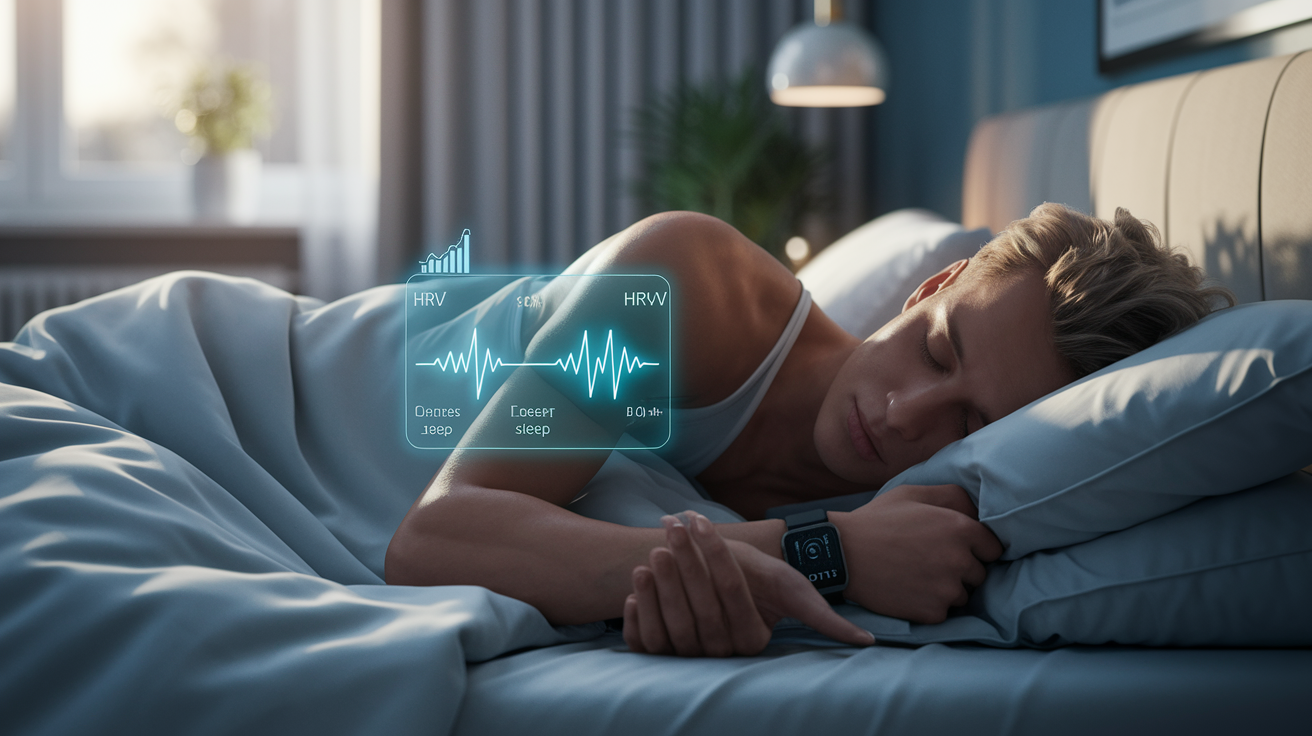
Sleep tracking actually matters when you focus on the numbers that tell you whether your body’s ready to handle another hard session. Heart rate variability (HRV) looks at the tiny gaps between heartbeats. When those gaps are bigger and more variable, your nervous system’s doing fine. When they shrink, you’re still under stress from yesterday’s workout, poor eating, or just life getting messy.
Deep sleep is where your body does the real work. Growth hormone gets released, torn muscle fibers get patched up, physical systems get reset. Most of it happens in the first half of the night, in long uninterrupted blocks. REM sleep shows up later, closer to morning, and that’s when your brain processes motor patterns, sorts emotions, and locks in the technical stuff you practiced. If you’re learning a new movement or trying to sharpen skills, REM matters just as much as deep sleep.
Sleep efficiency is simple math. Time asleep divided by time in bed. Anything above 85% is solid. Below that, you’re lying there awake or tossing around too much.
Here’s the thing: two people can both get seven hours, but if one person racks up 90 minutes of deep sleep with good HRV and the other only gets 40 minutes with suppressed HRV, they’re not equally recovered. Not even close. When your tracker shows reduced deep or REM percentages alongside dropping HRV, your central nervous system’s still loaded. Could be from training, could be nutrition, could be stress at work. Doesn’t really matter. What matters is you see it early and adjust before fatigue piles up into something worse.
Most training changes come straight from watching these metrics shift. Athletes back off planned intervals when HRV dips below their normal range. They skip heavy lifts when deep sleep falls short. They delay complex skill sessions when REM gets crushed. And when multiple markers trend down together, they take a full rest day instead of pretending everything’s fine.
HRV below baseline: Swap out intervals or max lifts for steady aerobic work or technique drills. Don’t touch anything close to max effort until HRV comes back up.
Deep sleep reduced: Cut volume by 20 to 30 percent, stick to mobility and low impact movement, push strength sessions later in the week.
REM sleep low: Hold off on complex skill work or tactical training. Stick with simple, repetitive movements that don’t demand much from your brain.
Sleep efficiency poor: Dial back total training stress for a day or two, fix whatever’s wrecking your sleep (light, temperature, noise), consider an active recovery day.
Multiple metrics down: Full rest day or just light movement like walking or easy swimming. Make sleep the priority that night and check again in the morning.
How to Interpret Your Sleep Tracking Data for Daily Training Decisions

Checking your sleep data each morning works when you follow a simple process and care more about patterns than one weird reading. Here’s how to turn raw numbers into decisions you can actually use:
- Check your HRV against your personal baseline. Most platforms calculate an average from the past week or month. A drop of more than 10 to 15 percent means elevated stress or incomplete recovery.
- Review total sleep time. Compare it to your usual target (7 to 9 hours for most athletes). Even small chronic deficits, like 30 minutes per night, add up over several days.
- Assess sleep stage distribution. Look at the percentage or minutes spent in deep and REM sleep. Consistent reductions in either stage mean your body’s struggling to complete full recovery cycles.
- Identify consistency trends. Open your weekly or monthly overview and scan for patterns. Three or more nights in a row of poor metrics carry more weight than a single bad night.
- Match readiness scores to planned intensity. If your device gives you a readiness or recovery score, use it as a rough guide. High scores support hard sessions. Moderate scores mean standard training. Low scores mean dial it back or rest.
- Note anomalies caused by external factors. Travel, late meals, alcohol, illness, or high work stress can all tank sleep metrics temporarily. Context helps you decide whether to adjust training or just monitor the next night.
Acting on trends instead of reacting to every fluctuation keeps you from making unnecessary changes and builds confidence in your data. A single night of low HRV after a late event or bad meal doesn’t mean you need a rest day. It means watch for recovery the following night. When the same pattern repeats across multiple nights, your body’s telling you it needs a lighter load or a break.
Adjusting Training Loads Based on Sleep Quality
Sleep quality shapes your capacity to absorb training stress. Adjusting workout intensity or volume based on overnight metrics cuts injury risk and keeps long term progress on track. When HRV drops and deep sleep declines, your autonomic nervous system stays in a heightened stress state. That limits your ability to safely or productively perform high intensity efforts. Pushing through poor recovery signals usually leads to subpar performance in the session itself, extended soreness, and slower adaptation.
On the flip side, high quality sleep (normal or elevated HRV, sufficient deep and REM sleep, good sleep efficiency) signals readiness for demanding workouts, heavy lifts, or competition level efforts.
Adjusting training based on sleep data isn’t about skipping workouts or losing fitness. It’s about matching training stress to recovery capacity so that each session produces adaptation instead of piling on fatigue. Sleep informed periodization keeps you training consistently across weeks and months, which delivers better results than sporadic hard sessions interrupted by forced rest or injury.
| Sleep Scenario | Training Adjustment | Expected Benefit |
|---|---|---|
| HRV normal, deep/REM sleep adequate, total sleep 7–9 hours | Proceed with planned high intensity or heavy strength work | Maximum adaptation from hard sessions, full recovery capacity available |
| HRV slightly below baseline, deep sleep reduced by 10–20%, total sleep 6–7 hours | Reduce interval volume by 20–30% or substitute with tempo/threshold work, keep strength sets but lower weight 5–10% | Maintains training stimulus without overloading fatigued systems, allows partial recovery |
| HRV down 15%+, deep sleep under 60 minutes, poor sleep efficiency | Replace planned hard session with low intensity aerobic work (20–45 minutes easy) or mobility/stretching | Reduces further nervous system stress, promotes blood flow and active recovery |
| Multiple nights of poor metrics, HRV persistently low, REM/deep sleep both compromised | Take full rest day or perform only light walking, reassess training plan and sleep hygiene | Prevents overtraining, reduces injury risk, resets autonomic balance for subsequent training block |
Recovery Protocols for Nights of Poor Sleep

Poor sleep messes with central nervous system function. Your brain and body become less capable of coordinating movement, regulating effort, and managing stress hormones. Even a single night of fragmented or shortened sleep can spike cortisol, slow reaction time, and impair muscle coordination. All of which raises injury risk during high intensity or technical training.
When your sleep tracker confirms a rough night (low HRV, minimal deep sleep, frequent awakenings), you don’t need to bail on training entirely. But you do need to support your nervous system’s recovery before loading it with more stress.
Targeted recovery protocols help reset autonomic balance and reduce the impact of poor sleep on the day’s training or overall weekly load. These methods are simple, don’t take much time, and fit into most schedules without major disruption.
Perform 20 to 30 minutes of low intensity aerobic movement (easy walking, light cycling, or swimming). This promotes blood flow and clears metabolic waste without taxing the nervous system.
Practice 5 to 10 minutes of slow, controlled breathing (4 second inhale, 6 second exhale). This activates the parasympathetic nervous system and lowers resting heart rate.
Drink 500 to 750 mL of water within the first hour after waking. Dehydration compounds fatigue and impairs cognitive function, especially after disrupted sleep.
Avoid caffeine for the first 90 minutes after waking and limit total intake. Delaying caffeine allows natural cortisol rhythms to stabilize. Too much caffeine on low sleep just amplifies jitteriness and crashes later.
Schedule a short nap (10 to 25 minutes) in the early afternoon if possible. Brief naps restore alertness and cognitive performance without entering deep sleep cycles that cause grogginess.
Using even two or three of these on a poor sleep day keeps you functional and reduces the training deficit caused by inadequate rest. If poor sleep persists across multiple nights, these become stopgap measures. You’ll need to address the actual sleep hygiene issues (light exposure, bedroom temperature, caffeine timing, or stress management) to restore consistent recovery and training capacity.
Recommended Devices and Apps for Accurate Sleep Tracking
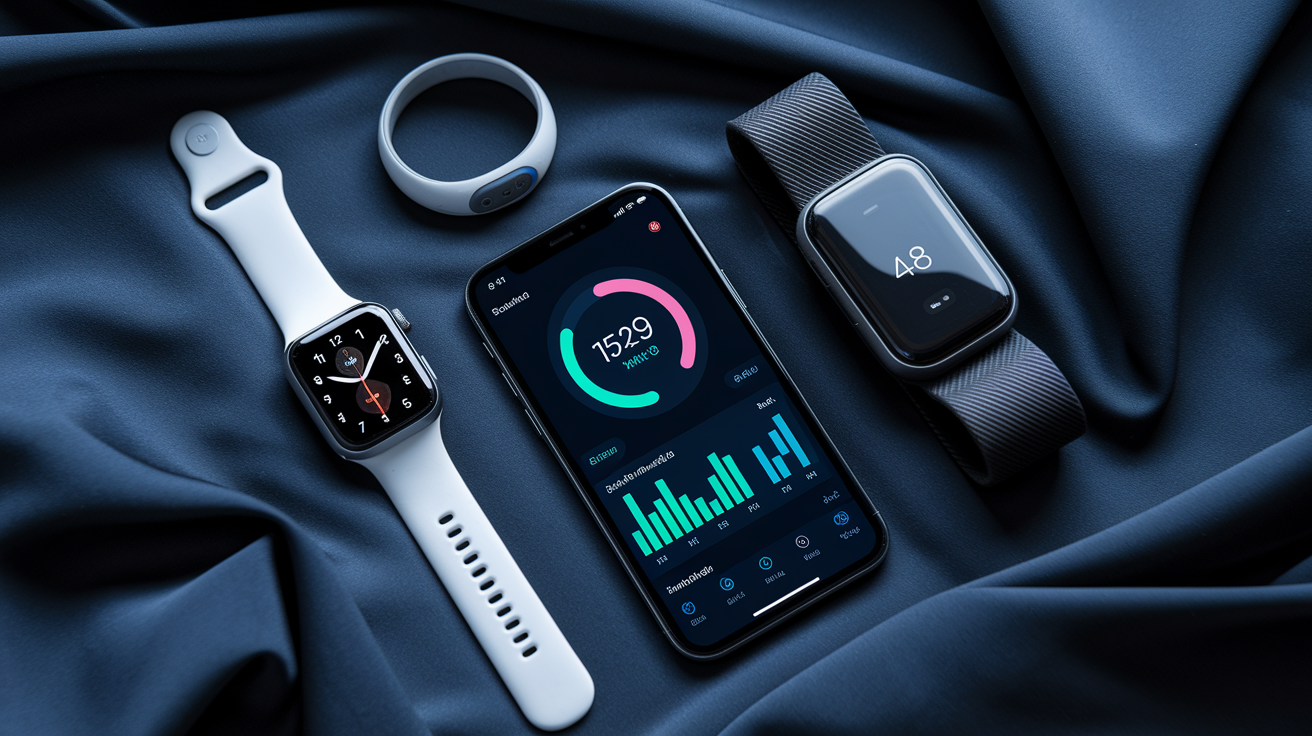
Sleep tracking devices vary a lot in accuracy, especially for HRV and sleep stage estimation. Picking the right tool depends on which metrics matter most for your training and how much precision you actually need.
Wrist based wearables (smartwatches and fitness trackers) are convenient and track total sleep time reliably. But they estimate sleep stages using movement and heart rate patterns, which can misclassify stages by 10 to 20 percent compared to clinical polysomnography. Chest strap heart rate monitors paired with compatible apps capture HRV more accurately than optical wrist sensors because they measure electrical signals directly from the heart. Smart rings combine portability with better overnight HRV accuracy than many wrist devices, though they still rely on optical sensors. Dedicated sleep tracking apps that use your phone’s microphone or accelerometer are the least accurate for physiological metrics but can be useful for identifying patterns like snoring or restlessness.
For athletes, the most important metrics are HRV, total sleep time, and sleep continuity (awakenings or time spent restless). Sleep stage estimates serve as secondary indicators. If your primary goal is monitoring recovery readiness, go with devices that measure HRV consistently and let you track trends over weeks. If you’re also interested in identifying sleep disruptions (apnea, movement disorders, environmental noise), look for platforms that log detailed overnight heart rate, respiratory rate, and movement data.
Cost and comfort matter too. An accurate device you don’t wear nightly is less useful than a slightly less precise one you use consistently.
When selecting a device, think about your sport, budget, and preferred measurement method. Endurance athletes often benefit most from HRV focused tools because aerobic training heavily taxes the autonomic nervous system. Strength athletes may prioritize deep sleep tracking since muscle repair depends on growth hormone released during slow wave sleep. Team sport athletes juggling variable training loads and travel benefit from platforms that integrate sleep data with training load and readiness scores.
Wrist based wearables: Convenient for 24/7 wear, track total sleep time and basic HRV trends. Best for athletes who want simplicity and automatic syncing with training apps.
Chest strap HR monitors + compatible apps: Provide the most accurate HRV readings. Ideal for athletes who prioritize precise autonomic monitoring and don’t mind wearing a strap overnight.
Smart rings: Compact and comfortable for sleep, deliver better HRV accuracy than most wrist devices. Suited to athletes who dislike bulky wearables or want discreet tracking.
Phone based sleep apps: Low cost and no additional hardware required. Useful for tracking sleep duration and identifying environmental disruptions but lack physiological depth for training decisions.
Case Studies: Real Examples of Sleep Driven Training Adjustments
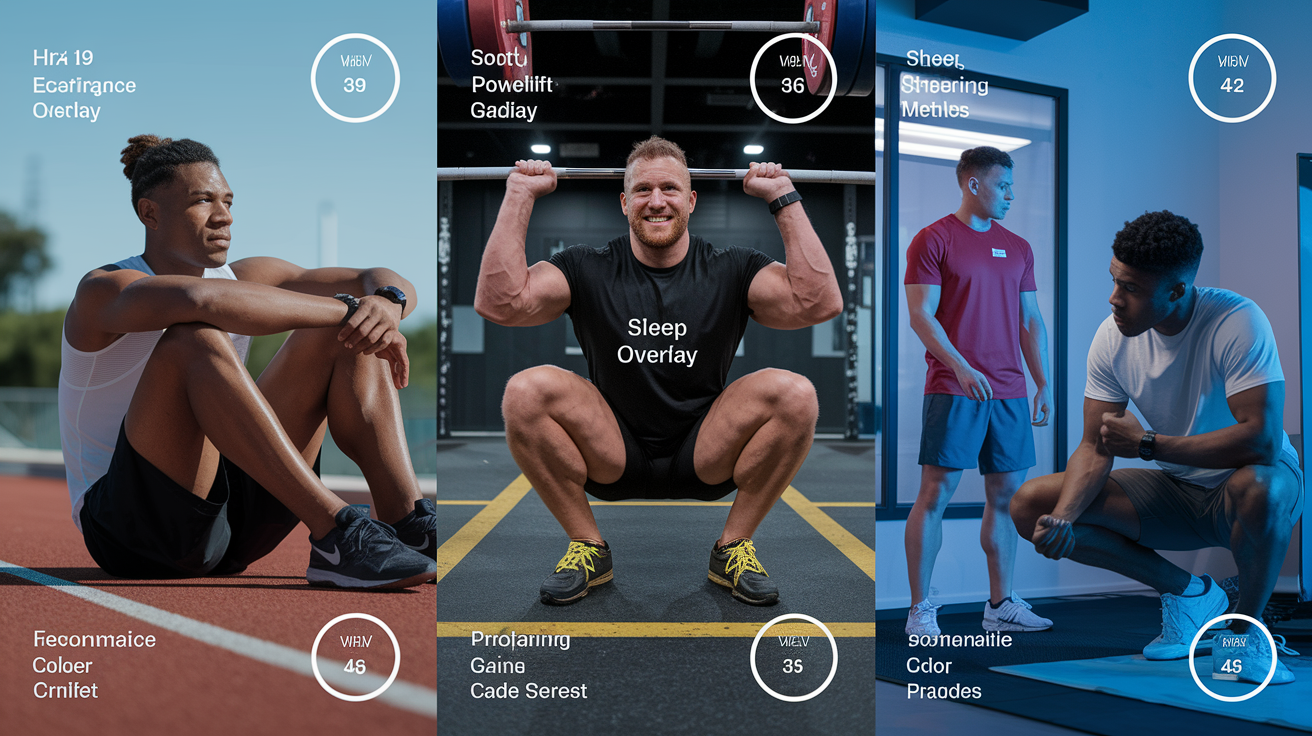
Endurance Athlete: HRV Guided Intensity Management
A recreational marathoner logging 50 to 60 miles per week noticed persistent fatigue and stalled pace improvements despite consistent training. After two weeks of nightly sleep tracking, the data revealed a pattern. HRV dropped 20 percent below baseline on nights following interval sessions. Deep sleep averaged only 45 minutes on those nights. Recovery didn’t normalize until 48 hours later.
The athlete adjusted the training plan by spacing hard workouts three days apart instead of two, adding an extra easy run between intervals and tempo sessions. Within four weeks, HRV variability decreased, average deep sleep rose to 75 minutes, and race pace efforts felt noticeably easier. The athlete completed the goal marathon six minutes faster than the previous year’s time, attributing much of the improvement to better recovery alignment.
Strength Athlete: Deep Sleep and Hypertrophy Progress
A competitive powerlifter struggled with stalled strength gains and lingering soreness despite eating in a calorie surplus and following a proven program. Sleep tracking over three weeks showed total sleep time averaged 7.5 hours, but deep sleep consistently fell below 60 minutes per night. Often as low as 40 minutes after heavy squat or deadlift days.
The lifter shifted evening training sessions to mid afternoon, implemented a 30 minute wind down routine with dim lighting and breathing exercises, and lowered bedroom temperature to 18°C. Deep sleep increased to an average of 85 minutes per night within two weeks. Over the next training block, the lifter added 15 kg to competition squat and 10 kg to deadlift. They reported faster recovery between sessions and reduced joint soreness.
Team Sport Athlete: Managing Travel and Competition Readiness
A semi professional soccer player used sleep tracking during a condensed competition schedule with three matches in eight days and cross country travel. The first night in the hotel showed severely fragmented sleep. Only 5.5 hours total, 12 awakenings, and HRV down 25 percent from baseline.
Instead of proceeding with the planned high intensity small sided game session the next morning, the athlete performed a 20 minute mobility routine and a 15 minute easy jog. A 20 minute nap in the early afternoon brought HRV back within 10 percent of baseline by evening. The following night’s sleep normalized (7 hours, fewer awakenings), and the athlete completed the match two days later with full energy and no soft tissue issues. The coaching staff adopted the protocol for all travel matches, resulting in fewer in season injuries across the squad.
Final Words
Check tonight’s key metrics—HRV, deep and REM sleep, and sleep efficiency—and note where they sit versus your usual baseline.
Use those trends to guide today’s plan: keep high‑intensity work when sleep is solid, dial back to low‑impact or technique work when scores fall, and lean on the recovery toolbox after rough nights.
This shows exactly how to use sleep tracking to improve training recovery: read patterns, tweak load, and pick a simple recovery move. Small, consistent tweaks add up—start with one change tonight.
FAQ
Q: What is the 3-3-3 rule for sleep?
A: The 3-3-3 rule for sleep is a quick grounding routine: take three deep breaths, notice three things you can see or hear, and relax three body parts to calm your nervous system for falling asleep.
Q: Does sleep help workout recovery?
A: Sleep helps workout recovery by boosting muscle repair, releasing recovery hormones (like growth hormone), and consolidating motor learning—consistent nights speed tissue repair and improve training gains.
Q: What are the 3 R’s of recovery?
A: The 3 R’s of recovery are rest (sleep and low activity), refuel (carbs plus protein to repair tissue), and rehydrate (fluids and electrolytes to restore function).
Q: What is the 10 4 3 2 1 sleep rule?
A: The 10 4 3 2 1 sleep rule is a pre-bed countdown: about 10 hours avoid caffeine, 4 avoid alcohol, 3 finish big meals, 2 stop screens, and 1 hour start a quiet wind-down.