

You don’t need 45 minutes to make exercise stick.
Five minutes of focused movement, no equipment and no shower, can turn “I’ll do it tomorrow” into “I did it today.”
These micro-workouts slip between emails, after a meeting, or before bed and remove the biggest excuses busy beginners use.
Do one five-minute session a day and you’re training the habit of showing up, not the perfect workout.
This post gives easy routines, simple progressions, and a one-week starter you can use tonight.
Fast-Start Guide: Micro-Workouts That Build Consistency in Just 5 Minutes

A micro-workout is just five minutes of movement you can do anywhere, usually with nothing but your body. These aren’t meant to replace hour-long gym sessions. They’re built to make movement so simple that you actually do it. Most busy beginners wait around for the perfect 45-minute window that never shows up. A 5-minute block removes that excuse completely.
These short sessions work because they change what you’re measuring. Instead of stressing over calories burned, you’re just asking “Did I move today?” That shift turns exercise into something you don’t negotiate with yourself about. Most people find it easier to commit to five minutes every single day than to squeeze in three longer workouts per week. And that daily habit becomes the base for everything else.
You can start right now without any gear. Pick one movement from the list below, set a timer, and go. If you’re brand new, choose the easiest version and focus on smooth form instead of speed.
5 beginner-friendly micro-workouts (no equipment):
- Full-body flow – 1 minute each: push-ups (or on your knees), squats, plank hold, high knees, jumping jacks (or step-touches if you’re avoiding impact).
- Lower body focus – 1 minute each: chair squats, alternating lunges (or step-backs), calf raises, glute bridges, wall sit.
- Core basics – 1 minute each: plank hold, mountain climbers (or slow knee taps), dead-bug, bicycle crunches, second plank hold.
- Cardio burst – 20 seconds work, 10 seconds rest, repeat 10 rounds: pick any two moves like high knees, jumping jacks, or marching in place.
- Mobility reset – 45 seconds each: shoulder rolls, neck release, hamstring reach, standing quad stretch, calf stretch, back twist.
Your starter plan: Do one five-minute workout daily for seven days. Stick with the same routine each day to learn the movements, or rotate through the list to find what feels sustainable.
Foundations of 5-Minute Micro-Workouts for Busy Beginners

Short bursts of movement get your heart rate up quickly, even without a formal warm-up. Research shows that brief, frequent activity can offset the metabolic and cardiovascular risks of sitting all day, improve circulation, reduce fatigue, and support muscle maintenance when you’re consistent. A 5-minute session won’t replace a full strength program, but it delivers real cardiovascular stimulus and keeps your body responsive throughout the day.
Micro-workouts help busy beginners adapt because they kill almost every common excuse. No gym membership, no special clothes, no shower required, and no need to carve out a huge chunk of your calendar. The low-impact, bodyweight formats used in most 5-minute routines are forgiving for stiff joints, returning exercisers, and anyone who hasn’t moved regularly in months. When the barrier to entry is this low, the hardest part becomes remembering to start, not surviving the session itself.
Here’s what the science supports for short, frequent movement:
- Improved cardiovascular health from repeated heart rate elevation throughout the day
- Increased daily calorie burn through frequent metabolic activation
- Better mood and reduced stress hormones after even brief physical activity
- Enhanced mobility and joint health when movement is distributed across the day instead of compressed into one block
- Reduced risk of insulin resistance and chronic fatigue linked to sedentary behavior
- Muscle growth potential when the same movements are trained frequently with adequate challenge
Complete 5-Minute Routine Library: Strength, Cardio, and Mobility

This library organizes every 5-minute format you’ll need into three categories: strength, cardio, and mobility. Each routine is designed to stand alone, so you can pick one based on your goal for the day or rotate through all three across the week. The instructions include timing, beginner modifications, and clear movement cues so you can start immediately without watching a video or decoding complex programming.
Use these routines as written, or mix and match individual exercises to build your own 5-minute plan. All movements assume bodyweight only unless otherwise noted. If a movement feels too hard, use the beginner modification. If it feels too easy, add reps or extend the interval by 10 seconds.
The goal is to finish each 5-minute session feeling like you worked, not like you need a nap. You should be slightly out of breath but able to return to your day within a minute or two.
Strength Micro-Workouts
Strength routines focus on building muscle endurance and foundational movement patterns. These sessions use timed intervals (usually 1 minute per exercise) or AMRAP (as many rounds as possible) formats to create fatigue without requiring heavy weights.
5 × 1-Minute Strength Circuit (Upper, Lower, Core):
- 1 minute: Push-ups (or knee push-ups on a mat, keep elbows close to ribs)
- 1 minute: Bodyweight squats (feet shoulder-width, sit back like you’re reaching for a chair)
- 1 minute: Plank hold (on forearms or hands, keep hips level with shoulders)
- 1 minute: Alternating reverse lunges (step back, drop back knee toward floor, return to standing)
- 1 minute: Glute bridges (lie on back, feet flat, press hips up, squeeze glutes at the top)
Beginner modification: Cut each interval to 40 seconds with 20 seconds rest, or perform half the reps at a slower pace.
AMRAP Strength Option (5 Minutes):
Set a timer and complete as many rounds as possible of this 3-move sequence:
- 10 squats
- 5 push-ups (or 10 knee push-ups)
- 15-second plank hold
Count your total rounds. Next time, try to beat that number by one round.
Core-Focused Strength (5 × 1 Minute):
- 1 minute: Plank hold
- 1 minute: Mountain climbers (slow and controlled, or march knees toward chest)
- 1 minute: Dead-bug (lie on back, extend opposite arm and leg, alternate sides)
- 1 minute: Bicycle crunches (slow rotation, elbow toward opposite knee)
- 1 minute: Second plank hold
Cardio Micro-Workouts
Cardio routines prioritize heart rate and calorie burn. These sessions use interval timing to create intensity without long, steady effort. If you’re new to cardio or have joint concerns, use the low-impact versions.
HIIT Cardio (20 Seconds Work / 10 Seconds Rest, 10 Rounds = 5 Minutes):
Pick two exercises and alternate them every round. Example pairing: high knees and jumping jacks.
- Round 1: 20 seconds high knees, 10 seconds rest
- Round 2: 20 seconds jumping jacks, 10 seconds rest
- Repeat for 10 total rounds
Low-impact swap: Replace high knees with marching in place. Replace jumping jacks with step-touches (step side to side, tap feet together).
Low-Impact Cardio Flow (5 × 1 Minute):
- 1 minute: Marching in place (lift knees to hip height, swing arms)
- 1 minute: Step-touches side to side (wide steps, touch foot to center)
- 1 minute: Alternating knee lifts (slower pace, focus on balance)
- 1 minute: Standing oblique crunches (lift knee to side, bring elbow down to meet it)
- 1 minute: Marching in place (pick up pace slightly)
This format keeps your heart rate elevated without any jumping or high-impact landing.
Mobility Micro-Workouts
Mobility routines improve range of motion, reduce stiffness, and prepare your body for harder training. These sessions are ideal for mornings, between meetings, or after long periods of sitting.
5-Move Mobility Sequence (45 Seconds Each):
- Shoulder rolls (10 forward, 10 backward, then hold arms overhead and reach tall)
- Neck release (tilt head side to side, hold each stretch for 5 seconds)
- Hamstring reach (stand, hinge at hips, reach toward toes, keep knees soft)
- Standing quad stretch (hold one foot behind you, pull heel toward glutes, switch sides halfway)
- Calf stretch and ankle circles (step one foot back, press heel down, then rotate ankle, switch sides halfway)
All movements are standing, so you can do this routine in an office, hallway, or kitchen without getting on the floor.
| Routine Name | Primary Goal |
|---|---|
| 5 × 1-Minute Strength Circuit | Build muscle endurance across upper, lower, and core |
| HIIT Cardio (20s/10s) | Elevate heart rate and burn calories quickly |
| Low-Impact Cardio Flow | Increase heart rate without joint stress |
| 5-Move Mobility Sequence | Improve range of motion and reduce stiffness |
Micro-Workouts for the Workday: Desk-Friendly 5-Minute Plans

Office and remote workers can use 5-minute micro-workouts to break up long sitting blocks without changing clothes or leaving the workspace. These routines use furniture you already have (a desk, a chair, stairs) and movements that won’t leave you sweaty or out of breath for your next meeting. The goal is to restore circulation, reset posture, and give your brain a short break from screen time.
Most desk-friendly circuits follow a 45 to 60 second interval per exercise. You don’t need a timer if you count reps slowly and focus on form. If you work in a shared space, choose seated or standing moves that don’t require floor work or loud impacts.
5 desk-friendly circuits (45 to 60 seconds each):
- Posture reset circuit – Shoulder rolls, neck release, seated spinal twist (one hand on opposite knee, rotate chest), standing chest opener (clasp hands behind back, lift chest), calf raises at desk edge.
- Lower body circuit – Chair squats (stand and sit without using hands), seated leg extensions (straighten one leg, hold, lower, repeat), standing quad stretch, calf raises, wall sit (back against wall, knees at 90 degrees).
- Core and stability circuit – Seated core pull (sit tall, pull belly button toward spine, hold 10 seconds, release, repeat), standing side bends, desk plank (hands on desk edge, walk feet back into plank position), standing knee lifts, seated leg lifts (extend both legs, hold, lower).
- Cardio burst circuit – Stair climbs (one or two flights, or march in place if no stairs), high knees, desk push-ups (hands on desk edge, feet back, perform push-up), step-touches, marching in place.
- Mobility and circulation circuit – Ankle circles (seated, rotate each ankle 10 times), wrist stretches (extend arm, pull fingers back gently), hip circles (stand, hands on hips, rotate hips in circles), hamstring reach, shoulder shrugs (lift shoulders to ears, hold, release).
Posture cues: Keep your chest open, shoulders down and back, and core gently engaged during standing moves. For seated exercises, sit toward the front edge of your chair with feet flat on the floor.
Building Consistency: Habit Strategies for Daily 5-Minute Workouts
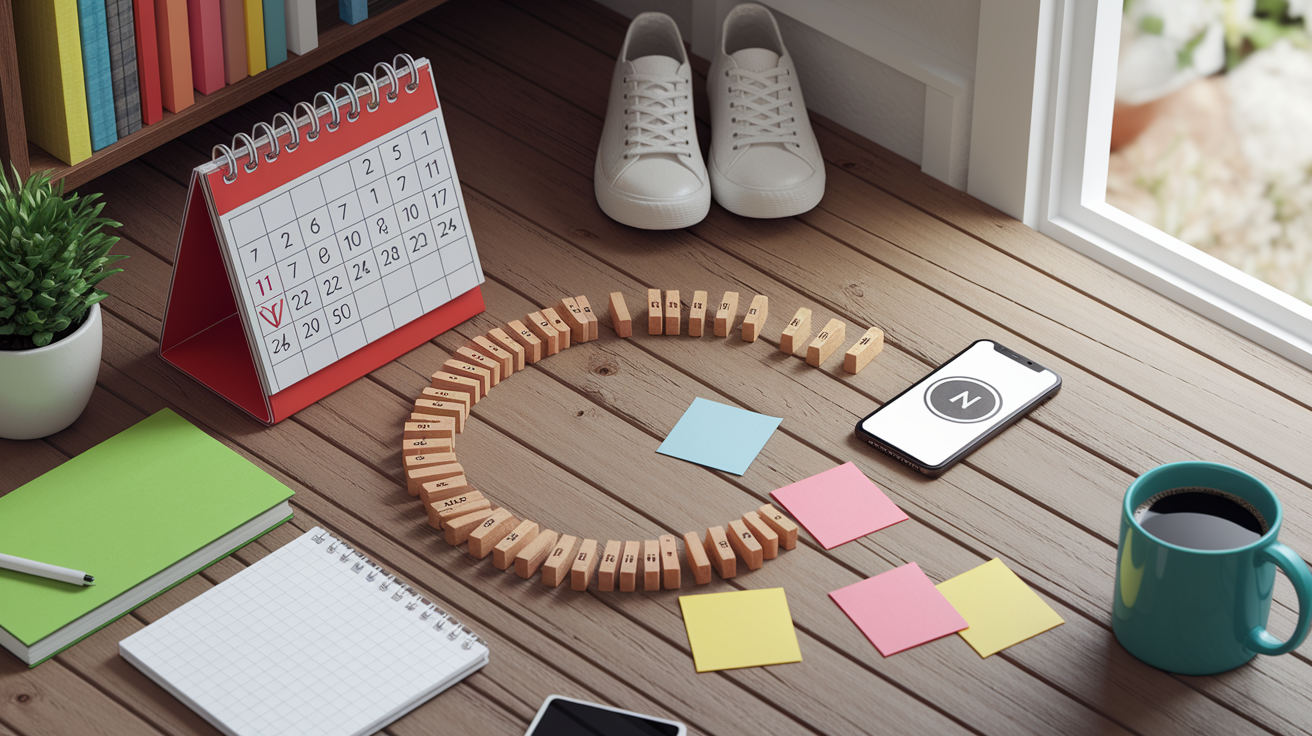
Consistency comes from making the workout so automatic that you stop debating whether to do it. The easiest way to build that automaticity is to attach your 5-minute session to something you already do every day. This is called habit stacking, and it works because your existing routine acts as a reliable trigger for the new behavior.
Start with one micro-workout per day at the same time and in the same place. Most beginners succeed by choosing a time when they’re already in motion, like right after waking up, during a mid-morning snack break, or immediately after closing the laptop for lunch. Pairing the workout with a specific daily task makes it feel like part of the task itself, not an extra chore you have to remember.
Track your streak using a simple method like marking an X on a calendar or logging completed sessions in your phone’s notes app. The goal in the first 30 days is to complete more sessions than you miss, not to perform perfectly. If you miss a day, restart your streak the next morning without guilt or extra sessions to “make up” for it. Streaks build confidence, and confidence makes the habit feel easier over time.
5 habit cues to trigger your daily 5-minute workout:
- Right after your first cup of coffee or tea (pair the workout with the mug still on the counter)
- During your usual mid-morning snack break (do the workout first, then eat)
- Immediately after closing your laptop for lunch (stand up, start the timer, move)
- When you get home and take off your shoes (leave workout shoes or a mat by the door as a visual reminder)
- Right before your evening shower (the workout becomes part of the wind-down routine)
Environmental preparation helps. Keep a yoga mat unrolled in the corner, leave a pair of sneakers by your desk, or set a daily phone alarm labeled “5-minute movement” for the same time each day.
Progression Made Simple: How to Scale 5-Minute Micro-Workouts

Progression means gradually increasing the challenge so your body continues to adapt. For 5-minute micro-workouts, progression is simpler than traditional programs because you only have a few variables to adjust: reps, time intervals, movement difficulty, and frequency.
Start by mastering the beginner version of each movement. Once you can complete a full 5-minute session without stopping or losing form, use the progression ladder below to add challenge. Most beginners can move through one step every two to three weeks.
4-step progression ladder:
- Increase reps within the same interval – If you’re doing 10 squats in 1 minute, aim for 12 squats in the same minute. If you’re doing knee push-ups, add 2 more reps per set.
- Extend work intervals – Shift from 20 seconds of work to 30 seconds, or from 40 second intervals to full 1-minute intervals with shorter rest.
- Upgrade movement difficulty – Move from knee push-ups to standard push-ups, from bodyweight squats to single-leg squats (assisted), or from plank holds on knees to full plank holds.
- Add a second micro-session – Once one 5-minute workout feels comfortable, add a second session later in the day. Two 5-minute workouts (one in the morning, one at lunch) gives you 10 minutes of total training volume and doubles your daily movement frequency.
Advanced users can combine three to five micro-sessions throughout the day to replace a traditional 30-minute workout. For example, 5 minutes of strength in the morning, 5 minutes of cardio at lunch, and 5 minutes of mobility in the evening creates a balanced 15-minute training day without requiring a single long block of time.
Tools and Minimal Equipment for Efficient 5-Minute Workouts
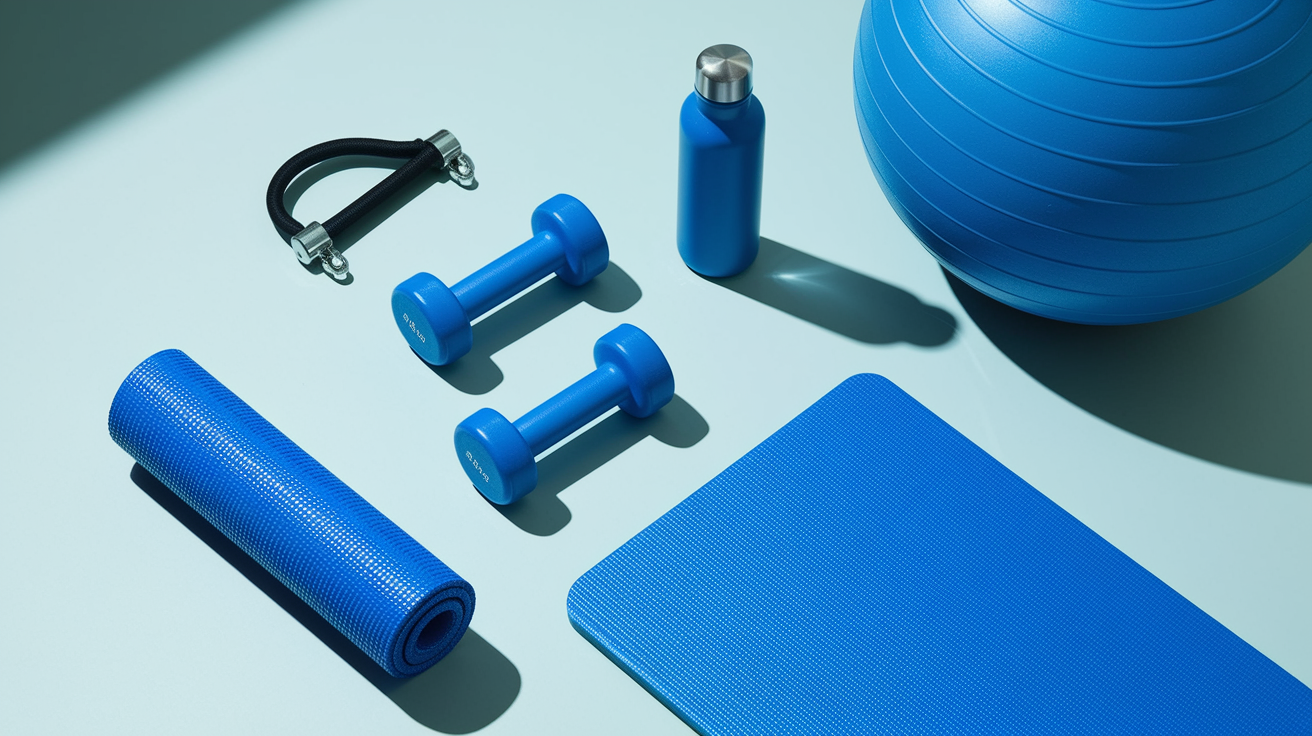
Most 5-minute micro-workouts require zero equipment, but adding one or two small, inexpensive tools can increase variety and progression potential without complicating the routine. The items below are optional, portable, and versatile enough to use for multiple workout types.
6 minimal equipment options:
- Mini loop resistance band – Fits in a pocket or desk drawer. Use for glute activation (band around thighs during squats or bridges), upper body work (banded rows, shoulder presses), or mobility drills. Adds resistance without requiring weights.
- Single dumbbell or kettlebell – Useful for goblet squats, single-arm rows, overhead presses, and core exercises like weighted dead-bugs. Start with 10 to 15 pounds for most beginners.
- Pair of dumbbells – Expands exercise options to include bilateral movements like dumbbell squats, chest presses, and bicep curls. A pair of 8 to 12 pound dumbbells works for most upper-body micro-sessions.
- Yoga mat or travel mat – Provides cushioning for floor-based core work, planks, and stretches. A foldable travel mat stores easily in a closet or car trunk.
- Pilates ball (small, 9-inch) – Adds instability for core exercises and inner-thigh work. Can be squeezed between knees during bridges or held overhead during crunches for added challenge.
- Adjustable resistance band with handles – Slightly larger than a mini loop, but still portable. Use for standing rows, chest presses, and assisted pull-down motions when anchored to a door or sturdy post.
If you only buy one item, start with a mini loop band. It costs less than ten dollars, weighs nothing, and unlocks dozens of lower-body and mobility progressions.
Weekly Micro-Workout Plan for Busy Beginners
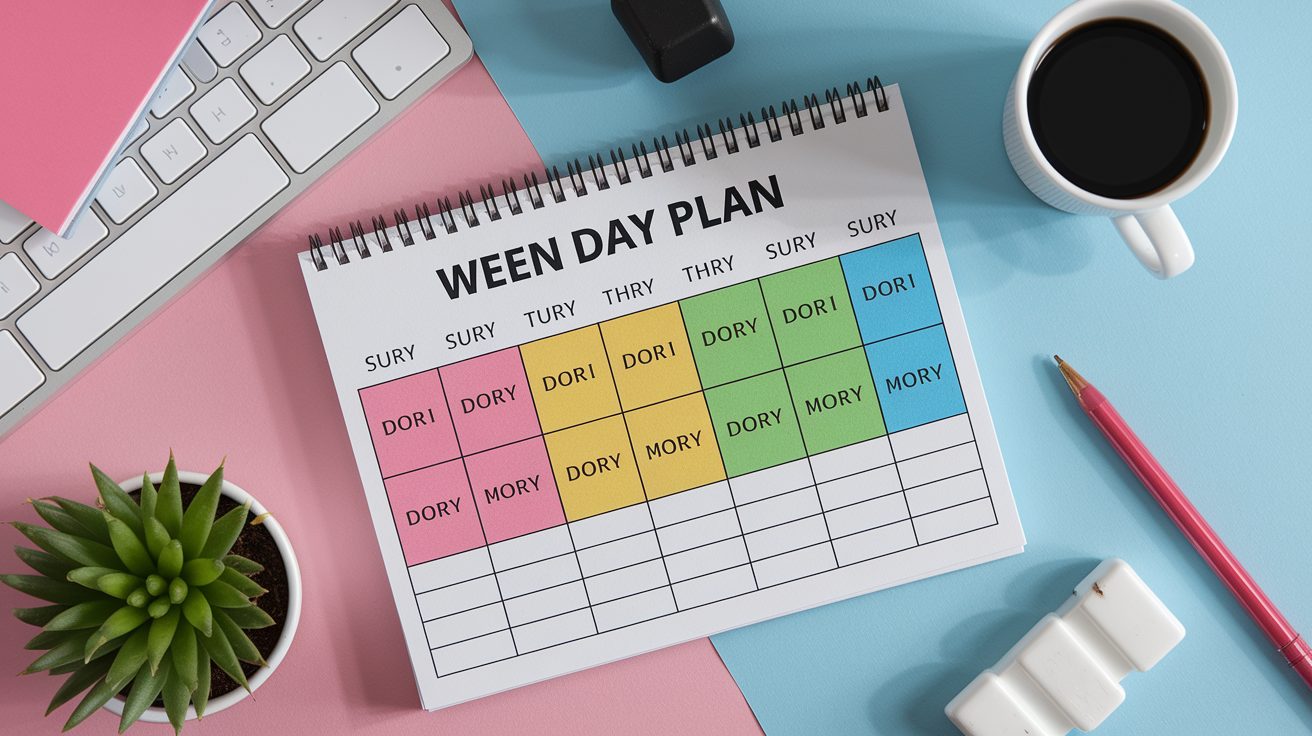
A structured weekly plan removes decision fatigue and ensures you rotate through strength, cardio, and mobility without overloading any one area. This 7-day plan uses one 5-minute session per day, with clear instructions for each session. Follow it exactly as written for your first two weeks, then adjust based on what feels sustainable.
Beginners should aim to complete 5 to 7 sessions per week. If you miss a day, continue with the next day’s workout instead of trying to catch up. Consistency across weeks matters more than perfection within a single week.
7-day beginner micro-workout plan:
- Monday – 5 × 1-Minute Strength Circuit (push-ups, squats, plank, lunges, glute bridges). Focus on learning the movement patterns with good form.
- Tuesday – Low-Impact Cardio Flow (marching, step-touches, knee lifts, standing oblique crunches, faster marching). Keep your heart rate up without joint stress.
- Wednesday – 5-Move Mobility Sequence (shoulder rolls, neck release, hamstring reach, quad stretch, calf stretch). Slow down and hold each stretch for the full 45 seconds.
- Thursday – AMRAP Strength Option (10 squats, 5 push-ups, 15-second plank, repeat for 5 minutes). Track your total rounds and try to beat it next week.
- Friday – HIIT Cardio (20 seconds work / 10 seconds rest, 10 rounds, alternate high knees and jumping jacks, or use low-impact swaps). Push your intensity during the 20-second bursts.
- Saturday – Desk-Friendly Posture Reset Circuit (shoulder rolls, neck release, seated twist, chest opener, calf raises). Use this session to restore mobility after a long week.
- Sunday – Core-Focused Strength (plank, mountain climbers, dead-bug, bicycle crunches, second plank). End the week with a stability challenge.
After two weeks, you can repeat this plan, increase the difficulty using the progression ladder, or add a second 5-minute session on your strongest days.
Final Words
in the action we kept it simple: a clear definition, quick no-equipment routines, desk-friendly options, habit-stacking tips, and an easy progression plan. Pick a routine and follow the starter plan: Do 1 × 5-minute workout daily for 7 days.
Set a cue (snack, meeting end, or shoes by the mat), track a streak, and only add gear when you want more challenge.
Use these 5-minute micro-workouts to build consistency for busy beginners — start today, track a short streak, and notice small wins every week.
FAQ
Q: What is a micro-workout?
A: The micro-workout is a short 5–10 minute exercise session that targets strength, cardio, or mobility and can be done anywhere with minimal or no equipment.
Q: How often should beginners do 5-minute micro-workouts?
A: Beginners should do one 5-minute micro-workout daily for seven days as a starter plan; advanced users can progress to 3–5 short sessions per day.
Q: Can 5-minute micro-workouts help with weight loss and fitness?
A: 5-minute micro-workouts can support weight loss and fitness by raising heart rate, boosting daily movement, and building strength when done frequently and paired with sensible eating.
Q: What’s a simple full-body 5-minute routine?
A: A simple full-body 5-minute routine is 1 minute each: push-ups, squats, plank, high knees, and jumping jacks — scale with knee push-ups or shallow squats as needed.
Q: How do I start quickly without equipment?
A: To start quickly without equipment, pick one 5-minute routine, do it once daily, keep a mat or shoes handy, and follow the starter plan: 1 × 5-minute workout daily for 7 days.
Q: What are desk-friendly 5-minute exercises?
A: Desk-friendly 5-minute exercises include chair squats, desk push-ups, calf raises, seated leg extensions, and shoulder rolls — perform each for 45–60 seconds with a tall posture cue.
Q: How should I progress and scale micro-workouts?
A: Progress micro-workouts by increasing reps, extending intervals (20s→30s→40s), moving from regressions to full versions, adding light resistance, or combining multiple 5-minute sessions per day.
Q: What minimal equipment helps 5-minute workouts?
A: Minimal equipment that helps includes a mini loop band, single dumbbell, pair of dumbbells, kettlebell, pilates ball, and a mat — each adds resistance or comfort, optional for beginners.
Q: How do I build consistency with daily micro-workouts?
A: Build consistency by habit-stacking: attach workouts to snacks, end-of-meeting breaks, coffee, bathroom breaks, or commute cues; track streaks on your phone and keep gear visible.
Q: Are 5-minute micro-workouts safe for beginners or those with injuries?
A: Micro-workouts are generally safe for beginners; choose low-impact options, prioritize form, regress when needed, and consult a clinician if you have injuries, chronic conditions, or worrying symptoms.