

Think you need an hour to get a meaningful workout?
You don’t.
This 20-minute, no-equipment lunch break circuit hits your whole body without leaving you a sweaty mess before your 2 PM meeting.
Six simple moves, 35 seconds on and 25 seconds rest, done for two or three rounds to fit your time.
Add a 3-minute warm-up and 3-minute cool-down and you’re still under 25 minutes.
This routine is built for busy beginners: short, simple, and actually doable on workdays.
Here is the quickest possible lunch-hour workout you can start today
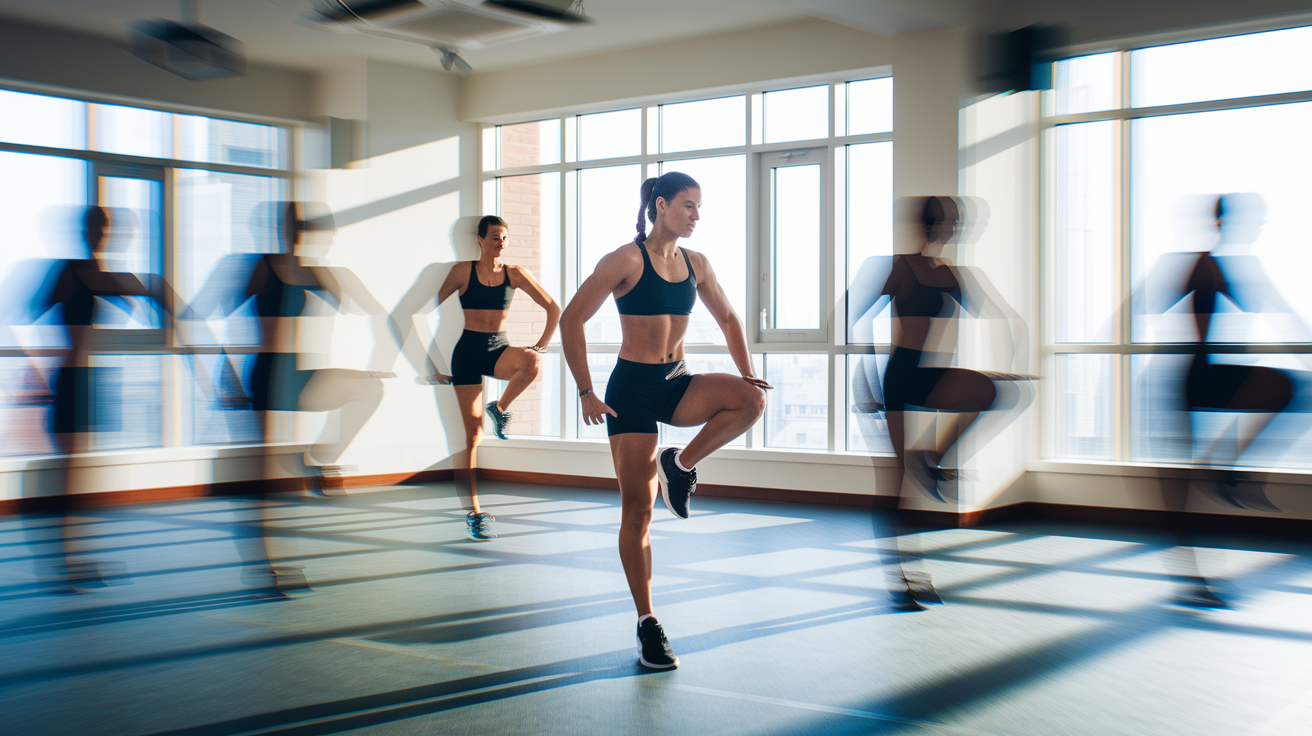
You’ve got 20 minutes and no equipment. This circuit strings together six bodyweight moves that hit your whole body without turning you into a sweaty mess before your 2 PM meeting. Each exercise runs 35 seconds, you rest for 25, and depending on your schedule you’ll knock out 2 or 3 full rounds.
-
Marching in place – 35 seconds on, 25 seconds rest. Bring your knees up to hip height, swing your arms like you’re walking, keep your core tight.
-
Wall push-ups – 35 seconds on, 25 seconds rest. Stand an arm’s length from a wall, hands flat at shoulder width, bend your elbows to bring your chest toward the wall, press back.
-
Bodyweight squats – 35 seconds on, 25 seconds rest. Feet about hip-width, sit back like there’s a chair behind you, chest stays up, knees track over your toes.
-
Standing knee raises – 35 seconds on, 25 seconds rest. Lift one knee toward your chest, hold it for a beat, switch sides.
-
Desk or chair dips – 35 seconds on, 25 seconds rest. Sit on the edge of something sturdy, hands gripping beside your hips, slide forward and lower yourself by bending your elbows, press back up.
-
Side-to-side steps – 35 seconds on, 25 seconds rest. Step wide to one side, bring the other foot to meet it, step the opposite direction. Keep it light and rhythmic.
One round takes about 6 minutes. Two rounds clock in at 12, three at 18. Tack on 3 minutes to warm up and 3 to cool down, and you’re still under 25 minutes. Plenty of time to eat half your lunch before and the rest after.
Quick Warm-Up to Prepare Your Body

Spending 3 or 4 minutes on simple movement raises your heart rate, loosens stiff joints, and tells your muscles you’re about to ask them to do something. This warm-up doesn’t need much space. A hallway corner, an empty conference room, or the spot next to your desk works fine.
Move gently through each exercise for 30 to 40 seconds. You’re not trying to break a sweat yet, just waking everything up.
- Arm circles – Extend both arms out to the sides and make small circles forward for 15 seconds, then reverse for 15.
- Marching in place – Lift your knees comfortably, swing your arms, breathe naturally for 40 seconds.
- Leg swings – Hold the back of a chair or touch a wall for balance, swing one leg forward and back 10 times, switch legs.
- Torso twists – Stand with feet shoulder-width apart, hands on hips or hanging loose, rotate your torso gently left and right for 30 seconds.
- Ankle rolls – Lift one foot slightly off the ground and roll the ankle in slow circles, 5 one way and 5 the other, then switch feet.
After this short sequence, you should feel looser and ready to move into the main circuit without any tightness or weird stiffness.
Main Lunch Break Circuit Breakdown
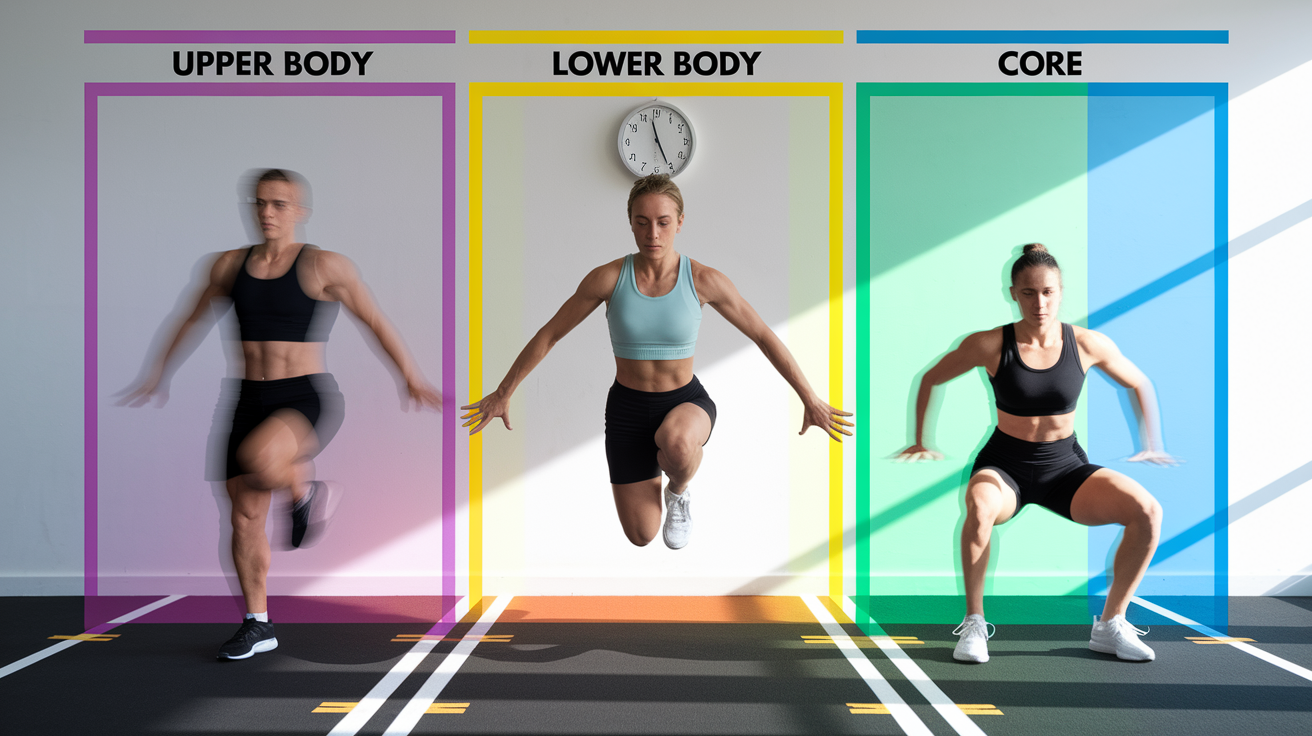
This circuit alternates between upper body, lower body, and core-focused movements so no single muscle group gets too tired too fast. Each exercise is simple enough to learn in one shot, and you can adjust intensity by controlling your speed or how far you go.
Marching in place
Lift one knee toward your chest, set it down, lift the other. Keep your back straight and let your arms swing naturally opposite your legs. If 35 seconds feels too easy, lift your knees a bit higher or pick up the pace. This keeps your heart rate up without needing much space or coordination.
Wall push-ups
Stand about an arm’s length from a solid wall. Put your palms flat against the wall at shoulder height and shoulder width. Bend your elbows to bring your chest toward the wall, keeping your body in a straight line from head to heels. Press back to the starting position. If regular push-ups feel too hard, the wall angle makes this way easier while still working your chest, shoulders, and triceps.
Bodyweight squats
Stand with feet roughly hip-width apart, toes pointing forward or turned out slightly. Sit your hips back as if you’re aiming for an invisible chair, keep your chest lifted, make sure your knees track in the same direction as your toes. Lower as far as feels comfortable, then press through your heels to stand back up. Don’t worry about hitting a specific depth. Controlled movement and steady breathing matter more than how low you go.
Standing knee raises
Stand tall and lift one knee up toward your chest. Pause for a moment at the top, then lower it and lift the other knee. You can rest one hand on a desk or wall for balance if you need it. This builds core stability and gives your legs a bit of active recovery between the squats and the dips.
Desk or chair dips
Sit on the edge of a sturdy desk or chair with your hands gripping the edge beside your hips, fingers pointing forward. Slide your hips forward off the edge, supporting your weight with your arms. Bend your elbows to lower your body a few inches, keeping elbows pointing straight back, then press back up. Keep your feet flat on the floor and closer to the desk if you want less resistance. This targets the triceps and shoulders.
Side-to-side steps
Step one foot out to the side, then bring the other foot to meet it. Step the opposite direction and repeat. Keep the movement light and rhythmic. This simple cardio burst keeps your heart rate elevated and gives your upper body a short rest before the circuit repeats.
Beginner Modifications and Low-Impact Variations
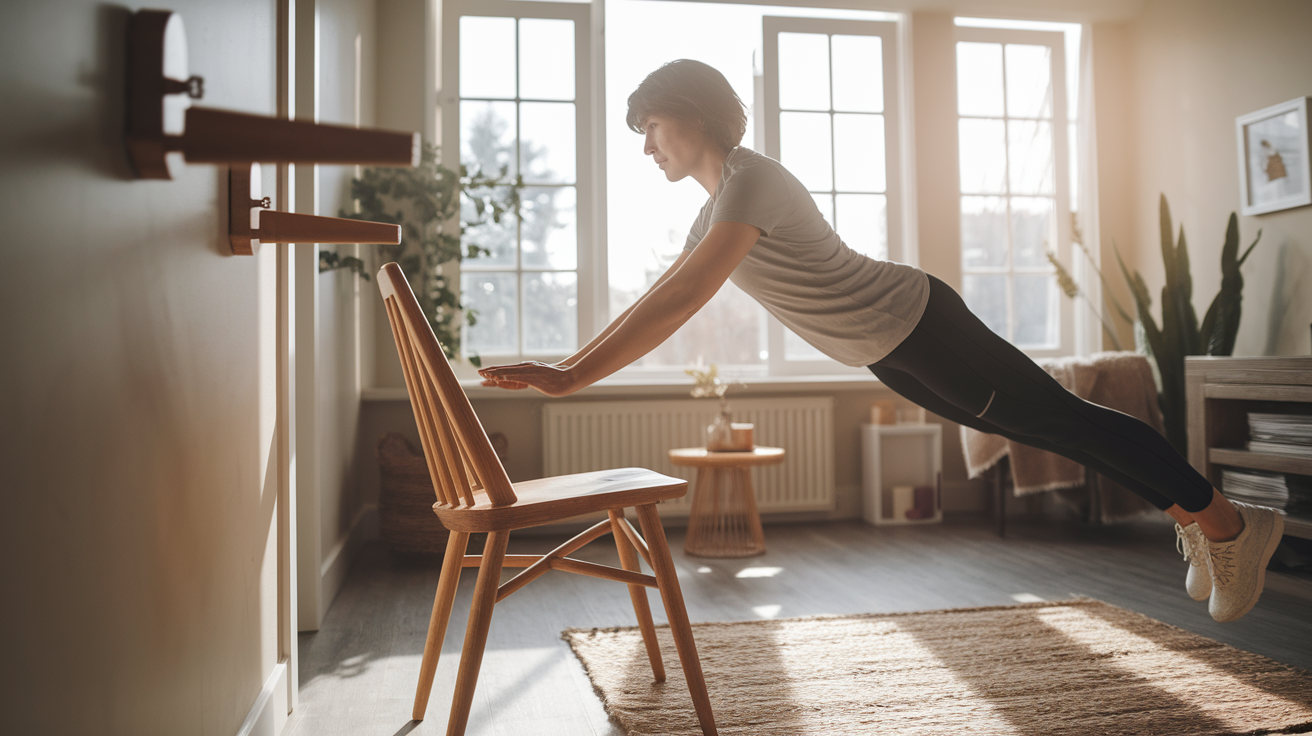
If any movement feels too hard or puts stress on a joint, swap it for an easier version. These modifications keep the workout accessible even on days when your energy is low or your body feels stiff from sitting.
Start with shorter work intervals. Instead of 35 seconds on each exercise, try 20 to 25 seconds and take a full 30 seconds of rest. You’ll still get through the circuit, but the lighter demand makes it easier to focus on form and finish all the rounds without feeling wiped out.
- Marching in place – If lifting your knees high feels awkward, march with a smaller range of motion or just step side to side at a comfortable pace.
- Wall push-ups – Step closer to the wall to reduce the angle and make the push easier. You can also slow the tempo, taking 3 seconds to lower and 3 seconds to press back up.
- Bodyweight squats – Reduce the depth by only lowering halfway, or hold the back of a chair for balance and support as you sit back.
- Desk or chair dips – Keep your feet closer to the desk and bend your elbows just slightly. Even a small dip will engage the triceps without overloading your shoulders.
These adjustments let you complete the workout on tough days and build confidence as you get stronger. When an easier variation starts to feel routine, add a few seconds of work time or increase your range of motion by one small step.
Cooling Down After Your Lunch Break Workout
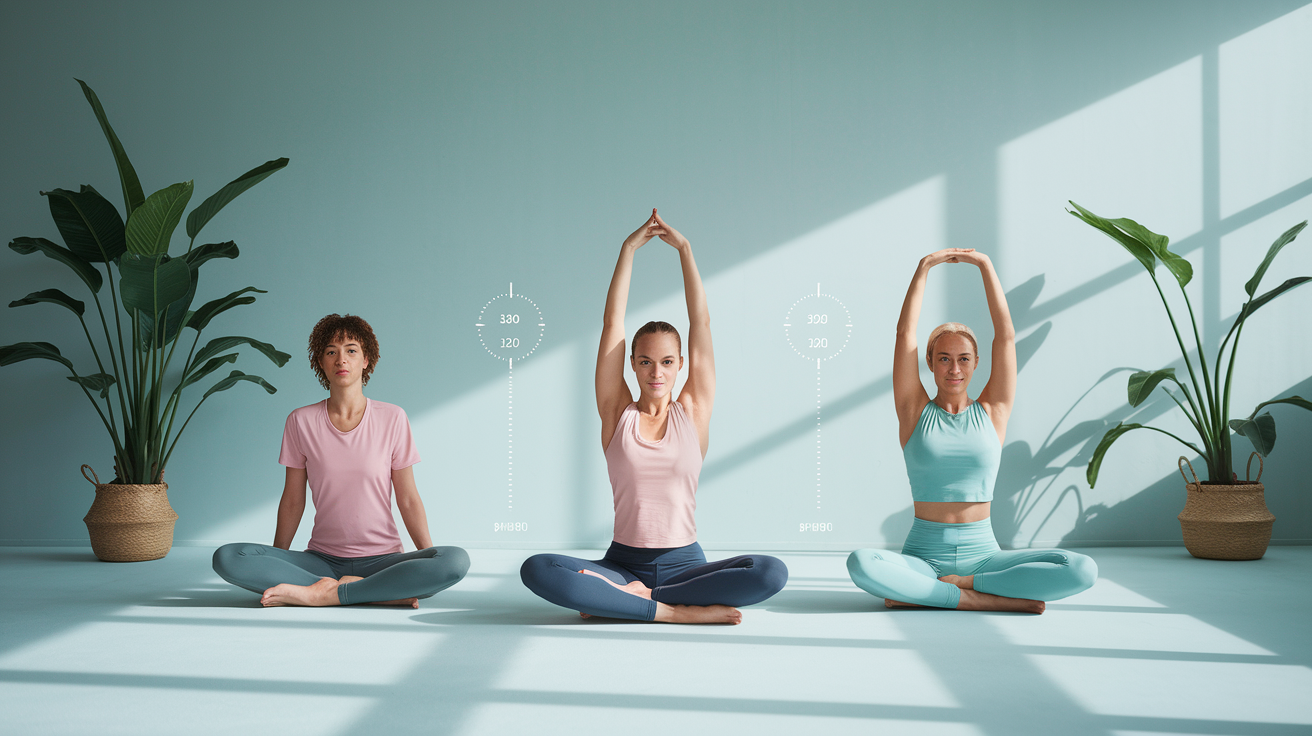
Spending 3 or 4 minutes stretching at the end brings your heart rate down gradually and reduces the chance of feeling stiff later in the day. You don’t need a yoga mat or a quiet room. These stretches work fine in the same space where you did the circuit.
Hold each stretch for 20 to 30 seconds and breathe slowly. You’re not trying to force flexibility, just gently releasing tension in the muscles you just worked.
- Hamstring stretch – Stand and place one heel on a low step or chair, keep that leg straight, and hinge forward slightly at the hips until you feel a gentle pull along the back of your thigh. Switch legs.
- Chest opener – Clasp your hands behind your back, straighten your arms, and lift your hands slightly while opening your chest. This counters the forward posture from desk work and push-ups.
- Quad stretch – Stand on one leg, pull the opposite foot toward your glutes, and hold your ankle gently. Keep your knees close together and your standing leg slightly bent for balance.
- Seated or standing torso twist – Sit in your chair or stand with feet shoulder-width apart, place one hand on the opposite knee or armrest, and gently twist your torso to look over your shoulder. Hold, then switch sides.
After these four stretches, take a few slow, deep breaths and you’re done. Your muscles will thank you, and you’ll feel more comfortable sitting back down at your desk for the rest of the afternoon.
How to Make Lunchtime Workouts Fit Your Workday
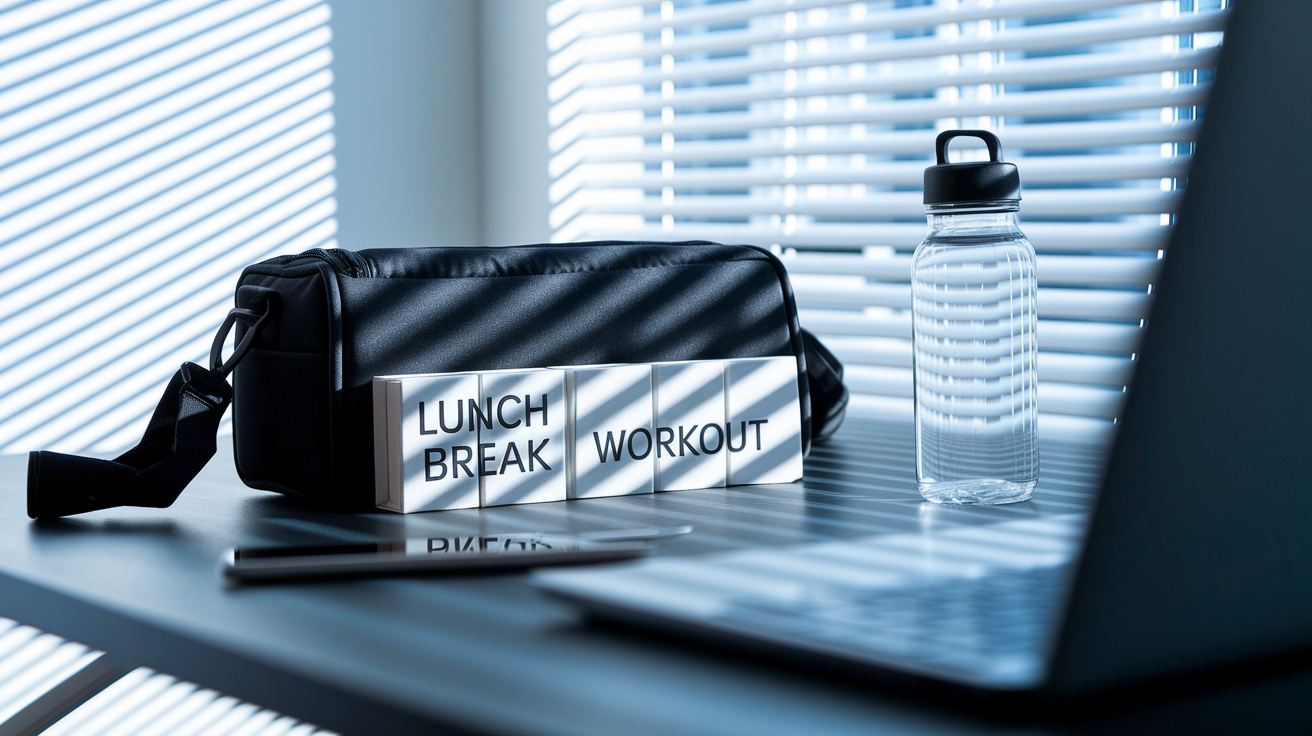
The easiest way to protect this 20 to 25 minutes is to block it on your calendar like you would a meeting. Label it “Lunch” or “Break” and treat it as non-negotiable. If colleagues see a blocked slot, they’re less likely to schedule over it, and you’re more likely to follow through.
Pack a small bag the night before with a clean shirt, deodorant, and any shoes you prefer for movement. Darker colors hide sweat better if you don’t have time to shower. Plenty of people do this circuit in their work clothes and just remove a blazer or cardigan. If you’re worried about getting too warm, choose the low-impact modifications and keep the intensity moderate.
On weeks when your schedule gets crushed, aim for two sessions instead of three, or do one full circuit instead of two rounds. A 10-minute workout still counts. Keeping the habit alive during busy periods makes it easier to ramp back up when things calm down.
Final Words
Get moving: a quick 3–4 minute warm-up, the six-move circuit (30–40 seconds on, 20–30 seconds rest), and a short cool-down fit into 15–30 minutes.
You also have beginner-friendly modifications, low-impact swaps, and timing options so you can protect joints and keep consistent. Block a 30-minute calendar slot, pack a shirt, and start with two rounds on busy days.
This lunch break workout circuit for busy beginners boosts energy and focus. It’s easy to repeat. Try it today.
FAQ
Q: What’s the quickest lunch-hour workout I can start today?
A: The quickest lunch-hour workout you can start today is a 15–30 minute bodyweight circuit with 5–8 moves, 30–40 seconds work, 20–30 seconds rest, 2–3 rounds, no equipment needed.
Q: What warm-up should I do before a lunch break workout?
A: The warm-up you should do before a lunch break workout is a 3–4 minute dynamic routine: arm circles, marching in place, leg swings, hip hinges, and shoulder taps to raise heart rate and activate muscles.
Q: What are six simple exercises for a 20-minute beginner circuit?
A: Six simple exercises for a 20-minute beginner circuit are squats, incline push-ups, glute bridges, reverse lunges, plank shoulder taps, and standing marches—perform each 30–40 seconds with 20–30 seconds rest.
Q: How many rounds and timing should I use for the circuit?
A: The rounds and timing you should use are 2–3 rounds, with each exercise done for 30–40 seconds and 20–30 seconds rest, which keeps pace beginner-friendly and fits a 15–30 minute slot.
Q: What low-impact modifications can make these moves easier?
A: Low-impact modifications you can use include shorter work intervals, reduced range of motion, wall or chair support, replacing jumps with step-backs, and doing marches instead of high-impact moves.
Q: How should I cool down after a lunch workout?
A: The cool-down you should do after a lunch workout is 3–4 minutes of gentle stretches—hamstring, quad, chest opener, and seated spinal twist—holding each 20–30 seconds to lower heart rate and ease stiffness.
Q: How do I fit a workout into a tight lunch break?
A: The way to fit a workout into a tight lunch break is block a 30-minute calendar slot, pack clothes ahead, do a 15–20 minute circuit with 2 rounds, then use leftover minutes to change or tidy up.
Q: How often should I do lunchtime circuits each week?
A: The frequency you should aim for is 2–4 lunchtime circuits per week to boost energy and strength, with rest or light-movement days in between for recovery and better long‑term consistency.