

You don’t need an hour of yoga to sleep better.
A gentle 15-minute evening mobility and stretch routine can melt away the day’s tightness, calm your nervous system, and help you fall asleep faster.
This guide gives busy beginners a simple, equipment-free sequence you can do between brushing your teeth and getting into bed.
You’ll get a 6-minute quick version, a fuller 10–20 minute option, easy modifications, and breathing cues to make it actually work.
Do one tonight. Small consistency beats perfect sessions.
A Time-Efficient Evening Mobility Routine for Busy Beginners

A short evening stretch routine helps you unwind, releases tension from sitting all day, and sets you up for better sleep. When you stretch gently before bed, you’re telling your body to lower your heart rate and calm down. Research shows this improves sleep quality and cuts stress. Most busy beginners can fit this into their existing bedtime routine without adding much time. A few minutes between brushing your teeth and climbing into bed is enough to feel a real difference.
You can pick between a 6-minute version and a 10–20 minute one depending on how the night’s going. The shorter version focuses on three or four key stretches held for 30–60 seconds each, plus a minute of breathing. The longer one adds more reps, a few extra movements, and extends the final breathing part to five minutes. Both are equipment-free and use your bed edge, couch, or wall for support.
Before you start, grab a pillow or two for padding under your knee, elbows, or head if you need it. Breathe slowly through your nose during each hold and exhale long enough to feel a gentle release. If something feels uncomfortable, use the beginner modifications listed below or shorten the hold to 20–30 seconds. Keep a calm, steady rhythm. This routine is about unwinding, not pushing yourself.
Follow this sequence each night:
-
Cat-Cow – Get on all fours on your bed. Inhale to arch your back and lift your chest, exhale to round your spine and lower your head. Repeat 5–10 times slowly.
-
Cat Stretch – Place your forearms on a pillow or folded blanket and sit your hips back toward your heels, letting your chest drop between your arms. Hold 30–60 seconds and breathe deeply.
-
Kneeling Chest Stretch – Sit back on both knees, place your hands out to the sides, and open your chest by drawing your shoulders back and down. Hold for 1 minute.
-
Hip Internal Rotations – Lie on your back with knees bent and feet flat, then let your knees gently rock side-to-side a few times to release hip tension. Move slowly and don’t force any popping sensation.
-
Hip External Rotation / Figure 4 – Cross your left ankle over your right thigh near the knee, then lift your right knee toward your chest. Hold 1 minute per side. If you feel the stretch without lifting, stay there.
-
Lying Scapula Squeeze – Lie on your back with your arms at your sides in a W shape, then squeeze your shoulder blades together and hold for 30 seconds. Repeat 3–4 times.
-
Upper Back Stretch – Place a folded pillow under your upper back and reach your arms overhead. Hold 30–60 seconds. Add a pillow under your head if your neck feels strained.
-
Final Breathing – Place a pillow under your knees and one under your shoulders to align your neck, sternum, and pelvis. Close your eyes and breathe slowly for 5 minutes, letting each exhale relax you deeper.
Key Benefits of an Evening Mobility and Stretch Routine
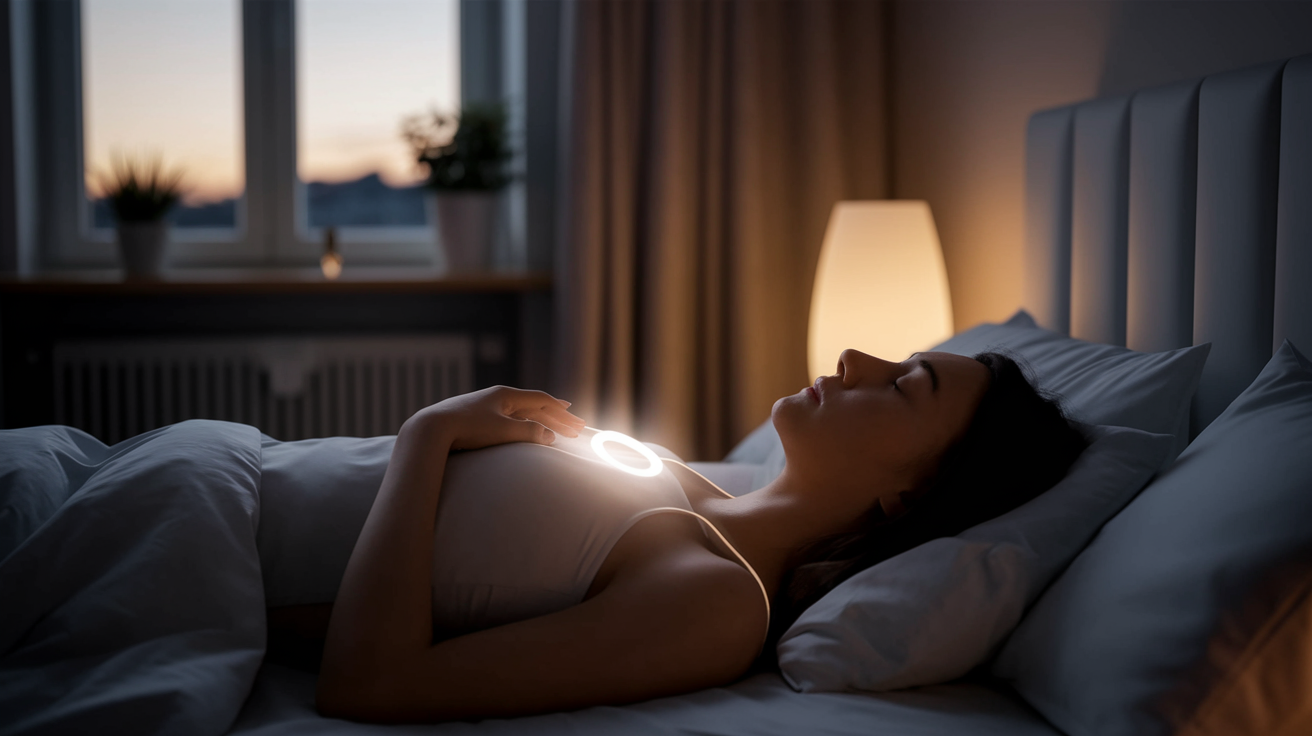
When you stretch gently in the evening, you activate your parasympathetic nervous system, which lowers your heart rate and reduces the stress hormones that can keep you awake. Slow, deliberate breathing during each hold enhances this calming effect, helping you transition from the day’s demands into a quieter, more restorative state. Research on stretching and relaxation confirms that even short sessions before bed improve sleep onset, sleep quality, and next-day recovery. Especially for people who spend most of their day sitting or standing in one position.
Desk work and commuting create stubborn tension in your hips, lower back, chest, and upper back. A few minutes of targeted stretching each night releases those tight spots and restores a bit of range you lose from hours of static posture. Opening your chest and rotating your hips before bed also supports long-term mobility and reduces the risk of compensation patterns that lead to aches and stiffness over time. For busy beginners, this routine addresses the areas that tend to feel worst after a long workday without requiring a gym, equipment, or a large time block.
Repeating the same simple sequence every night builds a powerful habit anchor. Your body begins to associate the routine with sleep preparation, which strengthens both the physical and psychological cues that help you unwind. Consistency beats complexity here. Doing six movements nightly for eight weeks will create more noticeable change than doing a perfect 30-minute session once a week.
Beginner-Friendly Modifications for Your Evening Mobility Routine

Most beginners need to adjust at least one or two stretches to match their current flexibility and comfort level. If your wrists hurt during Cat-Cow, place a pillow under your elbows and drop to your forearms instead of your hands. If your shoulders feel pinched in the Cat Stretch, tuck a pillow under each armpit and bend your elbows slightly to reduce the load. Small props and surface changes make a big difference in how sustainable the routine feels night after night.
Using your bed, couch, or wall as a support surface lowers the difficulty and lets you focus on breathing and gentle release instead of balance or strength. For example, you can do the Kneeling Chest Stretch leaning against the edge of your bed rather than kneeling on the floor. You can do the Figure 4 stretch lying flat on your mattress with your head on a pillow. If a one-minute hold feels too long, start with 20–30 seconds and add time as your body adapts. There’s no rush. Meeting yourself where you are tonight is the whole point.
If you have sensitive knees, always pad them with a folded towel or cushion. If deep hip rotations make your joints feel unstable or cause clicking, reduce the range and move more slowly. If reaching your arms overhead tires your shoulders quickly, bring them down to your sides and focus on opening your chest instead. Every modification is valid as long as you skip sharp pain and keep breathing steady.
Six practical modifications to try:
- Forearm-supported Cat-Cow – Use a pillow under your elbows and do the movement from your forearms if wrists are tender.
- Seated hip rotations – Sit on the edge of your bed with feet flat and gently rock your knees side-to-side instead of lying down.
- Wall-assisted chest opening – Stand facing a corner or doorway and place your forearms on each wall, then lean forward gently to open your chest.
- Reduced-range spinal twists – Keep your knees closer to center and focus on breathing into your ribcage instead of forcing a deep rotation.
- Pillow-supported shoulder positions – Add a pillow under your head, shoulders, or armpits anytime a position pulls too hard on your neck or upper back.
- Knee padding options – Use a folded blanket, yoga mat corner, or couch cushion under your knee during kneeling stretches.
Safe and Comfortable Stretching Habits for Evening Mobility Sessions

Gentle stretching should never hurt. A mild pulling sensation is normal, but sharp or intense pain means you’ve gone too far or the position doesn’t match your body right now. If you feel tingling, numbness, or a pinching sensation in any stretch, ease off immediately and try a smaller range or a different angle. Your goal is to release tension, not create new discomfort.
Keep your breathing smooth and don’t hold your breath. If you can’t breathe comfortably in a position, you’re working too hard. Relax your neck and shoulders during every hold and don’t force your thoracic spine or lower back into extreme curves. If a stretch causes persistent discomfort over several nights or if you have an injury or medical condition, talk to a physical therapist or clinician before continuing.
| Warning Sign | What To Do |
|---|---|
| Sharp, intense pain | Stop immediately, reduce range, or skip that movement tonight. |
| Numbness or tingling in fingers/toes | Release the position, shake out the limb, and avoid that angle in future sessions. |
| Holding your breath or feeling anxious | Reset your breathing, exhale slowly, and ease into a gentler version of the stretch. |
| Severe stiffness or compensation (arching low back to avoid hip stretch) | Use a pillow or wall for support, shorten the hold, and focus on one cue at a time. |
Breathing Techniques That Enhance Evening Mobility Results
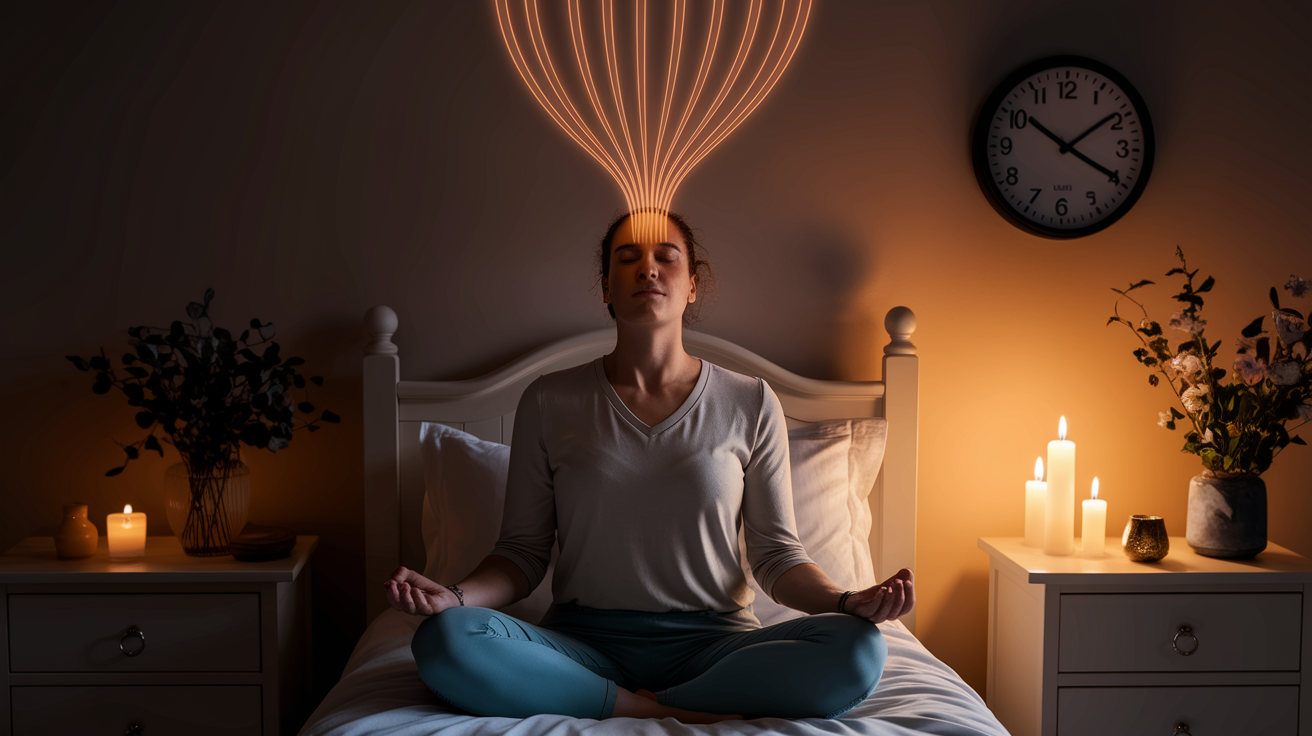
Your breath is the simplest tool you have to deepen a stretch and calm your nervous system. Inhale slowly through your nose to create space in your ribcage and abdomen, then exhale long and steady to release tension in the muscle you’re targeting. Most people naturally hold their breath when they feel a stretch, but that tightens the muscle instead of relaxing it. Focus on making your exhale longer than your inhale. Imagine you’re blowing out a candle slowly rather than all at once.
During the final five-minute breathing segment, shift your attention from individual muscles to your entire body. Breathe into your lower ribcage and belly, letting your chest stay relatively still. If intrusive thoughts pop up, acknowledge them briefly and return your focus to the rhythm of your breath. Some people find it helpful to jot down a quick note on their phone if a thought keeps returning, then go right back to breathing. This practice trains both physical relaxation and mental quiet, which compounds the sleep benefits over time.
Sample Breathing Count
Try a simple four-second inhale followed by a six-second exhale during the final relaxation pose. Count silently as you breathe: in-two-three-four, out-two-three-four-five-six. Repeat this pattern for five minutes. If four and six feel too long, start with three-second inhales and five-second exhales. The ratio matters more than the exact count. Just make sure your exhale is noticeably longer than your inhale.
Tracking Progress With Your Evening Mobility and Stretch Routine

Progress in flexibility and mobility takes weeks, not days. Research suggests that dedicating 5–10 minutes per muscle group per week for at least eight weeks leads to measurable structural change. If you follow this routine nightly, you’ll easily hit that threshold and begin to notice differences in how your body feels during the day. Less stiffness when you stand up from your desk, easier hip rotation when you tie your shoes, a more open chest when you take a deep breath.
To track your progress, pick one or two simple tests and check them every two weeks. You don’t need a formal assessment. Just a quick reference point to remind yourself that consistency is working. Most beginners see the most noticeable change in the first four to six weeks, then continued smaller improvements as they approach the eight-week mark. If you don’t see progress after eight weeks of nightly practice, consider consulting a physical therapist to rule out underlying restrictions or compensation patterns.
Three measurable markers to watch:
- Forward fold reach – Stand with feet together and hinge at your hips. Note how close your fingertips get to the floor without rounding your back.
- Hip rotation comfort – Sit with one ankle over the opposite knee and observe whether your top knee drops closer to parallel over time.
- Thoracic rotation range – Lie on your side with knees bent and reach your top arm across your body, tracking how far your shoulder can rotate toward the floor without lifting your hips.
Final Words
Do the short 6-minute sequence tonight—Cat-Cow, hip rotations, scapula squeezes, and a breathing cooldown. It helps lower arousal and gets your body ready for sleep.
Use pillows or the bed edge for support, shorten holds to 20–30 seconds if needed, and stop if something tingles. Track one simple test (forward fold reach or hip comfort) once a week to see progress.
This evening mobility and stretch routine for busy beginners is built to fit real life: quick, safe, and repeatable. Start tonight and you’ll feel less tight and sleep better in weeks. Small habit. Big payoff.
FAQ
Q: What is an evening mobility routine and why does it help sleep and unwind?
A: An evening mobility routine is a short set of gentle stretches and movements that relax muscles and lower arousal; it helps sleep by reducing stress, slowing heart rate, and easing desk-related stiffness.
Q: How long should my evening routine be and what’s the minimum effective option?
A: Your evening routine should be 6–20 minutes depending on time; use a 6‑minute quick flow or a 10–20 minute session. A 5‑minute minimum still reduces tension and supports better sleep.
Q: What are the core exercises in a 5–6 minute full-body evening routine?
A: The core exercises in a 5–6 minute routine are Cat‑Cow (5–10 reps), Cat stretch (30–60s), kneeling chest stretch (1 min), hip internal rotations (gentle reps), figure‑4 (1 min each), scapula squeezes (30s ×3–4), upper back stretch (30–60s), then breathing.
Q: Can I do these stretches on my bed or with limited space and no equipment?
A: Yes. You can use a bed edge, wall, couch, or pillows for support; these equipment‑free choices reduce load and make the routine easy to do in tight spaces.
Q: How do I safely modify stretches for wrist, hip, or shoulder discomfort?
A: To modify, try forearm‑supported Cat‑Cow, pillow under knees or elbows, seated hip rotations, wall‑assisted chest openers, and shorten holds to 20–30 seconds to avoid pain or popping.
Q: What warning signs mean I should stop stretching or see a clinician?
A: Stop stretching if you feel sharp pain, numbness or tingling, breath‑holding, or severe compensation. If symptoms persist or worsen after stopping, consult a clinician for guidance.
Q: How should I breathe during stretches and what’s a simple breathing count for relaxation?
A: Breathe slowly: inhale during lengthening and exhale long to relax. Use an inhale‑4, exhale‑6 pattern for the final segment, finishing with five minutes of slow belly‑to‑rib breaths.
Q: How can I track progress and what timeline should I expect for mobility gains?
A: Track forward‑fold reach, hip rotation comfort, and thoracic rotation range; log reps/holds weekly. Expect measurable improvements in about 6–8 weeks with roughly 5–10 minutes per muscle per week.