

Think vegetarian food can’t help you lose weight?
Actually, a smart vegetarian meal-prep plan can make losing weight easier and less stressful: veggies, legumes, and whole grains fill you up on fewer calories, and pre-portioning stops late-night drive-throughs.
This post lays out a simple week of meals, a two-hour batch-cook plan, portion targets, and a shopping list you can use tonight.
I’ll also give an easier fallback for busy nights and tiny tracking tips that actually stick.
How Vegetarian Meal Prep Supports Weight Loss
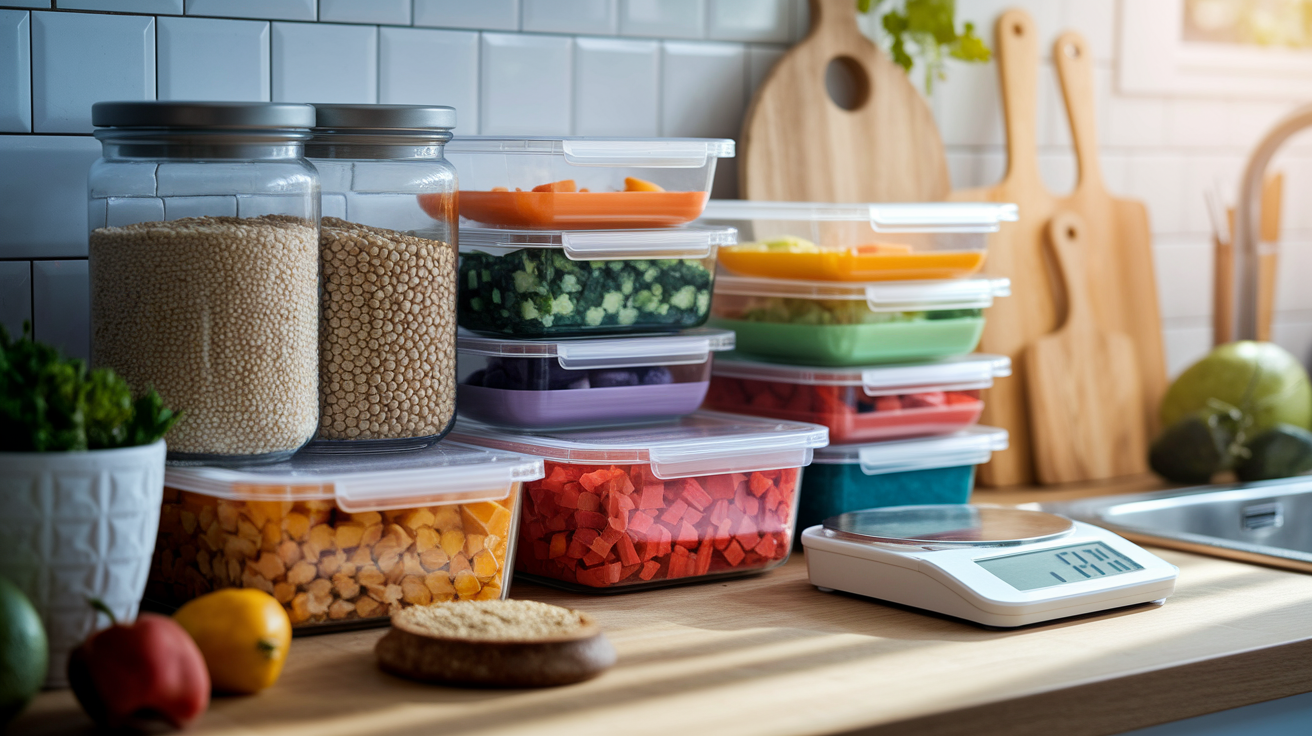
Vegetarian meal prep works because plant-based ingredients fill you up without packing in calories. Vegetables, legumes, and whole grains carry more fiber and water, so you’re satisfied on fewer calories. When you prep everything ahead, there’s no guessing what you’re eating.
Pre-portioning kills the guesswork. It stops you from grabbing high-calorie snacks when hunger shows up unannounced. Most people regain weight during the week when they’re tired and caught off guard. A container of chickpea bowls in the fridge beats a drive-through every time.
Consistency is what really matters. Eating similar meals at similar times teaches your body to expect fuel at regular intervals. That steadiness cuts cravings and makes hitting your calorie target seven days straight a lot easier.
Here’s what a simple week looks like:
- Monday: Greek yogurt parfait, lentil salad, tofu stir-fry with brown rice
- Tuesday: Overnight oats, leftover lentil salad, vegetable curry over quinoa
- Wednesday: Veggie omelet, chickpea quinoa bowl, baked sweet potato with greens
- Thursday: Greek yogurt parfait, leftover chickpea bowl, stuffed bell peppers
- Friday: Overnight oats, tofu stir-fry (fresh batch), lentil soup with whole-grain bread
- Saturday: Veggie omelet, leftover stuffed peppers, roasted vegetable pasta
- Sunday: Batch-cook day. Prep grains, legumes, roasted vegetables, and breakfasts for the week ahead
Each day lands around 1,200 to 1,500 calories depending on portion sizes and snack choices. Rotate two or three breakfast templates, two or three lunches, and two or three dinners to keep variety without overcomplicating things.
Calorie-Controlled Vegetarian Recipes
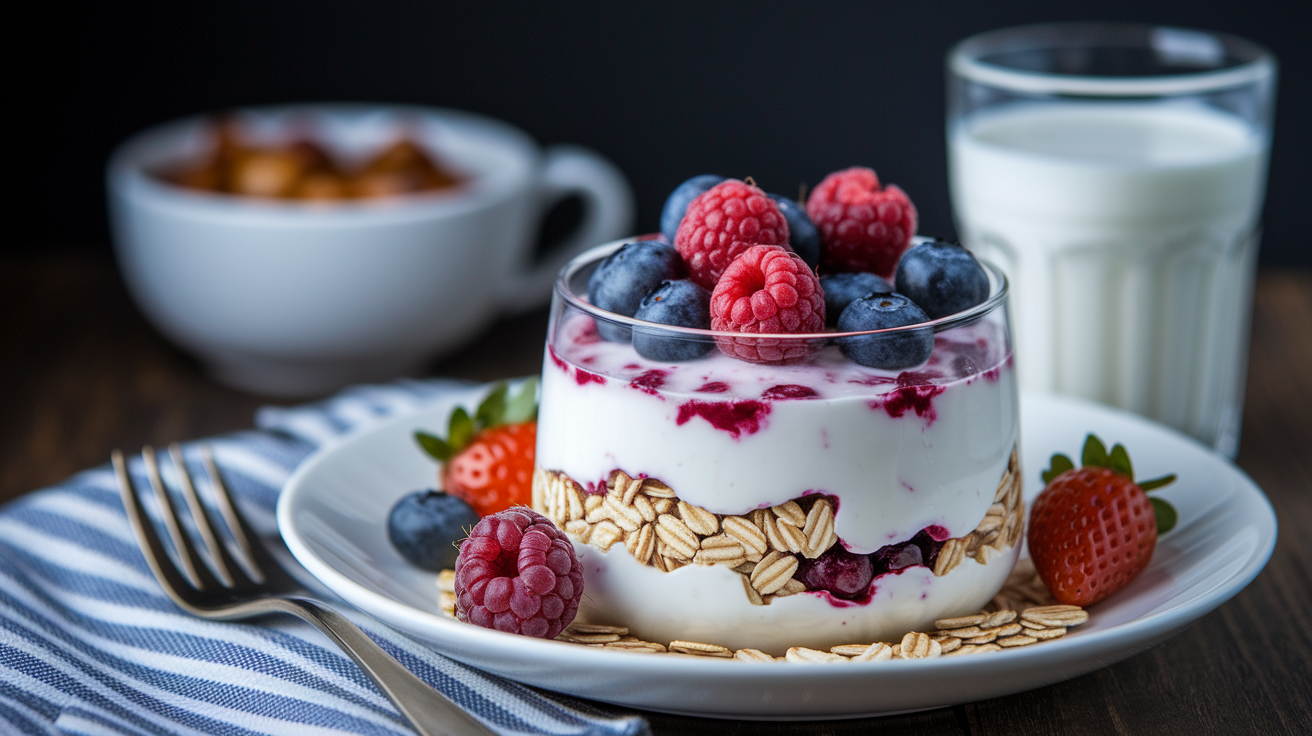
Breakfasts sit at 250 to 350 calories. Greek yogurt parfaits combine one cup of nonfat Greek yogurt with a third cup of oats and half a cup of berries for around 275 calories and 25 grams of protein. Veggie omelets use two eggs, a cup of spinach or mushrooms, and one slice of whole-grain toast to land near 250 calories. Overnight oats with chia seeds and a quarter cup of Greek yogurt stirred in hit 300 calories and keep you steady until lunch.
Lunches range from 350 to 400 calories and travel well. Lentil salads start with one cup of cooked lentils, add two cups of greens, cherry tomatoes, and one tablespoon of olive oil for about 385 calories and 18 grams of protein. Chickpea quinoa bowls layer three-quarters cup of chickpeas, half a cup of quinoa, and a cup of roasted vegetables for 410 calories. Tofu stir-fry packs 150 grams of firm tofu, two cups of mixed vegetables, and half a cup of brown rice into 370 calories.
Dinners sit between 400 and 450 calories and feel like comfort food. Baked tofu with roasted sweet potato and steamed greens totals 420 calories. Vegetable curry with a cup of cooked lentils and half a cup of brown rice comes in at 440 calories. Stuffed bell peppers filled with quinoa, black beans, and diced vegetables finish around 400 calories.
Snacks fill gaps without breaking your calorie budget. A medium apple or ten almonds lands near 80 calories. Half a cup of low-fat cottage cheese with sliced strawberries adds 110 calories and 14 grams of protein. One boiled egg gives you 70 calories and 6 grams of protein.
Five recipes to rotate:
- Greek yogurt parfait (oats, berries, yogurt) – 270–300 kcal
- Lentil salad (greens, tomatoes, olive oil) – 350–385 kcal
- Tofu stir-fry (vegetables, brown rice) – 350–400 kcal
- Chickpea quinoa bowl (roasted veg, olive oil) – 400–420 kcal
- Stuffed bell pepper (quinoa, black beans, spices) – 390–410 kcal
Batch-Cooking Instructions for Efficient Prep
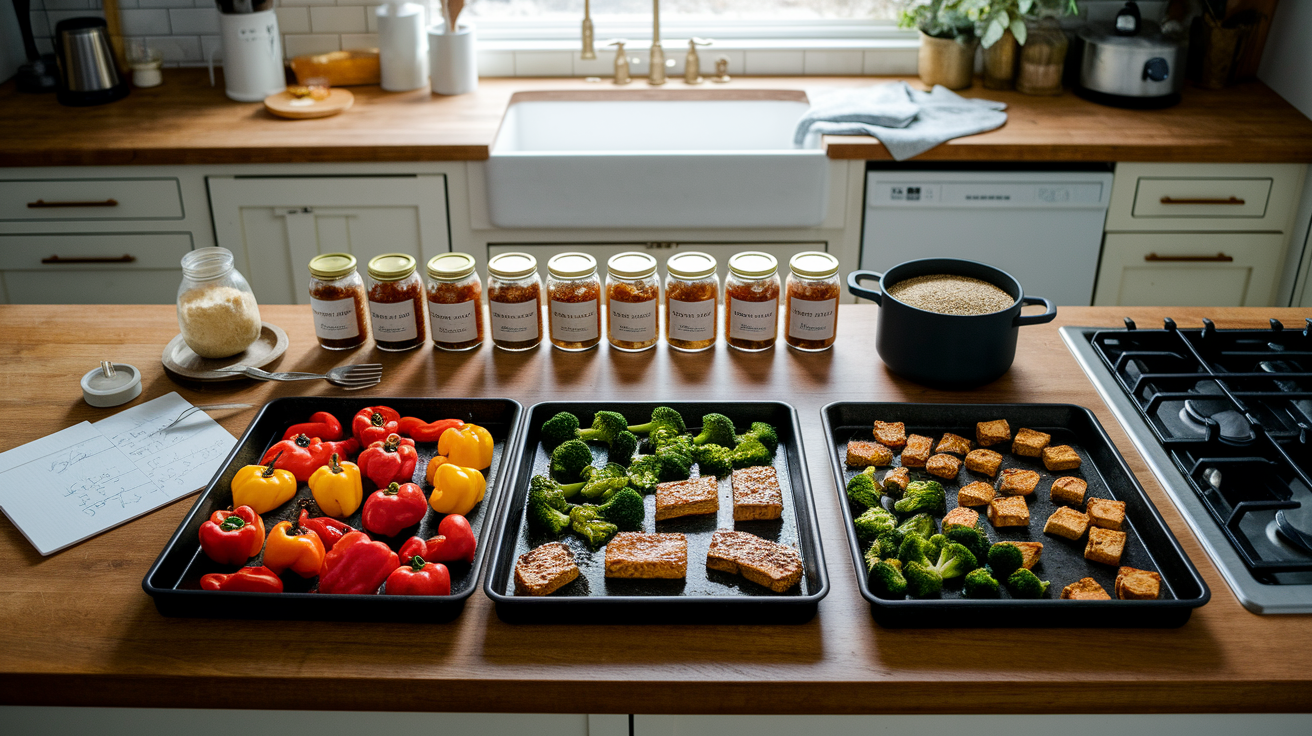
A two-hour Sunday session covers most of your week. Follow these six steps:
- Preheat your oven to 425°F (220°C) and line two or three baking sheets with parchment paper. Chop bell peppers, broccoli, zucchini, and sweet potatoes into similar-sized pieces and spread them across the sheets. Drizzle with one tablespoon of olive oil per sheet, season with salt and pepper, and roast for 25 to 30 minutes.
- While vegetables roast, cook your grains. Measure two to three cups of dry quinoa or brown rice into a rice cooker or large pot. Follow package directions. You’ll get six to nine cups of cooked grains, enough for lunch and dinner bases all week.
- Press and marinate tofu or tempeh. Drain one and a half pounds of firm tofu, press it between paper towels under a cutting board weighted with a heavy pot for ten minutes, then cube and toss with two tablespoons of soy sauce and one teaspoon of garlic powder. Spread on a parchment-lined sheet and bake at 375°F (190°C) for 25 minutes, flipping halfway.
- Cook legumes in a large pot. Rinse two cups of dry lentils and simmer in six cups of water for 20 to 25 minutes until tender. Drain and cool. If using canned chickpeas, drain and rinse three 15-ounce cans and set aside.
- Assemble overnight oats or yogurt parfaits. Portion one-third cup of oats, one tablespoon of chia seeds, and three-quarters cup of unsweetened almond milk into seven small containers. For parfaits, layer one cup of Greek yogurt, one-third cup of oats, and half a cup of berries in each of seven jars.
- Divide everything into meal containers. Use seven three-cup containers for lunches and dinners. Pack one cup of grains, one cup of legumes or tofu, and one to two cups of roasted vegetables per container. Label with the day and store in the fridge.
Batch cooking cuts your weeknight time to zero. Open a container, reheat for two minutes in the microwave, and eat. Most components stay fresh for three to four days in the fridge, so plan a midweek refresh on Wednesday evening if you want everything at peak texture. Roast one more tray of vegetables or cook another batch of tofu in 15 to 30 minutes.
Doing similar tasks at once is how you gain speed. Chop all your vegetables before you start cooking anything. Use your oven, stovetop, and rice cooker at the same time. Cool grains and legumes in shallow containers so they drop to fridge temperature faster and stay safe.
Portioning and Calorie Management

Portion sizes determine whether your meal prep plan creates the calorie deficit you need. One cup of cooked grains like quinoa or brown rice gives you around 200 to 220 calories and becomes your starch base. Pair that with one to one and a half cups of non-starchy vegetables (broccoli, bell peppers, greens, zucchini) for another 50 to 100 calories. Add 20 to 30 grams of protein from 150 grams of tofu, three-quarters cup of chickpeas, or one cup of lentils, and you land near 350 to 450 calories per main meal.
Most women aiming for weight loss target 1,200 to 1,500 calories per day. Most men target 1,500 to 1,800 calories per day. Split that into three main meals and one or two snacks. A 300-calorie breakfast, a 400-calorie lunch, a 400-calorie dinner, and two 100-calorie snacks total 1,300 calories. If you need more, increase each portion by a quarter cup of grains or add one tablespoon of olive oil to your daily meals.
Use reusable glass or BPA-free plastic containers with airtight lids. Three-cup containers work well for lunches and dinners because they fit one full plate of food without cramming. One to two-cup containers hold breakfasts like overnight oats or yogurt parfaits. Small snack containers (about one cup) keep nuts, fruit, or boiled eggs ready to grab. Label every container with the day of the week and basic reheating instructions so you never waste time deciding what to eat.
Vegetarian Meal Prep Shopping List
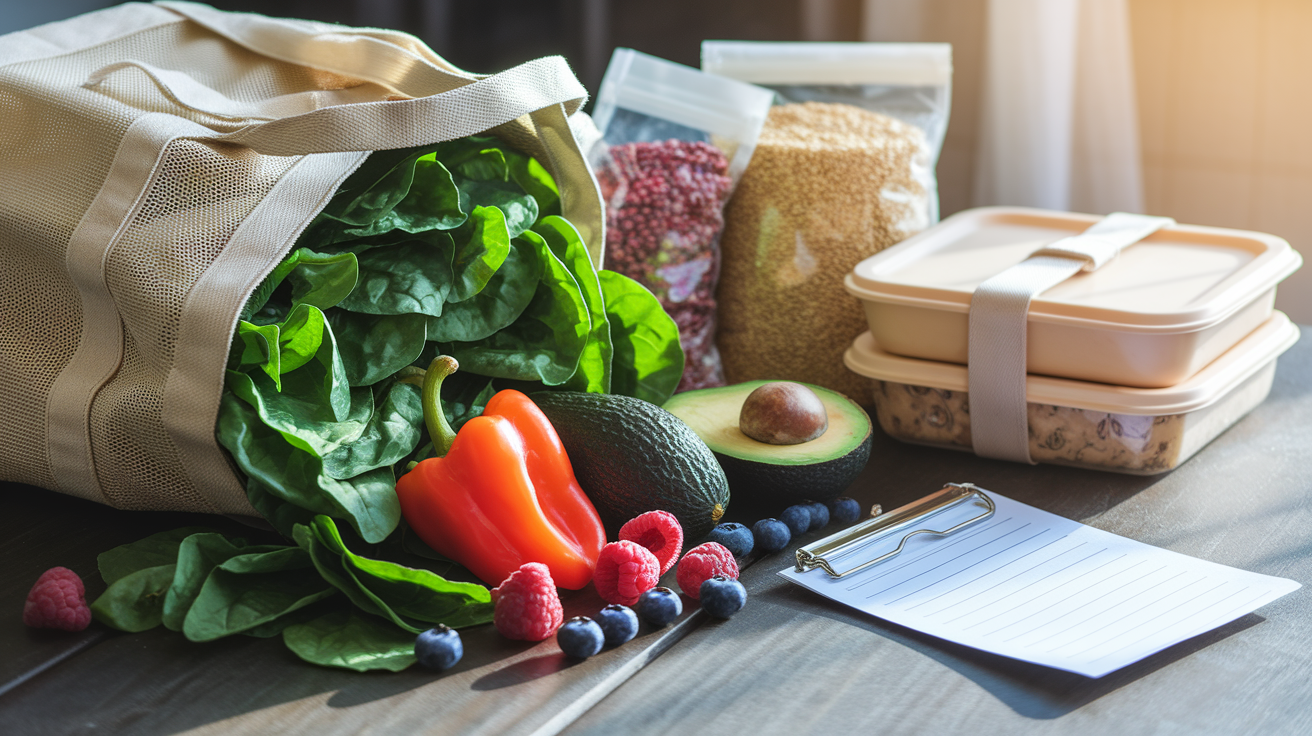
A single weekly grocery run covers all your meals when you buy staples in the right quantities.
| Category | Items |
|---|---|
| Grains | 2–3 cups dry quinoa or brown rice (400–600 g), 3 cups rolled oats (270 g) |
| Legumes & Proteins | 2 cups dry lentils (400 g), 3 cans chickpeas (15 oz each), 1.5 lb firm tofu (680 g), 14 large eggs |
| Dairy & Alternatives | 32 oz nonfat Greek yogurt (900 g), 16 oz low-fat cottage cheese (450 g), unsweetened almond or soy milk |
| Vegetables | 2 lb spinach or kale (900 g), 6 bell peppers, 2 heads broccoli (700–900 g), 4–6 sweet potatoes (2–3 lb), 2–3 lb frozen mixed vegetables |
| Fruits & Nuts | 3–4 avocados, 2 lb fresh or frozen berries, 3 apples, 8–12 oz almonds or mixed nuts (225–340 g), 2 oz chia seeds |
| Flavorings & Oils | Olive oil (8–12 tablespoons per week), low-sodium soy sauce, garlic, cumin, cayenne, black pepper, lemon juice, balsamic vinegar |
Buy frozen vegetables and berries to cut prep time and reduce waste. Frozen spinach, broccoli, and mixed stir-fry blends cost less than fresh and keep for months. Canned chickpeas and lentils save soaking and cooking time, but dry lentils are cheaper if you’ve got a spare 25 minutes. Stock up on spices once a month so you always have flavor without added calories.
Storage and Food Safety for Vegetarian Meal Prep

Refrigerated meals stay safe for three to four days when stored properly. Cool cooked grains, legumes, and roasted vegetables to room temperature within two hours of cooking, then transfer them to airtight containers and refrigerate immediately. Shallow containers speed up cooling and keep food out of the danger zone where bacteria grow fastest.
Glass containers with snap lids work best because they don’t absorb odors or stains and you can see what’s inside without opening them. Stack containers by day so Monday’s meals sit at the front and Sunday’s meals sit at the back. Label each container with the date you prepped it and a quick reheating note like “microwave 2 minutes” or “oven 350°F for 10 minutes.”
Freeze meals you won’t eat within four days. Cooked grains, legumes, tofu, and roasted vegetables freeze well for eight to twelve weeks in freezer-safe containers or heavy-duty freezer bags. Leave half an inch of headspace because food expands when frozen. Thaw frozen meals in the fridge overnight, then reheat the same way you would a fresh container. Don’t refreeze thawed meals because texture suffers and safety risks increase.
Sample Weekly Vegetarian Meal Prep Plans

Two weekly plans give you flexibility. Rotate between them or mix and match meals to prevent boredom.
Plan A: High-Protein Focus
| Day | Breakfast | Lunch | Dinner |
|---|---|---|---|
| Monday | Greek yogurt parfait (oats, berries, yogurt) | Lentil salad (greens, tomatoes, olive oil) | Tofu stir-fry (vegetables, brown rice) |
| Tuesday | Veggie omelet (2 eggs, spinach, mushrooms, toast) | Leftover lentil salad | Chickpea quinoa bowl (roasted veg, tahini drizzle) |
| Wednesday | Overnight oats (chia, almond milk, Greek yogurt) | Leftover tofu stir-fry | Baked tempeh with sweet potato and steamed greens |
| Thursday | Greek yogurt parfait | Leftover chickpea quinoa bowl | Stuffed bell pepper (quinoa, black beans, spices) |
| Friday | Veggie omelet | Leftover baked tempeh with sweet potato | Lentil soup with whole-grain bread |
| Saturday | Overnight oats | Leftover stuffed bell pepper | Tofu and vegetable curry over brown rice |
| Sunday | Greek yogurt parfait | Leftover lentil soup | Batch-cook session: roast vegetables, cook grains, prep breakfasts |
Plan B: Comfort & Variety
| Day | Breakfast | Lunch | Dinner |
|---|---|---|---|
| Monday | Overnight oats (chia, almond milk, cinnamon) | Chickpea salad wrap (whole-grain tortilla, greens) | Roasted vegetable pasta (marinara, nutritional yeast) |
| Tuesday | Greek yogurt parfait (oats, berries, yogurt) | Leftover chickpea salad wrap | Black bean tacos (corn tortillas, avocado, salsa) |
| Wednesday | Veggie omelet (2 eggs, bell pepper, onion, toast) | Leftover roasted vegetable pasta | Lentil curry over quinoa |
| Thursday | Overnight oats | Leftover black bean tacos | Stuffed portobello mushrooms (quinoa, spinach, feta) |
| Friday | Greek yogurt parfait | Leftover lentil curry | Vegetable stir-fry with tofu and brown rice |
| Saturday | Veggie omelet | Leftover stuffed portobello mushrooms | Baked falafel with cucumber salad and hummus |
| Sunday | Overnight oats | Leftover vegetable stir-fry | Batch-cook session: prep proteins, roast vegetables, cook grains |
Both plans keep daily calories between 1,200 and 1,500 and protein between 70 and 100 grams. Add one or two snacks (a boiled egg, ten almonds, or half a cup of cottage cheese) to reach your target if you need more fuel. Swap any meal for another from the same category when you want a change.
Final Words
Start prepping one week’s meals tonight: cook a grain, roast a mix of vegetables, and batch a legume for ready protein. These moves lower calorie density and make portion control easy.
Use the recipes, portion tips, storage rules, and the sample weekly plans to build a routine that sticks. If nights are busy, keep the minimum: grains + one veg + beans.
Set a 45-minute window this evening to cook and portion. That small step makes a vegetarian meal prep plan for weight loss feel doable—and sets you up for steady progress.
FAQ
Q: How does vegetarian meal prep support weight loss?
A: Vegetarian meal prep supports weight loss by lowering calorie density with fiber-rich vegetables, whole grains, and legumes, controlling portions, and boosting consistency to reduce impulsive snacking and overeating.
Q: What does a simple 7-day vegetarian meal-prep plan look like?
A: A simple 7-day vegetarian meal-prep plan uses daily themes—overnight oats breakfasts, grain-bowl lunches, hearty salads, soups, stir-fries, roasted-veg dinners, and a flexible leftovers day for variety and easy assembly.
Q: Which vegetarian ingredients help with weight loss?
A: Vegetarian weight-loss ingredients include lentils, chickpeas, tofu, quinoa, oats, Greek yogurt, and lots of vegetables—high in fiber or protein to keep you full on fewer calories.
Q: What are some low-calorie vegetarian meal ideas and calorie ranges?
A: Low-calorie vegetarian meal ideas include lentil salad (350–450 kcal), tofu stir-fry (400–500 kcal), quinoa bowl (350–450 kcal), Greek-yogurt parfait (300–400 kcal), and chickpea soup (350–450 kcal).
Q: How do I batch-cook efficiently for vegetarian meal prep?
A: Batch-cook efficiently by roasting vegetables, cooking grains, baking tofu, preparing a bean mix, seasoning, then portioning into containers—one 2–4 hour session covers most weekly meals.
Q: How long do prepped vegetarian components last in the fridge or freezer?
A: Prepped vegetarian components last about 3–5 days in the fridge and 1–3 months in the freezer; use airtight containers and label with dates for best quality.
Q: How should I portion vegetarian meals to manage calories?
A: Portion vegetarian meals with roughly 1 cup cooked grains, 1–1.5 cups vegetables, and 20–30 grams protein (tofu, lentils) to hit typical calorie and fullness targets.
Q: What containers and storage tips keep meal prep safe?
A: Airtight containers that cool quickly keep meals safe; refrigerate within two hours, store components 3–5 days, and freeze long-term. Reheat fully and discard if off-smelling.
Q: What should I buy for vegetarian meal prep shopping?
A: A vegetarian meal-prep shopping list should include grains (quinoa, brown rice, oats), legumes (beans, lentils), proteins (tofu, Greek yogurt), fresh vegetables, fruits, nuts, and basic spices.
Q: How often should I prep meals each week to stay consistent?
A: Prep meals once or twice weekly for consistency—one longer session or two shorter sessions reduces decision fatigue and saves about 2–4 hours over the week.