

What if one focused 3-hour Sunday session could end your nightly dinner scramble?
No magic. Just a simple plan that mixes fully cooked meals, freezer-ready packets, and prepped components you can mix all week.
Read this for a step-by-step 3-hour schedule, a grocery list sized for five workdays, batch-friendly recipes, storage and reheating rules, and a 30 to 45 minute Wednesday refresh.
Do the prep once, and weekdays become grab-and-go, without starting from zero midweek.
A Weekly Batch Cooking Plan Tailored for Busy Professionals
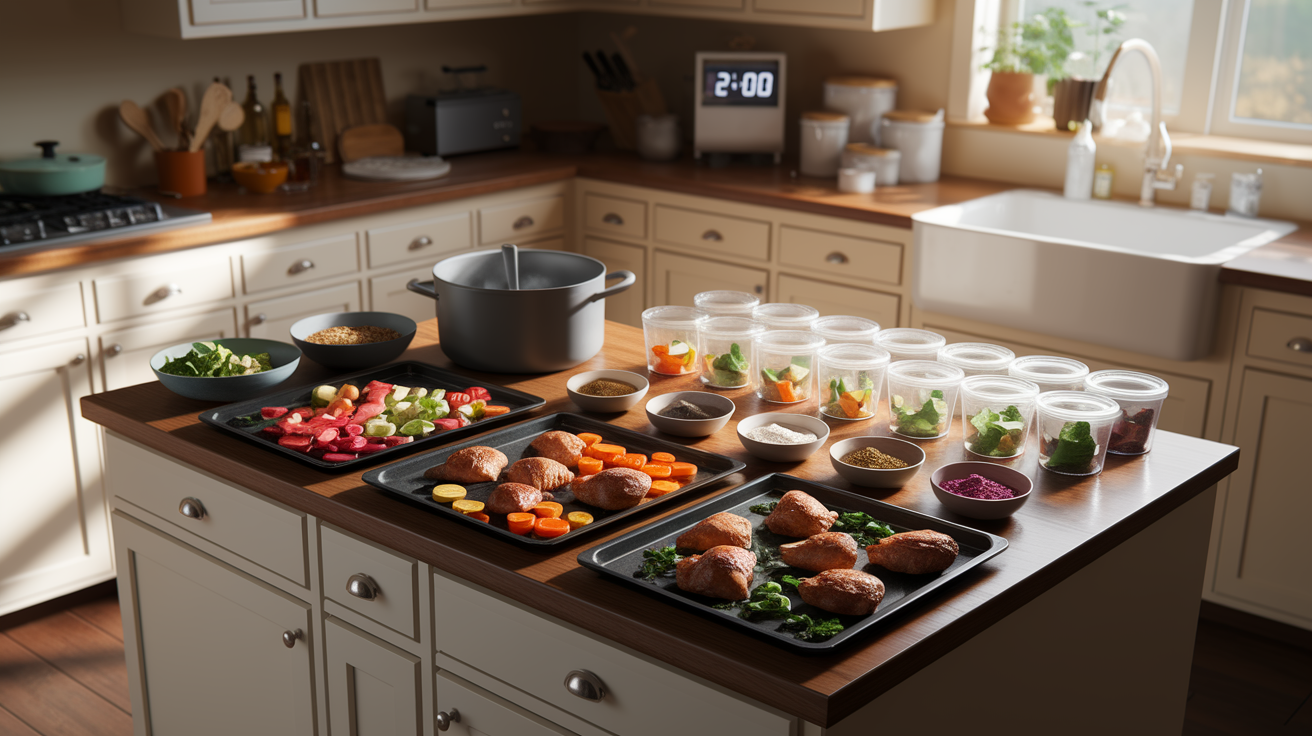
A realistic batch cooking schedule fits into a single Sunday afternoon and gives you ready meals for the entire work week. The most effective approach combines all three common batch cooking methods in one session: cook some complete meals to freeze, assemble a few uncooked freezer packets to cook later, and prep individual components like grains and proteins that you can mix throughout the week.
Most busy professionals find success with a 2 to 3 hour Sunday block plus a quick 30 to 45 minute Wednesday refresh. Sunday handles the heavy lifting. The midweek refresh keeps variety alive without requiring a second full cook day. You can shift these blocks to Saturday morning or any quiet window that works for your schedule.
Here’s the exact sequence that makes a 2 to 3 hour session work:
- 0:00 to 0:15 Set up your workspace, preheat your oven to 400°F, label your containers with a permanent marker, and pull out all ingredients so nothing slows you down mid cook.
- 0:15 to 0:45 Start your grains in a pot or Instant Pot (cook at least 6 cups of dry rice or quinoa so you have multiple portions). While grains cook, chop vegetables and season proteins for roasting.
- 0:45 to 1:30 Load sheet pans with chicken thighs, tofu, or salmon and roast them. Use a second oven rack for root vegetables. On the stovetop, simmer a pot of beans or a simple sauce while the oven does its work.
- 1:30 to 1:50 Portion everything into containers. Let hot items cool on the counter for a bit, then move them to the fridge or freezer. Keep cooked grains in 4 cup portions (enough for a family of four or multiple single servings).
- 1:50 to 2:00 Wipe down counters, load the dishwasher, and organize your fridge so grab and go meals sit at eye level.
- Wednesday refresh (30 to 45 minutes) Roast a fresh batch of vegetables, cook one additional protein, or assemble a new sauce to keep meals from feeling repetitive.
This structure removes nightly decision fatigue. When you open the fridge on Tuesday evening, dinner’s already there. The midweek refresh keeps things interesting without requiring you to start from zero twice a week.
Building a Grocery List That Supports a Time-Saving Batch Schedule

A shopping list for a 5 workday batch plan should cover proteins, grains, vegetables, and pantry staples in quantities that align with your target meal count. For one person prepping 5 lunches and 3 to 5 dinners, you’ll need roughly 1.5 to 2 kg of protein (about 3.3 to 4.4 pounds), 800 grams of dry grains, and 2 to 3 kg of mixed vegetables. Shopping once with these quantities in mind keeps you out of the grocery store during the week and supports bulk buying, which usually costs less per unit than grabbing ingredients meal by meal.
Your list breaks down into a few simple categories that make checkout faster and reduce the chance you’ll forget something. Buying dry beans instead of canned saves money and freezer space. Stocking a few backup canned items (beans, tomatoes) gives you a safety net if plans shift.
Here’s what a typical 5 day batch shopping list looks like:
Proteins: 1 to 1.2 kg boneless chicken thighs plus 500 g salmon, firm tofu, or ground turkey
Grains and starches: 800 g dry rice, quinoa, or rolled oats (about 4 cups dry or 6 cups oats)
Vegetables: 4 to 6 medium sweet potatoes, 3 bell peppers, 2 heads of broccoli, 2 large onions, 1 bag of baby spinach
Legumes: 2 cans (400 g each) of black beans or chickpeas, or 1 cup dry beans to cook in bulk
Pantry staples: 100 to 150 ml olive oil, 60 to 80 ml soy sauce, vinegar, salt, pepper, paprika, cumin
Fresh herbs and citrus: 1 bunch of parsley or cilantro, 2 lemons or limes
Dairy or alternatives: 6 large eggs, 200 g plain Greek yogurt (optional)
Backup items: 2 cans (400 g) diced tomatoes, 100 g nuts or seeds for toppings
Essential Batch-Friendly Recipes Ideal for Time-Saving Weekly Prep
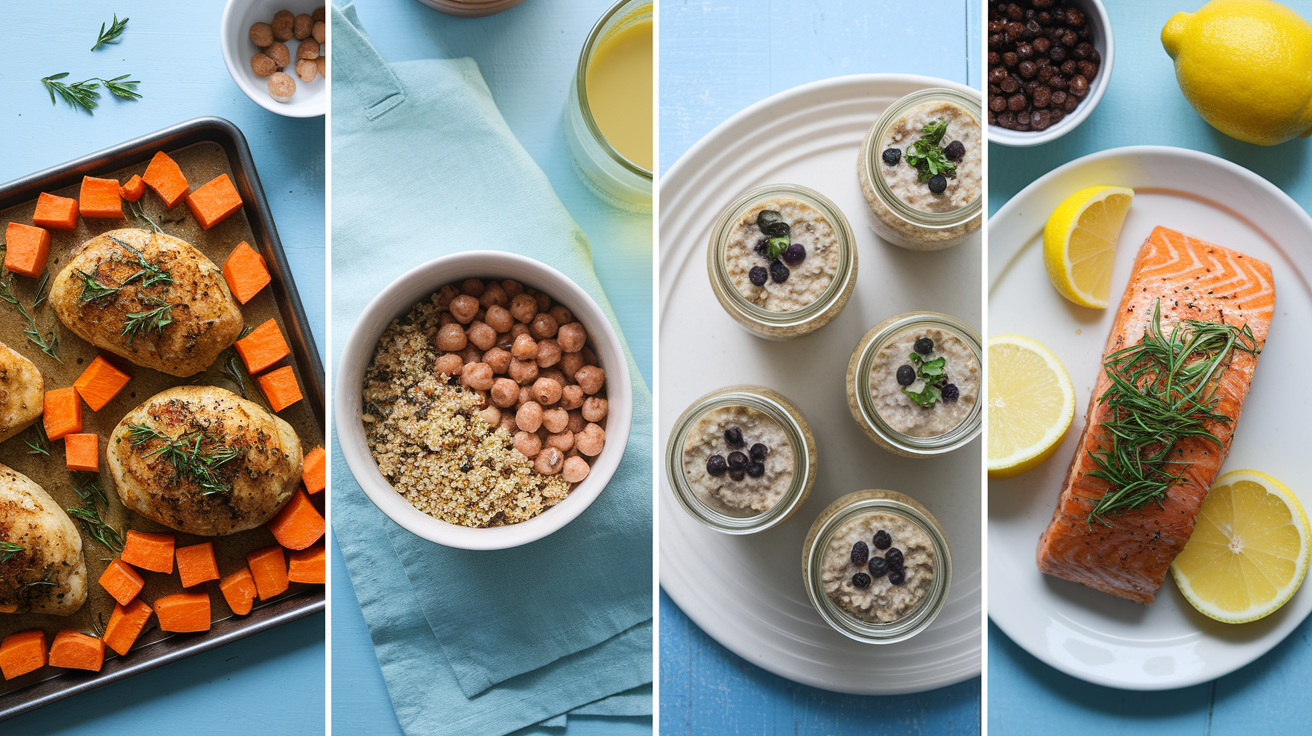
The best batch recipes scale easily, reheat well, and let you swap ingredients without rewriting the whole plan. Sheet pan meals, grain bowls, and one pot dishes all meet these criteria. A single sheet pan dinner can yield 4 servings in 30 minutes of mostly hands off oven time. Grain bowls with roasted vegetables and a protein give you the flexibility to mix components throughout the week so meals don’t feel identical.
When you’re choosing recipes for batch cooking, look for balanced macros that land between 400 and 600 calories per serving with 30 to 40 grams of protein. This range supports most professional workdays without leaving you too full or too hungry by mid afternoon. Recipes that freeze well (casseroles, chilis, enchiladas) can be cooked once and portioned into 2 or 3 meals for future weeks. Recipes you assemble uncooked (dump dinners, slow cooker pot roast) save fridge space and cook while you’re at work.
Here are four reliable batch friendly recipes with realistic prep times and storage windows:
| Recipe Name | Prep Time | Storage Duration | Calories (approx) |
|---|---|---|---|
| Sheet Pan Chicken & Sweet Potato | 15–20 min | Fridge 4 days / Freeze 2–3 months | 450 per serving |
| Quinoa Bowls with Chickpeas | 20–30 min | Fridge 4 days | 420 per serving |
| Overnight Oats (5 jars) | 10 min total | Fridge 4 days | 280 per jar |
| Baked Salmon with Lemon | 12–15 min | Fridge 3 days / Freeze 2 months | 380 per serving |
Variety comes from rotating two or three sauces and mixing proteins across the same grain and vegetable bases. A batch of tahini lemon dressing, a jar of tomato sauce, and a simple soy ginger mix can turn identical ingredients into eight distinct meals.
Storage, Portioning, and Food Safety for a Reliable Batch Cook Routine
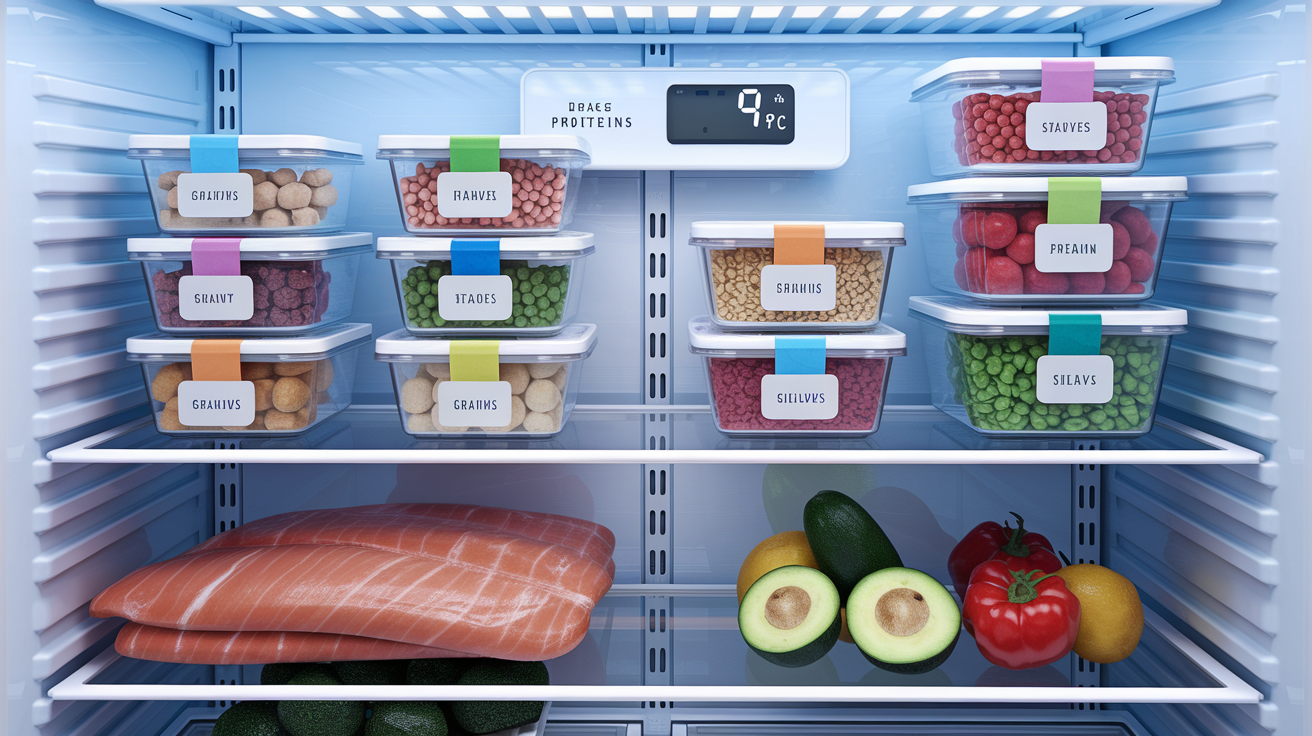
Safe storage starts with cooling food quickly and organizing your fridge so the oldest meals get eaten first. Divide hot food into shallow containers within an hour of cooking, then move everything to the fridge within two hours. Your fridge should stay at or below 4°C (40°F). Cooked meals last 3 to 4 days in the fridge, sauces and dressings stretch to 5 to 7 days, and frozen meals hold their quality for 2 to 3 months.
Portioning prevents waste and makes grab and go mornings faster. A typical single serving meal container holds 1 to 1.5 cups of cooked grains, 120 to 150 grams of cooked protein, and 1 to 2 cups of vegetables. For a week of lunches and dinners, plan on 10 meal sized containers (24 to 28 ounces each) and 5 smaller jars (16 ounces) for breakfasts. Label every container with the date you prepped it and a simple use by date. “Prep 04/06, Use by 04/10” keeps you honest.
When reheating, aim for an internal temperature of 74°C (165°F) for proteins and casseroles. Microwave meals for 2 to 4 minutes, stirring halfway through. Oven reheating takes 12 to 18 minutes at 350°F and works better for crispy textures. One reader mentioned freezing homemade stock in 2 cup containers and keeping meatballs separate from sauce so individual portions thaw faster. Both save time on busy nights.
Follow these steps to keep your batch cook routine safe and running smoothly:
Cool hot foods in shallow containers within 1 hour of cooking, then refrigerate within 2 hours total.
Label every container with prep date and use by date using a permanent marker or masking tape.
Store the oldest meals at the front of the fridge so you eat them first.
Keep raw proteins on the bottom shelf to prevent drips onto ready to eat items.
Thaw frozen meals in the fridge 24 hours before you need them, or reheat directly from frozen with extra time.
Time-Blocking and Workflow Tricks to Maximize Batch Cooking Efficiency
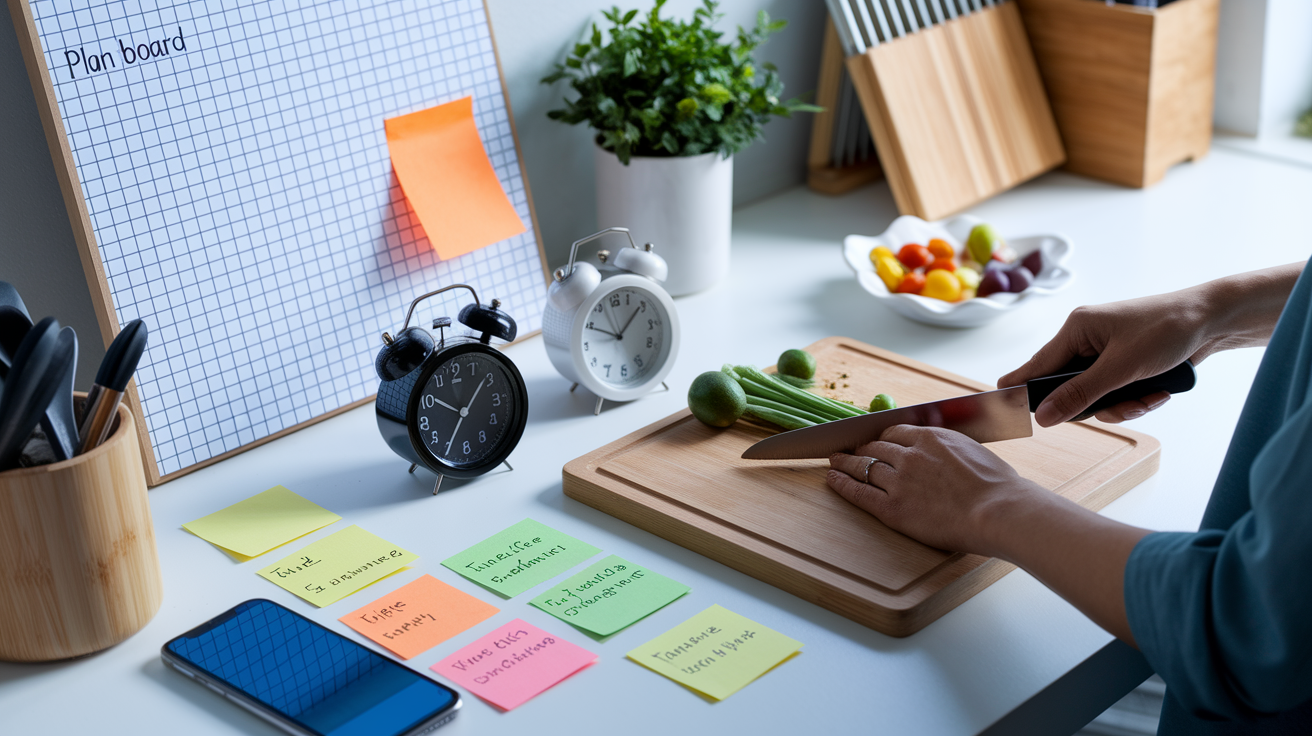
The fastest way to batch cook is to group similar tasks together instead of bouncing between chopping, cooking, and cleaning. Chop all your vegetables in one 20 to 30 minute block at the start of your session. While grains simmer on the stovetop (15 to 20 minutes of mostly hands off time), season and load your sheet pans so the oven can start working. Staggering tasks this way keeps at least two things cooking at once without requiring you to stand and watch.
Use timers for every step. Set one timer for your grains, another for the oven, and a third as a reminder to start your next task. This removes mental load and prevents overcooking. An Instant Pot or slow cooker adds another layer of efficiency because both cook with almost zero supervision. For example, cook 6 cups of dry brown rice in an 8 quart Instant Pot, portion the cooked rice into 4 cup batches, and freeze them for multiple dinners. That’s 20 minutes of setup for a week’s worth of a staple ingredient.
Here are five workflow tactics that cut your active cooking time:
Start grains and beans first because they take the longest and need the least attention once they’re going.
Prep all proteins at once (season chicken, cube tofu, portion salmon) so you can load multiple sheet pans in quick succession.
Use two oven racks to roast proteins on one level and vegetables on another, saving 25 to 35 minutes compared to cooking in separate batches.
Clean as you go during natural downtime. Wipe the cutting board while the oven preheats, load the dishwasher while grains simmer.
Double or triple recipes whenever you’re already cooking dinner during the week, then freeze the extras to build a rotating freezer stash without dedicating extra sessions.
Containers, Tools, and Equipment to Support a Weekly Batch Cooking Routine
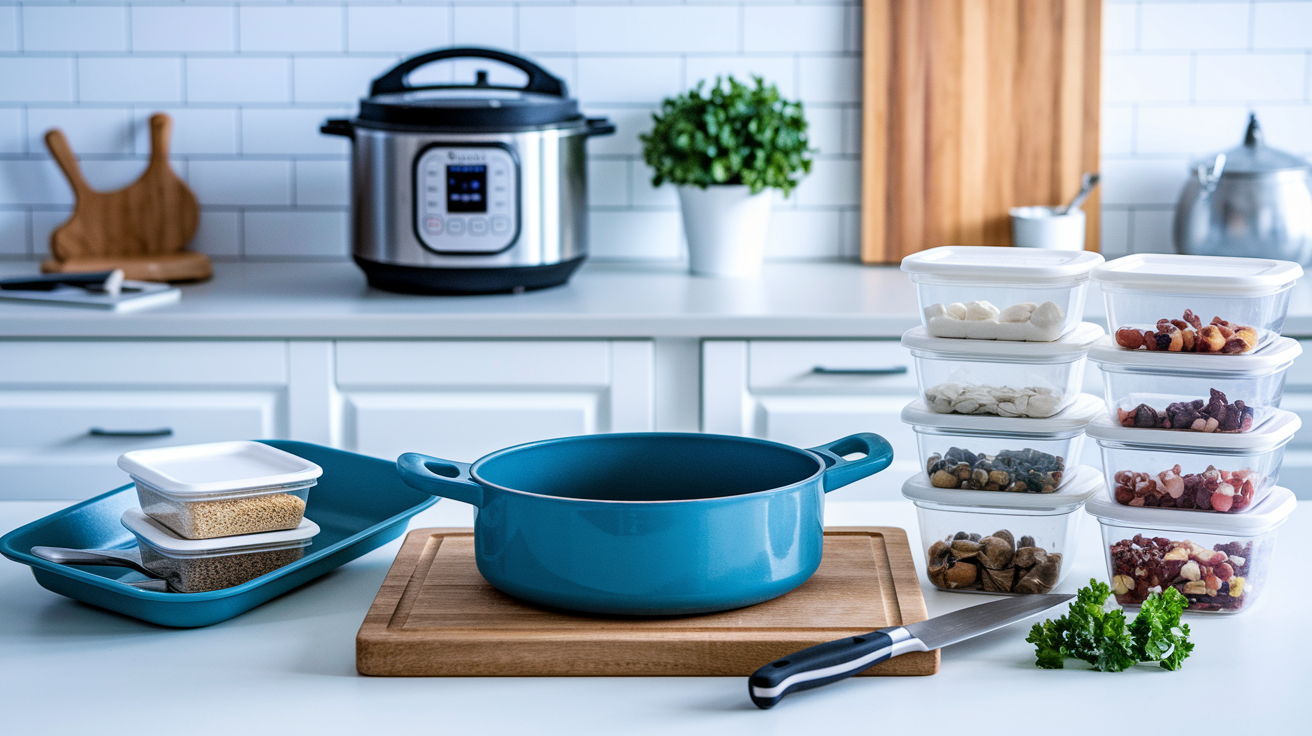
You don’t need special equipment to batch cook successfully. A single sheet pan, one medium pot for grains, a cutting board, a sharp chef’s knife, and 8 to 12 airtight containers cover most sessions. If you already own these items, you can start this Sunday. The key is using what you have efficiently rather than waiting to buy the perfect gear.
Two optional upgrades make the process faster if you decide batch cooking is a long term habit. An Instant Pot or programmable slow cooker reduces hands on time for grains, beans, and tough cuts of meat. A second sheet pan lets you roast proteins and vegetables at the same time on separate racks, cutting total oven time nearly in half. Invest in a set of microwave safe, BPA free meal containers in the 24 to 32 ounce range so everything stacks neatly in your fridge and nothing leaks in your work bag. A permanent marker and a roll of masking tape handle all your labeling needs without requiring printable stickers or fancy systems.
Budget-Friendly Batch Cooking Strategies for Busy Professionals
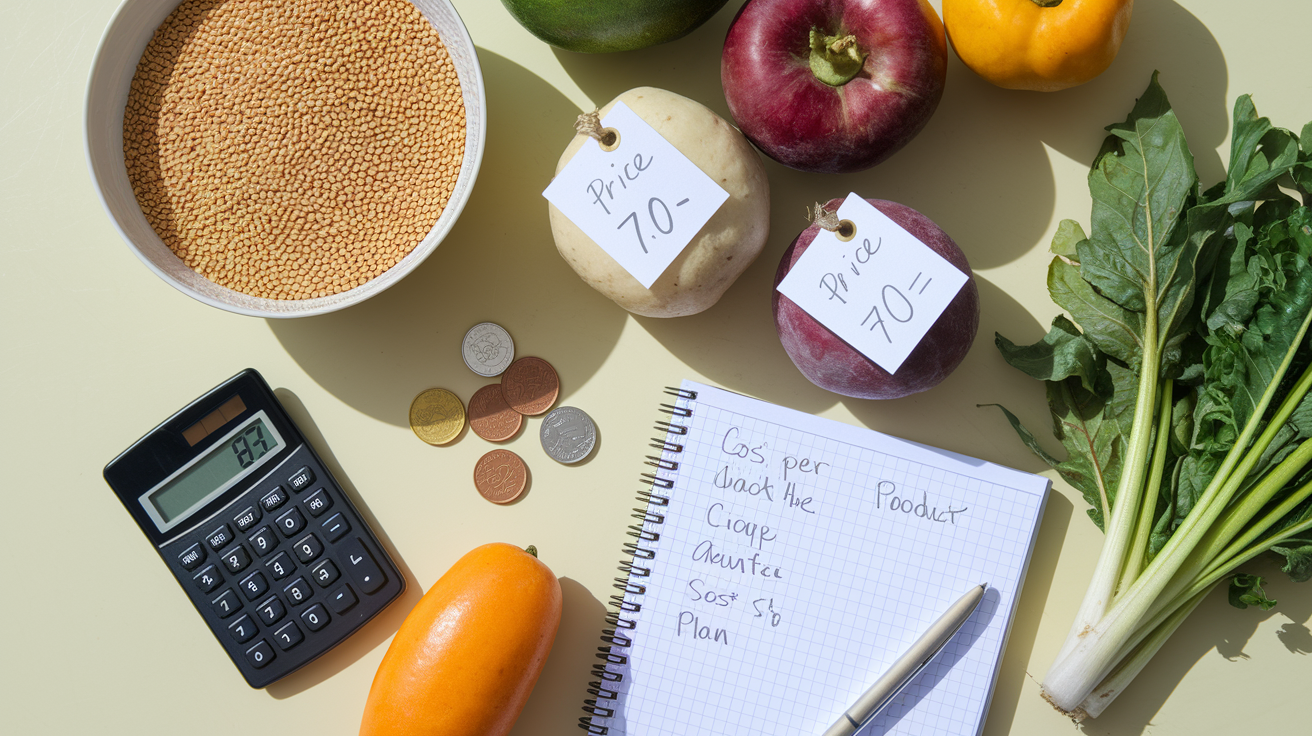
Batch cooking cuts your weekly food spending in two ways: you buy ingredients in bulk at lower per unit prices, and you avoid the markups that come with takeout and last minute convenience purchases. Cooking dry beans instead of buying canned saves roughly 60 to 70 percent per serving. A week’s worth of meals for one person typically costs between $40 and $65 depending on your region and protein choices, compared to $80 to $150 if you’re eating out most nights.
The biggest savings come from reducing grocery trips and takeout orders. When you have 8 to 10 ready meals in your fridge and freezer, the temptation to order delivery on a Tuesday night drops. Batch cooking also helps you use up perishable ingredients before they spoil. If you buy a 3 pound bag of carrots and roast them all at once, none of them turn to mush in the cridge drawer.
Here are four simple money saving practices that fit into a batch cooking routine:
Buy grains, beans, and oats in bulk from the bulk bins or large bags instead of single serving packets.
Choose one or two less expensive proteins (chicken thighs, tofu, canned tuna) and rotate them with occasional splurges like salmon.
Use frozen vegetables when fresh prices spike. Frozen broccoli, spinach, and bell peppers cook and freeze just as well as fresh.
Reuse sauces and dressings across multiple meals so one batch of tahini dressing or tomato sauce supports 4 to 6 different dinners.
Final Words
in the action, you learned a practical 2–3 hour Sunday session with clear time blocks and a 30–45 minute midweek refresh to keep meals fresh.
We walked through three batch-cooking modes, a grocery list that fits five workdays, batch-friendly recipes, storage and safety tips, and simple time-blocking tricks.
Use the time-saving batch cooking schedule for busy professionals as your default: book a two-hour block this Sunday, follow the six-step setup-to-storage sequence, and treat the midweek refresh as your reset. You’ll save time and stress.
FAQ
Q: What does a realistic 2–3 hour weekly batch cooking session look like?
A: A realistic 2–3 hour weekly batch cooking session looks like: 0–15 min setup, 15–45 min chopping/prep, 45–75 min grains and oven batches, 75–120 min finishing, then 10–20 min cool/portion.
Q: What are the three common batch-cooking methods and how do they fit the schedule?
A: The three common batch-cooking methods are full meals, freezer-assembled meals, and component prep; use oven time for full meals, set aside freezer portions, and reserve a 20–30 minute block for chopping components.
Q: What is the midweek 30–45 minute refresh routine?
A: The midweek 30–45 minute refresh routine is a quick top-up: reheat soups, roast one sheet of veggies, cook a small grain batch, and restock salads or proteins for the remaining days.
Q: What exact sequence should I follow from setup to storage?
A: The exact sequence from setup to storage is: 1) clear counters, 2) wash and trim, 3) cook grains/proteins, 4) roast or pan-cook mains, 5) cool and portion, 6) label and refrigerate/freeze.
Q: How much should I buy for a 5-workday batch-cook grocery list?
A: For five workdays buy about 1.5–2 kg protein, ~800 g dry grains, 2–3 kg mixed vegetables, plus pantry staples, herbs, dairy, and backup items like canned beans or frozen veg.
Q: How long do batch-cooked meals last in the fridge and freezer?
A: Batch-cooked meals last about 3–4 days in the fridge and 2–3 months in the freezer; refrigerated sauces last 5–7 days for best quality and safety.
Q: What are safe cooling and reheating rules to follow?
A: Safe cooling and reheating rules are: cool food within 1–2 hours, store at or below 4°C/40°F, reheat to 74°C/165°F, and avoid reheating the same meal more than once.
Q: How should I portion meals for balanced weekday lunches?
A: Meals should be portioned with about 1–1.5 cups grains, 120–150 g protein, and at least one cup of vegetables per meal; use consistent containers to simplify tracking and reheating.
Q: What essential tools do I need for weekly batch cooking?
A: Essential tools include an Instant Pot or slow cooker, a sheet pan, a medium pot, 8–12 meal containers (24–28 oz), 16 oz jars for breakfasts, freezer bags, and a permanent marker.
Q: What simple budget-friendly strategies cut costs while batch cooking?
A: Budget-friendly strategies include buying dry beans and grains in bulk, doubling recipes, limiting store visits, reusing ingredients across meals, and freezing extras to reduce takeout and waste.