

What if your morning coffee isn’t the real fix for grogginess?
Try a 2-minute routine that wakes your circulation, loosens stiff joints, and clears brain fog faster than just waiting for caffeine.
No equipment. No long stretches.
This piece gives the exact 120-second sequence you can use today—even on chaotic mornings—to feel more alert right away.
You’ll get step-by-step timings, low-impact swaps, and a one-minute fallback for when time is tight.
A Fast, Beginner-Friendly Morning Routine That Boosts Energy Immediately

Most people grab coffee first thing because grogginess feels impossible to shake without it. Here’s a better move: a 2-minute routine that wakes up your circulation, loosens stiff joints, and gives you a clear energy lift before you’ve even touched a cup. You can start using it today, no equipment needed. The whole thing takes 120 seconds and works immediately.
Here’s the full routine with exact timings:
- 0:00–0:20 — Hydrate while standing. Drink 200–300 ml of water. Keep the glass on your nightstand the night before.
- 0:20–0:50 — Jumping jacks at a moderate pace (30 seconds). If jumping feels too intense, march in place with high knees instead.
- 0:50–1:20 — Standing side bend (30 seconds). Alternate sides every 15 seconds. Focus on gentle mobility, not stretching as far as possible.
- 1:20–2:00 — High knees or high-knee march (40 seconds). Move at a pace that slightly elevates your breathing. Marching in place works if high knees are too much.
This sequence raises your heart rate and sends oxygen to your muscles and brain within the first minute. Jumping jacks and high knees trigger a mild spike in circulation that clears brain fog faster than just lying there waiting to feel human. Side bends mobilize your spine and rib cage, which tend to stiffen overnight. That small range of motion reduces the creaky feeling and improves posture right away.
If your morning is chaotic, you can collapse the routine into 1 minute: quick 100–150 ml sip of water (20 seconds), march or do high knees (20 seconds), then finish with a few deep breaths and side bends (20 seconds). Even that condensed version gives you a noticeable alertness boost.
Dynamic Movement Options for a Stronger Morning Energy Routine

Once the 2-minute baseline feels easy, you can add targeted mobility moves that loosen the neck, shoulders, and hips without extending your total time much. These upgrades improve posture and circulation in the first few minutes of your day, so you start with better alignment instead of carrying overnight stiffness into your commute or first calls.
Five mobility movements to rotate into your routine (spend 20–30 seconds on each):
Arm circles. Forward and backward, at a slow to moderate tempo. Opens the shoulder girdle.
Shoulder rolls. Lift your shoulders toward your ears, then roll them back and down. Releases upper trap tension.
Hip circles. Stand on one leg and draw slow circles with the lifted knee, then switch sides. Wakes up hip flexors and stabilizers.
Neck tilts. Gently tilt your head toward each shoulder, then forward and back. Relieves overnight neck stiffness.
Cat-cow standing. Place hands on your knees, round your back (cat), then arch it gently (cow). Mobilizes the entire spine in under 30 seconds.
You can slot one or two of these into the transition between jumping jacks and side bends, or run through all five in a separate 2-minute block after your core routine. The key is steady, controlled motion. No bouncing or forcing range. These movements increase blood flow to stiff joints and signal your nervous system that it’s time to move.
Low-Impact Variations for Total Beginners
If you’re returning to exercise after a break, dealing with joint sensitivity, or just waking up especially stiff, switch to the lowest-impact versions until your body adapts. Marching in place with exaggerated knee lifts replaces jumping jacks completely and still raises your heart rate within 20–30 seconds. Perform side bends more slowly and cut the range in half. Focus on feeling the gentle stretch along your ribs rather than bending as far as possible.
For any bodyweight squat or lunge later on, use a sturdy chair: sit down and stand up at a controlled pace to build strength without stress on your knees. These modifications still improve circulation and mobility. They just reduce impact and load while you’re building baseline fitness.
Beginner Morning Cardio and Bodyweight Strength to Elevate Alertness
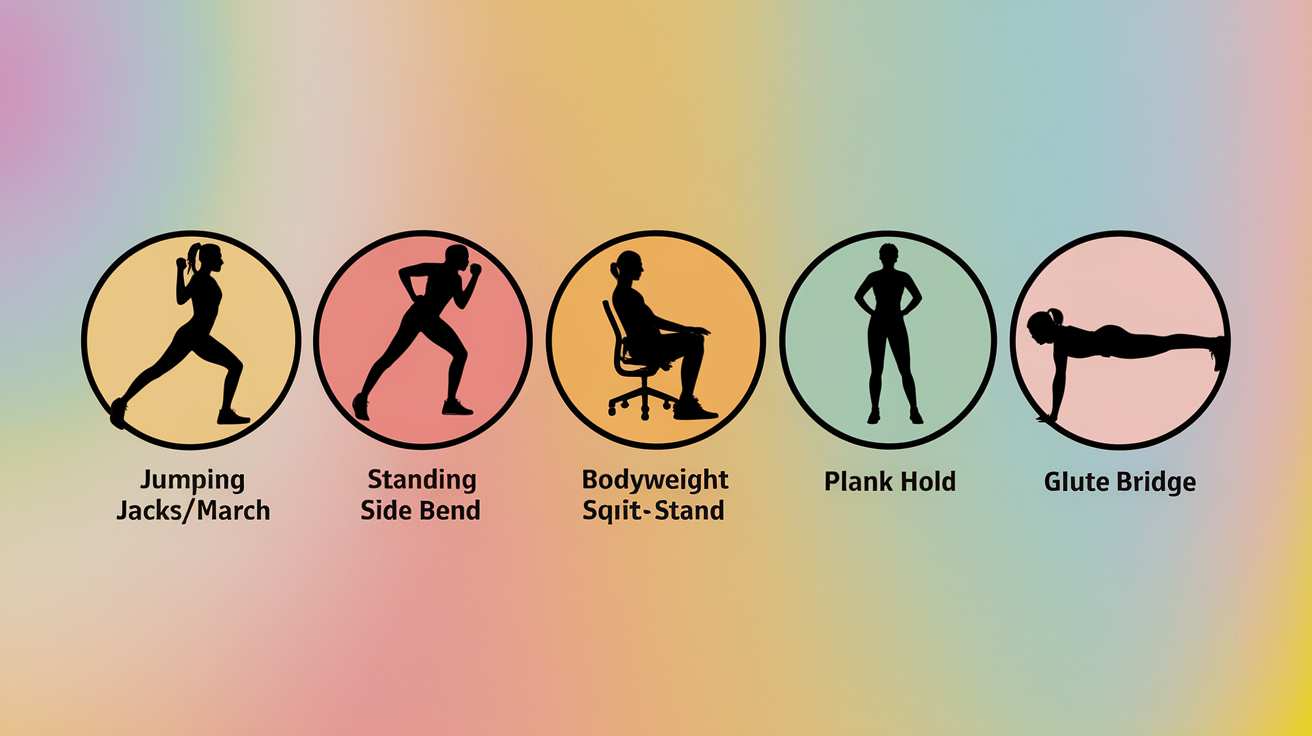
When you have 5–10 minutes instead of 2, you can add a simple circuit that strengthens your core, activates your glutes, and builds better posture over time. This longer format keeps the same gentle ramp-up but layers in strength moves that improve stability and endurance. You’ll feel the difference in energy and mood within the first week. And you’ll see improvements in how long you can hold a plank or how many bodyweight squats feel comfortable.
| Exercise | Duration | Beginner Modification |
|---|---|---|
| Jumping Jacks or March | 30 seconds | March in place at a steady pace |
| Standing Side Bend | 30 seconds | Reduce range; move slowly |
| Bodyweight Squats or Chair Sit-Stand | 30 seconds | Sit down to a chair and stand back up |
| Plank Hold | 30–60 seconds | Hold on knees instead of toes |
| Glute Bridge | 30 seconds | Pause at the top for 2 seconds each rep |
Run through the first three exercises once, rest for 30 seconds, then repeat the entire sequence. After your second round, drop to the floor (or a mat if you have one) and hold a plank for as long as you can, aiming for at least 30 seconds. If a full plank on your toes is too hard, hold it on your knees. Your core still activates and you build toward the toes-down version.
Finish with a 30-second glute bridge: lie on your back, feet flat, lift your hips and squeeze your glutes at the top. This move counters the hip flexor tightness that builds from sitting and sleeping.
After your last exercise, spend 60 seconds on diaphragmatic breathing as a cool-down. Place one hand on your belly, breathe in slowly through your nose so your belly rises, then exhale fully. Follow that with 60 seconds of posture alignment. Stand tall, pull your shoulder blades down and back, lengthen your neck. This reset reinforces better posture and brings your heart rate back to baseline before you move into breakfast or a shower.
Pacing and Weekly Progression for Beginners
Keep your intensity at a pace where you can still speak a short sentence without gasping. That moderate effort is enough to elevate your heart rate and trigger energy benefits without leaving you exhausted before your day starts. Start with 2 rounds of the circuit above, three mornings per week.
Once two rounds feel easy, add a third round or extend your plank hold by 10 seconds each week. Small increases over 4–6 weeks build real strength and endurance without overwhelming your schedule or recovery capacity.
Nutrition Essentials That Support a Morning Energy Routine

The right breakfast stabilizes your blood sugar, sustains your energy through mid-morning, and supports muscle recovery if you’ve just finished bodyweight circuits. Prioritize protein plus a moderate portion of complex carbs and healthy fats. That combination prevents the sugar spike and crash that comes from pastries or sweetened cereal and keeps you alert during meetings or tasks that require focus.
If you’re short on time, a 150–250 calorie snack right after your routine works as a bridge until you can eat a full meal. A small container of Greek yogurt, one hard-boiled egg, or a handful of almonds mixed with a few dried cranberries all deliver quick protein and fat to stabilize energy. When you have a few more minutes, aim for one of these six options:
Two scrambled eggs with a slice of whole-grain toast and half an avocado.
Smoothie with spinach, half a banana, 1 tablespoon almond butter, unsweetened almond milk.
Greek yogurt topped with a handful of berries and a sprinkle of chia seeds.
Oatmeal made with milk (or a fortified plant milk), topped with sliced apple and a teaspoon of nut butter.
Cottage cheese with cherry tomatoes and a small whole-grain pita.
Whole-grain wrap with scrambled egg whites, a handful of spinach and a thin spread of hummus.
Keep breakfast simple and repeatable. Pick two or three options you can prep quickly, rotate them through the week, and save decision energy for the rest of your day. Avoid heavy added sugars early in the morning. Sweetened coffee drinks, flavored yogurts, and sugary granola bars cause a quick energy drop an hour later, which defeats the purpose of your movement routine.
Light Exposure and Hydration Habits That Improve Morning Wakefulness

Your circadian rhythm responds to light within minutes of waking. Stepping outside or sitting near a bright window for 10–15 minutes can reduce grogginess faster than scrolling your phone in dim indoor light. Natural sunlight (even on an overcast day) delivers a stronger signal than most indoor bulbs. That exposure suppresses melatonin (the sleep hormone) and triggers cortisol (which supports alertness) at the right time of day, making it easier to feel awake and stay alert through your morning tasks.
Hydration works alongside light exposure. Overnight, you lose water through breathing and perspiration. Even mild dehydration contributes to fatigue, difficulty concentrating, and a sluggish feeling. Drinking 200–300 ml of water as soon as you wake rehydrates your cells and kickstarts metabolism.
Keep a filled glass on your nightstand or in the bathroom so you don’t have to think about it. Plain water works perfectly. If you want a small boost, add a squeeze of lemon or a pinch of sea salt for trace electrolytes. Some people add liquid chlorophyll or a greens powder, but those are optional. Plain water delivers the core benefit.
Adapting Sunlight Strategies for Cloudy Days or Indoor Workers
If you live in a region with limited morning sun or work early shifts indoors, position yourself near the brightest window you have access to for the first 15 minutes after your routine. Even indirect daylight through a window provides more lumens than typical overhead office lighting.
On truly dark mornings, a daylight-spectrum lamp (often called a “light therapy” or “SAD” lamp) placed on your desk or breakfast table can mimic some of the circadian benefits of natural sunlight. Aim for at least 10 minutes of exposure at roughly 10,000 lux if you’re using a therapeutic light. Pair that artificial light with your hydration and movement routine to create a consistent wake-up signal your body learns to recognize.
Morning Mindfulness, Breathwork, and Mini-Mental Resets for Busy Beginners
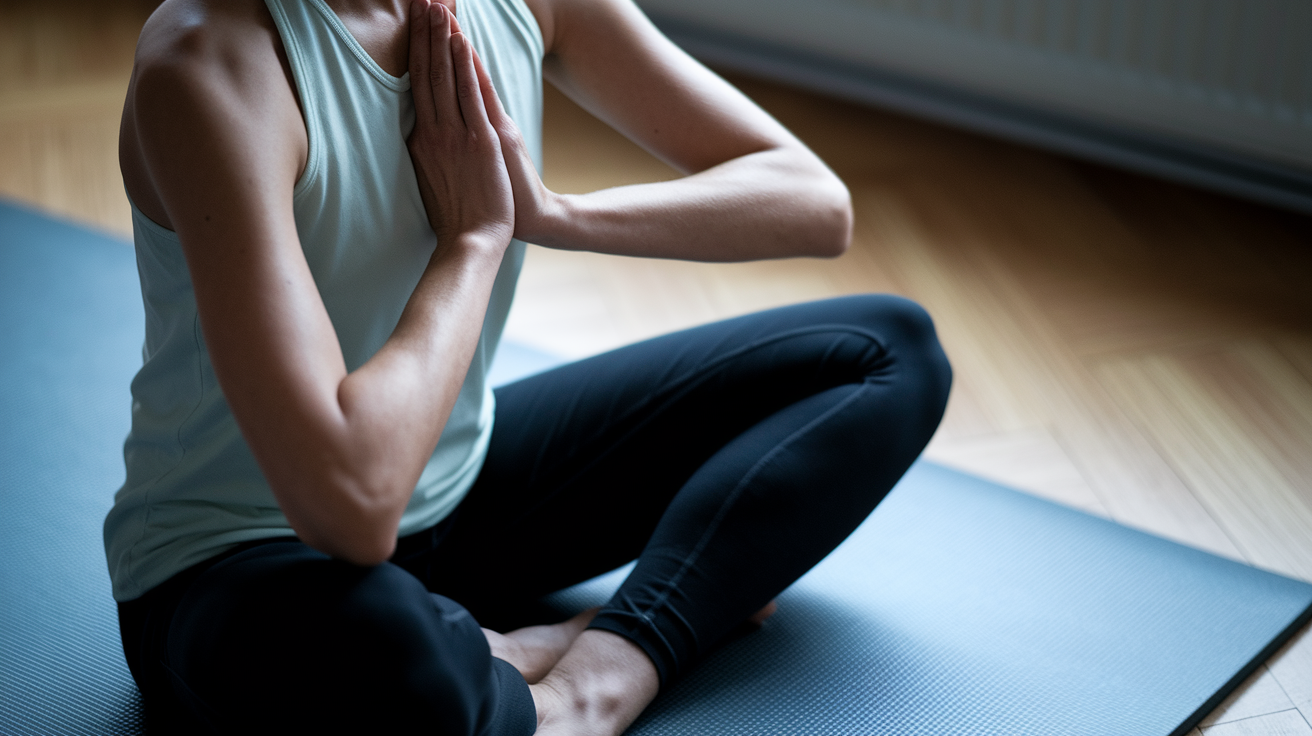
After you’ve moved your body and hydrated, a 2–5 minute mental reset helps you enter the day with clarity instead of reactivity. This isn’t about forcing a zen state or meditating for 20 minutes. It’s about creating a small buffer between waking up and diving into email, messages, or demands. Even two minutes of intentional breathing or gratitude journaling reduces stress and improves decision-making for the hours ahead.
Box breathing is the simplest structure: inhale for a count of four, hold for four, exhale for four, hold for four. Repeat that cycle four to six times. The pattern calms your nervous system and increases focus without requiring any apps or guidance.
If you prefer a slightly longer practice, try a 3–5 minute body scan: close your eyes, notice tension in your shoulders or jaw, breathe into those areas and consciously release the tightness as you exhale. That scan reduces physical stress you might be carrying from the previous day or from anticipation of today’s schedule.
Four micro-mindfulness habits you can rotate through your mornings:
Gratitude list. Write down three specific things you’re grateful for. Keep it concrete: “My coffee tastes good,” “I slept through the night,” “My friend texted yesterday.”
Priority tasks. List your top three tasks for the day. Knowing your focus points reduces decision fatigue and prevents you from reacting to every notification.
One-minute guided breath. Use a free app or YouTube video for a single guided breathing exercise. Keeps you accountable if your mind wanders.
Intention setting. Choose one word or short phrase that describes how you want to show up today. Examples: “patient,” “curious,” “steady.” Revisit that intention before meetings or tough moments.
Pick one habit and stick with it for a week before rotating to another. Consistency matters more than variety. Over time, these small resets train your brain to start the day in a calmer, more intentional state instead of immediately reacting to external pressure.
Practical Morning Routine Habit Stacking for Busy Schedules

Habit stacking links a new behavior to an existing anchor, which reduces the mental effort required to remember and execute your routine. Instead of trying to “find time” for movement, hydration, or breathwork, you attach each micro-habit to something you already do automatically. Like brushing your teeth, making coffee, or letting the dog out. That structure turns your morning into a predictable flow instead of a series of isolated tasks you might skip when things get hectic.
| Micro Habit | Stacked With | Benefit |
|---|---|---|
| Drink 200–300 ml water | Right after turning off alarm | Rehydrates immediately; wakes up metabolism |
| 2-minute movement routine | While coffee brews or kettle boils | Uses dead time; raises heart rate before caffeine |
| Box breathing (4 cycles) | During or right after shower | Calms nervous system; improves focus |
| 10–15 minutes sunlight | Walk to car, bus stop, or around block | Regulates circadian rhythm; boosts alertness |
| Gratitude list or task priorities | While eating breakfast | Reduces decision fatigue; sets intentional tone |
The key is to sequence habits in a logical order so one action naturally leads to the next. For example: alarm off, hydrate, 2-minute routine, shower with breathwork, dress, breakfast with planning, step outside for light. That flow eliminates micro-decisions and friction points.
Lay out your workout clothes the night before if movement is part of your stack, and fill your water glass so it’s ready on your nightstand. Removing small barriers increases the likelihood you’ll follow through on busy or low-motivation mornings.
Alarm Placement and Snooze-Avoidance Strategies
Place your alarm across the room instead of on your nightstand. That forces you to stand up and walk to turn it off, which interrupts the snooze reflex. Once you’re vertical, drink your pre-filled glass of water immediately. Hydration and upright posture make it much harder to crawl back into bed.
Set your alarm for the actual time you need to wake up, not 15 minutes earlier “just in case.” Snoozing fragments your sleep cycle and leaves you groggier than if you’d simply woken at the later time. If you struggle with this, try moving your wake time 10 minutes earlier each week until you have a small buffer, then use that buffer for your 2-minute routine instead of extra sleep.
Tracking Progress and Staying Consistent With a Morning Energy Routine

Consistency builds results, and tracking small wins keeps you motivated when progress feels slow. You don’t need a complex app or detailed spreadsheet. A simple check mark on a calendar or a note in your phone works. The goal is to make your effort visible so you can see patterns, celebrate streaks, and identify where you tend to skip days.
Run your 2-minute routine every single day. That’s your non-negotiable baseline. Then add your 5–10 minute circuit or strength session 3–5 times per week, depending on your schedule and recovery. If you miss a day, restart the next morning without guilt or attempts to “make up” missed sessions. Trying to double up usually leads to burnout or skipped days later in the week. One missed day doesn’t erase your progress. It’s the pattern over weeks that matters.
Four simple metrics to track your progress:
Plank hold duration. Measure how long you can hold a plank each week. Beginners often add 10–15 seconds per week with consistent practice.
Morning energy rating. Rate your energy on a 1–10 scale right after waking and again 30 minutes later. Watch for improvements in both numbers over 2–4 weeks.
Routine completion streak. Count consecutive days you complete at least the 2-minute baseline. Aim for 7, then 14, then 30.
Reduction in grogginess time. Notice how long it takes to feel fully awake. With consistent hydration, movement, and light exposure, most people cut that time in half within two weeks.
If you want a structured challenge, try a 30-day posture or mobility focus. Each day, spend an extra 60 seconds on one mobility move (hip circles, shoulder rolls, cat-cow) and track any changes in stiffness or range of motion. Take a quick photo of your standing posture on day 1 and day 30. You’ll likely see improvement in shoulder position and spine alignment. Small, visible changes reinforce the habit and make it easier to stick with your routine long-term.
Final Words
Do the 2-minute micro routine first thing — hydrate, 30s jumping jacks, standing side bends, then high knees. It’s the baseline you can do every morning.
When you have time, add mobility or a 5–10 minute circuit, grab a quick protein-rich snack, get sunlight, and finish with a short mindfulness reset. Habit-stack and track one small metric so progress shows up.
Use this morning energy-boosting routine for busy beginners as your repeatable starter — try it tomorrow and feel the difference in a few weeks.
FAQ
Q: What is the 3 3 3 rule at the gym?
A: The 3 3 3 rule at the gym is a strength-focused plan of three sets of three reps per exercise, using heavier weight and full rest between sets to build raw strength efficiently.
Q: What is the 5 5 5 30 morning routine?
A: The 5 5 5 30 morning routine is a simple time-blocked approach: three five-minute starters (hydrate, quick move, brief plan) then one focused 30-minute priority block to jumpstart your day.
Q: What is the 20/20/20 rule morning routine?
A: The 20/20/20 morning routine is 20 minutes of movement, 20 minutes of reflection (meditation or journaling), then 20 minutes of learning or reading to increase energy, clarity, and focus.
Q: What is the 30/30/30 morning routine?
A: The 30/30/30 morning routine divides your morning into three 30-minute blocks—commonly movement, mindset or planning, and focused work or learning—best when you have about 90 minutes for a deeper start.