

Dishes, not diets, are the real reason most dinner plans fail.
If you’re trying to lose weight, one-pan meal prep is the simple fix.
This post gives fast, real recipes that roast or sauté protein and vegetables together in 20 to 30 minutes, hit about 350–450 calories, and deliver 25–35 grams of protein per serving.
You’ll learn the exact formulas, timing tricks, and easy swaps so you can portion once, reheat, and stay on track all week.
No extra pans. No guesswork.
Fast One-Pan Dinner Solutions for Weight Loss Meal Prep
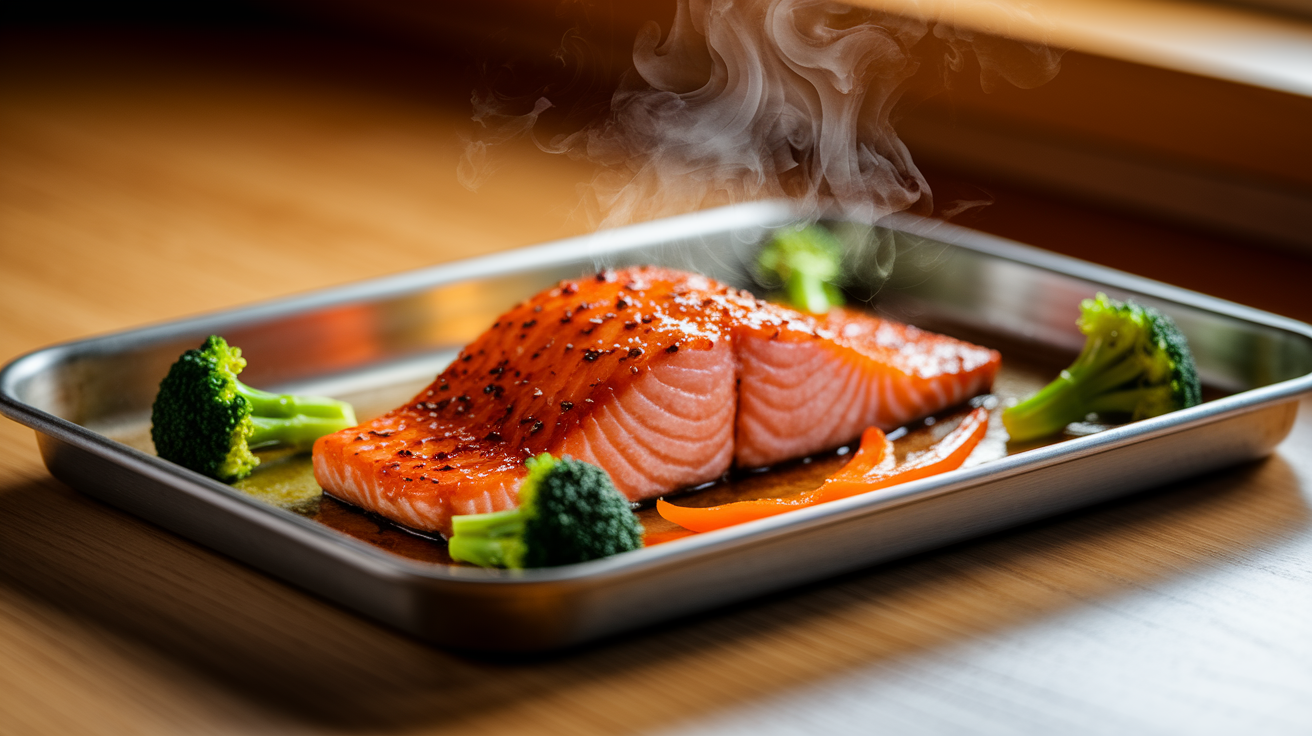
One-pan cooking kills the biggest weeknight problem: too many decisions and a sink full of dishes. When you’re trying to lose weight, simple systems work better than willpower. A single pan holds your protein, your vegetables, and your entire dinner plan. Roast everything together, portion it once, and you’re done for tonight and tomorrow’s lunch. No second-guessing what fits your goals. No scrubbing three pots at 9 p.m.
Sheet Pan Teriyaki Salmon and Vegetables takes 20 minutes at 400°F and delivers around 380 calories per serving with 28 grams of protein. Toss salmon fillets with bell peppers and broccoli, drizzle teriyaki glaze, roast. One pan, one timer, done. Sheet Pan Bruschetta Chicken runs about 30 minutes and clocks in near 420 calories with 35 grams of protein. Chicken breasts roast alongside diced potatoes, then you top with fresh tomatoes and basil after they cool.
Italian Turkey Meatball Sheet Pan Dinner uses lightened-up turkey meatballs, zucchini, and cherry tomatoes for roughly 390 calories and 32 grams of protein per portion. Beef Fried Rice skillet hits 30 grams of protein in a single serving and comes together in one pan in under 30 minutes. For weight loss, aim for portions that fill half your plate with non-starchy vegetables and a palm-sized portion of lean protein. Most of these recipes land naturally in the 350 to 450 calorie range when you follow the servings listed.
What makes a one-pan dinner work for weight loss:
- High protein content (25 to 40 grams per serving) to support muscle and satiety
- Vegetables fill at least half the pan for volume and fiber with minimal calories
- Lean proteins like chicken breast, shrimp, salmon, or turkey keep fat moderate
- Light oil use (1 to 2 tablespoons for the whole pan) and low-calorie sauces
- Quick cook times (20 to 30 minutes) so you actually use the recipe on a Tuesday night
Building Low-Calorie One-Pan Meals with the Right Formula

Every effective one-pan dinner follows the same structure: Protein + Vegetables + Oil + Optional Toppings. Start by choosing a lean protein. Chicken breasts, turkey meatballs, shrimp, or salmon fillets. Fill the other half of your pan with non-starchy vegetables like broccoli, zucchini, bell peppers, asparagus, or Brussels sprouts. Drizzle 1 to 2 tablespoons of olive oil or avocado oil over everything, season with salt, pepper, and any spice blend you like, then roast at 400°F for 20 to 30 minutes. Dense root vegetables and bone-in chicken take longer. Seafood and softer vegetables finish fastest.
Most proteins and tender vegetables cook in the same 20 to 30 minute window, but you can stagger ingredients if needed. For example, if you’re roasting chicken thighs with baby carrots and asparagus, add the carrots to the pan first, let them roast for 10 minutes, then add the chicken and asparagus for the final 20 minutes. This keeps everything from overcooking or undercooking. Check your recipe for exact stagger timing, but the baseline rule is simple. Harder vegetables go in early, softer ones later.
How to assemble any low-calorie one-pan dinner:
- Pick a lean protein (4 to 6 ounces per serving): chicken breast, shrimp, salmon, turkey sausage, or extra-firm tofu.
- Choose 2 to 3 non-starchy vegetables (aim for 2 to 3 cups per serving): broccoli, zucchini, bell peppers, green beans, cauliflower, or tomatoes.
- Toss with 1 to 2 tablespoons oil for the whole pan and season with salt, pepper, garlic powder, or a spice blend.
- Roast at 400°F for 20 to 30 minutes, checking doneness halfway. Adjust timing for thicker proteins or denser vegetables.
Timing Essentials for One-Pan Cooking
Most proteins and vegetables roast together at 400°F for 20 to 30 minutes. But seafood finishes faster. Shrimp and thin salmon fillets are usually done in 15 to 20 minutes. If you’re mixing quick-cooking items like cherry tomatoes with slower ones like sweet potato cubes, start the potatoes 10 minutes early, then add the tomatoes and your protein. That stagger keeps textures right and prevents mushy vegetables or dry chicken.
Essential Pans, Tools, and Equipment for One-Pan Weight-Loss Cooking
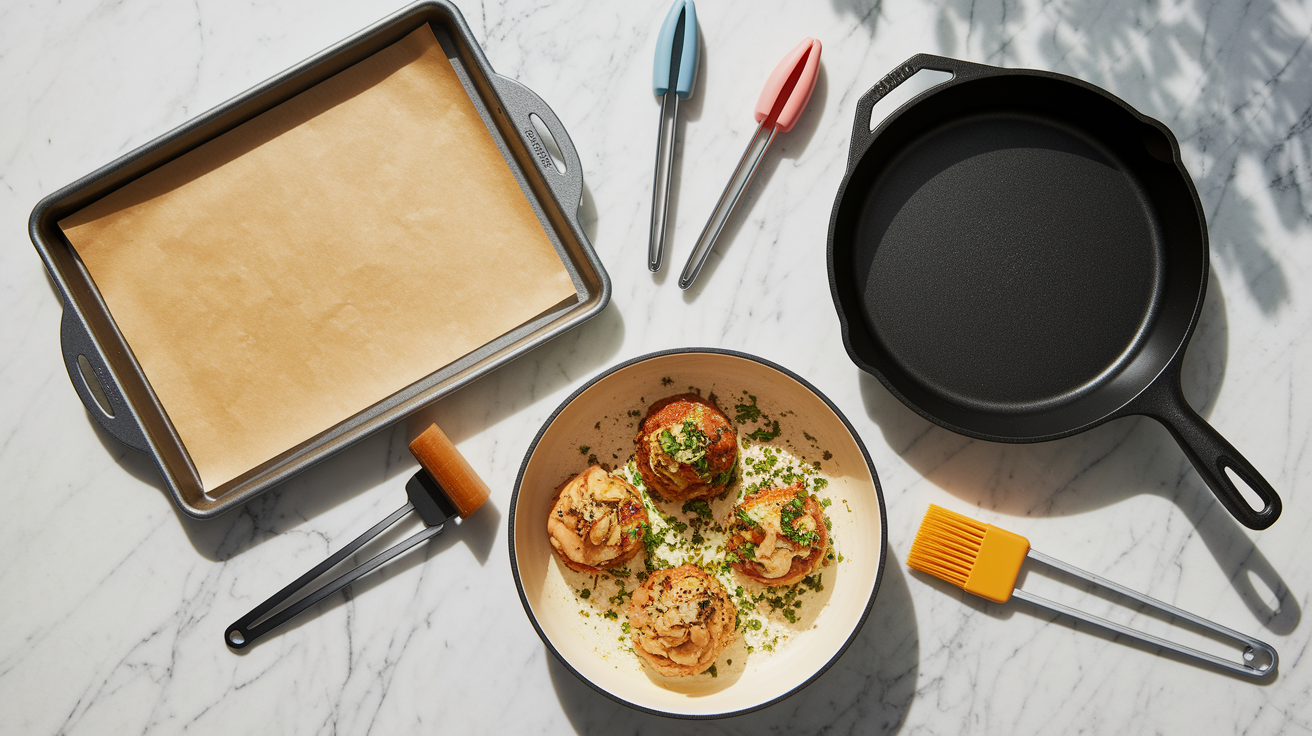
The best all-around pan for sheet-pan dinners is an 18×13-inch rimmed baking sheet. It’s big enough to spread out protein and vegetables in a single layer so everything roasts instead of steaming. A jelly roll pan measures about 15×10 inches and works if you’re cooking for one or two people, but it gets crowded fast. For skillet meals, a 12-inch cast-iron or oven-safe nonstick pan handles stovetop-to-oven recipes like shakshuka or orzo skillets. If you use nonstick, check that it’s rated for 400°F or higher before putting it in the oven.
Line your pans with foil or parchment paper for the fastest cleanup. No scrubbing, just toss the liner. If you’re cooking breaded items like panko salmon or crispy chicken, set a wire rack on top of your baking sheet so pan juices drain away and the coating stays crispy. Most one-pan recipes roast at 400°F because it’s hot enough to brown vegetables and proteins in 20 to 30 minutes without drying them out.
| Pan Type | Size | Best Use | Notes |
|---|---|---|---|
| Rimmed baking sheet | 18×13 inches | Sheet-pan dinners for 3 to 4 servings | Line with foil or parchment for easy cleanup |
| Jelly roll pan | 15×10 inches | Smaller batches, 1 to 2 servings | Fits fewer ingredients; good for singles or couples |
| 12-inch cast-iron skillet | 12-inch diameter | Stovetop-to-oven skillet meals | Holds heat well; works for searing then roasting |
| 5.5-quart oven-safe pan | ~12-inch diameter | One-pot pastas, rice skillets, stews | Check oven-safe temperature rating before use |
High-Protein One-Pan Recipes Under 30 Minutes
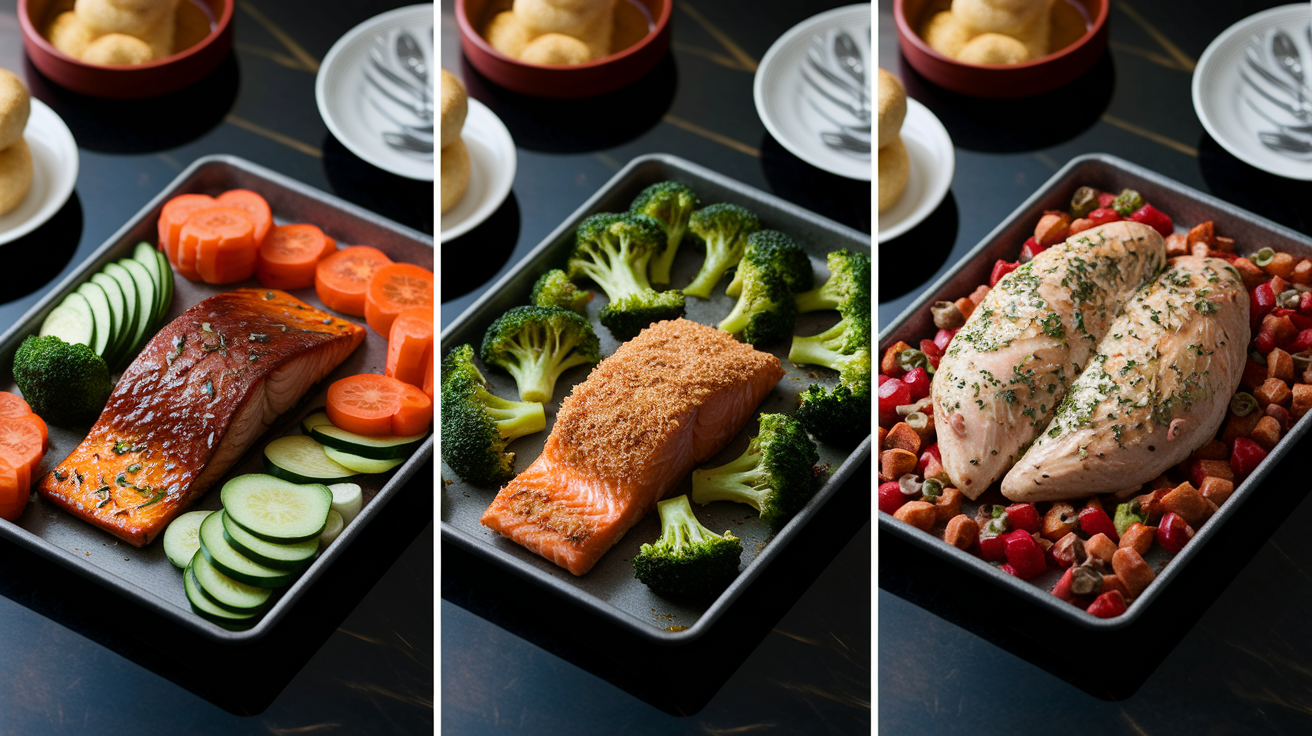
When you need dinner fast and want to hit your protein target, these recipes deliver 25 to 35 grams per serving in 30 minutes or less. They’re built for weeknights when you get home late and still want a real meal that supports fat loss. Most use simple pantry seasonings and frozen or fresh vegetables you already have on hand.
Sheet Pan Teriyaki Salmon and Vegetables roasts in 20 minutes and gives you about 380 calories and 28 grams of protein per serving. You use salmon fillets, bell peppers, and broccoli with a light teriyaki glaze. Sheet Pan Panko Salmon with Crispy Broccoli also finishes in 20 minutes. Panko-crusted salmon with roasted broccoli florets, roughly 400 calories and 30 grams of protein. For chicken, try Sheet Pan Bruschetta Chicken: roast chicken breasts and baby potatoes for 30 minutes, then top with fresh tomatoes and basil for around 420 calories and 35 grams of protein.
Beef Fried Rice skillet is a stovetop one-pan meal ready in about 30 minutes, delivering 30 grams of protein per serving and using lean ground beef, frozen mixed vegetables, and day-old rice. Italian Turkey Meatball Sheet Pan Dinner uses lightened-up turkey meatballs, zucchini, and cherry tomatoes for roughly 390 calories and 32 grams of protein. It’s meal-prep friendly and reheats well. One-Pot Teriyaki Chicken and Rice combines chicken teriyaki and fried rice in a single pan in under 30 minutes, using frozen pre-chopped vegetables to save prep time.
Six high-protein one-pan dinners under 30 minutes:
- Sheet Pan Teriyaki Salmon and Vegetables – 20 minutes | 380 calories | 28g protein | salmon, bell peppers, broccoli, teriyaki glaze
- Sheet Pan Panko Salmon with Crispy Broccoli – 20 minutes | 400 calories | 30g protein | panko-crusted salmon, broccoli florets
- Sheet Pan Bruschetta Chicken – 30 minutes | 420 calories | 35g protein | chicken breasts, baby potatoes, fresh tomato-basil topping
- Beef Fried Rice Skillet – 30 minutes | ~450 calories | 30g protein | lean ground beef, frozen mixed vegetables, day-old rice
- Italian Turkey Meatball Sheet Pan Dinner – 30 minutes | 390 calories | 32g protein | turkey meatballs, zucchini, cherry tomatoes
- One-Pot Teriyaki Chicken and Rice – 30 minutes | ~460 calories | 28g protein | chicken thighs, frozen vegetables, rice cooked in one pan
Vegetable-Forward One-Pan Dinners for Low-Calorie Nights

Some nights you want to fill up on volume without a lot of calories. Vegetable-heavy one-pan dinners deliver exactly that. These meals pack fiber, color, and texture while keeping calories in the 300 to 400 range. They’re perfect for lighter dinners or when you’re banking calories for a bigger meal the next day.
Warm Curry Roasted Sheet Pan Vegetable Salad is vegetarian, gluten-free, and dairy-free. Roasted sweet potato, cauliflower, chickpeas, and kale tossed in a light curry spice blend, around 320 calories per serving. Curried Sweet Potato and Chickpeas is a vegan option with roasted sweet potato cubes, red cabbage, chickpeas, and fresh kale for roughly 340 calories. Sheet Pan Baked Feta with Broccolini, Tomatoes, and Chickpeas is a lower-carb vegetarian dinner where feta melts into roasted vegetables and chickpeas for about 380 calories and 18 grams of protein. Sweet and Sour Cauliflower Bowls use roasted cauliflower with a tangy sauce, bell peppers, and snap peas for around 290 calories. Add tofu or tempeh if you want more protein.
Five vegetable-protein pairings that keep you full on fewer calories:
- Sweet potato + chickpeas – fiber and plant protein for steady energy
- Cauliflower + white beans – high volume, low calories, creamy when mashed
- Brussels sprouts + turkey sausage – cruciferous crunch with lean protein
- Zucchini + feta or goat cheese – moisture and tang without heavy calories
- Broccoli + shrimp – quick-cooking combo with high protein and low fat
Make-Ahead and Freezer-Friendly One-Pan Prep for Weight Loss
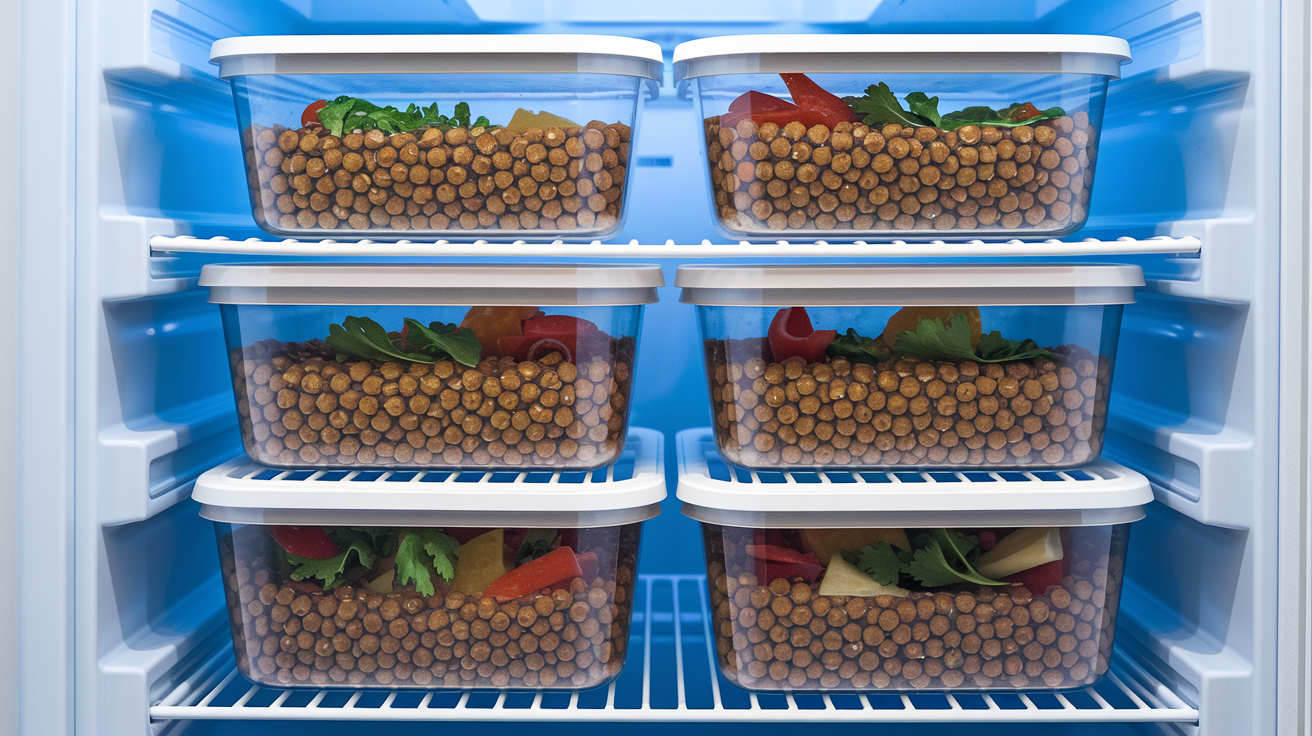
Meal prep works best when you can cook once and eat three or four times. Most one-pan dinners store well in airtight containers in the fridge for up to four days, and several freeze beautifully for longer storage. Marinate your proteins up to 24 hours ahead. Chicken thighs in teriyaki or Italian seasoning, shrimp in garlic and lemon. They’re ready to roast when you get home. Chop your vegetables in advance and store them in airtight containers or bags in the fridge. They’ll stay fresh for two to three days.
One-Pot Vegan Lentil Minestrone is explicitly freezer-friendly. Portion it into single servings, freeze for up to three months, and reheat on the stovetop or microwave. Pan-Fried Gnocchi with Sun-dried Tomatoes and White Beans can be eaten hot or cold, making it a great pack-and-go lunch. Let hot components like roasted chicken or potatoes cool to room temperature before packing them with delicate toppings like fresh tomatoes or herbs. If you pack them hot, the steam will overcook softer ingredients and turn them mushy.
Most sheet-pan and skillet meals reheat well in a 350°F oven for 10 to 15 minutes or in the microwave for 2 to 3 minutes. If you’re reheating breaded items like panko salmon, use the oven or an air fryer to keep the coating crispy. For meals with grains like rice or quinoa, add a splash of water or broth before reheating to prevent drying out.
Safe Storage Timeframes
| Food Type | Fridge Duration | Freezer Duration | Reheat Method |
|---|---|---|---|
| Cooked chicken, turkey, beef | 3 to 4 days | 2 to 3 months | Oven 350°F for 10 to 15 min or microwave 2 to 3 min |
| Cooked seafood (salmon, shrimp) | 2 to 3 days | 1 to 2 months | Oven 300°F for 8 to 10 min or microwave 1 to 2 min |
| Roasted vegetables | 4 to 5 days | 2 to 3 months | Oven 350°F for 10 min or microwave 2 min |
| Soups, stews, lentil dishes | 4 to 5 days | 3 to 4 months | Stovetop or microwave until steaming hot |
One-Pan Meal Prep Shopping List and Budget Tips

One reader dropped their weekly grocery spend from $100 to $40 by using structured one-pan meal prep. Buying only what they needed for planned recipes and using every ingredient across multiple meals. Most one-pan dinners rely on pantry staples you already own: olive oil, salt, pepper, garlic powder, soy sauce, and a few spice blends. Fresh or frozen vegetables are interchangeable in almost every recipe, and frozen options like pre-chopped broccoli or bell pepper strips save prep time and reduce waste because you use exactly what you need.
Buy proteins on sale and freeze them until you’re ready to cook. Chicken thighs, ground turkey, and frozen shrimp are budget-friendly and versatile across dozens of one-pan recipes. Seasonal produce costs less and tastes better. In summer, load up on zucchini, tomatoes, and bell peppers. In fall and winter, buy sweet potatoes, Brussels sprouts, and squash. Canned or dried beans, lentils, and chickpeas stretch meals and add plant protein for pennies per serving.
Organized shopping list for one-pan meal prep:
- Proteins: chicken breasts, chicken thighs, ground turkey, turkey sausage, shrimp, salmon fillets, extra-firm tofu, canned chickpeas
- Vegetables (fresh or frozen): broccoli, bell peppers, zucchini, cherry tomatoes, sweet potatoes, Brussels sprouts, asparagus, cauliflower
- Pantry staples: olive oil, avocado oil, soy sauce, balsamic vinegar, garlic powder, onion powder, paprika, cumin, chili powder
- Grains and starches (optional): brown rice, quinoa, baby potatoes, whole-wheat orzo, cauliflower rice
- Flavor boosters: fresh garlic, fresh ginger, lemon, lime, fresh herbs (basil, cilantro, parsley), jarred pesto, teriyaki sauce, hot sauce
- Cheeses and dairy (optional): feta, goat cheese, Parmesan, plain Greek yogurt
- Freezer backups: frozen mixed vegetables, frozen shrimp, frozen cauliflower rice, frozen broccoli florets
- Condiments and sauces: low-sodium soy sauce, honey, Dijon mustard, sriracha, tahini, sun-dried tomatoes
Low-Calorie Flavor Boosters for One-Pan Weight-Loss Dinners
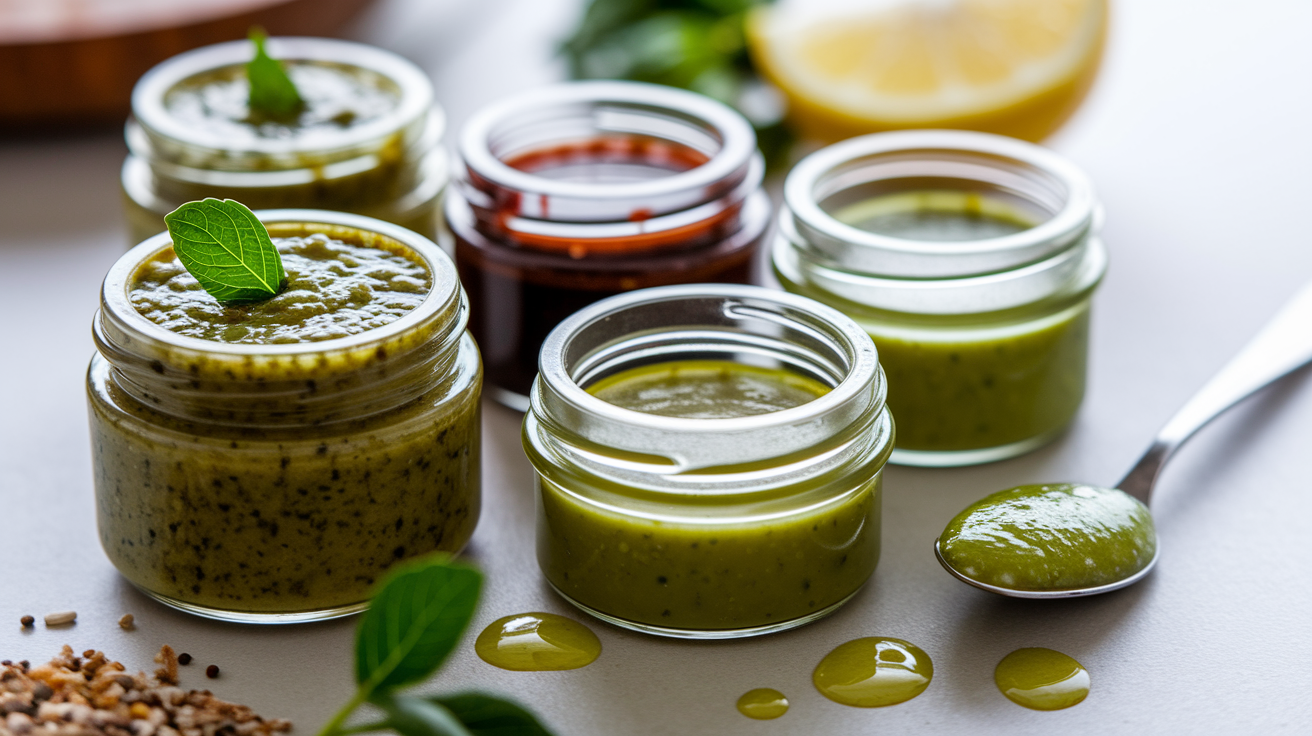
Plain roasted chicken and broccoli gets boring fast. But you can add serious flavor without adding serious calories. A tablespoon of pesto adds about 40 calories and transforms plain salmon or chicken. A drizzle of balsamic-herb seasoning (balsamic vinegar, garlic, oregano, and a pinch of salt) costs almost no calories and brightens roasted vegetables. Teriyaki glaze, honey-sriracha, and Peruvian green sauce (cilantro, jalapeño, lime, Greek yogurt) all pack flavor for under 50 calories per serving when used lightly.
Your baseline seasoning is always oil plus salt and pepper. Use just enough oil to coat the pan and prevent sticking, usually 1 to 2 tablespoons for a full sheet pan. After that, spice blends do the heavy lifting: Italian seasoning, taco seasoning, curry powder, garlic and herb blends, or Old Bay for seafood. Fresh herbs added after roasting (basil, cilantro, parsley) give a bright finish without any calories. A squeeze of lemon or lime juice at the end wakes up the whole dish.
Five low-calorie flavor additions for one-pan dinners:
- Homemade pesto – 1 tablespoon adds ~40 calories; use sparingly on chicken, salmon, or roasted vegetables.
- Balsamic-herb drizzle – balsamic vinegar + garlic + oregano, nearly zero calories, perfect for chicken and tomatoes.
- Teriyaki glaze – 1 tablespoon is ~30 calories; toss with salmon or shrimp before roasting.
- Spicy Peruvian green sauce – cilantro, jalapeño, lime, Greek yogurt; about 25 calories per 2-tablespoon serving.
- Lemon or lime wedges – squeeze fresh citrus over finished meals for bright, zero-calorie flavor.
Smart Portioning and Calorie Tracking for One-Pan Dinners
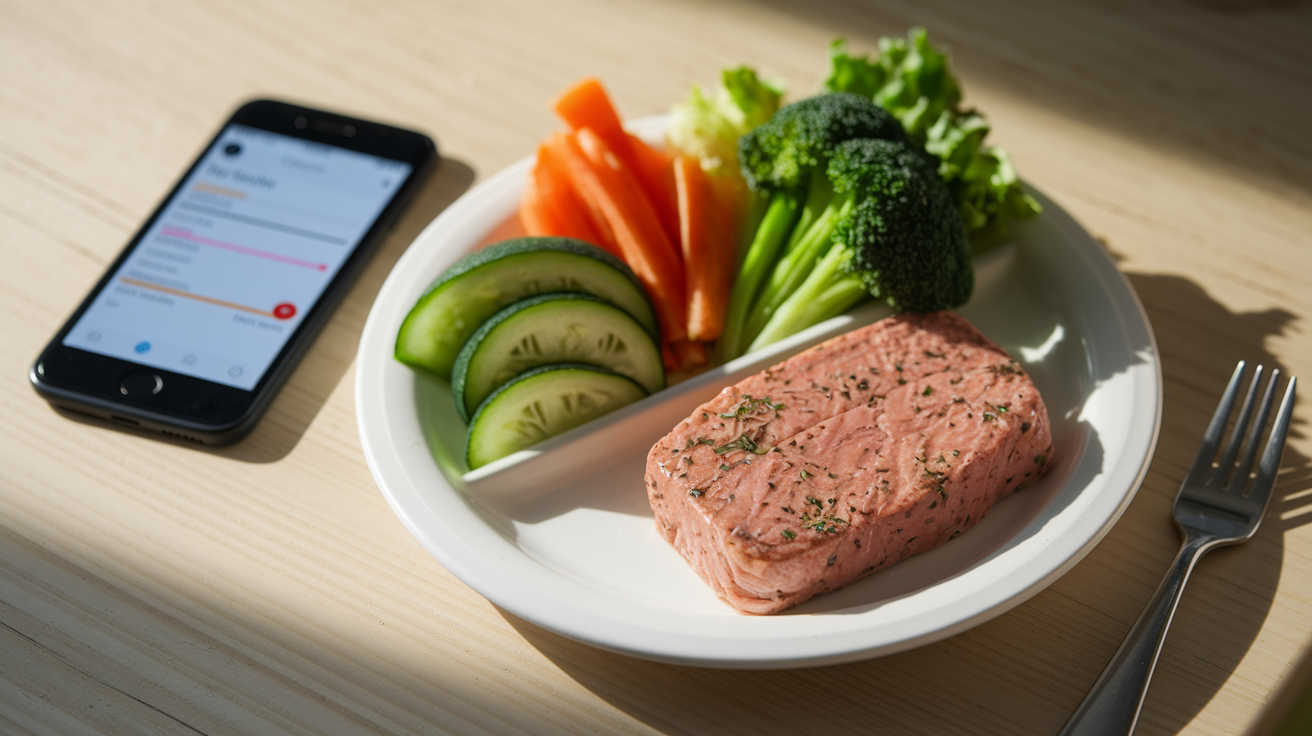
The simplest portioning rule for weight loss is to fill half your pan with non-starchy vegetables and half with lean protein. When you plate your dinner, aim for a palm-sized portion of protein (about 4 to 6 ounces cooked) and 2 to 3 cups of vegetables. Most one-pan dinners naturally land in the 350 to 500 calorie range per serving when you follow the recipe portions, with 25 to 40 grams of protein to support muscle and keep you full.
If you’re tracking macros, weigh your protein raw before cooking. 4 ounces raw chicken breast becomes about 3 ounces cooked and delivers roughly 25 grams of protein and 120 calories. Add your vegetables (usually 25 to 50 calories per cup of non-starchy options like broccoli or zucchini), plus the oil you used for the whole pan divided by servings (1 tablespoon olive oil = 120 calories, so if you used 2 tablespoons for 4 servings, that’s 60 calories per serving). Many of these meals make great lunch leftovers. Pack them in single-serving containers right after cooking so you’re not guessing portions later.
| Meal Type | Target Calories | Target Protein |
|---|---|---|
| Weeknight dinner (active fat loss) | 350 to 450 | 25 to 35g |
| Higher-protein dinner (strength training) | 450 to 550 | 35 to 45g |
| Lunch leftover (packed meal) | 350 to 450 | 25 to 35g |
Final Words
Jump right in: choose lean protein, pile on vegetables, and roast or skillet-cook at 400°F for 20–30 minutes.
The post gave quick recipe examples with calories and times, a simple formula (protein + veg + oil + seasoning), gear tips, make-ahead/freezer notes, budget shopping ideas, flavor-light toppings, and portioning targets.
Use the 30-minute high-protein options and vegetable-forward swaps to stay on track.
Try one-pan meal prep recipes for quick weight-loss dinners this week — small steps, steady progress.
FAQ
Q: Why are one-pan dinners good for weight-loss meal prep?
A: One-pan dinners are good for weight-loss meal prep because they cut cleanup, make portioning simple, and save time—so you’re more likely to cook at home and eat controlled, balanced meals regularly.
Q: What is the simple formula to build a balanced low-calorie one-pan meal?
A: The simple formula to build a balanced low-calorie one-pan meal is: lean protein + lots of vegetables + a teaspoon or two of healthy oil + seasoning, with optional low-calorie toppings.
Q: What are timing essentials for one-pan cooking?
A: Timing essentials for one-pan cooking are to roast at about 400°F for 20–30 minutes, note seafood cooks fastest, and start denser vegetables (sweet potato, carrots) before softer ones (peppers, zucchini).
Q: What pans and tools should I use for one-pan weight-loss cooking?
A: The best pans and tools for one-pan weight-loss cooking are an 18×13-inch rimmed baking sheet, a 12-inch oven-safe skillet, and foil or parchment for fast cleanup and even roasting.
Q: Can you give quick one-pan dinner examples with calories, prep/cook times, and portion notes?
A: Quick examples: Teriyaki salmon with peppers (~350 kcal, 10 min prep, 20 min cook, 1 serving); Balsamic-herb chicken + broccoli (~420 kcal, 15/30, 1 serving); Turkey meatballs + mixed veg (~400 kcal, 20/25, 1–2 servings).
Q: How much protein should I aim for in a one-pan dinner?
A: Aim for about 25–40 grams of protein per one-pan dinner; choose salmon, chicken breast, turkey meatballs, shrimp, or beef portions to hit that, and add beans or Greek yogurt if needed.
Q: How do I make one-pan meals ahead and freeze them?
A: Making one-pan meals ahead means marinating proteins up to 24 hours, chopping vegetables and storing airtight, then freezing fully cooked meals up to three months; reheat in oven or microwave until hot.
Q: How should I portion one-pan dinners for fat loss and track calories?
A: Portioning for fat loss means filling half the pan with vegetables, reserving 4–6 ounces cooked protein, and keeping dinners around 350–500 calories; track with a quick note on your phone.
Q: What shopping and budget tips help with one-pan meal prep?
A: Budget tips for one-pan meal prep are to buy frozen vegetables, choose seasonal produce, shop sale proteins (chicken, tofu, turkey sausage), use pantry staples, and plan repeats to cut grocery costs.
Q: Which low-calorie flavor boosters work best for one-pan dinners?
A: Low-calorie flavor boosters that work well are light pesto, balsamic-herb spritz, Peruvian green sauce, a thin teriyaki glaze, or a small spoon of garlic aioli—use sparingly to keep calories low.
Q: What quick swaps lower calories in one-pan dishes?
A: Quick swaps to lower calories include using an oil spray instead of tablespoons, trimming skin from poultry, swapping white rice for cauliflower rice, and choosing low-sugar sauces or a squeeze of citrus.