

Think you need an hour at the gym to get fit?
You don’t.
This post gives a safe, beginner-friendly 15-minute HIIT plan that fits into a busy day and protects your joints.
You’ll get a quick warm-up, six low-impact moves on a 30s work/30s rest cycle, easy swaps for sore knees, and a short cooldown.
No fancy equipment or perfect fitness level required—just a phone timer and steady effort.
Follow the plan three times a week, and you’ll see real progress without burning out.
Overview of a Safe, Beginner-Friendly 15-Minute HIIT Routine

HIIT stands for High-Intensity Interval Training. You alternate between short bursts of harder effort and brief recovery periods. For busy beginners, a 15-minute HIIT session fits into tight schedules without giving up results. You move for a short interval, rest, then repeat. No gym membership or special equipment required.
Fifteen minutes is enough time to raise your heart rate, challenge your muscles, and trigger a metabolic boost that keeps going after you finish. When the routine includes proper rest and low-impact options, injury risk stays low. You work hard for 20 to 30 seconds, then recover for the same amount or longer, giving your body time to catch its breath before the next round.
Here’s why this starter plan works for beginners:
Efficiency. A complete session in 15 minutes, warm-up to cooldown.
Low-impact modifications. Every move has a gentler version that protects joints.
Simple intervals. Work and rest times are easy to follow with a phone timer.
Measurable progress. You can track sessions per week and adjust intensity every couple of weeks.
In the sections ahead, you’ll get a structured warm-up, the full 15-minute routine with exact work and rest times, a cooldown sequence, and step-by-step safety guidance. Everything you need is right here.
Warm-Up to Prepare the Body

A warm-up raises your body temperature, gets blood flowing to your muscles, and reduces the chance of strain when you start the harder intervals. Three to four minutes of dynamic movement is all it takes. Dynamic means you keep moving instead of holding a stretch.
Here’s a simple warm-up sequence you can do in any small space:
Marching on the spot for 60 seconds. Lift your knees to hip height and swing your arms naturally. Keep the pace steady.
Arm circles for 30 seconds. Extend your arms out to the sides and make small circles forward, then reverse for the second half.
Hip hinges for 30 seconds. Stand tall, place hands on hips, then hinge forward from the waist with a flat back. Return upright and repeat at a smooth tempo.
Ankle pumps and calf raises for 60 seconds. Rise onto your toes, lower back down, then gently flex and point your feet to wake up ankles and calves.
When you finish those four moves, you’re ready for the main session.
The 15-Minute Beginner HIIT Routine
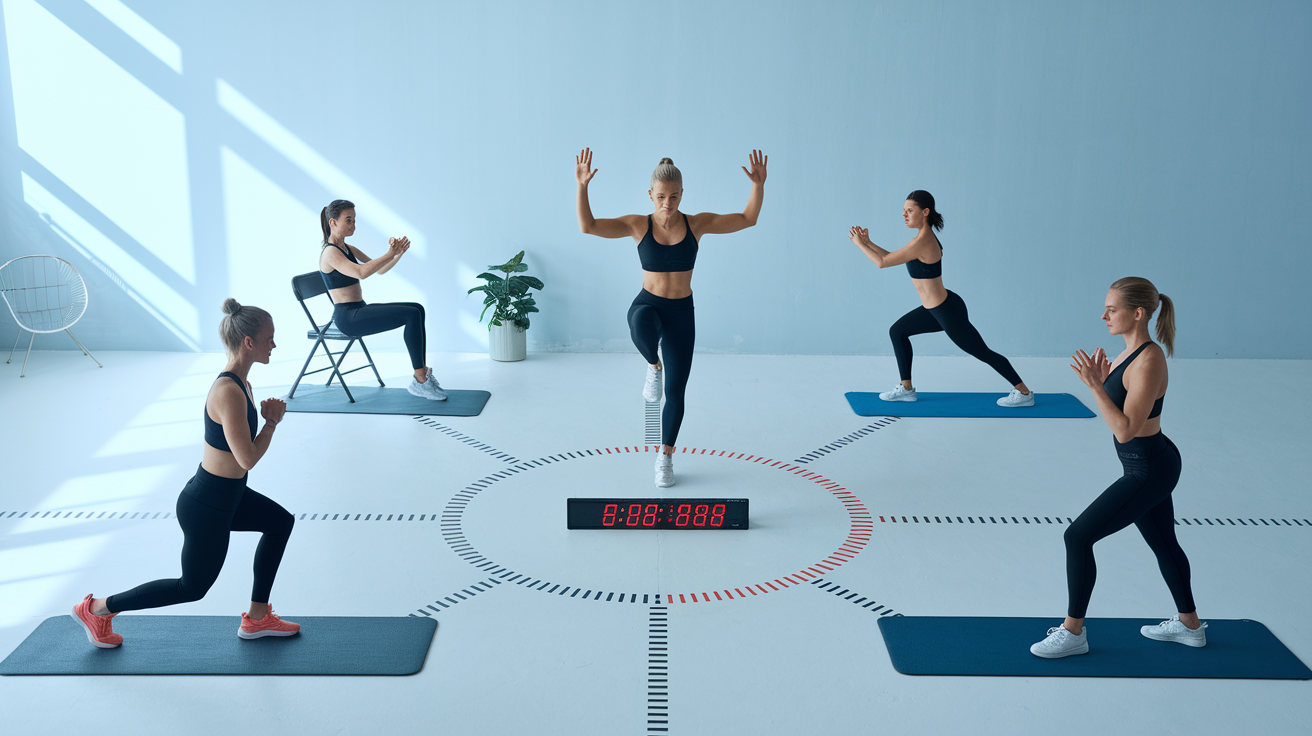
This routine uses a 30-second work, 30-second rest interval structure. You perform one exercise for 30 seconds, rest for 30 seconds, then move to the next exercise. Six movements repeated once will fill 12 minutes. Add a 2-minute buffer at the start or end to stay within the 15-minute window. If you need more recovery, switch to 20 seconds of work and 40 seconds of rest.
Every exercise is low-impact by default. That means no jumping, no harsh landing, and no sudden twisting. You can bump up intensity by moving faster, adding a light dumbbell, or extending the work interval to 40 seconds once you feel comfortable.
| Exercise | Work Time | Rest Time | Notes |
|---|---|---|---|
| Marching on the spot | 30 seconds | 30 seconds | Lift knees to hip height, swing arms to raise heart rate. |
| Chair-supported squat | 30 seconds | 30 seconds | Sit back toward a chair, chest up, knees over toes. Stand fully each rep. |
| Reverse lunge (alternating legs) | 30 seconds | 30 seconds | Step one foot back, lower until front knee is 90°, return upright. Hold chair if needed. |
| Incline push-up (wall or counter) | 30 seconds | 30 seconds | Hands shoulder-width on a stable surface, body straight, lower chest, push back up. |
| Glute bridge | 30 seconds | 30 seconds | Lie on back, knees bent, lift hips until body forms a line from knees to shoulders. Squeeze glutes. |
| Standing knee drive or high-knee march | 30 seconds | 30 seconds | Drive one knee up, lower, repeat on other side. Keep a steady tempo, no jumping required. |
Repeat the six exercises one more time if you want a full 12-minute main set, or stop after one round if your energy is low. Both options keep you inside the 15-minute total when you include warm-up and cooldown.
Low-Impact Modifications for Absolute Beginners

If you’re brand new to exercise or managing joint discomfort, every move in the routine above can be adjusted. Low-impact doesn’t mean low-intensity. You can still work hard by controlling your speed, adding range of motion, or using more muscle engagement.
Here are four easy swaps to protect your joints and keep the session safe:
Replace marching or knee drives with a slow step-touch side to side. You’ll raise your heart rate without lifting your knees high.
Swap chair-supported squats for a seated stand-and-sit using a sturdy chair. Focus on standing up slowly using your leg muscles, then sit back down with control.
Trade reverse lunges for static split squats. Keep both feet in place, bend your knees, and lower your back knee toward the floor without stepping.
Switch floor glute bridges to a standing glute squeeze. Stand tall, squeeze your glutes for two seconds, release, and repeat for the full 30 seconds.
If an exercise causes sharp pain, skip it and move to the next one. Muscle burn is normal during the work interval. Sharp joint pain is a signal to stop and adjust.
Cooldown and Guided Recovery

A cooldown brings your heart rate back down gradually and helps your muscles relax after the work intervals. Three to five minutes is plenty. Use static stretches, which means you hold each position without bouncing.
Follow this sequence after your last exercise:
Standing forward fold for 30 seconds. Stand with feet hip-width, hinge at the hips, let your upper body hang toward the floor. Bend your knees slightly if your hamstrings are tight.
Quad stretch (each leg) for 20 seconds per side. Stand on one leg, pull the opposite heel toward your glutes, hold. Use a wall or chair for balance if needed.
Hip flexor stretch (each leg) for 20 seconds per side. Step one foot forward into a shallow lunge, shift weight forward gently to feel a stretch in the front of the back hip.
Deep diaphragmatic breathing for 60 seconds. Place one hand on your belly, inhale slowly through your nose for four counts, exhale through your mouth for six counts. Repeat until your breathing feels calm.
After those four stretches, you’re done. The total cooldown takes about three minutes.
Safety Tips for New HIIT Exercisers

Safety starts with pacing. You don’t need to move at top speed during the work intervals. Your goal is to finish each 30-second block with good form and controlled breathing. Beginners often push too hard in the first few sessions, then feel sore or burned out by day three. Start at a moderate effort, around a 6 out of 10 on your own intensity scale, and add speed only after a week or two of consistent practice.
Hydration, footwear, and surface matter more than most people realize. Drink water before you start and keep a bottle nearby during rest intervals. Wear supportive shoes with a stable sole, even indoors. Avoid deep carpet, slippery tile, or uneven outdoor pavement. A yoga mat on a hard floor works well for moves like the glute bridge.
Breathing should stay steady during work intervals. If you feel dizzy, lighten the effort or extend your rest period to 45 or 60 seconds. Sharp chest pain, severe shortness of breath, or faintness are red flags. Stop the session and consult a healthcare provider if those symptoms appear.
How to Progress the Routine Over Time

Once you complete the routine comfortably for two weeks at 30 seconds work and 30 seconds rest, it’s time to add a small challenge. Progression keeps your body adapting and prevents the workout from feeling stale. Small changes every one to two weeks are enough.
Here are four simple ways to bump up difficulty:
Extend work time to 40 seconds while keeping rest at 20 seconds. This raises the total work volume without adding new exercises.
Add a second round of the six exercises to create a 12-minute main set instead of a single 6-minute circuit.
Hold light dumbbells during squats, lunges, or glute bridges. Start with 2 to 5 pounds (1 to 3 kilograms) and add weight only when form stays clean.
Speed up movement tempo during marching, knee drives, or squats. Faster reps raise heart rate and demand more coordination.
Pick one progression method at a time. Don’t change everything at once. Track your sessions in a simple note on your phone so you can see when you’re ready for the next step.
Weekly Scheduling Recommendations
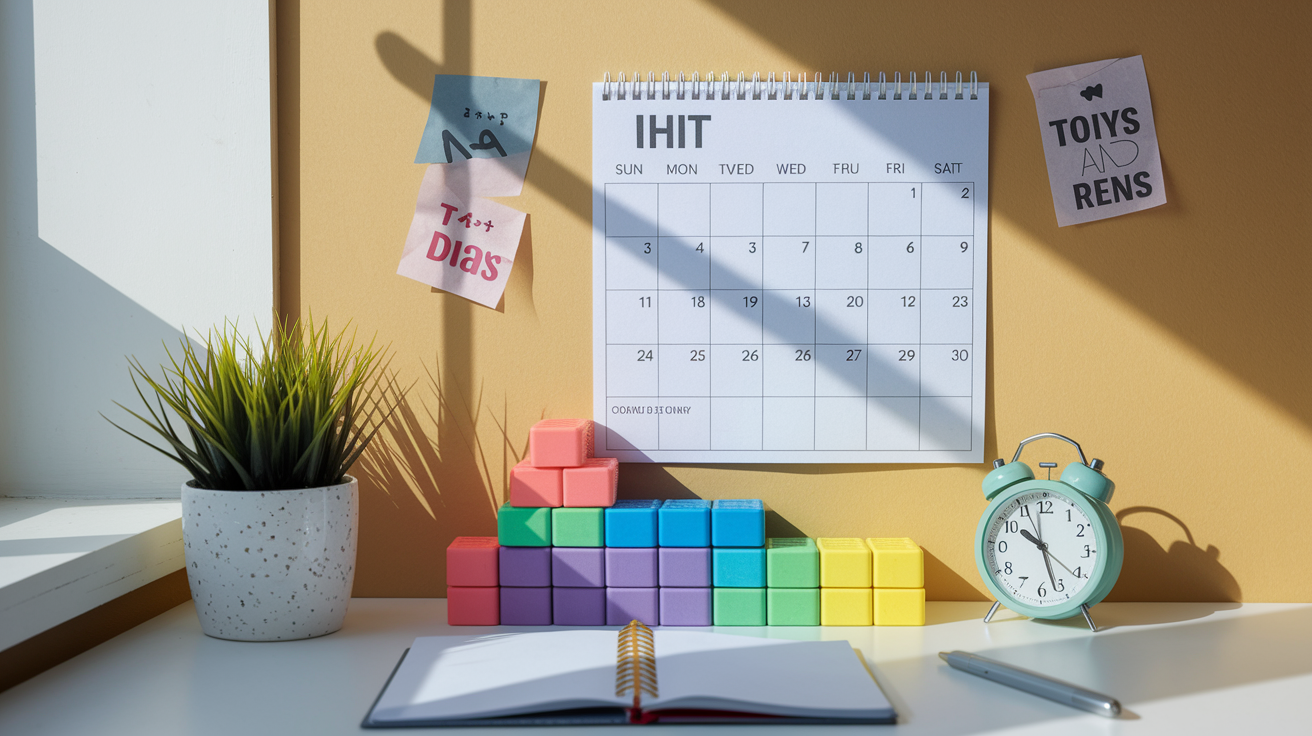
Consistency beats intensity for beginners. Three HIIT sessions per week on non-consecutive days give your muscles time to recover and adapt. Start with two sessions in week one if you’re brand new to structured exercise, then add a third session in week two or three.
Here’s a sample weekly layout:
Monday. 15-minute HIIT session (warm-up, main routine, cooldown).
Wednesday. Second 15-minute HIIT session. Keep the same exercises and intervals as Monday.
Friday. Third session. By the end of week two, this becomes your steady rhythm.
On rest days, light activity like a 20-minute walk or gentle stretching supports recovery without adding fatigue. Avoid back-to-back HIIT days. Your body needs at least 48 hours between sessions to repair muscle and restore energy. If you feel unusually sore or tired, take an extra rest day and resume the schedule when you’re ready.
Final Words
Grab a timer, warm up for 3–4 minutes, then jump into the 15‑minute intervals using the 30:30 or 20:40 work/rest format. Use the low‑impact options if joints feel sore.
The post gives the full routine, a quick cooldown, safety tips, and simple ways to progress. Aim for 2–3 sessions a week and track small wins.
If time’s tight, do two sets of the first three moves tonight.
This HIIT for busy beginners: safe 15-minute starter plan is a short, manageable way to build fitness—keep going.
FAQ
Q: Is 15 minutes of HIIT a day enough?
A: Fifteen minutes of HIIT a day is enough to improve cardiovascular fitness and burn calories when you work hard, include a warm-up/cooldown, and do 2–4 sessions weekly while focusing on form.
Q: What is the 3 3 3 rule at the gym?
A: The 3‑3‑3 rule at the gym is a simple strength template—three sets of three reps across compound moves to build technique and strength with manageable volume and steady weight progression.
Q: Does HIIT lower triglycerides?
A: HIIT lowers triglycerides by improving fat metabolism and insulin sensitivity; regular sessions over weeks often reduce triglyceride levels, especially when paired with weight loss and a healthier diet.
Q: How should a beginner start HIIT?
A: A beginner should start HIIT with a short, paced plan: 3–4 minute warm-up, a 15-minute 30:30 or 20:40 interval set using low‑impact moves, twice weekly, and gradual progression.