

Want fat-burning that actually lasts until lunch?
A steady, make-ahead breakfast—20 to 30 grams of protein, fiber-rich carbs, and a bit of healthy fat—keeps your blood sugar steady, curbs cravings, and makes a calorie-controlled day much easier.
This post lays out simple meal prep breakfast options you can batch on Sunday—egg muffins, Greek yogurt jars, high-protein overnight oats—plus portioning, storage, and quick swaps so you can eat in under a minute and still support sustained energy and real weight loss.
Key Benefits of Make-Ahead Breakfasts for Energy and Weight Loss
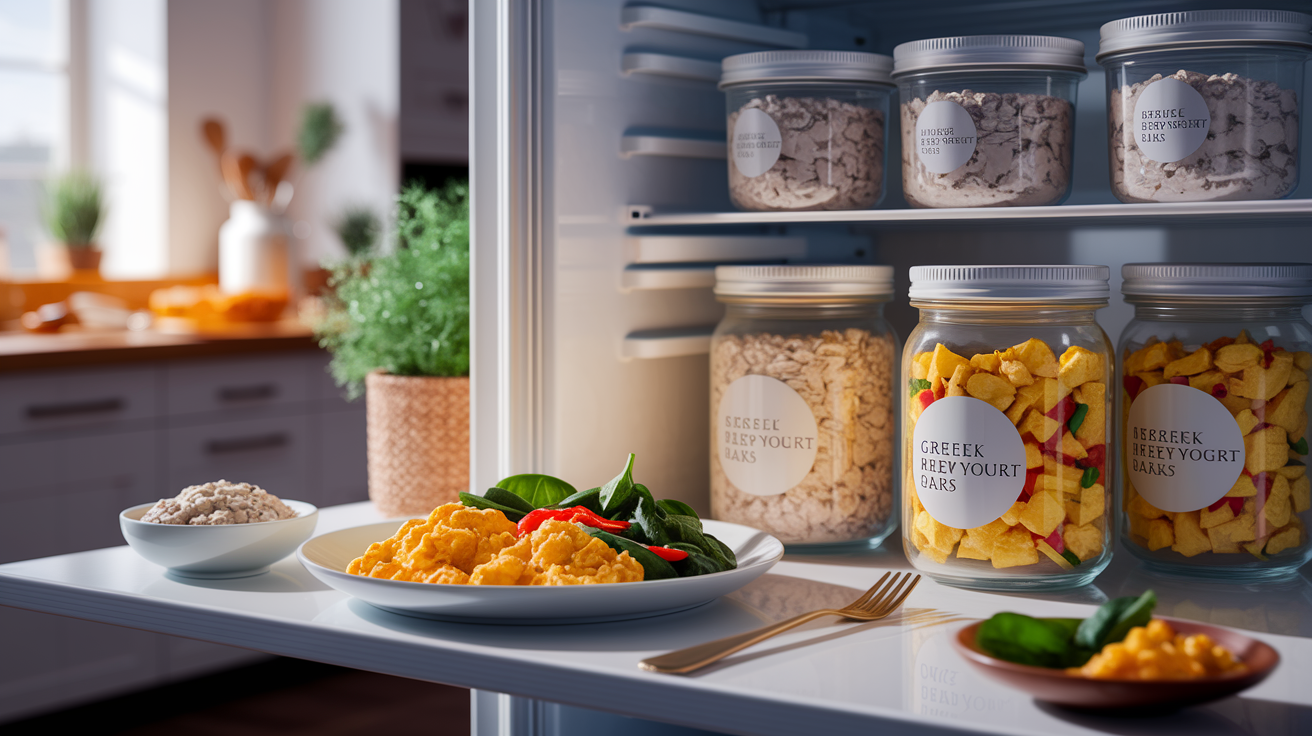
Starting your day with a high-protein, fiber-rich breakfast sets your blood sugar, appetite hormones, and energy for the next several hours. Protein triggers a stronger satiety response than carbs or fat alone, which means you stay full longer and don’t reach for mid-morning snacks as often. Complex carbs from oats, quinoa, or whole grains digest slowly, releasing glucose steadily instead of spiking and crashing. Together, these macronutrients keep cortisol and insulin in check, so you avoid that 10 a.m. slump and the cravings that follow.
Prepping breakfasts ahead removes the morning guesswork and decision fatigue that often lead to skipped meals or grabbing quick, high-sugar options. When your breakfast is already portioned and waiting in the fridge, you control the calorie count and macro split from the start. That consistency drives fat loss over weeks and months, not perfection on one random Tuesday.
Make-ahead breakfasts also free up 10 to 15 minutes every morning. That can be the difference between eating at home and buying a pastry on your way to work. Here’s what you can expect:
- Blood sugar stays stable for 3 to 4 hours, reducing energy dips and hunger swings
- Morning prep time drops by 10 to 15 minutes per day
- Calorie tracking gets simpler because portions are pre-measured
- Weekly adherence to your nutrition plan increases since daily breakfast decisions are already made
High-Protein Meal Prep Breakfast Recipes
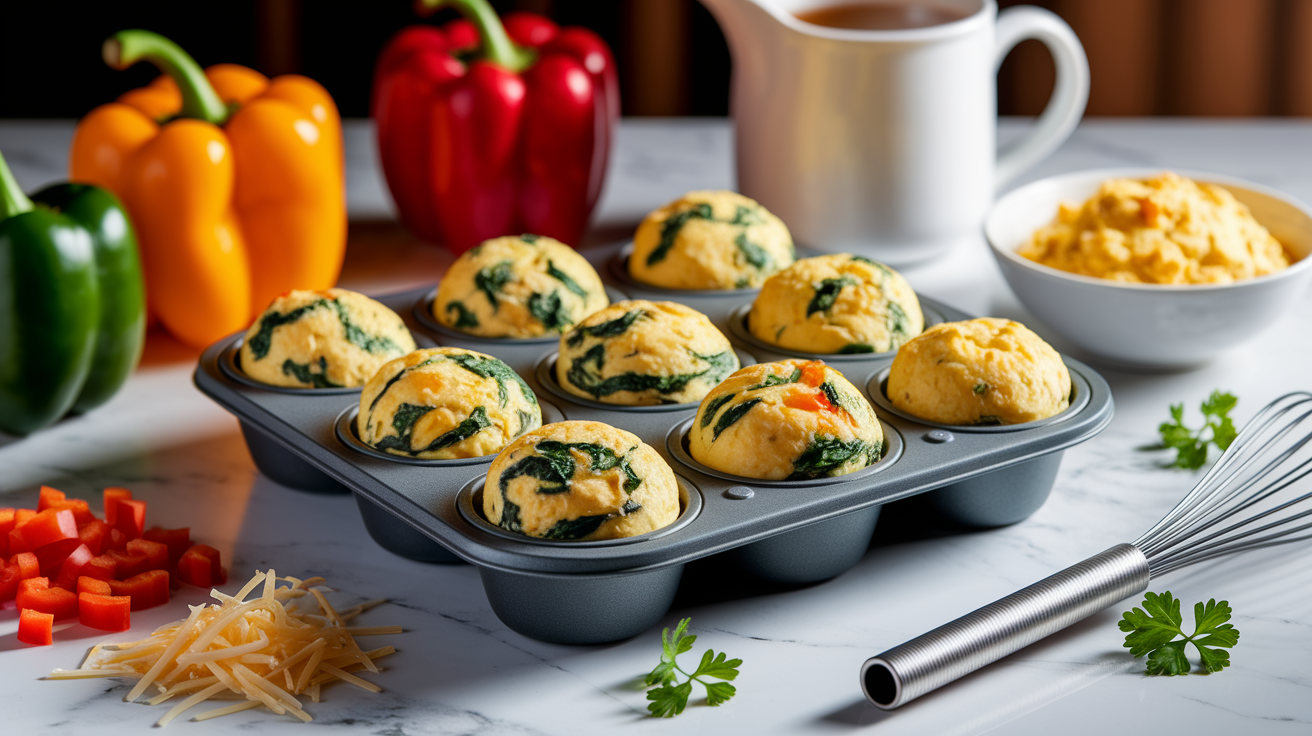
Egg-Based Meal Prep Breakfasts
Eggs are one of the most cost-effective, nutrient-dense protein sources you can prep in bulk. A batch of 12 egg muffin cups takes about 30 minutes total, bakes in a standard muffin tin, and delivers 20 to 22 grams of protein per two-muffin serving. Mix eggs with chopped peppers, spinach, mushrooms, and a small amount of low-fat cheese or diced turkey for variety. Bake at 350°F for 20 to 25 minutes, let them cool, then store in a sealed container in the fridge.
- Batch size: 12 muffins, serves 6 at 2 muffins each
- Prep time: 10 minutes active, 20 to 25 minutes baking
- Protein per serving: 20 to 22 grams, around 260 calories
Yogurt & Cottage Cheese Prep Options
Greek yogurt and cottage cheese are ready-to-eat proteins that require zero cooking and layer well with fruit, nuts, and seeds. A single-serving jar can hold three-quarters of a cup of 2% Greek yogurt, a third cup of mixed berries, and a tablespoon of chia seeds for texture and fiber. Prep five jars on Sunday and grab one each morning. Cottage cheese works the same way and pairs well with diced peaches, a sprinkle of cinnamon, and a small handful of almonds.
- Batch size: 5 individual jars
- Prep time: 5 to 10 minutes total
- Protein per jar: 24 to 26 grams, around 360 calories for the yogurt version
High-Protein Oatmeal Variations
Overnight oats or baked oatmeal can hit 20 to 30 grams of protein when you stir in Greek yogurt, a scoop of whey or plant protein powder, or mix in cottage cheese. For overnight oats, combine half a cup of rolled oats with three-quarters cup of Greek yogurt, a tablespoon of chia seeds, and berries in a jar. Refrigerate overnight. The oats soften while the chia gels. For baked oatmeal, mix two cups of oats with two eggs, a scoop of protein powder, mashed banana, and cinnamon, then bake in a greased dish at 350°F for 30 minutes. Slice into squares and store.
- Batch size: 5 jars for overnight, or 8 squares for baked
- Prep time: 5 minutes for overnight, 40 minutes total for baked
- Protein per serving: 24 to 28 grams for overnight, 14 to 16 grams per baked square
Quick-Prep Low-Calorie Breakfast Options
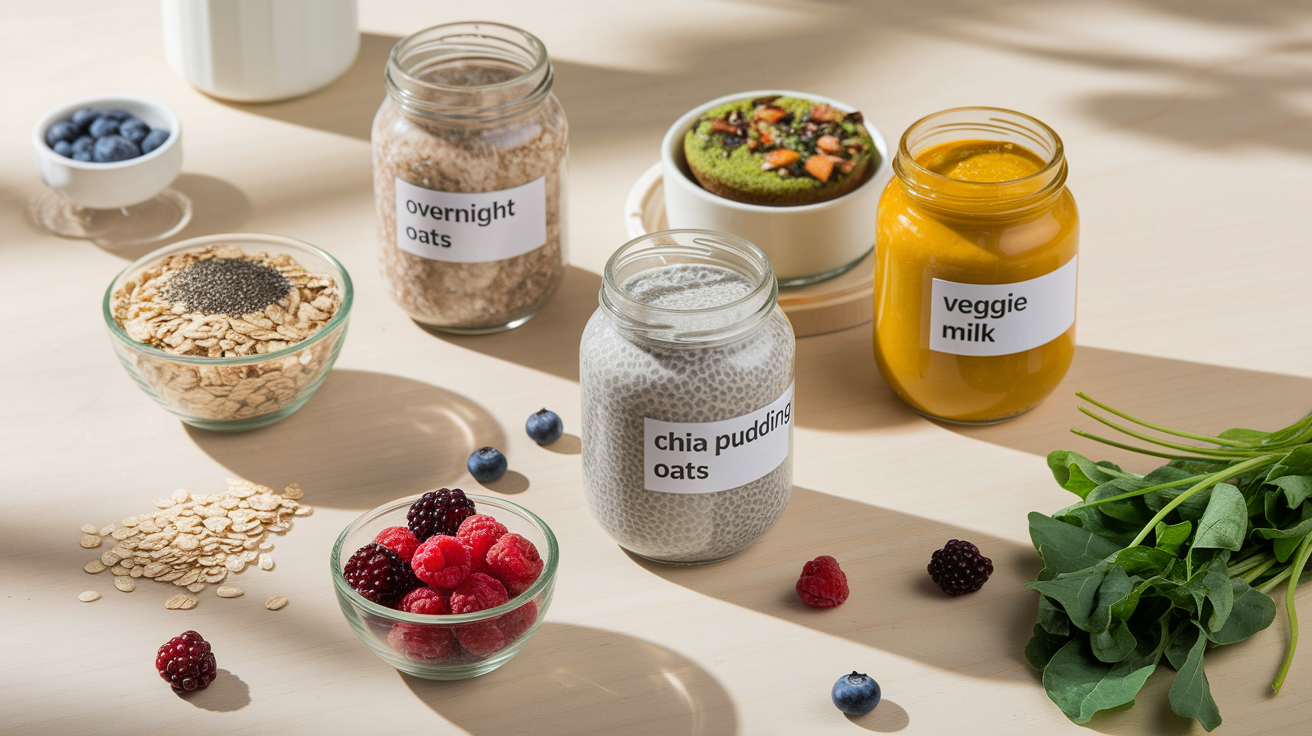
If your daily calorie target sits around 1,400 to 1,800 for fat loss, keeping breakfast under 350 to 400 calories while still delivering 20 to 30 grams of protein helps you stay full without using up half your day’s budget. Overnight oats made with unsweetened almond milk instead of whole milk, or chia pudding sweetened only with mashed banana and berries, both land in the 300 to 360 calorie range. Egg muffins made with whole eggs and extra vegetables instead of cheese come in around 260 calories for two muffins and still give you 20 grams of protein.
Cottage cheese bowls are one of the fastest low-calorie options. A cup of 1% cottage cheese with half a sliced apple, a teaspoon of cinnamon, and ten almonds delivers about 25 grams of protein and stays under 280 calories. Prep five of these in small containers on Sunday and eat them cold or at room temperature all week.
Three quick options with approximate calories and protein:
- Greek yogurt overnight oats (half cup oats, three-quarters cup 2% yogurt, berries, chia), 360 calories, 25 grams protein
- Chia pudding with protein powder (three tablespoons chia, one scoop protein, almond milk, berries), 300 calories, 27 grams protein
- Two veggie-packed egg muffins (eggs, spinach, peppers, minimal cheese), 260 calories, 21 grams protein
Batch Cooking and Portioning Techniques
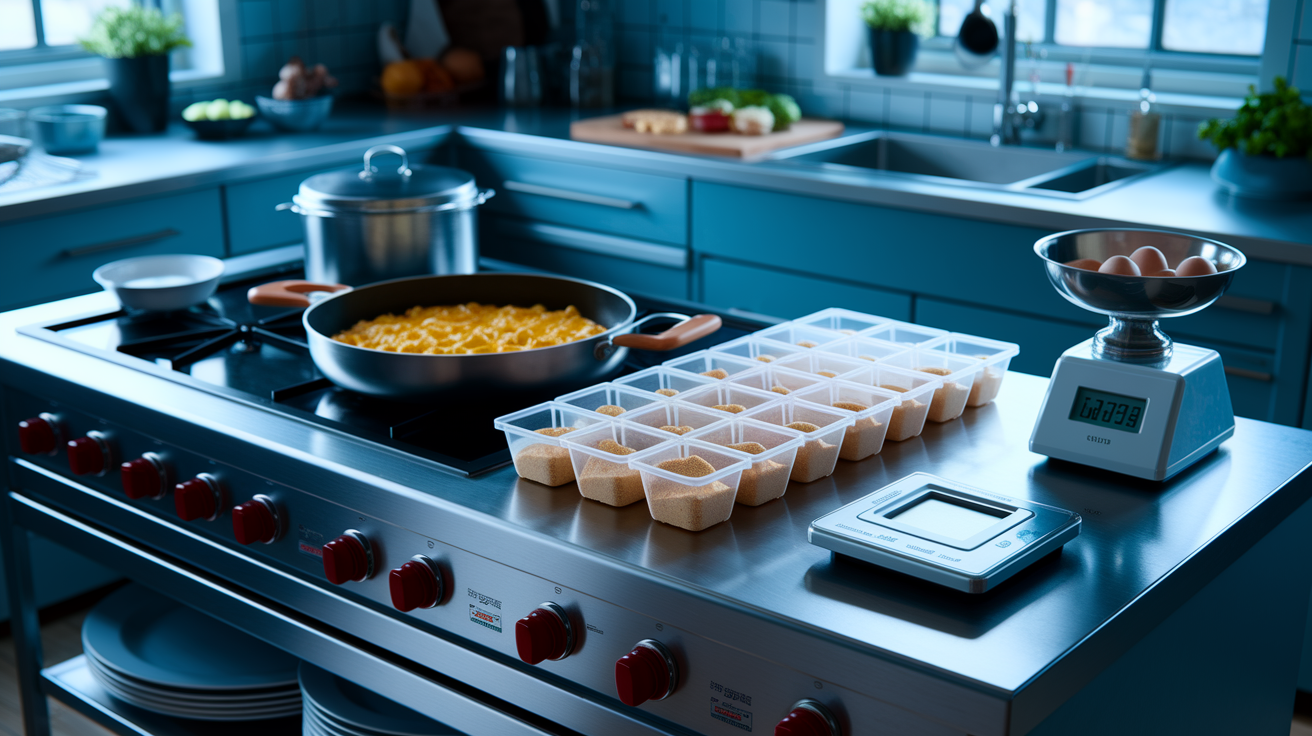
Batch cooking means dedicating one or two blocks of time per week to prepare multiple servings of the same recipe, then dividing them into individual portions right away. Instead of making one breakfast every morning, you make six or eight servings on Sunday and store them in labeled containers. This cuts your total weekly breakfast prep time from 35 to 50 minutes down to about 60 to 90 minutes once, then five to ten seconds per morning to grab and reheat.
Portioning immediately after cooking prevents the common mistake of eyeballing servings later in the week, which usually leads to larger portions and higher calories than planned. Weighing cooked eggs, oats, or quinoa on a kitchen scale and dividing by the number of servings gives you exact macro counts. If a recipe yields eight servings and the total cooked weight is 1,200 grams, each portion is 150 grams. Write the weight or calorie count on a piece of tape on each container so there’s no guessing on Wednesday morning.
Using the right containers speeds up the process. Wide-mouth 16-ounce mason jars work well for overnight oats and chia pudding because you can eat directly from the jar. Three-compartment meal prep containers let you separate wet ingredients from dry toppings until you’re ready to eat, which keeps textures fresh.
| Technique | Benefit | Time Saved |
|---|---|---|
| Batch baking egg muffins | One 30-minute session replaces six mornings of cooking | 50 to 60 minutes per week |
| Pre-portioning into single-serve jars | Removes guesswork and controls calorie intake | 5 to 10 minutes per weekday morning |
| Using a slow cooker for steel-cut oats overnight | Unattended cooking while you sleep | 15 to 20 minutes of active morning prep across the week |
| Weighing ingredients and labeling containers | Ensures accurate macro tracking for weight loss | Prevents calorie creep that stalls progress |
Storage, Refrigeration, and Freezing Guidelines
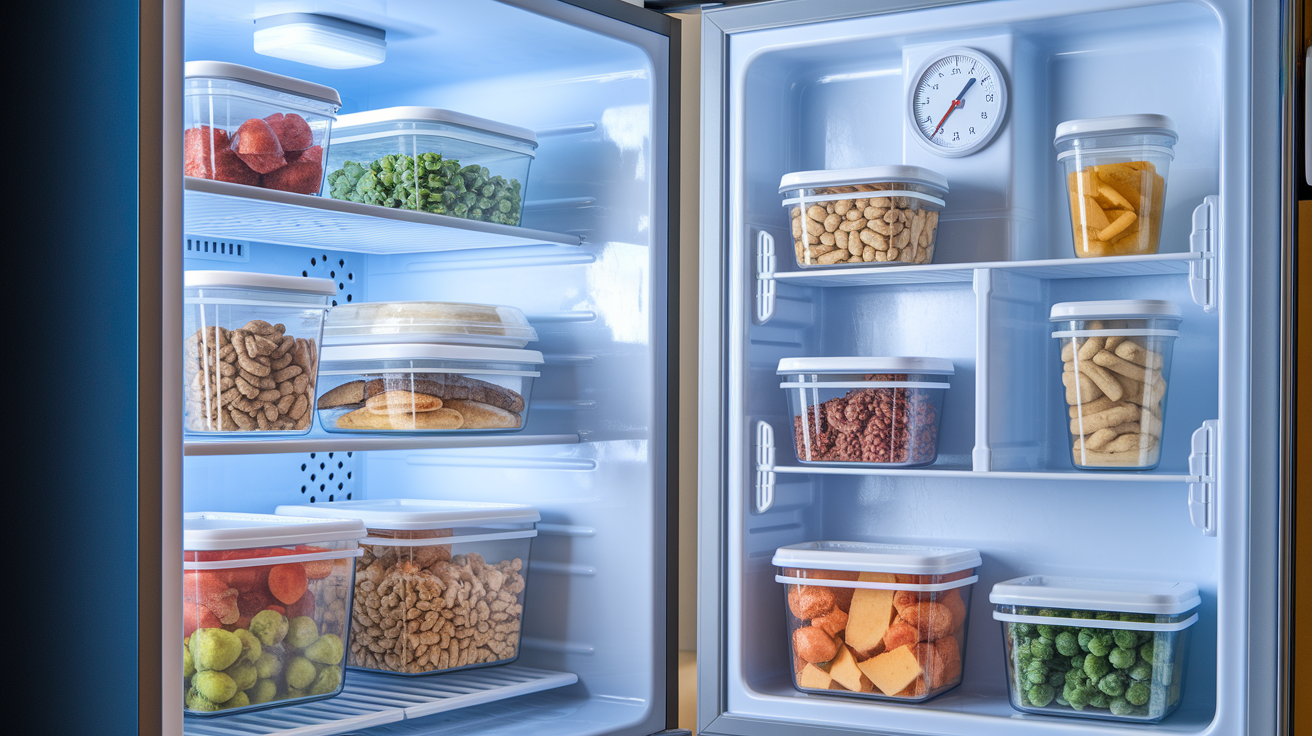
Proper storage keeps your prepped breakfasts safe to eat and tasting fresh all week. Most cooked egg dishes, including muffins and scrambles, last three to four days in the refrigerator when stored in airtight containers. Overnight oats, chia pudding, and yogurt-based jars stay good for four to five days as long as they’re kept below 40°F. If you’re prepping on Sunday for the following week, plan to eat refrigerated items by Thursday or Friday.
Freezing extends shelf life to two or three months for most baked goods and cooked grains. Egg muffins, protein pancakes, baked oatmeal squares, and breakfast burritos all freeze well. Let everything cool completely before wrapping individual portions in parchment or placing them in freezer-safe silicone bags or glass containers. Thaw overnight in the fridge or reheat directly from frozen in the microwave for 60 to 90 seconds. Frozen pancakes can go straight into a toaster for a quick crisp.
Key timelines to follow:
- Cooked egg muffins and scrambles: 3 to 4 days refrigerated, 2 to 3 months frozen
- Overnight oats and chia pudding: 4 to 5 days refrigerated, 3 months frozen (texture may change slightly)
- Baked oatmeal and protein pancakes: 5 days refrigerated, 2 to 3 months frozen
- Assembled yogurt or cottage cheese bowls: 3 to 5 days refrigerated, do not freeze
Nutritional Planning: Macros and Energy Balance
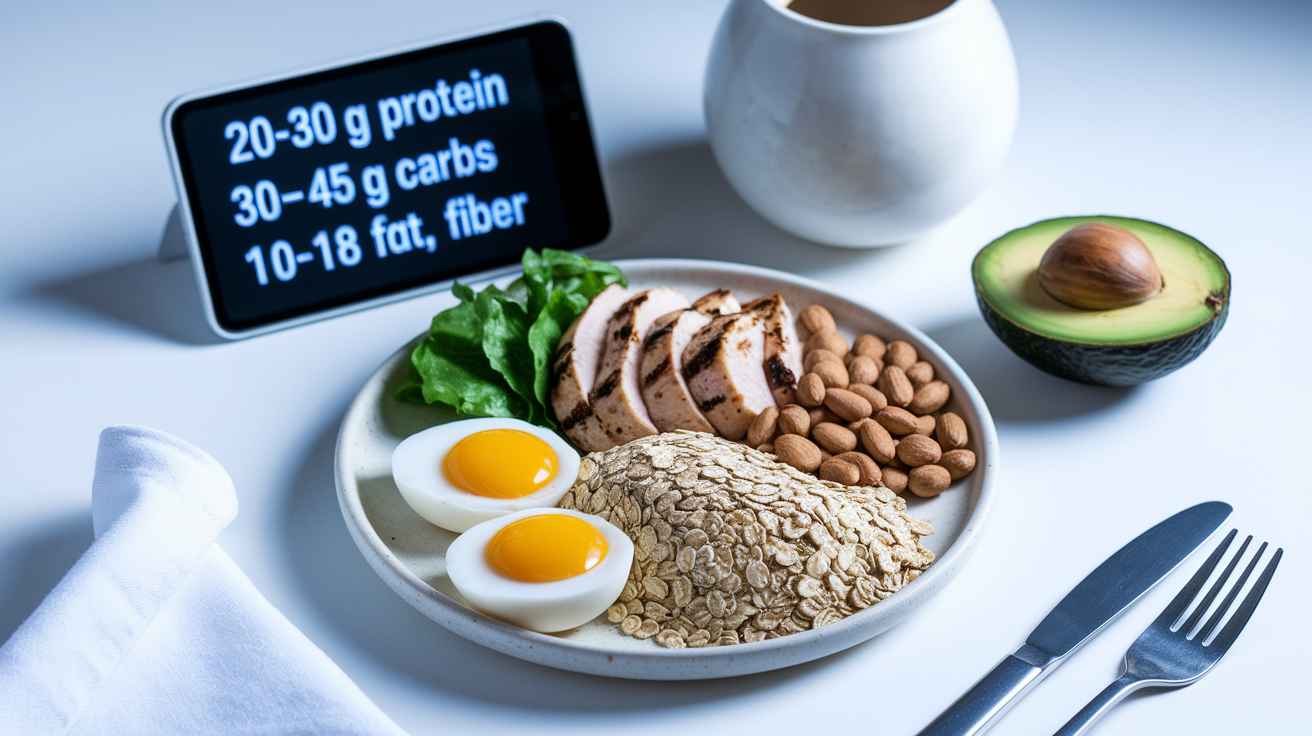
A balanced breakfast designed for sustained energy and fat loss typically contains 20 to 30 grams of protein, 30 to 45 grams of complex carbohydrates, 10 to 18 grams of healthy fats, and at least 6 to 10 grams of fiber. That combination keeps you full for three to four hours, supports muscle preservation during a calorie deficit, and provides steady glucose release instead of a spike and crash. Protein is the anchor because it has the highest thermic effect of food, meaning your body burns more calories digesting it compared to carbs or fat.
For most adults aiming to lose weight, a breakfast in the 300 to 450 calorie range hits that macro profile without taking up too much of the daily budget. If your total daily target is 1,600 calories, a 350-calorie breakfast leaves room for two larger meals and a snack. The key is consistency. Eating roughly the same macros every morning stabilizes hunger hormones like ghrelin and leptin, which makes it easier to stick to your plan on busy or stressful days.
Keep added sugars below 6 to 8 grams per serving by relying on whole fruit, cinnamon, vanilla extract, or a small amount of mashed banana for sweetness. High sugar loads in the morning trigger insulin spikes that can lead to mid-morning hunger and cravings. Prioritizing whole-food carbs like oats, quinoa, and sweet potato over refined grains also increases fiber intake, which slows digestion and keeps energy levels steady all morning.
Final Words
You saw why make-ahead breakfasts work: protein, fiber, and complex carbs keep you full and steady, and prepping ahead cuts decision fatigue and helps hit calorie goals.
Pick one high-protein recipe and prep a batch tonight. If time is tight, do a single-serve overnight oats or egg muffin. Quick win.
Use these meal prep breakfast options for sustained energy and weight loss as your default. Small, repeatable habits add up. You’ve got this.
FAQ
Q: What is the best breakfast for weight loss and energy?
A: The best breakfast for weight loss and energy is a meal with 20–30 g protein, fiber, and a bit of complex carbs—eggs or Greek yogurt with oats and berries to stay full and steady.
Q: What is the 30 30 30 rule for breakfast?
A: The 30-30-30 rule for breakfast means having about 30 grams of protein within 30 minutes of waking and moving for 30 minutes to help appetite control and boost morning energy.
Q: What breakfast meal prep is best for weight loss?
A: The best breakfast meal prep for weight loss is high-protein, high-fiber, portioned meals—egg muffins, Greek yogurt jars with oats and fruit, or overnight oats with protein to curb calories and hunger.
Q: What to eat for breakfast for sustained energy?
A: For sustained energy, eat breakfast with protein, fiber, and complex carbs—like steel-cut oats topped with Greek yogurt, berries, and nuts—so blood sugar stays steady and hunger comes later.