

Portion control, not complicated diets, is the real key to steady weight loss.
Meal prep makes portion control automatic, so you stop guessing and overfilling plates.
This post gives simple, usable strategies: weigh proteins, use visual cues (palm, fist, thumb), choose consistent container volumes, and divide batch cooks so every meal fits your calorie goal.
Do these things for a few weeks and you’ll reliably hold a 250 to 500 calorie daily deficit for steady fat loss.
Here’s how to start.
Core Portioning Strategies to Support Meal Prep and Weight Loss
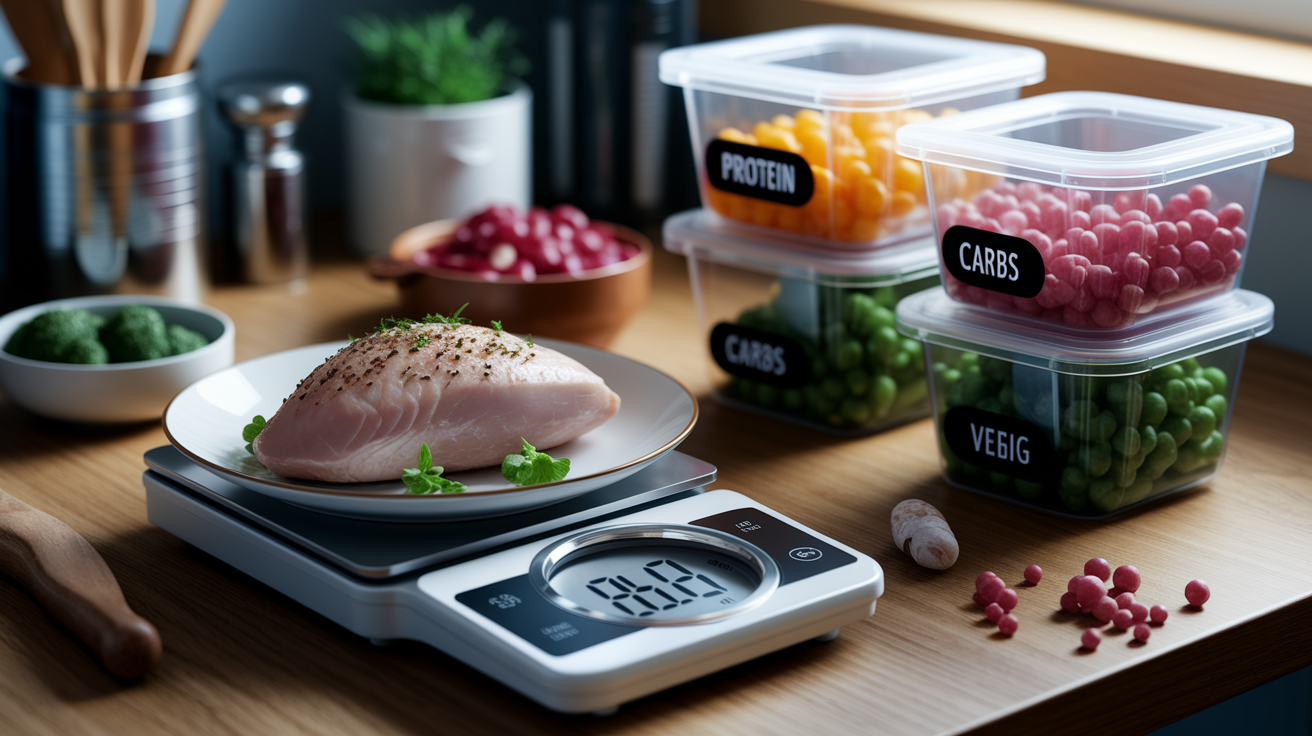
Portion control matters because calorie intake drives weight change. When your portions exceed what your body burns, the extra energy gets stored as fat. Restaurant meals now deliver double the calories most people need in one sitting, and typical servings have ballooned since the 1970s. Pre-portioning during meal prep removes the guesswork and makes it easier to hold a 250 to 500 calorie deficit each day, which supports about 0.5 to 1 lb of fat loss per week.
You need simple tools and consistent reference points to measure portions accurately. A digital kitchen scale weighs proteins and grains in grams or ounces. Measuring cups work for liquids and cooked starches. Visual cues help when you don’t have a scale handy. A palm-sized portion equals about 3 to 4 oz of cooked protein (85 to 113 g), a cupped hand represents roughly 1/2 cup of cooked carbs (120 ml), a fist equals 1 to 2 cups of non-starchy vegetables (240 to 480 ml), and a thumb tip is approximately 1 tablespoon of fats (15 ml). These benchmarks keep you close to target serving sizes without constant math.
Accurate pre-portioning during meal prep locks in your calorie deficit before the week starts. When every container holds the same measured amounts of protein, carbs, and vegetables, you avoid the daily temptation to eyeball servings or add “just a bit more.” That consistency turns portion control from a daily decision into an automatic habit. Habits sustain weight loss over months.
- Pre-weigh proteins — Divide cooked chicken, fish, or lean beef into 3 to 4 oz portions (85 to 113 g) right after cooking, and pack each portion into its own container.
- Use fixed container volumes — Select meal containers in the 500 to 800 ml range so every meal occupies the same physical space, reducing the urge to overfill.
- Divide batch cooks evenly — Calculate total weight (for example, 1,200 g of cooked quinoa) and divide by the number of portions you need (1,200 ÷ 6 = 200 g per portion).
- Check nutrition labels — Compare the serving size listed on the package to the amount you actually use, and adjust your portions to match your calorie target.
- Use smaller plates — Switching from a 12-inch dinner plate to a 9-inch plate can reduce your serving size by 20 to 30 percent without feeling deprived.
- Pre-portion snacks — Bag or box snacks into single-serve amounts of 100 to 200 calories to prevent eating directly from large packages.
Practical Meal Prep Techniques for Accurate Portion Control
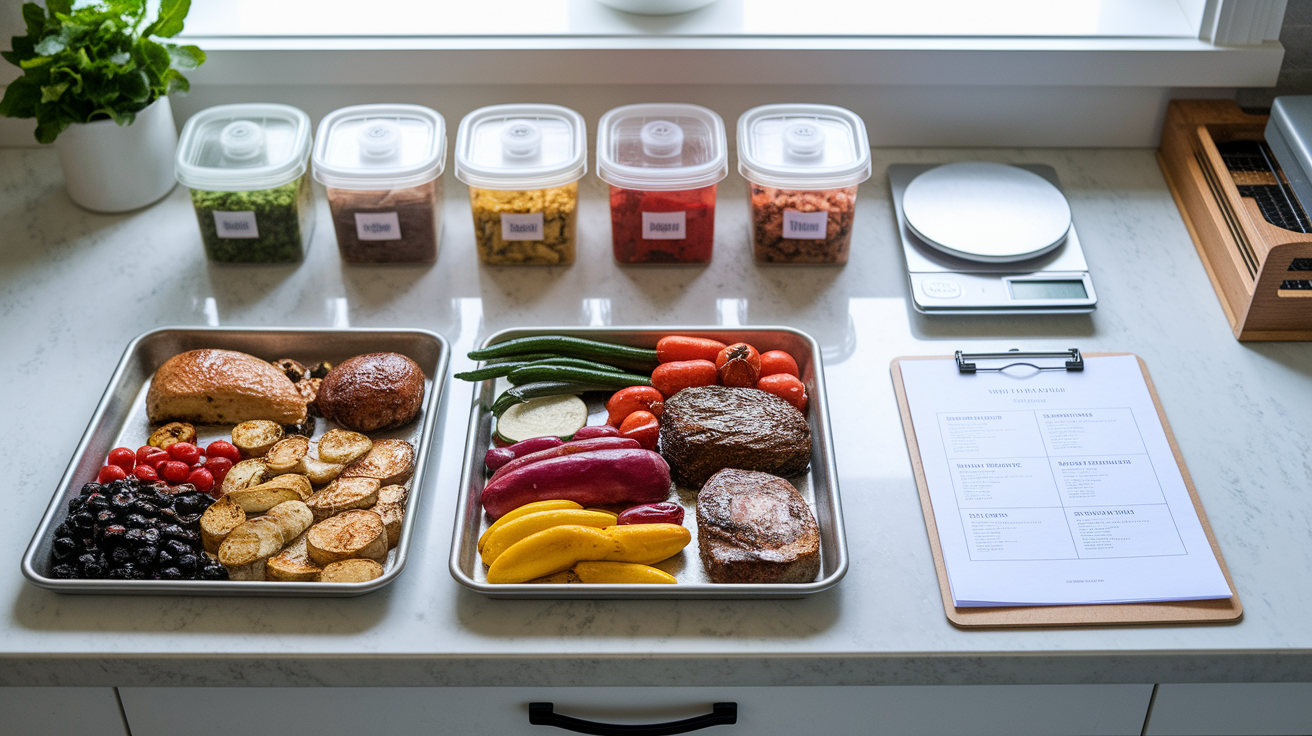
Pick one day each week as your prep day and plan every meal you’ll eat over the next three to five days. Write a shopping list with exact quantities so you buy only what you need and avoid impulse purchases that lead to extra food in the house. Organize your kitchen before you start cooking. Clear counter space, line up your containers, and set out your scale and measuring cups. When every ingredient and tool is ready, you move faster and portion more consistently.
After batch cooking your proteins, grains, and vegetables, divide the total yield by the number of portions you planned. If you cooked 1,000 g of grilled chicken and want five portions, each container gets 200 g. Use your kitchen scale to weigh each portion directly into its container. Same method works for cooked rice or quinoa. Measure the total volume in cups or grams, then divide evenly. This step removes guesswork and ensures every meal delivers the same calorie and macro profile.
- Shop with a list and quantities — Buy 2 to 4 lbs of protein (900 g to 1.8 kg), enough dry grains to yield 6 to 10 cups cooked, and 6 to 10 cups of fresh or frozen vegetables for three to five days.
- Batch cook staples — Roast or grill all proteins at once, steam or boil grains in one large pot, and roast or steam vegetables on sheet pans to save time and energy.
- Divide meals by weight or volume — Weigh the total amount of each food, divide by the number of portions, and use a scale or measuring cup to distribute evenly into containers.
- Label every container — Write the date, meal name, and approximate calories or protein grams on each lid so you know what you’re eating and how old it is.
- Store immediately — Refrigerate meals you’ll eat within three to four days and freeze extras within two hours of cooking to preserve freshness and safety.
Recommended Portion Sizes by Food Group for Weight Loss Success
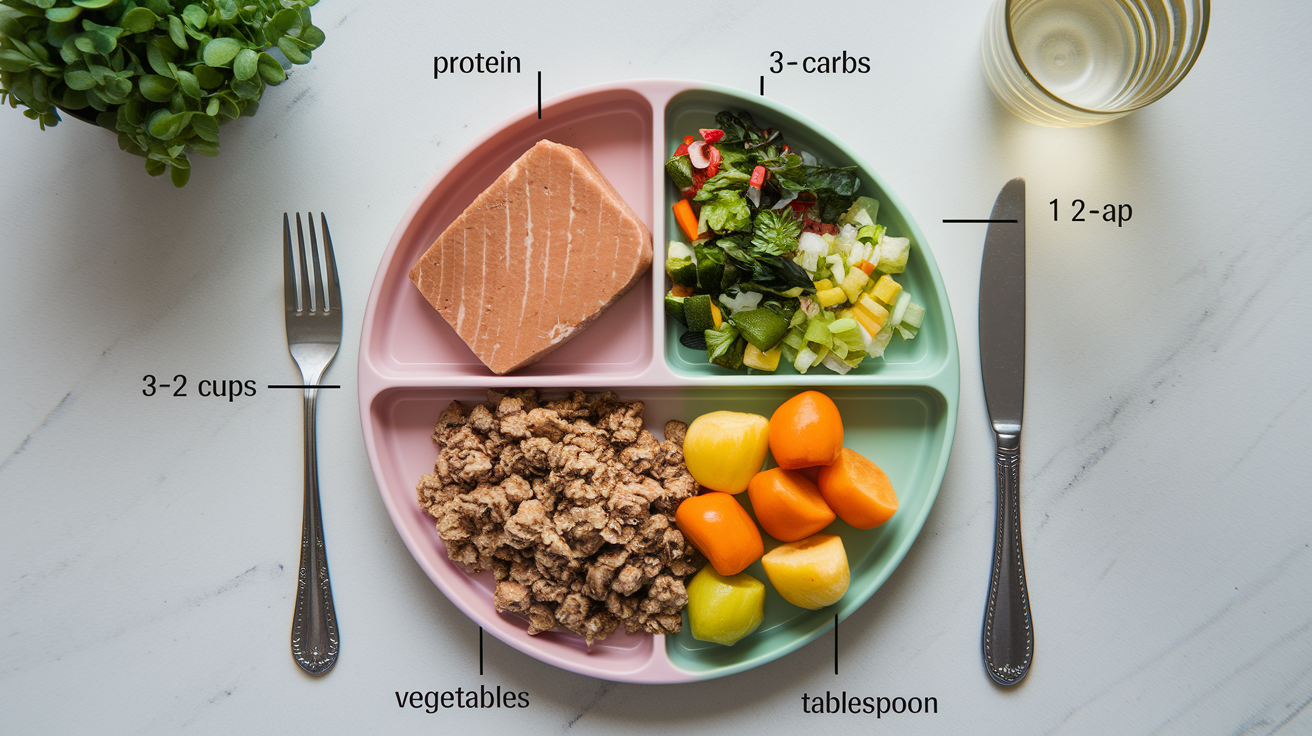
Protein portions should land between 3 and 4 oz of cooked meat, poultry, fish, tofu, or tempeh per meal, which translates to roughly 85 to 113 g on a kitchen scale. This range supplies around 20 to 30 g of protein, enough to support muscle maintenance and keep you satisfied for several hours. A palm-sized piece of grilled chicken breast or baked salmon fits this target. Measuring it a few times with a scale will train your eye to recognize the correct size without tools.
Carb servings depend on your activity level and total calorie goal, but a safe starting point is 1/2 to 1 cup of cooked grains, starchy vegetables, or legumes per meal, equal to about 120 to 240 ml. One half cup of cooked brown rice, quinoa, or sweet potato delivers roughly 100 to 150 calories and provides steady energy without spiking blood sugar. Non-starchy vegetables should fill 1 to 2 cups of your plate (240 to 480 ml) because they add volume, fiber, and micronutrients with very few calories. Leafy greens, broccoli, peppers, and zucchini help you feel full while staying inside your calorie deficit.
Fats are calorie dense, so portion them carefully at 1 to 2 tablespoons per meal, which equals 15 to 30 ml. One tablespoon of olive oil, a quarter of an avocado, or a small handful of nuts (about 1 oz or 28 g) adds flavor and essential fatty acids without pushing your meal over budget. Snacks should stay in the 150 to 250 calorie range. Examples include 1 to 2 cups of raw vegetables with 2 tablespoons of hummus, a small apple with 1 tablespoon of almond butter, or a single-serve container of Greek yogurt with a few berries.
Selecting and Using Tools for Consistent Portion Accuracy
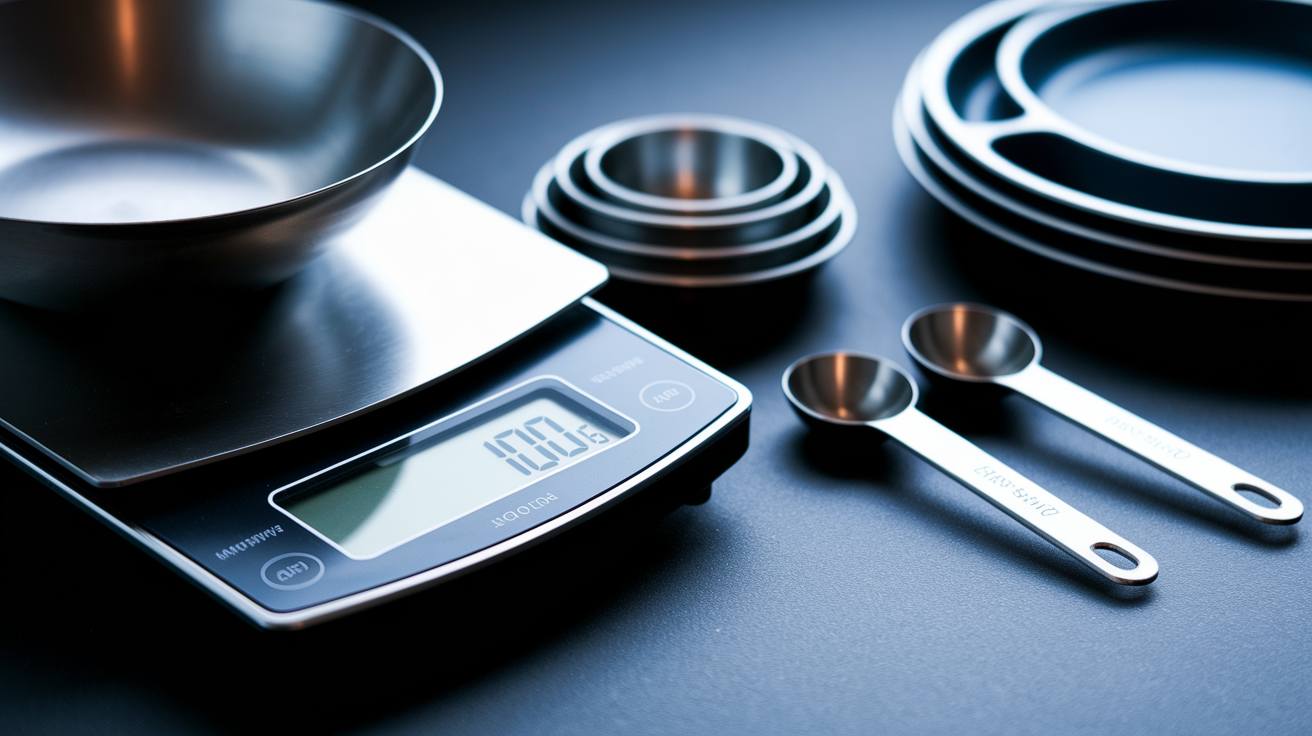
Start with a digital kitchen scale that measures in both grams and ounces, accurate to at least 1 g increments. Scales eliminate estimation and work for any food, cooked or raw, solid or semi-solid. A set of nested measuring cups (1 cup, 1/2 cup, 1/3 cup, 1/4 cup) handles liquids and cooked grains, while measuring spoons (1 tablespoon, 1 teaspoon) control oils, nut butters, and dressings. Portion-control plates with divided sections guide you visually. Place protein in one compartment, carbs in another, and vegetables in the largest section. These tools cost less than a week’s worth of restaurant meals and last for years.
Build habits by using your scale every day for the first two to four weeks. Weigh your breakfast oats, your lunch protein, and your dinner rice until the correct portion size becomes automatic. Standardize the measuring cup you use for cooked grains so “1/2 cup” always means the same thing, not a heaping scoop one day and a level measure the next. Keep your tool set in one drawer or on one counter so you never waste time searching. Clean them immediately after use so they’re ready for the next prep session. Consistency in your process creates consistency in your portions.
- Digital kitchen scale — Accurate to 1 g, measures up to 5 kg, and includes a tare function to zero out the weight of bowls or containers.
- Nested measuring cups — A set covering 1 cup (240 ml), 1/2 cup (120 ml), 1/3 cup (80 ml), and 1/4 cup (60 ml) for liquids and cooked foods.
- Portion-control plates — Plates 8 to 10 inches in diameter with three divided sections to guide protein, carb, and vegetable servings.
- Measuring spoons — Include 1 tablespoon (15 ml) and 1 teaspoon (5 ml) for fats, dressings, and condiments.
Container Selection and Packaging Methods for Controlled Meal Portions
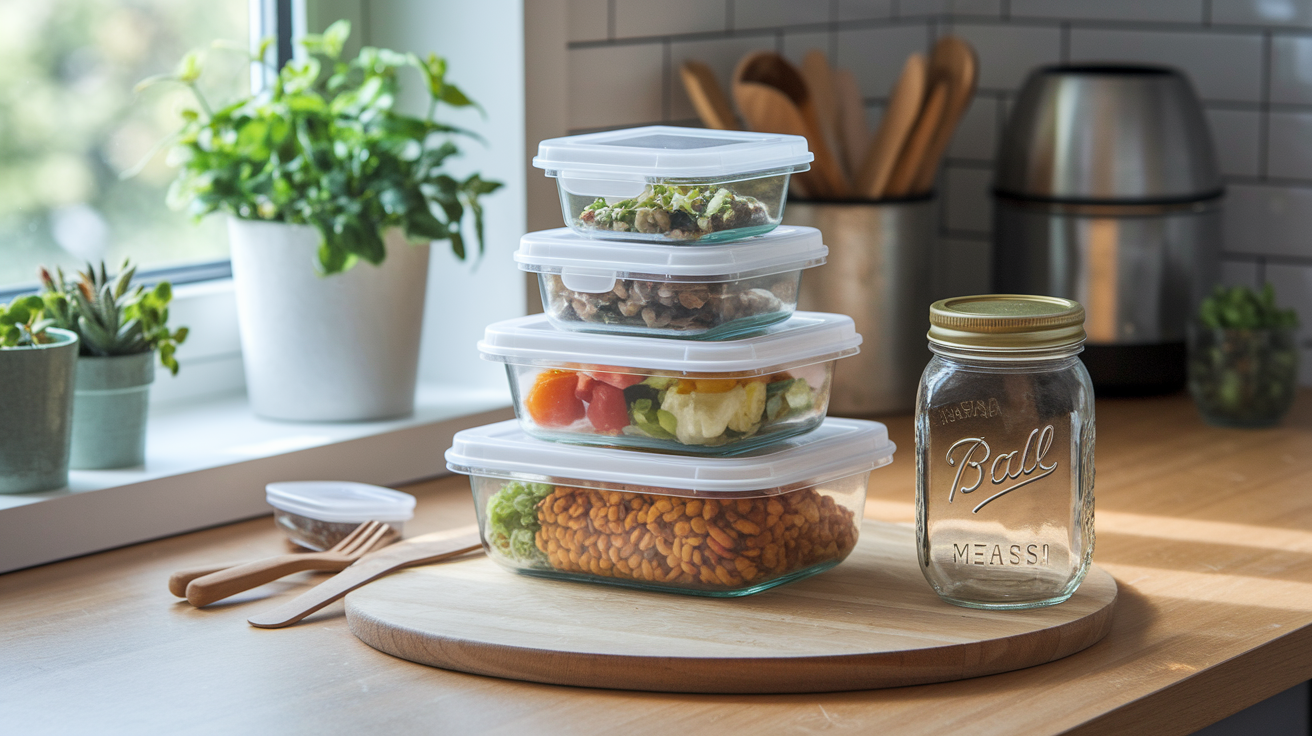
Choose containers based on the volume of food each meal requires and the number of compartments you need. A single full meal fits comfortably in a 500 to 800 ml container, while larger appetites or higher-calorie plans may need 1,000 ml. Three-compartment containers with dividers keep protein, carbs, and vegetables separate, preventing soggy textures and making it easier to see if you’ve hit your portion targets at a glance. Clear containers let you identify meals quickly in the refrigerator. Glass options withstand repeated microwave and freezer cycles without staining or warping.
Glass containers cost more upfront but last longer and won’t absorb odors or colors from tomato sauces or curries. BPA-free plastic containers are lighter and cheaper, good for bringing meals to work or the gym, but replace them when lids lose their seal. Look for stackable designs to save refrigerator space and leak-proof lids if you’ll be transporting meals in a bag. Label each container with a piece of masking tape and a permanent marker, noting the date, meal type, and approximate calorie count to track your intake and rotate stock using first-in, first-out rules.
| Container Type | Recommended Size (ml/oz) | Best Use |
|---|---|---|
| Single full meal | 500–800 ml (16–27 oz) | Lunch or dinner with protein, carbs, and vegetables in one container |
| 3-compartment tray | 700–1,000 ml (24–34 oz) | Balanced meals with separate sections for each food group |
| Snack container | 240–350 ml (8–12 oz) | Pre-portioned snacks like vegetables and hummus, or fruit and nuts |
| Mason jar | 473 ml (16 oz) | Layered salads or overnight oats with ingredients stacked to prevent sogginess |
Strategies to Prevent Portion Creep During Meal Prep
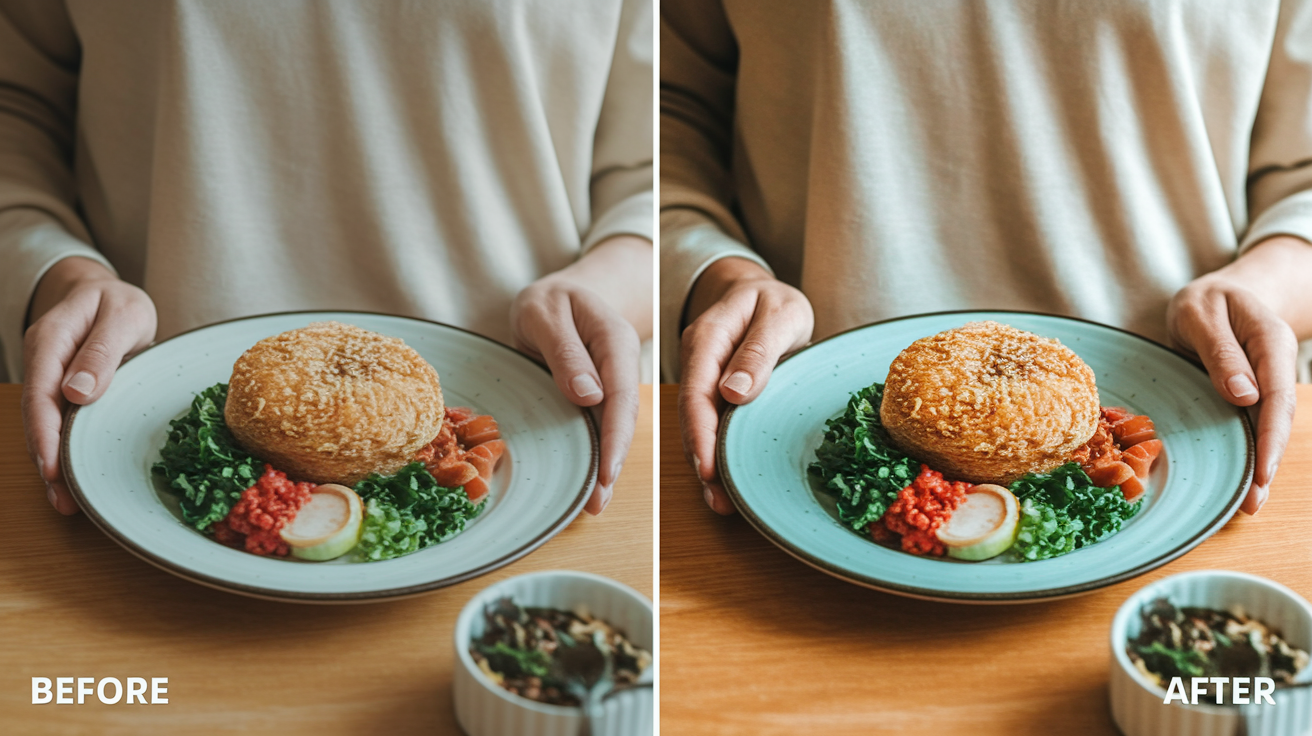
Portion creep happens when servings grow gradually over time without you noticing. Using oversized plates tricks your brain into thinking a normal portion looks too small, so you add more food to fill the empty space. Switching to a 9-inch plate instead of a 12-inch plate can reduce your serving size by 20 to 30 percent, and your satisfaction stays the same because the plate still looks full. Pre-portioning snacks into single-serve bags or small containers removes the temptation to eat straight from a family-size package, where it’s easy to lose track of how much you’ve consumed.
Re-measure your portions every one to two weeks, even after you’ve been meal prepping for months. Appetite changes with activity level, stress, and weight loss. What felt like enough food at the start may feel too small or too large a few weeks later. Weighing your usual servings again recalibrates your eye and keeps your calorie intake aligned with your current goal. Label every container with the portion size and date. Avoid eating directly from serving dishes or storage containers during meals.
- Use smaller plates and bowls — Downsize your dinnerware to 8 to 10 inches in diameter to naturally reduce serving sizes without feeling restricted.
- Label portions with weight and calories — Write “4 oz chicken, 1/2 cup rice, 450 cal” on each container to stay accountable and track intake accurately.
- Separate snacks into single servings — Divide a large bag of nuts or pretzels into 100 to 200 calorie portions in small bags or containers as soon as you bring them home.
- Re-measure weekly — Weigh your usual portions once a week to catch any gradual increase in serving size before it affects your weight trend.
- Avoid eating from packages — Always transfer food to a plate or container before eating so you can see the full amount you’re consuming.
Sample Portion-Controlled Meal Prep Templates for Weight Loss
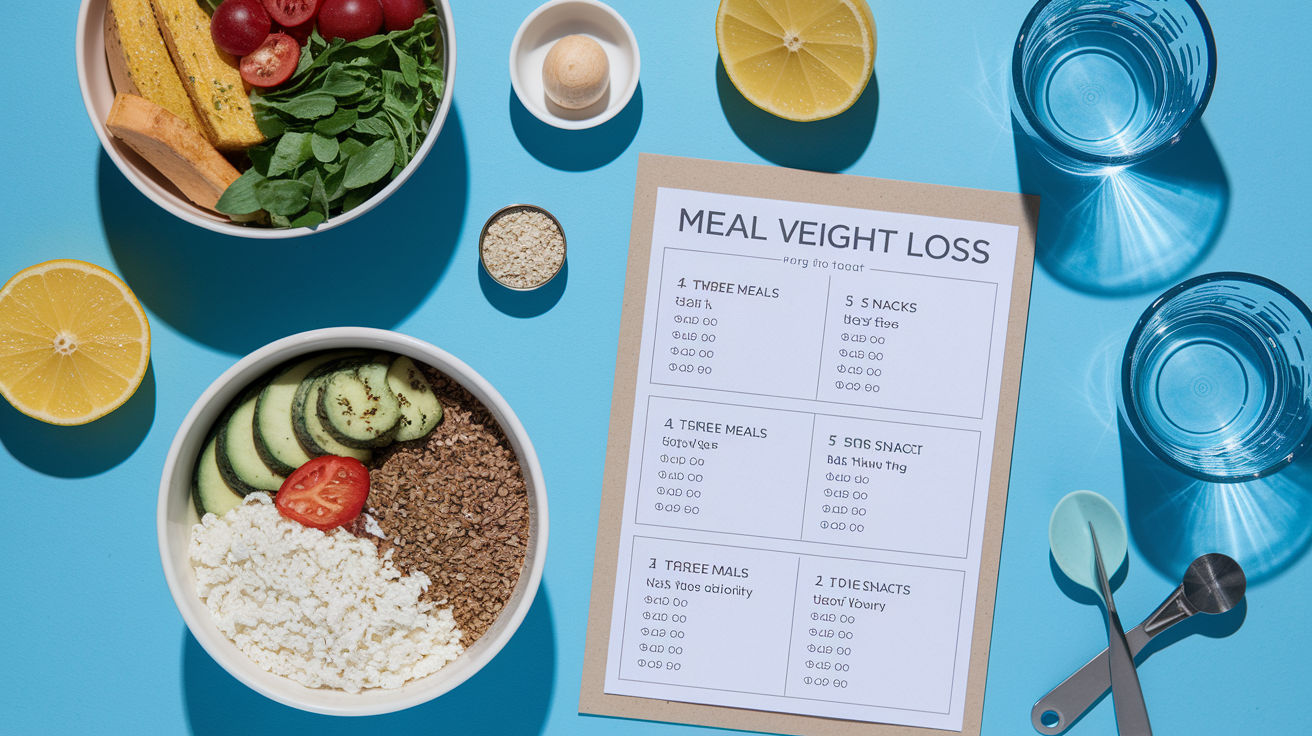
Real-world meal templates show you exactly how to structure a day of eating with accurate portions and balanced macros. A typical moderate weight-loss plan divides daily calories across three meals and one or two snacks, with each meal delivering roughly 400 to 500 calories and snacks adding 150 to 250 calories. Breakfast might include 1/2 cup of rolled oats (about 45 to 50 g dry), 1/2 cup of plain Greek yogurt (120 g), and 1/2 cup of mixed berries (75 g), adding up to around 350 calories with 20 g of protein and plenty of fiber to keep you satisfied until lunch.
Lunch and dinner follow the same portioning rules. 4 oz of cooked protein (113 g), 1/2 to 1 cup of cooked carbs (120 to 240 ml), and 1 to 2 cups of non-starchy vegetables (240 to 480 ml), plus 1 tablespoon of healthy fat (15 ml). A grilled chicken bowl with 4 oz chicken breast, 1/2 cup cooked quinoa, 2 cups of roasted broccoli and bell peppers, and a drizzle of olive oil delivers about 450 calories and 35 g of protein. Dinner could be 5 oz of baked salmon (140 g), 1 cup of steamed green beans (90 g), and 1/2 cup of brown rice (120 ml) for roughly 500 calories with high omega-3 content.
Snacks keep hunger in check between meals without derailing your deficit. One to two cups of sliced cucumber and bell pepper (100 to 200 g) with 2 tablespoons of hummus (30 g) provides crunch, fiber, and around 150 calories. A small apple with 1 tablespoon of almond butter adds natural sweetness and healthy fats for about 200 calories. These templates are starting points. Adjust portion sizes up or down based on your total daily calorie target, which typically ranges from 1,600 to 2,400 calories for women and 2,000 to 3,000 calories for men, depending on age, weight, and activity level.
| Meal | Portion Breakdown | Approx Calories |
|---|---|---|
| Breakfast | 1/2 cup rolled oats (45 g), 1/2 cup Greek yogurt (120 g), 1/2 cup berries (75 g) | ~350 cal |
| Lunch | 4 oz grilled chicken (113 g), 1/2 cup quinoa (120 ml), 2 cups mixed vegetables (300 g), 1 tbsp olive oil (15 ml) | ~450 cal |
| Snack | 1–2 cups sliced vegetables (150 g), 2 tbsp hummus (30 g) | ~150 cal |
| Dinner | 5 oz baked salmon (140 g), 1 cup steamed green beans (90 g), 1/2 cup brown rice (120 ml) | ~500 cal |
How Portion Control Supports Fat Loss and Sustainable Weight Management
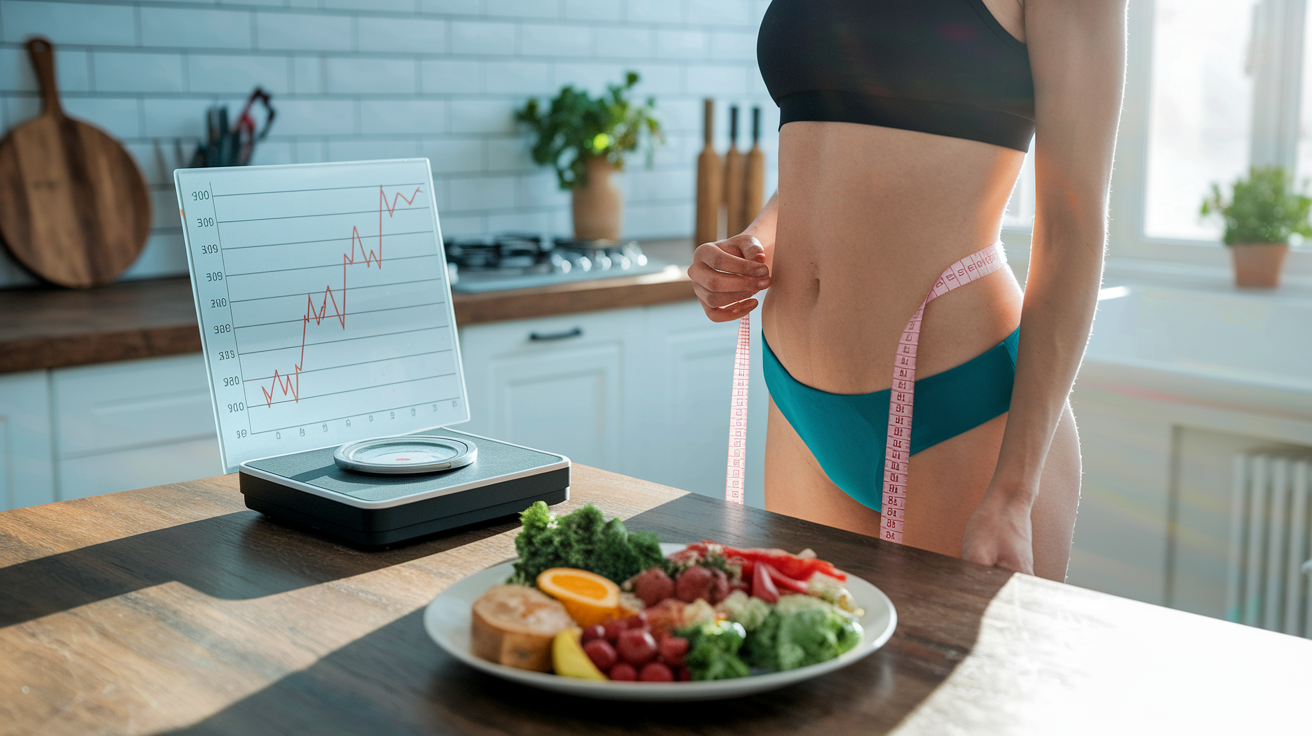
Fat loss happens when you consistently consume fewer calories than your body burns for daily activity and metabolism. Portion control makes that deficit predictable by removing the variability of eyeballing servings or adding extra spoonfuls. When every meal contains measured amounts of protein, carbs, and fats, your total daily intake stays within a narrow range week after week. That consistency produces steady weight loss. A deficit of 250 to 500 calories per day results in roughly 0.5 to 1 lb of fat loss each week, a pace that preserves muscle mass and keeps your metabolic rate stable.
Extreme calorie cuts deliver faster initial results but often backfire because your body adapts by slowing metabolic processes and increasing hunger signals. Drastic restriction also makes it harder to stick to your plan for more than a few weeks, leading to rebound eating and weight regain. Pre-portioned meals prevent that cycle by giving you enough food to feel satisfied while still hitting your deficit target. Over time, accurate portioning becomes a habit that requires less mental effort. Habits sustain results far longer than willpower alone. Consistent, moderate deficits paired with regular meals and balanced macros build a weight-loss pattern you can maintain for months or even years, turning short-term fat loss into long-term weight management.
Final Words
We focused on practical moves: measure proteins with a scale, use divided containers, batch-cook and divide by weight, and follow simple serving guides to keep calories steady.
Do this tonight: weigh one protein portion or pack one meal into a divided container. If you’re short on time, use a food scale app or pre-marked containers as the easier option.
Putting these portion control tips for meal prep and weight loss into practice makes calorie goals doable and keeps progress steady. You’ve got this.
FAQ
Q: What is the 3-3-3 rule for weight loss and food?
A: The 3-3-3 rule for weight loss and food is a simple portion shortcut: aim for about 3 oz protein, 3/4 cup cooked carbs, and 3 cups non-starchy vegetables per meal, then adjust by calories.
Q: What is the 5-4-3-2-1 rule for nutrition?
A: The 5-4-3-2-1 rule for nutrition is an easy daily target: 5 servings fruits/vegetables, 4 whole-grain portions, 3 protein portions, 2 healthy-fat portions, and 1 small treat—scale to your needs.
Q: Can I do portion control and still lose weight?
A: Portion control can still help you lose weight by creating a consistent calorie deficit; a 250–500 kcal/day deficit typically supports about 0.5–1 lb of weight loss per week.