

You don’t need a gym, fancy gear, or an hour to get fitter — 15 minutes can change your week.
This walk-based beginner program shows how to squeeze short, effective walks into real life: morning coffee, a lunch break, or a post-dinner loop.
You’ll get a simple 7-day plan, easy time-management tricks, and step-by-step progressions that fit tight schedules.
The point is consistency, not heroic workouts.
Start with tiny walks, protect one daily window, and build from there—so busy adults can actually stick with a plan and see real results.
Quick Walking Schedule for Busy Adults

A 15 to 30 minute walk fits into most daily routines and delivers real cardiovascular benefits without gym access or special equipment. Short sessions work because your body responds to moderate effort even when time’s limited. If 30 minutes feels impossible, splitting that block into two 15 minute walks or three 10 minute walks produces similar results. The goal is consistency, not perfection.
Most beginners underestimate how quickly short walks add up. A 20 minute lunch walk plus a 10 minute evening loop equals 30 minutes of moderate activity, covering a solid chunk of the weekly 150 minute target. Even on chaotic days, a single 10 minute walk maintains momentum and keeps the habit alive. Start with what fits, then add minutes as your schedule allows.
Use the same time slots each week so walking becomes automatic. Morning walks before work, midday breaks, or post-dinner loops all work. Pick windows that rarely get interrupted and defend them like you would a meeting. Once the routine feels normal, you can layer in extra sessions or longer durations without rethinking your entire day.
Sample 7-Day Walking Plan
- Day 1: 15 minute easy walk at a pace that allows comfortable conversation.
- Day 2: 20 minute brisk walk, aiming for slightly harder breathing but still able to talk.
- Day 3: Rest or 10 minute recovery walk if you feel good.
- Day 4: 15 minute walk with two 1 minute faster intervals.
- Day 5: 25 minute steady walk at moderate effort.
- Day 6: 30 minute longer walk at an easy to moderate pace.
- Day 7: 15 minute easy walk or full rest day.
Practical Time Management Strategies for Staying Consistent

Convert idle time into walking time by replacing low-value activities with short walks. Take calls while walking around the block, park farther from store entrances, or walk during kids’ sports practices instead of sitting in the car. These micro-adjustments add 5 to 15 minutes without creating new calendar blocks. Walking meetings work for one-on-one check-ins, and a 10 minute loop before or after lunch breaks up the workday without missing deadlines.
Habit stacking links walking to tasks you already do every day. Walk immediately after morning coffee, right when you get home from work, or during the first commercial break of a favorite show. The trigger stays the same, so the walk becomes automatic. On weeks when schedules explode, protect just one or two walking windows instead of abandoning the whole routine. Two 15 minute walks beat zero movement, and short streaks rebuild motivation faster than restarting from scratch.
Simple Progression to Build Fitness Over Time

Gradual increases prevent burnout and cut injury risk while building endurance. Add 5 minutes to one or two sessions each week until you reach 30 minutes per walk, then hold that duration for a few weeks before adding intensity. If you start with three 15 minute walks in week one, aim for three 20 minute walks by week two and 25 minutes by week three. Small jumps feel manageable and compound quickly.
Once 30 minute sessions feel comfortable, vary intensity instead of only adding time. Insert short bursts of faster walking, choose routes with gentle hills, or increase your usual pace for half the session. These changes boost calorie burn and cardiovascular gains without requiring longer workouts, which matters when your schedule stays tight.
4 Safe Progression Options
- Add duration: Increase total weekly walking time by 10 to 15 minutes (spread across sessions) each week.
- Add frequency: Start with 3 days per week, then move to 4 or 5 days once sessions feel easy.
- Add intervals: Walk at your normal pace, then speed up for 1 minute, recover for 2 minutes, and repeat 3 to 5 times.
- Add incline or terrain: Choose a route with mild hills or stairs, or raise treadmill incline by 1 to 2 percent.
Common Barriers and How to Overcome Them

Time pressure tops the list of reasons adults skip workouts, but walking adapts better than most exercise. When a 30 minute block disappears, shift to two 15 minute walks or three 10 minute walks scattered through the day. The total minutes matter more than doing them all at once. If mornings explode, move the walk to lunch or evening instead of writing off the entire day.
Bad weather and fatigue are close behind. Indoor mall walking, treadmill sessions, or even marching in place during a favorite podcast keep the routine alive when it’s too hot, cold, or rainy outside. On low-energy days, commit to just 5 or 10 minutes at an easy pace. Starting often leads to finishing the full session, and a short walk beats sitting still.
Motivation fades when progress feels invisible. Track minutes per week or daily step counts in a simple phone note or free app. Seeing small wins like “walked 4 days this week” or “added 1,000 steps since last month” makes the work feel real. Celebrate those micro-goals the same way you’d celebrate any other achievement.
Motivation and Habit Building Techniques

Pairing walking with something enjoyable turns obligation into reward. Queue up a podcast you only listen to during walks, call a friend for a chat-and-walk session, or explore new neighborhoods instead of repeating the same loop. These small pleasures make lacing up shoes easier, especially on days when discipline runs low.
Tracking creates accountability without extra effort. A basic step counter or the health app already on your phone shows whether you hit weekly targets. Set a modest goal like 5,000 steps per day or 75 minutes of walking per week, then raise it by 500 steps or 10 minutes once you consistently hit the mark for two weeks. Progress becomes visible, and visible progress fuels the next session.
5 Habit Building Approaches
- Use the same time slot each day so your body expects the walk.
- Lay out shoes and clothes the night before to remove morning friction.
- Start a streak calendar and mark each walking day with an X. Aim for 7 or 14 days in a row.
- Find an accountability partner who texts or walks with you a few times per week.
- Reward consistent weeks with a small treat, new playlist, or a slightly longer weekend walk in a favorite spot.
Modifications for Different Fitness Levels and Needs
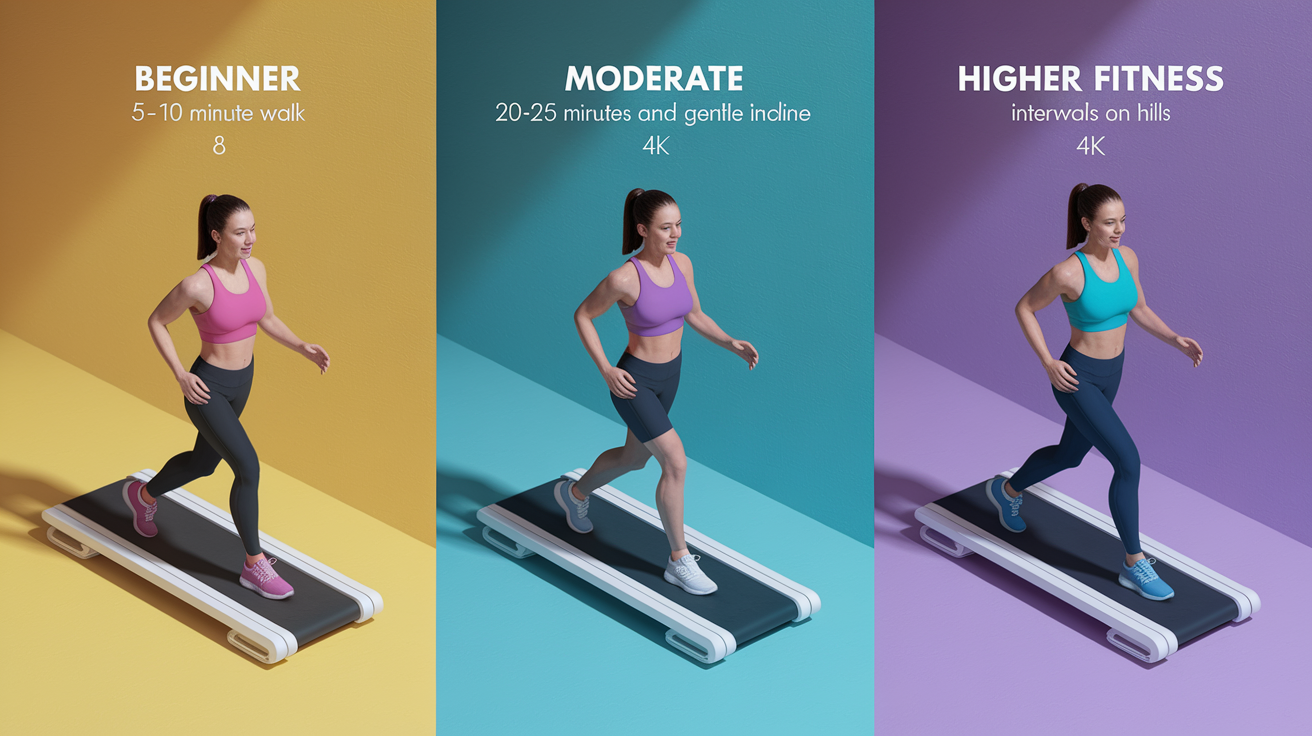
Slower paces and shorter sessions suit true beginners or anyone returning after a break. Start with 10 minute walks at whatever speed feels comfortable, even if that means strolling. Once 10 minutes feels easy, add 5 minutes or pick up the pace slightly. There’s no minimum speed requirement. Moving beats not moving, and consistency builds the base for faster or longer walks later.
Higher-fitness beginners can skip the slowest progressions and jump to 20 or 25 minute sessions with intervals from week one. Add 1 minute of brisk walking every 5 minutes, or choose hilly routes to increase effort without extra time. If regular walks feel too easy after two weeks, raise intensity before extending duration. Short, harder efforts often fit tighter schedules better than long, easy sessions.
| Level | Suggested Adjustment |
|---|---|
| New to exercise or very low fitness | Start with 5–10 minute walks, 2–3 times per day; add 5 minutes per week |
| Moderate fitness or returning after break | Begin at 15–20 minutes, 3–4 days/week; progress to 30 minutes over 3–4 weeks |
| Higher fitness or active lifestyle | Start at 25–30 minutes with intervals or hills; increase frequency to 5–6 days/week |
Final Words
Get moving with the quick schedule: a short daily block, 15–30 minutes most days, or three 10‑minute bursts when time’s tight. The post gave simple time hacks, safe ways to progress, and fixes for bad weather or low energy.
You also got habit tips—stack walks with errands or calls, track steps, and nudge duration up by a few minutes each week. Modifications keep this doable no matter your level.
Try a 10‑minute walk today. This walk-based beginner program for busy adults fits real life and adds up to real progress.
FAQ
Q: What is a quick walking schedule for busy adults?
A: A quick walking schedule for busy adults is 15–30 minutes of brisk walking most days, or three 10-minute blocks daily; start with 10 minutes and build to 30 across the week.
Q: How do I start with short daily walking blocks?
A: To start with short daily walking blocks, begin with one 10-minute walk tonight, then add a second session most days; small, consistent steps beat occasional long workouts.
Q: Why are 15–30 minutes of walking effective for beginners?
A: Fifteen to 30 minutes of walking is effective because it improves cardiovascular health, boosts mood, and fits busy lives; even short bouts add up toward fitness and activity goals.
Q: How can I split walks into 10-minute segments if I’m short on time?
A: You can split walks into 10-minute segments by doing a morning quick walk, a brisk lunchtime loop, and an evening stroll; three short bouts equal one longer session.
Q: How can I fit walking into a busy schedule?
A: You can fit walking into a busy schedule by walking during phone calls, using part of your commute, taking brisk lunch breaks, or stacking errands into a short walking route.
Q: How should I safely progress to build fitness over time?
A: You should safely progress by adding about five minutes to weekly totals, introducing mild hills, and alternating brisk and moderate paces—change only one variable at a time.
Q: What are simple progression options for beginners?
A: Simple progression options include adding five minutes each week, adding a daily hill, inserting one brisk interval per walk, or increasing walk days from three to five per week.
Q: What if time, weather, or fatigue stop me from walking?
A: If time, weather, or fatigue stop you, do short indoor walks, march in place, take stairs, or commit to a guaranteed 10-minute fallback walk to keep the habit alive.
Q: How can I stay motivated and build a walking habit?
A: You can stay motivated by habit stacking (walk after coffee), tracking steps, pairing walks with podcasts, setting one weekly goal, and keeping a 10-minute minimum fallback.
Q: How should I modify the plan for different fitness levels?
A: You should modify the plan with slower paces and shorter intervals for beginners, low-incline routes for recovery, and faster intervals or added hills for more fit walkers.