

Think meal prep has to be complicated to help you lose weight?
It doesn’t.
With a simple plan: one protein, one carb, one veg, and an hour or two once a week, you can stop guessing at dinner and eat meals that support steady weight loss.
This post gives easy, repeatable meal prep ideas for beginners, a quick shopping checklist, and a minimum-effective plan you can try tonight.
No cooking marathon, no weird ingredients, just practical meals that make sticking with healthy eating much easier.
Beginner-Friendly Meal Prep Foundations for Weight Loss

Meal prep takes the guesswork out of eating. You’re not staring into the fridge at 7 PM wondering what’s for dinner, and you’re way less likely to default to takeout when there’s already a meal waiting. That’s the part that matters for weight loss. Consistency beats perfection every time.
You don’t need to cook for five hours straight or turn your kitchen into a commercial prep line. Set aside an hour or two when it works for you. Make a few meals, not every single one. Store them in the fridge for three or four days. Freeze the extras. Start with recipes that use three or four ingredients so you’re not drowning in instructions or hunting down specialty ingredients you’ll never use again.
The three-ingredient formula is dead simple: one protein, one carb, one vegetable. Bake some chicken thighs, roast sweet potato chunks, steam broccoli. Cook it all at once. Portion it into containers. You just prepped easy meal prep ideas for weight loss beginners without counting a single macro.
Here’s what you actually need to get started:
Simplicity. Pick recipes with three to five ingredients and one or two steps. You shouldn’t be reading a novel while your oven timer’s going off.
Speed. One or two hours once a week is plenty. You’re building a habit, not auditioning for a cooking show.
A quick-start routine. Prep just breakfast or lunch at first. Leave dinners flexible until the whole thing feels automatic.
First meals that travel well. Go for make-ahead weight-loss meals for beginners that reheat easily. Grain bowls, baked proteins, roasted vegetables.
Storage basics. Use airtight containers. Label each with the day you’re eating it. Fridge for up to four days, freezer for anything beyond that.
Time-saving habits. Reuse core ingredients across meals. Roast a whole batch of chicken on Sunday and use it in three different dishes. Cuts your cooking time and your grocery bill.
Planning Easy Prep Meals That Support Weight Loss
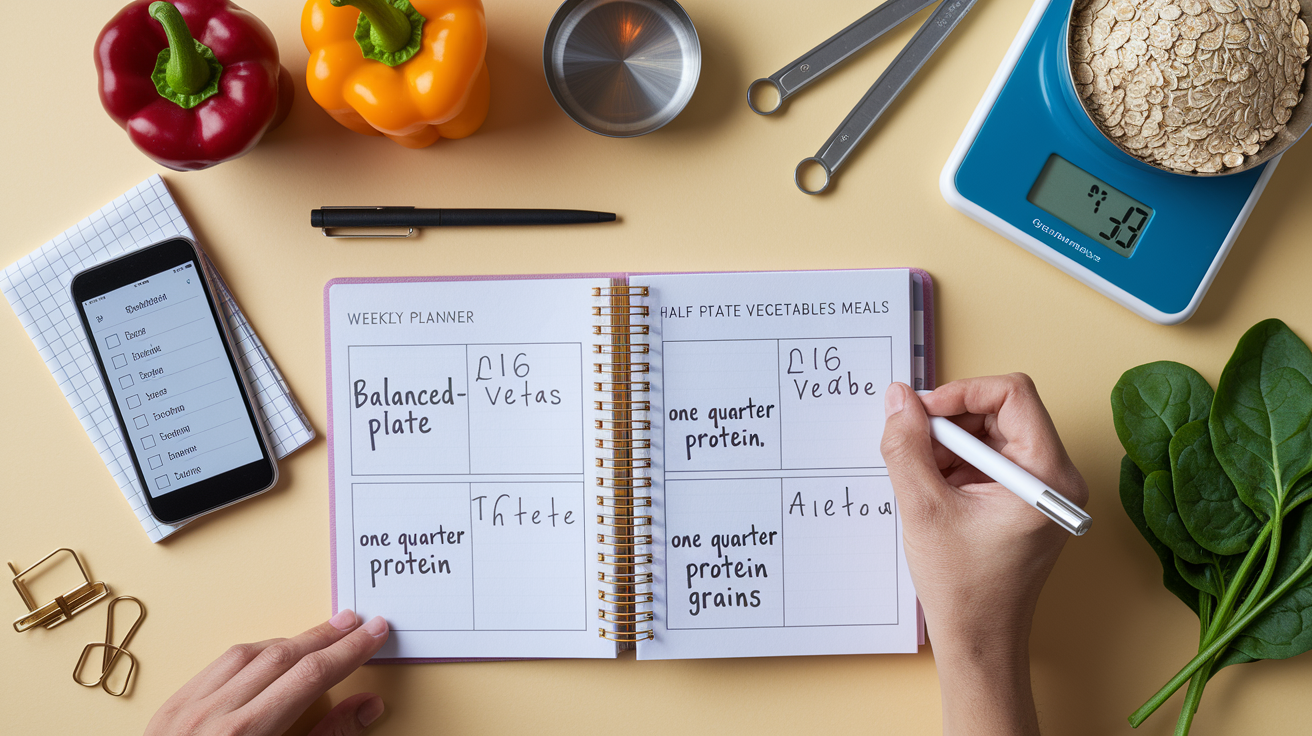
Planning isn’t about building a spreadsheet. It’s choosing two or three meals you’ll actually eat this week, checking what’s in your pantry, and writing down what you need to buy. That short list keeps you focused at the store and stops you from buying stuff that’ll sit in the back of your fridge until it goes bad.
A simple meal template for weeknight success? The balanced-plate formula. Roughly half fruits and vegetables, one quarter protein, one quarter grains or starchy carbs. That visual guide works without weighing food or counting every calorie.
For beginners, portion-size targets remove the guesswork. Aim for about three to four ounces of cooked lean protein per meal (a piece roughly the size of your palm), half a cup of cooked grains like brown rice or quinoa, one to two cups of non-starchy vegetables, and one tablespoon of healthy fat or a quarter of an avocado. Those amounts land most people in a 400 to 600 calorie range per meal, which supports gradual weight loss when you stick with it. If you want a more precise target, a TDEE or BMR calculator can estimate your daily calorie needs based on age, activity, and goals. Then you just divide that number across your meals.
Here’s how to plan your first batch:
Pick two to three repeatable meals. Choose one breakfast (like overnight oats), one lunch (like a chicken and veggie bowl), and maybe one dinner or snack. Eating the same meals a few days in a row builds the habit without forcing you to learn new recipes every day.
Use portion guides as starting points. Measure your first few portions with measuring cups or a kitchen scale so you know what half a cup of quinoa or four ounces of chicken looks like on your plate. Then eyeball it going forward.
Select one or two proteins and carbs. If you choose chicken breast and ground turkey as proteins, and sweet potatoes and brown rice as carbs, you can mix and match across all your meals without buying ten different ingredients.
Estimate total calories loosely. Add up one day’s meals to check you’re in a reasonable range for your goals. Most beginners target 1,400 to 2,000 calories per day depending on size and activity. Adjust portion sizes up or down as needed.
Match meals to your weekly schedule. If you know Wednesday night is always busy, prep Wednesday’s dinner on Sunday. If mornings are calm, save breakfast for fresh cooking and focus your prep time on lunches and snacks instead.
Final Words
Start small: pick one meal to prep and block 60–90 minutes this week. Prep 1–2 meals first, use the 3-ingredient formula, and store leftovers for 3–4 days or freeze extras.
Follow the planning steps: use the simple plate guide (half veggies, quarter protein, quarter grains) and pick 2–3 repeatable meals. Use portion-size rules so it’s easy.
Do this tonight — write one shopping list item and pick your first recipe. These easy meal prep ideas for weight loss beginners make healthy habits simple and repeatable.
FAQ
Q: How does meal prep help with weight loss?
A: Meal prep helps weight loss by cutting decision fatigue, saving time and money, and building routine; ready meals make healthier choices easier and reduce grabbing quick, higher-calorie options.
Q: How do I start meal prepping as a beginner?
A: To start meal prepping as a beginner, prep one or two meals first, block an hour or two weekly, pick simple recipes, and use the three-ingredient formula to keep things repeatable.
Q: What is the three-ingredient formula for simple meal prep?
A: The three-ingredient formula pairs a protein, a vegetable, and a grain or starchy side so you can build quick, balanced make-ahead meals without complex portion math.
Q: How do I store prepped meals safely and how long do they last?
A: Store prepped meals in airtight containers, refrigerate them for three to four days, and freeze extras; thaw frozen meals overnight in the fridge and reheat until steaming before eating.
Q: What’s an easy portion guide for beginners?
A: An easy portion guide uses a balanced plate: half fruits or vegetables, one quarter protein, one quarter grains—about three to four ounces cooked protein, half cup grains, and one to two cups vegetables.
Q: How do I plan meals for the week without overcomplicating things?
A: To plan simply, choose two to three repeatable meals, match them to busy nights, batch-cook once weekly, and swap simple sides for variety without extra work.
Q: How can I save time when batch-cooking for weight loss?
A: You can save time by chopping all veggies at once, cooking one protein in bulk, using one-pot methods, and choosing recipes that share ingredients across meals.
Q: How do I estimate calories for meal prep beginners?
A: You can estimate calories by finding your TDEE or BMR with an online calculator, picking a reasonable daily target, then dividing that into rough meal estimates.
Q: What’s a minimum effective option if I don’t have time to prep?
A: A minimum effective option is prepping just one meal type, doubling the dinner you already make, or packing cooked protein plus a quick veg and a simple grain.