

Think you need half an hour to get a useful workout? Think again.
Two minutes can raise your heart rate, build strength, or loosen tight hips—if you use the right moves.
This post gives ready-to-do, two-minute routines you can do at the store, at your desk, or on the stairs.
No equipment, no guesswork, just four clear formats and quick progress options.
Pick one routine, do it today during a break, and you’ll have a real win for the week.
Fast-Start 2-Minute Workout Routines for Immediate Use
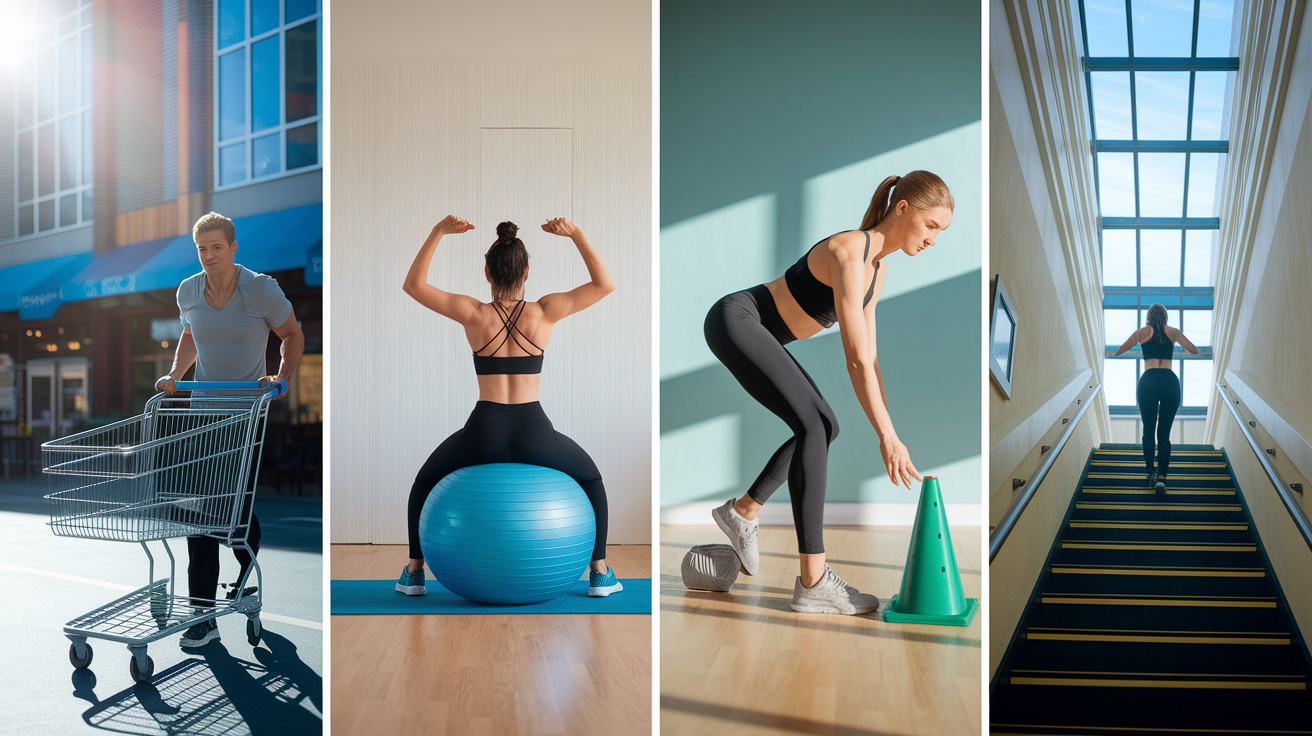
You can finish a full micro workout in the time it takes to brush your teeth. These routines use whatever’s around you. No gym membership, no fancy equipment.
Each mini workout below takes two minutes or less. Do one during a work break, before lunch, while your coffee brews. The shopping cart push fits into your grocery run. The stability ball wall squat works at home or in the office. The step-over balance drill needs a soup can or plastic cone. Stair climbs happen wherever you find stairs.
Start with whichever routine matches where you are right now. At the store? Push the cart. At home with a stability ball? Do wall squats. Got stairs nearby? Climb them. Pick one, do it today, and you’ve already added movement to your week.
Supermarket cart push – Push an empty shopping cart around the store perimeter before you start filling it. Want more effort? Wait until the cart’s half full, then push another circuit. This targets your legs, core, and shoulders while you complete an errand you were doing anyway.
Stability ball wall squats – Place a stability ball behind your back against a wall, hands on your hips. Bend your knees slowly as far as feels comfortable, then return to standing. Keep your knees from moving past your toes. The ball rolls with you as you squat. This works your quads, glutes, hamstrings, and core, and the ball supports safer form than a freestanding squat.
Step-over balance drill – Stand about 6 inches behind a small plastic cone, soup can, or child’s beach bucket. Lift one leg and step over the object slowly, transfer your weight to the front foot, then lift the other leg and step over. Step back the same way, one leg at a time. Repeat 10 times. To progress, add side-stepping or raise the object height gradually up to 12 inches. This builds balance, strengthens your hip stabilizers, glutes, and quads, and helps prevent falls.
Stair climbs – Climb the stairs in your home, apartment building, or office stairwell. Make multiple trips up and down at a moderate pace for about two minutes. Breathe regularly and rest if you feel discomfort. Stair climbing burns more calories per minute than jogging and strengthens your quads, glutes, and calves. In public stairwells, bring an exercise buddy for safety and company.
Full-Body 2 Minute Workout Intensity Formats and Comparisons

The way you divide two minutes changes how hard the workout feels and what it trains. A simple format uses four exercises for 30 seconds each with no rest. This keeps your heart rate steady and gives you time to focus on form. Want more intensity? Try four rounds of 20 seconds of work followed by 10 seconds of rest. Same total time, but with built-in recovery that lets you push harder during each work interval. Advanced users can run eight rounds of 15 seconds of work and 15 seconds of rest, which mimics Tabata principles and spikes effort even higher because short bursts allow near maximum output.
Choosing a format depends on your current fitness and how much you can recover between efforts. Beginners do well with straight 30 second blocks because there’s no pressure to sprint. Intermediate users benefit from 20/10 splits because the rest window prevents burnout while still building cardio capacity. If you’re experienced and want a challenge, 15/15 intervals let you go all out for each burst, then recover just enough to repeat. All three formats fit the same two minute window, so you can test each one with the same four movements and see which keeps you most consistent.
| Format | Timing Pattern |
|---|---|
| Beginner | 4 exercises × 30 seconds each (no rest) |
| Intermediate | 4 rounds × (20s work / 10s rest) |
| Advanced | 8 rounds × (15s work / 15s rest) |
Strength-Focused Two-Minute Workout Adaptation Guide

Any strength movement can fit a two minute block if you control the tempo and choose a load that lets you complete 8 to 15 reps in 30 seconds. A dumbbell deadlift with 5 to 10 pounds takes about 3 seconds down and 2 seconds up, so you’ll finish 10 to 12 reps in one 30 second window. Chair sit-to-stands move faster, closer to 12 to 15 reps in 30 seconds, because bodyweight is lighter and the range is shorter. Overhead presses with light dumbbells or water bottles slow down to 8 to 12 reps because your shoulders fatigue quickly under load.
Pick a weight or resistance level that you can move with good form for the entire interval without stopping. If you’re using a resistance band, choose a tension that feels challenging by rep 10 but doesn’t force you to drop the band early. If you’re working with bodyweight, slow the tempo to 4 seconds down and 2 seconds up to increase time under tension and make the set harder without adding weight. Pair two lower body moves with two upper body moves to spread fatigue and keep your heart rate up across the full two minutes.
Sample lower body/upper body split – Dumbbell deadlifts for 30 seconds (10 to 12 reps with 5 to 10 lb weights, targets hamstrings and back), then overhead presses for 30 seconds (8 to 12 reps, targets shoulders).
Sample bodyweight circuit – Chair sit-to-stands for 30 seconds (12 to 15 reps, targets glutes and quads), then wall push-ups for 30 seconds (10 to 15 reps, targets chest and triceps).
Core and Balance Form Cues and Key Variations for Two-Minute Sessions

Core and balance work depends more on muscle activation and control than on speed or weight. When you hold a modified plank, engage your abs by pulling your belly button toward your spine and squeezing your glutes to keep your hips level. In a bird dog hold, reach your arm and opposite leg out slowly until you feel your core working to stop your torso from twisting. For seated knee lifts, drive your knees up until your hip flexors engage, then lower with control instead of letting your legs drop. Single leg balance drills require you to press your standing foot into the floor and lock your knee without hyperextending, small adjustments that keep you stable without tipping.
Isometric holds like planks or wall sits challenge endurance, so aim for 15 to 30 seconds if you’re new and build toward 60 seconds as you adapt. Dynamic moves like bird dogs or knee lifts use shorter holds, about 2 seconds per rep, to accumulate volume across 30 seconds. If your balance feels shaky, stand near a wall or chair back so you can touch it lightly without leaning. If a full plank is too much, drop to your knees and hold the same flat back position, which reduces load while keeping the same muscle activation pattern.
Beginner-Friendly Adjustments
Start with 15 second holds instead of 30 if a full interval feels too long. For single leg balance, keep your lifted foot just an inch off the floor instead of raising your knee to hip height. In bird dog drills, extend only your arm or only your leg at first, then combine them once you can hold steady. Chair assisted variations let you rest one hand on a seat back during standing moves, which cuts fall risk and builds confidence before you try the move unsupported.
Two-Minute Mobility and Stretch Techniques for Better Range of Motion
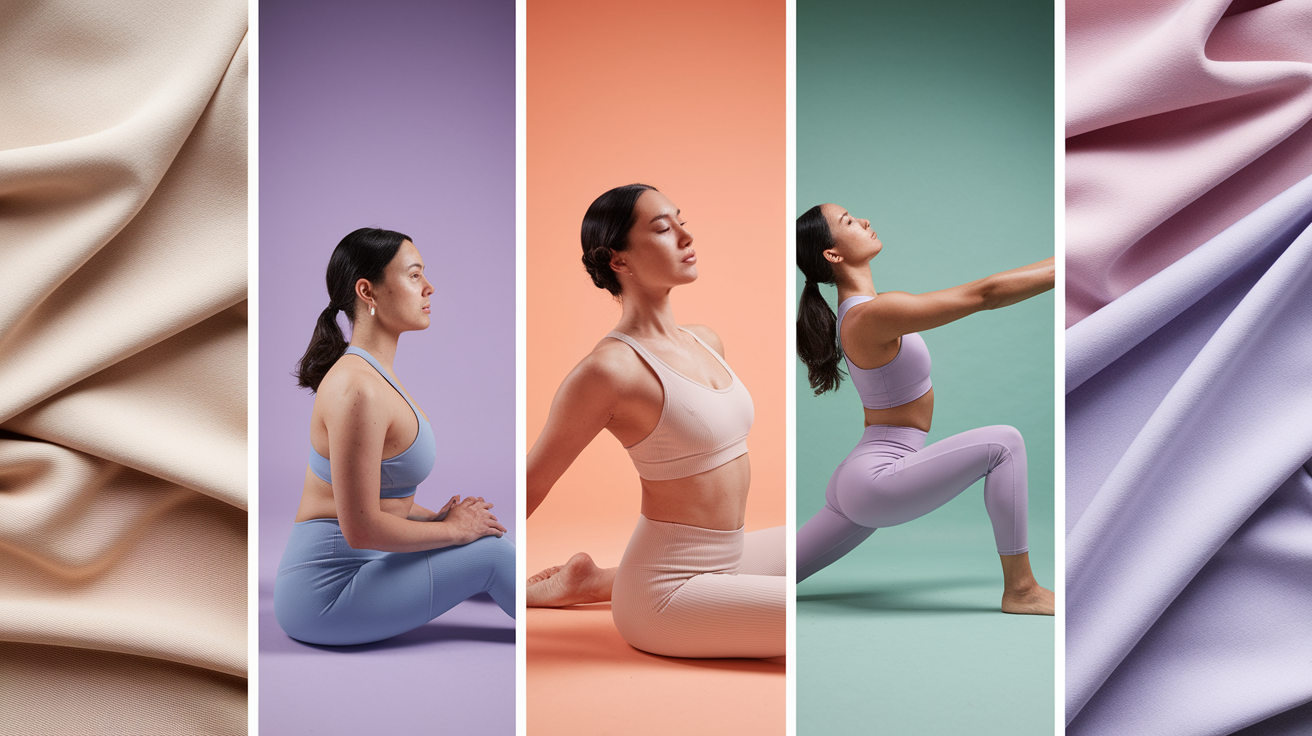
Mobility work in a two minute window focuses on smooth, controlled movement through your joints’ full range. Spend 30 seconds on each area, moving slowly enough that you feel the stretch deepen without forcing it. For neck rolls, tilt your head forward and roll it gently to one side, then back, then to the other side, breathing through each position. A chest opener involves clasping your hands behind your back and lifting your arms until you feel your chest expand, holding for a breath, then releasing and repeating. Hip flexor stretches ask you to step one foot forward into a shallow lunge, tuck your pelvis under, and lean slightly forward until you feel the stretch in the front of your back hip.
Keep your breathing steady and deep, inhaling for 3 to 4 seconds and exhaling for the same count. This prevents you from holding your breath, which stiffens muscles instead of loosening them. Transition between stretches without rushing. If you finish a 30 second neck roll block with time left, add an extra slow roll instead of jumping to the next move early. You can mix these stretches into your own two minute frame by picking any four areas that feel tight today. Quick post-workout cooldown or a mid-afternoon desk break to reset posture and release tension.
Accessibility and Low-Impact 2 Minute Workout Options
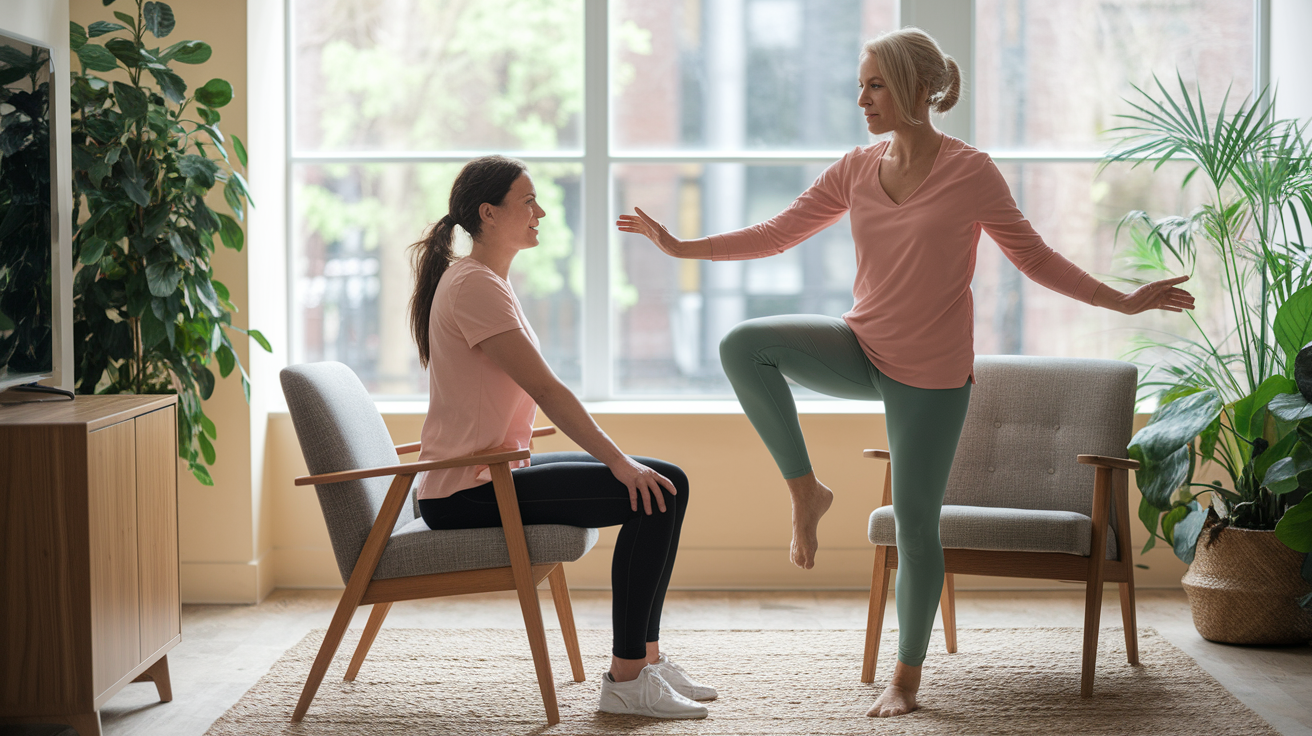
Seated and chair supported movements let you train strength, mobility, and cardio without standing balance or high joint load. Chair marching involves sitting upright and lifting one knee at a time in a controlled rhythm, which activates your hip flexors and core with zero impact. Seated leg extensions ask you to straighten one knee until your leg is parallel to the floor, hold for a second, then lower, working your quads without stressing your knees. Seated alternating arm raises build shoulder endurance by lifting one arm overhead while the other rests, then switching, a pattern that keeps your heart rate up while you stay supported.
These variations work well for anyone managing joint pain, recovering from injury, or new to exercise after a long break. You can perform them at your desk, in a waiting room, or at home without worrying about tripping or losing balance. The low impact nature also makes them safe for older adults, with research suggesting that regular seated movement helps reduce fall risk when combined with supervised balance training. If you’re cleared for standing work but want extra stability, keep one hand on the chair back during torso rotations or single leg lifts.
Seated knee lifts with a slow tempo – Lift one knee toward your chest, hold for 2 seconds, lower slowly, then switch legs. Aim for 10 to 15 reps per side in 30 seconds. This builds hip flexor strength and core control without standing.
Chair supported standing balance – Stand behind a chair, rest your fingertips on the back, and lift one foot an inch off the floor. Hold for 10 seconds, then switch legs. Repeat for 30 seconds total. This improves stability and confidence before trying unsupported balance drills.
Program Planning: How to Use 2 Minute Workouts for Consistency

Short workouts become effective when you repeat them across the day or week. One two minute session adds movement, but three sessions spread through your day deliver six minutes of training. That starts to build a habit and accumulate enough volume to see progress. Do a micro workout in the morning, another at lunch, and a third in the evening. You’ve logged 6 minutes a day or 42 minutes a week without blocking off a single long training window.
Track your sessions in a simple note on your phone or a check mark on a calendar. Write down which routine you did and at what time so you can see patterns and adjust. If mornings feel rushed, skip that slot and add a fourth session before bed instead. Progression happens by adding one more session per day every week, increasing the difficulty of each move, or combining two back to back two minute blocks once your schedule allows a four minute window.
Measure progress with small, concrete markers. Count how many squats you complete in 30 seconds this week, then try to add one or two reps next week. Note how long you can hold a plank today, then aim for 5 more seconds in two weeks. If you’re doing stair climbs, track how many trips up and down you finish in two minutes, then try to match or beat that number the following session. These tiny improvements prove the routine’s working and keep you motivated to repeat it.
| Week | Daily Sessions | Goal |
|---|---|---|
| 1 | 1–2 | Build the habit, test routines, find your best times of day |
| 2 | 2–3 | Increase frequency, start tracking reps or hold times |
| 3 | 3 | Add light weight (dumbbells or water bottles) or try higher intensity formats (20/10 intervals) |
| 4 | 3–5 | Aim for consistency at this frequency or combine two sessions into one 4 minute block |
Reps per 30 second strength interval: 8 to 15 depending on load and tempo
Hold time for isometric moves: 15 to 60 seconds depending on fitness level
Weekly volume target: 6 to 10 minutes per day equals 42 to 70 minutes per week when sessions are repeated 3 to 5 times daily
Safety, Form Checks, and Quick Modifications for 2 Minute Workouts
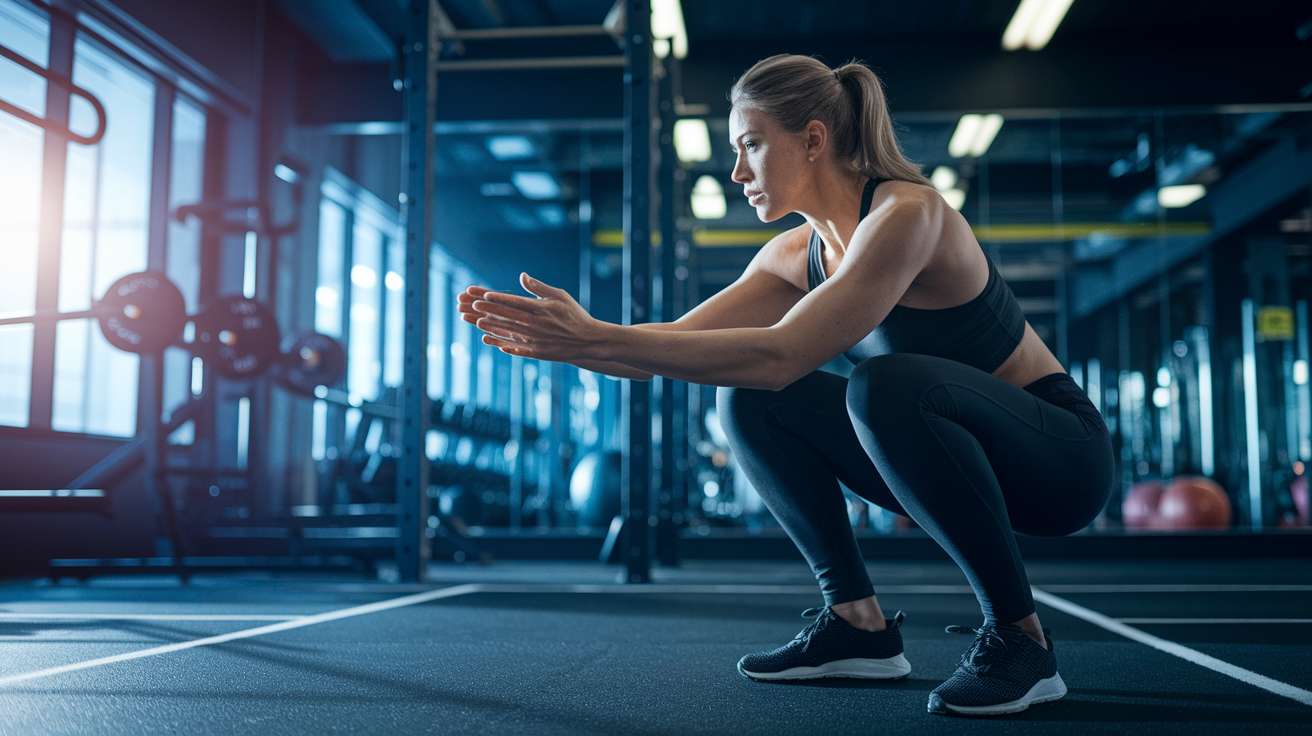
Stop immediately if you feel sharp pain, dizziness, or severe shortness of breath. Micro workouts are short, but they still demand good form and attention to how your body responds. During squats, avoid letting your knees drift forward past your toes by pushing your hips back first and keeping your weight in your heels. In any standing move, engage your core by pulling your belly button in slightly, which protects your lower back and improves balance.
Breathe regularly through every rep and hold. Inhale during the easier phase of a movement, like lowering into a squat, and exhale during the harder phase, like standing back up. If you’re climbing stairs, breathe in rhythm with your steps instead of holding your breath when you push. Rest between sessions if you feel fatigued, and never try to push through joint pain or muscle strain that worsens as you move.
Remove rugs or obstacles from your workout space to prevent tripping during step-overs or lunges.
Use a chair back or wall for balance support if you feel unsteady during single leg drills.
In public stairwells, bring a workout partner for safety and motivation.
Keep your chest lifted and shoulders back during all moves to maintain posture and reduce neck strain.
Press your knees outward slightly during squats to prevent them from caving inward, which protects your knee joints.
If an exercise causes discomfort that doesn’t ease with form adjustments, swap it for a similar move that feels better, like replacing jump squats with bodyweight squats or swapping push-ups for wall push-ups.
Final Words
Jump right in: this post gave four ready-to-do two-minute routines (cart push, wall squats, step-over drill, stair climbs), plus intensity formats, strength tweaks, core cues, mobility moves, accessibility options, planning tips, and safety notes.
Do one thing today: set a 2-minute timer and try stair climbs or wall squats, focus on form, and jot down reps or hold time.
A single 2 minute workout is tiny, repeatable, and builds real progress—do it now and keep it simple.
FAQ
Q: Are 2 minute workouts effective?
A: Two-minute workouts are effective for raising daily activity and breaking long sitting; done often, they boost stamina and strength a bit, but you still need longer or tougher sessions for major gains.
Q: How does exercise reduce cortisol?
A: Exercise reduces cortisol by triggering a short stress response that, with regular activity and recovery, lowers baseline stress hormones; moderate workouts and steady breathing help regulate cortisol, while extreme exercise can raise it temporarily.
Q: What exercises lower blood pressure?
A: Exercises that lower blood pressure include regular aerobic moves—brisk walking, cycling, and stair climbing—plus resistance training; do them most days, start slow, and check with your clinician if you take blood-pressure meds.
Q: How much exercise should a diabetic get a day?
A: People with diabetes should get about 150 minutes of moderate aerobic activity per week (roughly 30 minutes five days), plus two weekly strength sessions; daily movement helps blood sugar—check with your care team.