

Think you need an hour at the gym to get results?
You don’t.
Ten minutes of smart moves can build strength, boost energy, and loosen stiff joints for busy beginners.
This quick full body routine pairs a short warm up with four simple exercises and easier options so you can start now and progress safely.
No equipment. No guesswork.
Do it tonight: two minute warm up and three short rounds.
Warm-Up Essentials for a Beginner-Friendly 10-Minute Workout
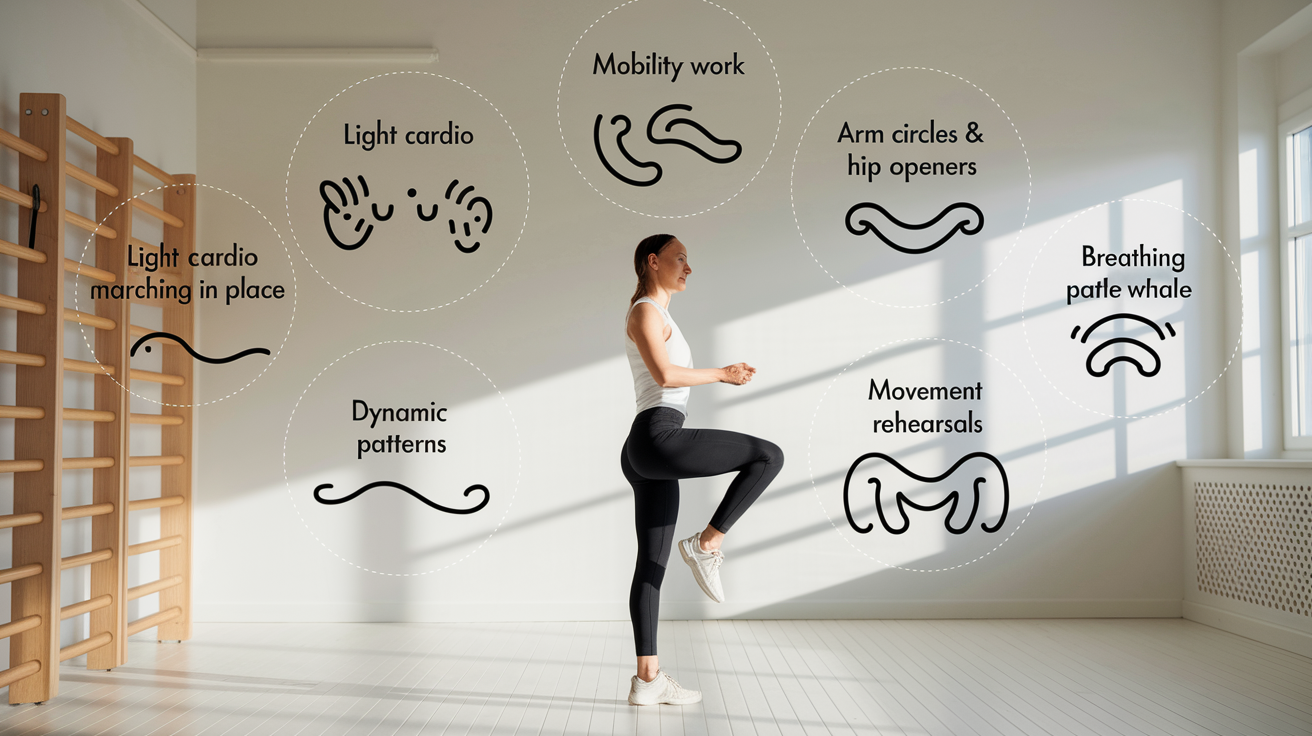
A proper warm-up gets your body ready from the inside out. Your heart pumps more blood to working muscles, synovial fluid starts lubricating your joints, and your nervous system switches from rest mode into coordination mode. That combo reduces injury risk and makes everything feel smoother. Even two minutes of deliberate movement gives your tissues a heads-up that work’s coming, which matters especially if you’ve been glued to a desk or just rolled out of bed.
You don’t need anything elaborate. If you’re new to exercise or feeling stiff, take the full three minutes and keep the pace conversational. Short on time or already warmed up from walking the dog? A quick ninety seconds of intentional movement still counts. The goal is readiness, not exhaustion. Dial intensity based on how your body feels that day.
Your warm-up can pull from these five categories:
- Light cardio that raises your pulse without spiking fatigue. Marching in place, easy step-touches, or gentle hopping if your knees feel good.
- Mobility work that explores your joints’ full range in a controlled way. Arm circles, hip openers, ankle rolls.
- Dynamic stretches that combine movement and gentle tension. Leg swings, torso twists, walking lunges.
- Breathing patterns synced to rhythm, helping you find a calm, steady pace before intensity kicks in.
- Movement rehearsals at low load. Run through simplified versions of the exercises you’re about to perform.
Foundational Movement Principles for a Safe and Effective Beginner Full-Body Routine
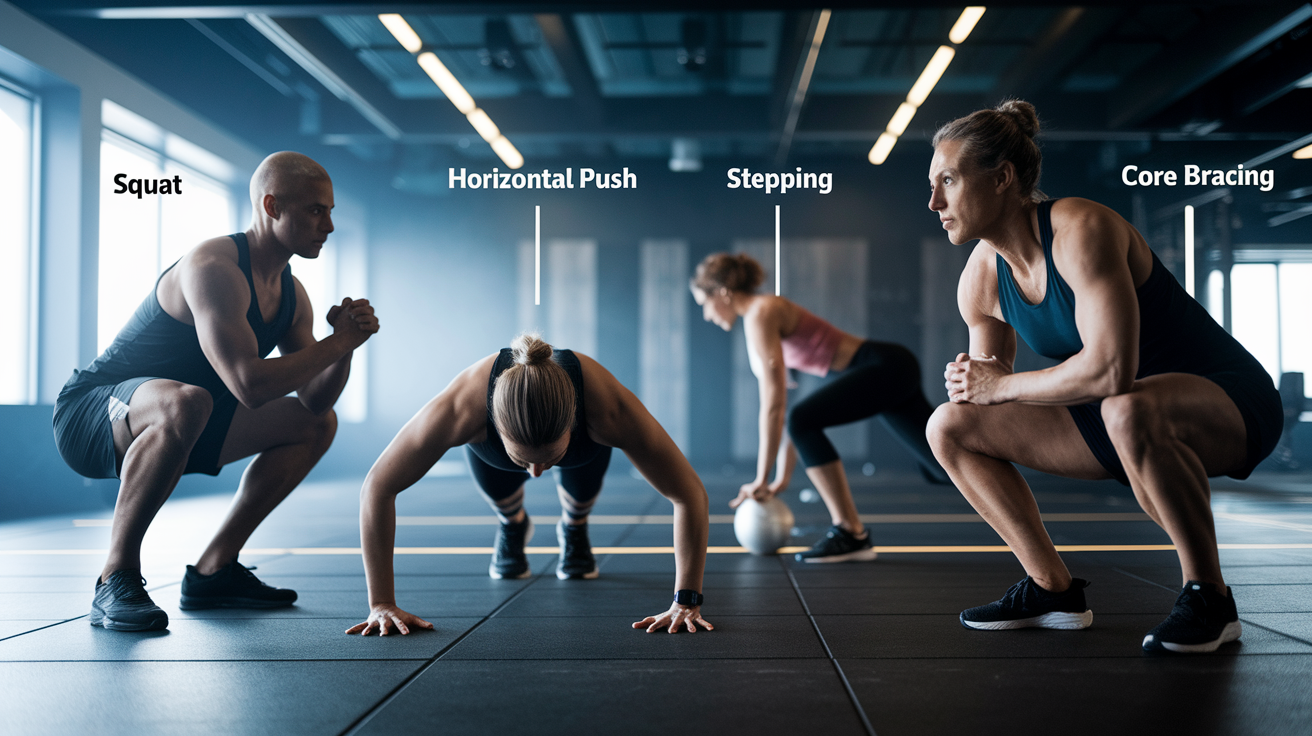
Understanding why a movement works matters more than how many reps you log. Full-body routines rely on a handful of universal patterns that show up in daily life. Sitting, standing, pushing doors open, carrying groceries. When you train these patterns deliberately, you’re rehearsing the mechanics your body already uses. That repetition builds strength, stability, and the ability to move confidently when life demands it.
The following principles underpin every beginner-friendly bodyweight routine. Master these and you’ll progress safely, avoid compensations, and actually enjoy the work.
The Squatting Pattern
A squat is your body’s natural way of lowering and raising your center of mass. Weight should stay balanced across the entire foot, not just the toes or heels. Your knees track in line with your toes as you descend. Hips move back and down simultaneously. Think of sitting into a low chair rather than dropping straight down.
Core tension holds your torso upright while your lower body does the work. If your chest collapses forward or your lower back rounds too much, you’ve gone too deep for your current mobility. Shorten the range until you can maintain alignment, then add depth over weeks. Push through the whole foot to stand, and squeeze your glutes at the top to finish the rep with full hip extension.
The Horizontal Pushing Pattern
Any movement that presses your hands away from your torso uses this pattern. Your shoulder blades should glide smoothly across your ribcage, not wing out or lock rigid. As you lower into a push-up or press-up variation, your elbows bend and your chest descends toward the floor. The goal is controlled descent and a powerful press.
Ribcage position determines spinal safety. If your belly sags toward the floor, you’ve lost tension and your lower back is bearing load it shouldn’t. Brace your abs as if someone might poke your stomach. Maintain that firmness throughout the set. Your body should move as one plank, not as a hinge at the hips or a sag in the middle.
The Stepping Pattern
Lunges, step-ups, and single-leg movements all demand balance and unilateral control. When you step forward or back, your weight shifts entirely onto one leg for a moment. That leg must stabilize your pelvis, control your knee, and manage the load without wobbling.
Keep your torso upright and your core engaged to prevent leaning. Your front knee bends to roughly 90 degrees, staying over or slightly behind your toes. The trailing leg provides balance but shouldn’t carry most of the load. Push through the heel and midfoot of your working leg to return to standing. Feeling unsteady? Widen your stance slightly or hold a wall for support until strength catches up.
The Core Bracing Pattern
Your core isn’t just your abs. It’s a cylinder of muscles wrapping from your ribcage to your pelvis, front to back. When you brace, you create tension in that cylinder, stabilizing your spine and protecting it from unwanted movement. This happens before you squat, before you step, and throughout every plank or mountain climber.
To find the brace, exhale gently and tighten your midsection as if you’re about to cough or brace for impact. You’re not sucking in or pushing out. You’re creating firmness. Hold that tension while breathing normally through your nose or mouth. Don’t hold your breath, which spikes blood pressure and cuts endurance short. A strong, steady brace lets you move powerfully without compensation, and it’s the foundation every other pattern relies on.
Final Words
You started with a short warm-up to raise heart rate, boost blood flow, and wake up your joints and nervous system.
Then we walked through core movement principles, squatting, horizontal pushing, stepping, and core bracing, so each exercise is safer and more useful.
Use the simple template and the minimum-effective options when life gets busy.
You now have a practical 10-minute full-body workout for busy beginners you can do tonight. Try it tonight — small wins add up.
FAQ
Q: Is a 10 minute full body workout enough?
A: A 10-minute full-body workout is enough to maintain movement, boost energy, and build habit; use quality compound moves and aim for 3–4 sessions weekly to see measurable progress.
Q: What exercise is good for high blood pressure?
A: An aerobic exercise like brisk walking is good for high blood pressure because it lowers resting pressure; aim for 30 minutes most days and add strength twice weekly. Check with your clinician if you have risks.
Q: What is the 3 3 3 rule at the gym?
A: The 3-3-3 rule at the gym is most commonly 3 sets of 3 reps per exercise to build strength; adjust reps, sets, or rest depending on your goals and fitness level.
Q: What to drink before morning exercise?
A: A good drink before morning exercise is plain water—6–12 ounces to rehydrate; for longer or intense sessions add a small carb drink or coffee for a mild boost and skip sugary drinks.